
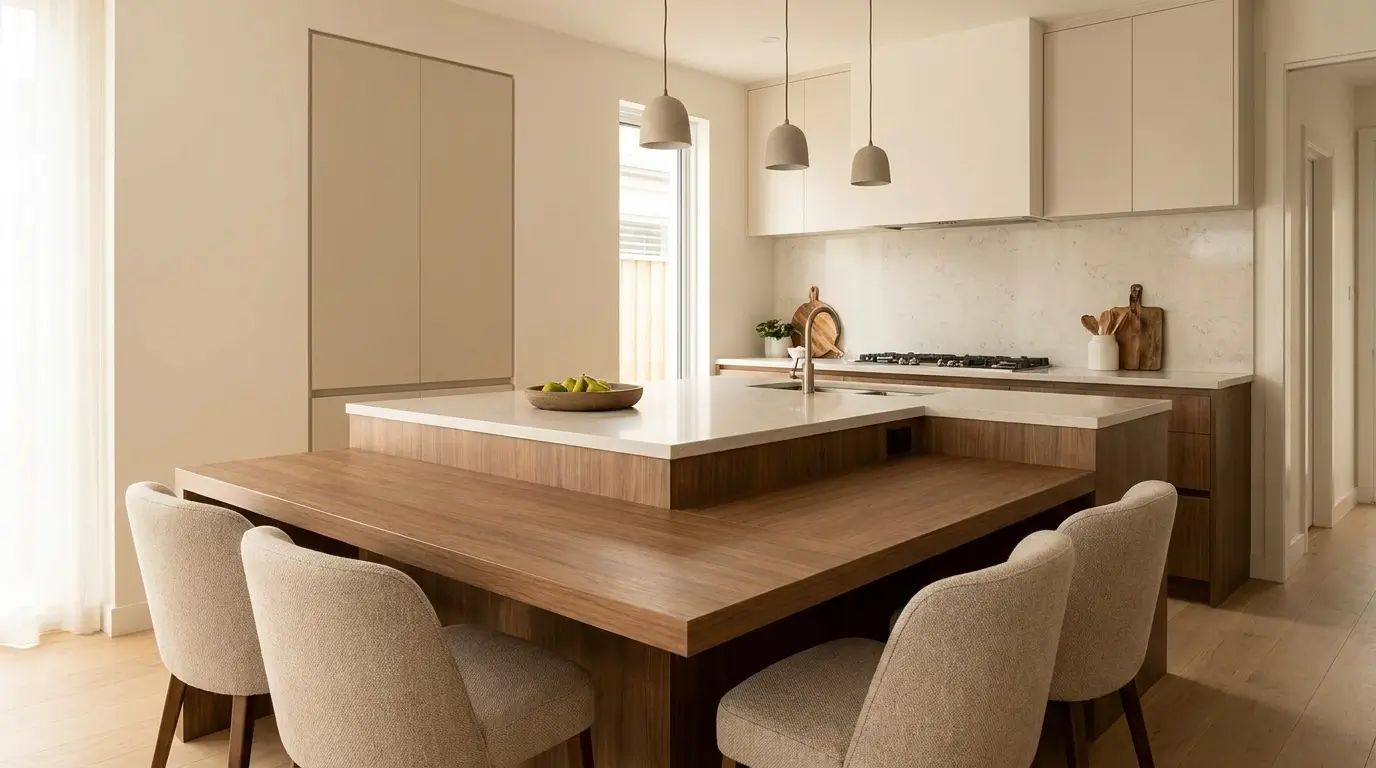
The conventional kitchen island is a single-height object. It sits at counter height, it does one primary job, and the limitations of that single height mean that it serves some functions well and others poorly. Counter height is right for food preparation but wrong for comfortable dining. Bar height is right for casual perching but wrong for a proper meal. The single-level island asks the people using it to adapt their behavior to its fixed dimension rather than offering different dimensions for different activities, which is a fundamental design limitation that becomes increasingly obvious as the island is asked to serve more of the functions that a modern open-plan home requires of it.
The multi-level kitchen island solves this problem by doing something architecturally straightforward but functionally transformative. It introduces two or more distinct heights within a single island form, each calibrated to a specific activity and a specific posture, creating an object that serves multiple functions simultaneously without asking anyone to compromise on the ergonomics of any of them. The preparation surface is at the right height for standing and working. The dining surface is at the right height for sitting and eating. The bar surface is at the right height for casual conversation. Each zone does its job at the dimension that job actually requires, and the single island that results serves the full complexity of a modern kitchen and dining life within a footprint that separate pieces of furniture for each function could never approach.
In the Indian urban home context, where the kitchen frequently connects directly to the living and dining areas in an open-plan configuration and where the pressure to serve multiple social and functional purposes from a compact footprint is constant, the multi-level island with integrated dining is not a luxury feature borrowed from a design tradition with more space than it needs. It is a genuinely intelligent response to the specific conditions of compact urban living, and it is available at a range of dimensions, configurations, and budget levels that make it a realistic option for a much broader range of kitchens than its apparent design sophistication might suggest.
Multi-Level Kitchen Island with Integrated Dining Table Seating Ideas
1. The Classic Two-Level Counter and Bar Configuration
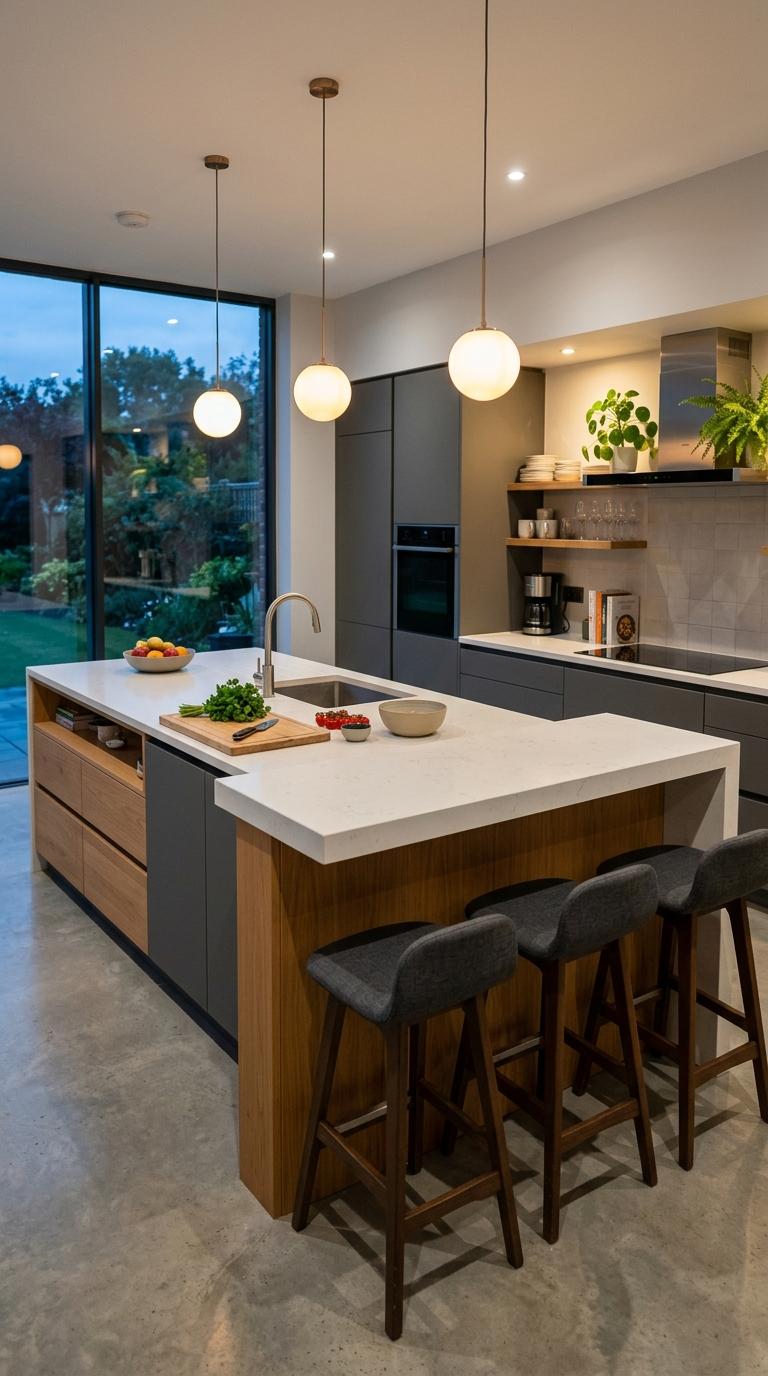
The most widely used and most practically resolved multi-level island configuration is the two-level arrangement where a standard counter height working surface at eighty-five to ninety centimeters occupies the kitchen-facing side of the island and a raised bar height surface at one hundred to one hundred and ten centimeters occupies the dining-facing side, with the height difference between the two levels creating a natural visual and functional division between the working and the social zones of the island.
The logic of this configuration is directly derived from the activities it serves. The lower counter height surface on the kitchen side is the preparation zone where chopping, kneading, rolling, and assembling happens in the posture that food preparation requires, standing with the working surface at approximately hip height. The raised bar height surface on the opposite side provides the elevated seating position that bar stools are designed for, creating a casual dining and social perching zone that faces outward toward the living area and allows people seated at the island to be part of the social life of the open-plan space while remaining physically separated from the working kitchen behind the island.
The height differential between the two levels, typically between fifteen and twenty-five centimeters, does something visually important in addition to its ergonomic function. It creates a visual step in the island’s profile that clearly communicates the island’s two distinct identities, the working kitchen object on one side and the social dining surface on the other, without requiring any material change or decorative device to make that distinction. The stepped profile reads immediately as intentional, as a designed feature rather than an arbitrary variation in height, which gives the multi-level island an architectural clarity that a single-height island can only approximate through material and color distinction.
The raised bar surface on the dining side also performs a screening function that single-level islands cannot provide. It conceals the working kitchen surface from the view of people seated at the bar, hiding the cutting boards, the spice containers, and the general productive clutter of active cooking behind the raised section while presenting a clean, uninterrupted surface to the dining side. This visual separation between kitchen work and dining presentation is one of the most socially significant functions of the two-level island in an open-plan Indian home where the expectation of receiving guests while cooking is a regular feature of domestic life.
2. Three-Level Island for Maximum Functional Differentiation
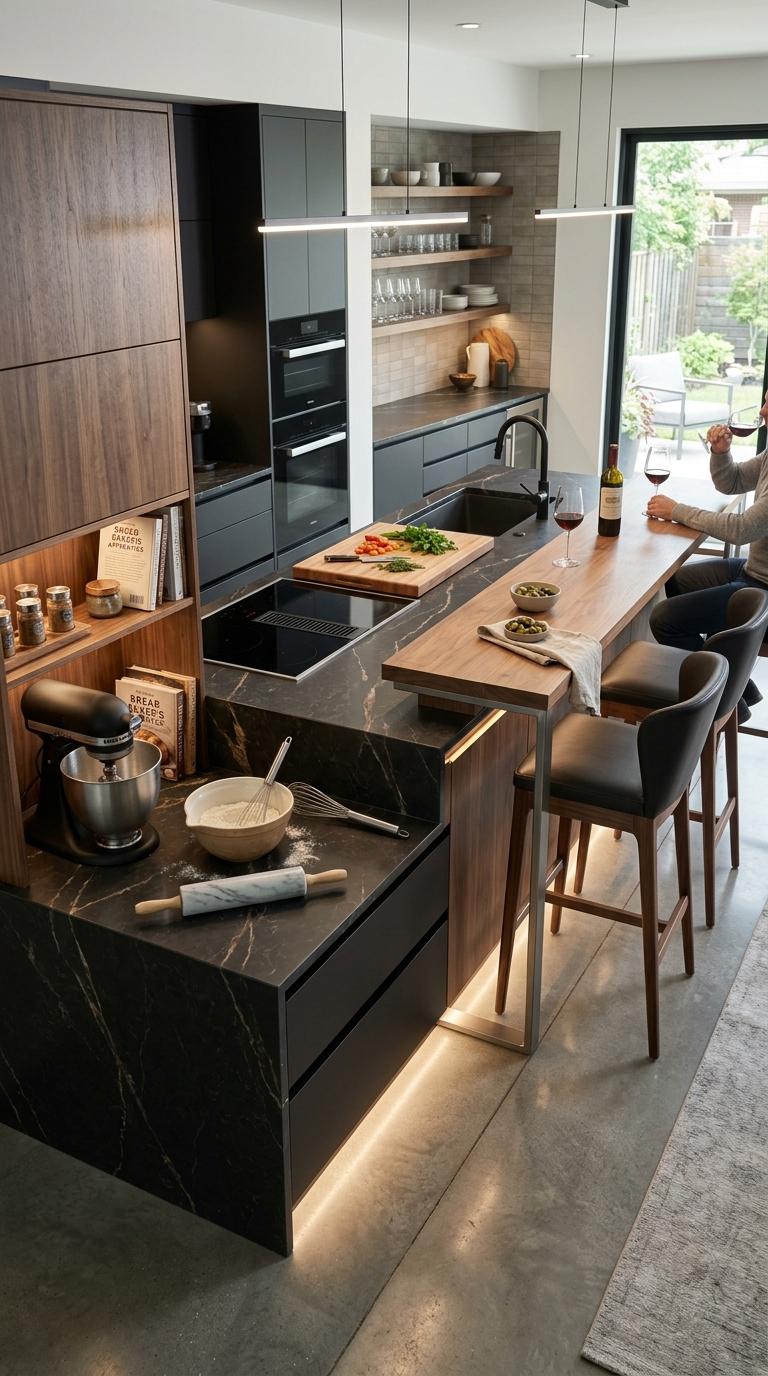
A three-level island takes the principle of height-specific zoning to its fullest practical expression by introducing a third level that serves a third distinct activity, typically a lower surface at seventy to seventy-five centimeters that functions as a dedicated baking and pastry preparation zone, a cutting and chopping surface at standard counter height, and a dining and social surface at bar height.
The lower baking zone at seventy to seventy-five centimeters is a practical requirement of serious baking that most kitchens fail to provide because they are designed at a single counter height optimized for general preparation rather than for the specific posture demands of rolling pastry, kneading bread dough, and working with the leverage and downward pressure that these tasks require. A surface ten to fifteen centimeters lower than standard counter height positions the working surface closer to hip level, which allows the arms to exert downward pressure more naturally and more efficiently and makes extended baking sessions significantly less fatiguing. Japanese and European professional bakeries position their working surfaces at this lower height for exactly this ergonomic reason.
In a three-level island for an Indian kitchen, the lower level might be designated for the specific tasks that characterize Indian baking and bread preparation, rolling chapati and paratha, shaping bread dough, and working with the chakla and belan that Indian flatbread preparation requires. Positioning the chakla at a lower surface height than the standard counter is a genuine ergonomic improvement that most Indian kitchen designs have never considered and that a three-level island makes naturally and elegantly available.
The visual complexity of a three-level island is significant, and it requires careful design attention to ensure that the stepped profile reads as a considered architectural composition rather than an awkward accumulation of different heights. Consistent material selection across all three levels, with the steps between them expressed as precise, clean lines rather than gradual transitions, creates a three-level island that looks deliberately designed and architecturally resolved.
3. Cantilevered Dining Extension from Primary Counter
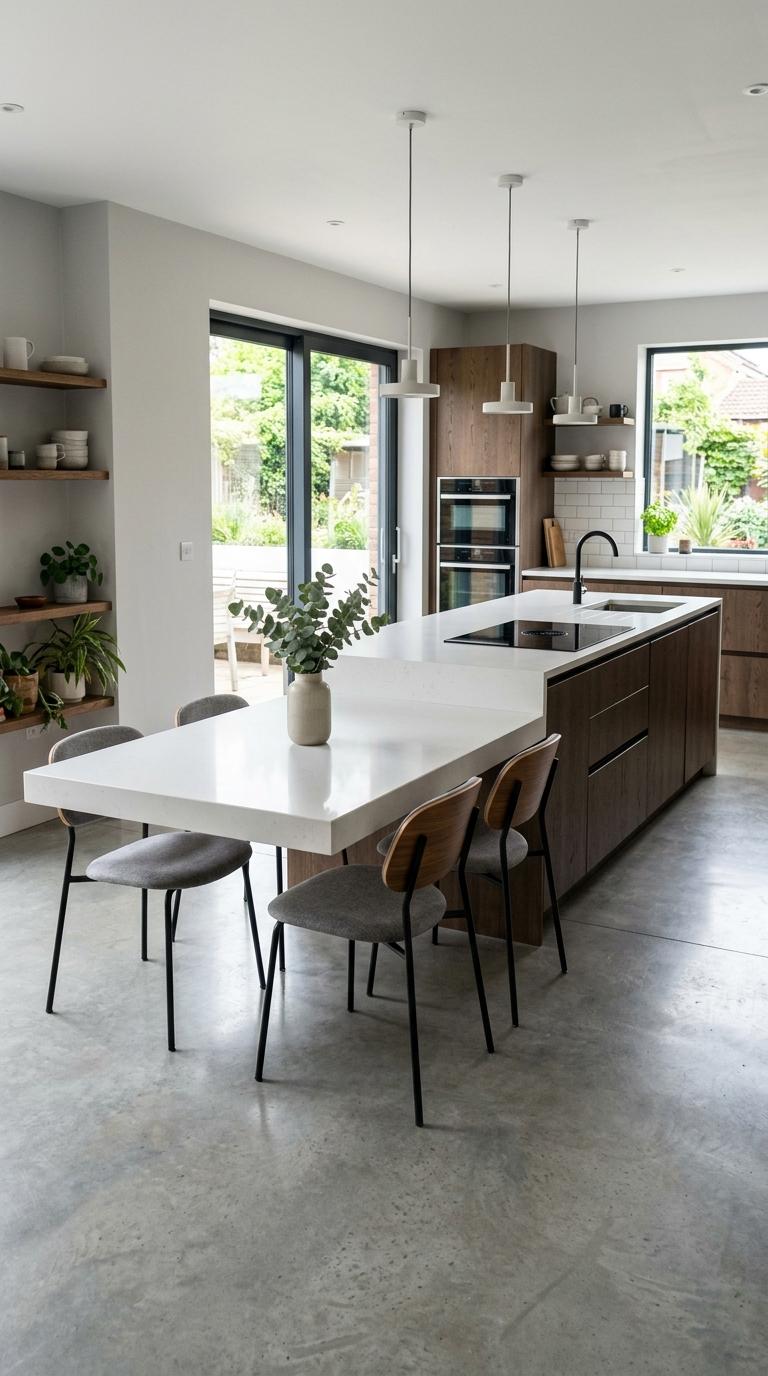
A cantilevered dining extension is a multi-level island configuration where the dining surface is not a separate raised section but a projecting extension of the primary counter surface that drops to dining table height at one or both ends of the island, creating a dining position that is lower than the counter and that provides the knee clearance necessary for comfortable seated dining at a conventional table height of seventy to seventy-five centimeters.
This configuration differs from the bar height dining approach in its seating posture and its social dynamic. Dining at bar height on bar stools is casual and informal, a posture associated with quick meals, drinks, and conversation rather than extended family dinners. Dining at table height on standard chairs is the posture of the proper meal, the Sunday lunch, the birthday dinner, and the daily family gathering that Indian domestic culture places at the center of home life. A cantilevered table height extension from the kitchen island creates the second option within a single island form, providing a dining surface that is appropriate for the full range of Indian dining occasions from the quickest breakfast to the most extended family meal.
The cantilever structure of this extension is the design and engineering challenge that determines whether the configuration is available in a specific kitchen context. A cantilevered dining surface of table height projecting from the island must be structurally supported by the island base without a leg at the outer edge if it is to provide knee clearance for seated diners, and the depth of cantilever required for comfortable knee clearance of thirty to forty centimeters demands a structural solution that transfers the load through the island base rather than through a support leg that would obstruct the seating position.
In practice, a cantilevered dining extension of up to forty centimeters can be achieved through the structural design of the island base using steel internal framing hidden within the island cabinetry, without requiring a visible support leg. Extensions beyond forty centimeters require either a visible support leg or a more complex structural solution. For most compact island dining configurations where the extension depth of thirty to forty centimeters provides adequate but not generous knee clearance, the legless cantilever is achievable and creates a cleaner and more spatially efficient dining arrangement than any legged alternative.
4. Waterfall Counter with Drop-Down Dining Level
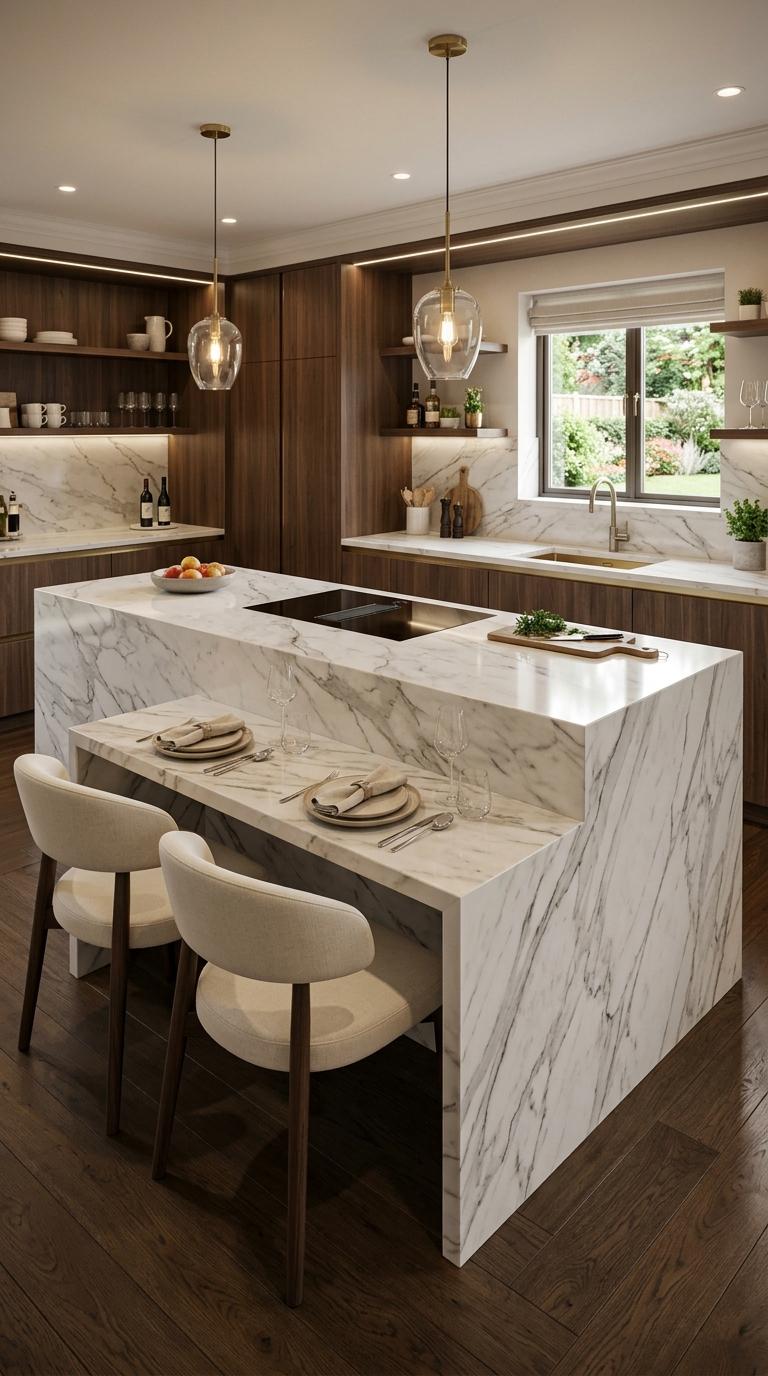
A waterfall counter island, where the counter material continues vertically down one end of the island to the floor in an uninterrupted plane, can be designed with a built-in dining extension at one end that creates a drop-down surface at table height, using the waterfall end panel as the structural support for the dining extension in a way that is both architecturally elegant and structurally efficient.
In this configuration the waterfall end of the island serves three simultaneous purposes. It creates the dramatic design feature of the uninterrupted material plane from counter top to floor. It provides the structural mass that supports the dining extension without requiring additional legs. And it visually anchors the dining side of the island to the floor in a way that makes the dining extension feel like a permanent, settled feature of the kitchen rather than an add-on or afterthought.
The dining extension projecting from the waterfall end should be at seventy-five centimeters height for table-height dining and should extend sufficiently from the island face to allow comfortable seating for two to four people. A dining extension of sixty to ninety centimeters from the island face accommodates two to three people on one side and potentially a fourth person at the end, creating a dining capacity of three to four within a footprint that a separate dining table of equivalent capacity would vastly exceed.
The material of the waterfall panel and the dining extension surface in this configuration should be the same as the counter material, creating the visual continuity of the waterfall effect across all three surfaces of the island end. Natural marble, quartzite, or a premium quartz surface in a book-matched pattern creates the most dramatic and most design-forward expression of this configuration, where the uninterrupted flow of the stone pattern from counter to waterfall panel to dining surface creates an island of extraordinary visual coherence and material luxury.
5. Island with Integrated Banquette Dining
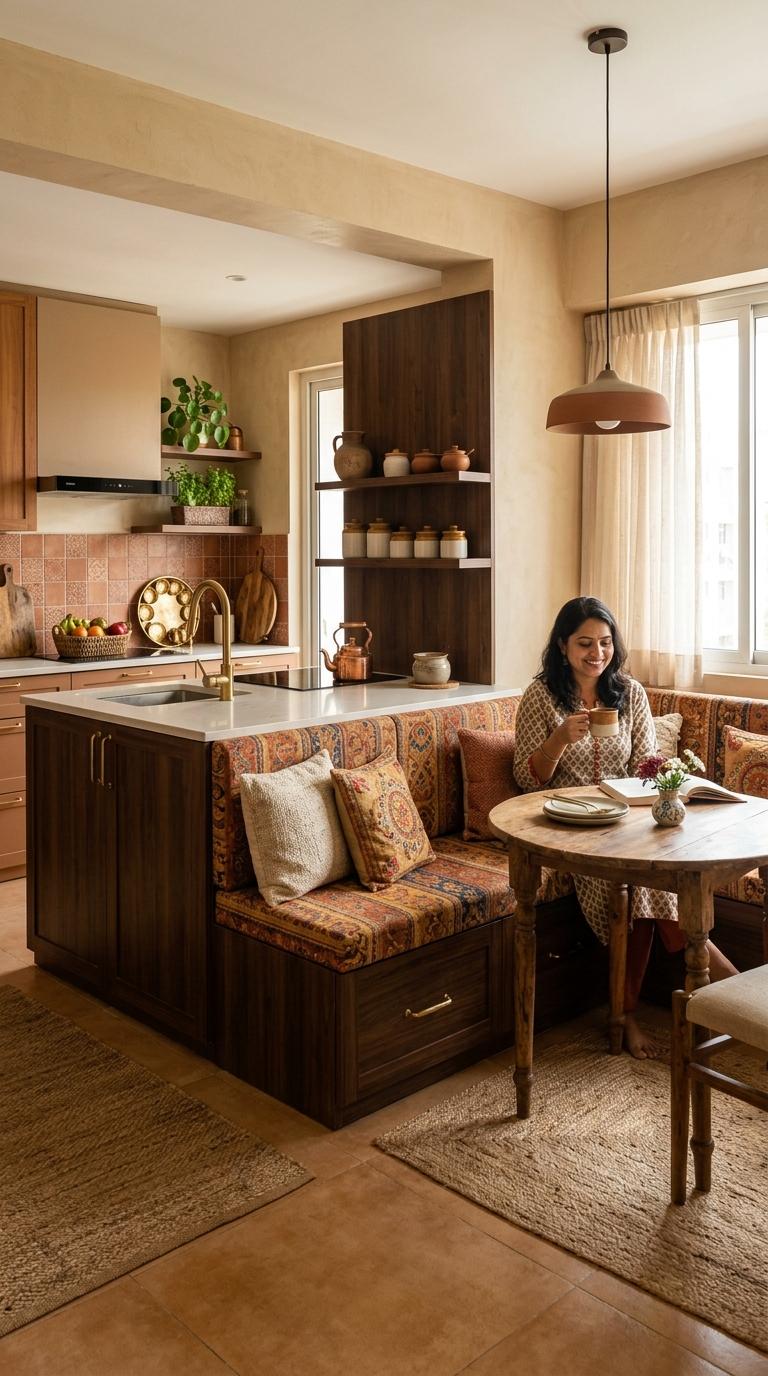
A multi-level island that incorporates a built-in banquette seating on the dining side creates the most complete and most spatially efficient dining integration available in any kitchen island configuration. The banquette, a built-in upholstered bench seat fixed to the wall or to the island structure, provides comfortable dining seating in a form that takes up significantly less floor space than equivalent chair seating because the bench does not need to be pulled back from the table to allow a person to be seated.
The banquette dining island typically positions the dining surface at table height with the banquette bench on the dining side and the counter surface at standard height on the kitchen side. The back of the island base facing the dining zone can be designed as a full piece of furniture, with the upholstered banquette seat above and concealed storage below in the form of drawers or lift-up compartments that are accessible from the dining side. This storage capacity within the banquette base is one of the most valuable aspects of the integrated banquette island because it provides a storage location for items that the dining zone requires, extra table linens, placemats, candles, and serving accessories, immediately adjacent to where they are used.
In an Indian home context where the banquette dining configuration is still relatively uncommon but where the spatial efficiency and social warmth it creates are both highly relevant to the conditions of compact urban living, the integrated banquette island is one of the most compelling multi-level island configurations available. It creates a dining experience of genuine comfort and intimacy within a spatial footprint that a table and separate chairs could not match, and it gives the dining zone of an open-plan kitchen a defined, settled identity that free-standing furniture arrangements in compact spaces rarely achieve.
6. Peninsula Multi-Level with Dining Integration
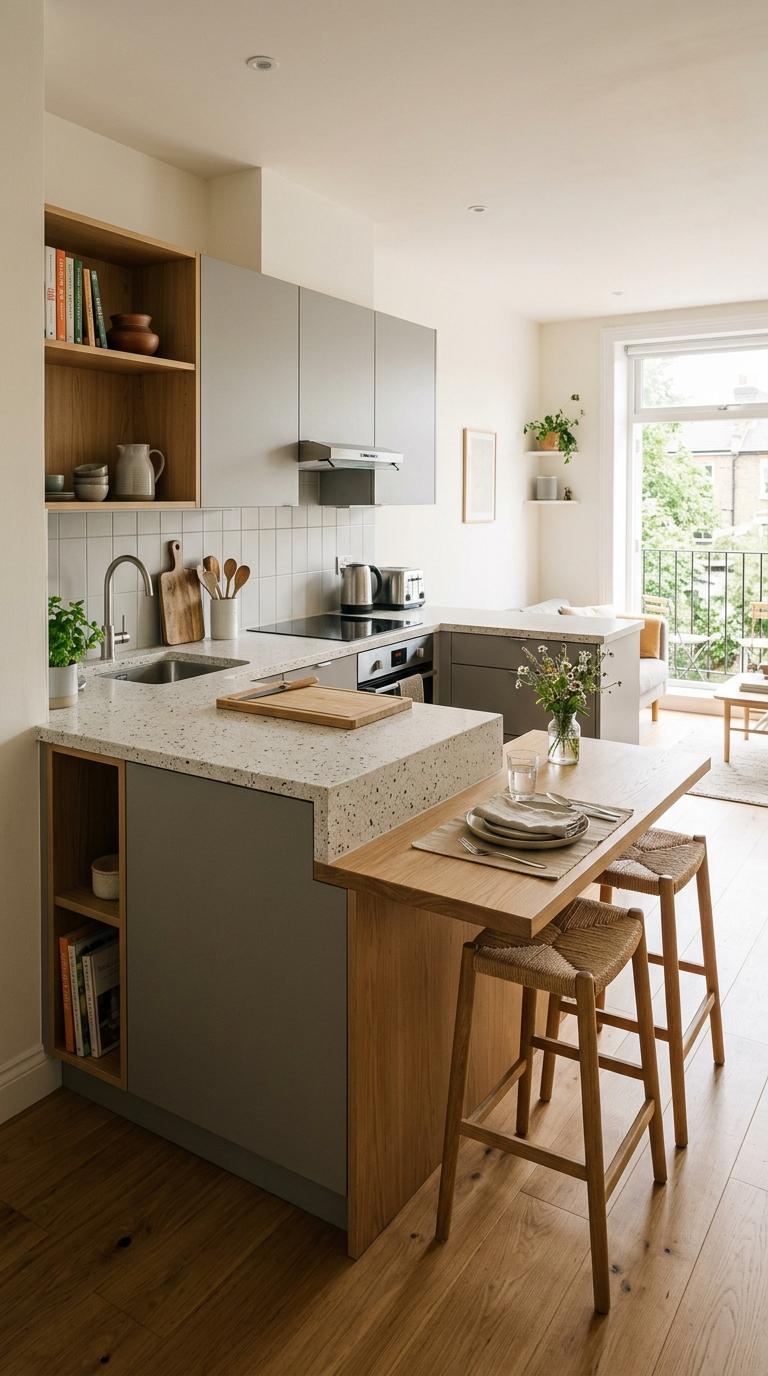
A peninsula, attached to the existing kitchen counter at one end rather than freestanding on all four sides, is the spatial configuration that makes multi-level dining integration available in kitchens that are too compact for a freestanding island of the dimensions that a multi-level arrangement requires. The peninsula requires aisle clearance on only two sides rather than three, which means it can project further into the available floor space than a freestanding island of the same width, providing the counter length necessary for both a working zone and a dining zone within a single linear installation.
The multi-level peninsula positions the working counter at standard height along the kitchen-facing edge and the dining surface at either bar height or table height at the free end, creating an L-shaped or T-shaped counter profile that delineates the boundary between the kitchen zone and the dining zone while providing both functions from a single attached installation. The free end of the peninsula, projecting into the dining area, becomes the dining focal point, and the transition from the kitchen body of the peninsula to the dining end is where the height change between the two levels occurs.
The design of the junction between the working level and the dining level in a peninsula configuration requires careful attention to both the visual quality of the transition and the structural integrity of the joint. A step detail executed in the primary counter material with a precisely formed edge creates a clean, architectural transition that reads as a deliberate design feature. A material change at the step, for example a stone counter transitioning to a warm wood dining surface at the point where the height drops to table level, creates a more dramatic visual distinction between the two zones while maintaining the single-object quality of the peninsula form.
7. Breakfast Bar Integrated with Full Dining Table
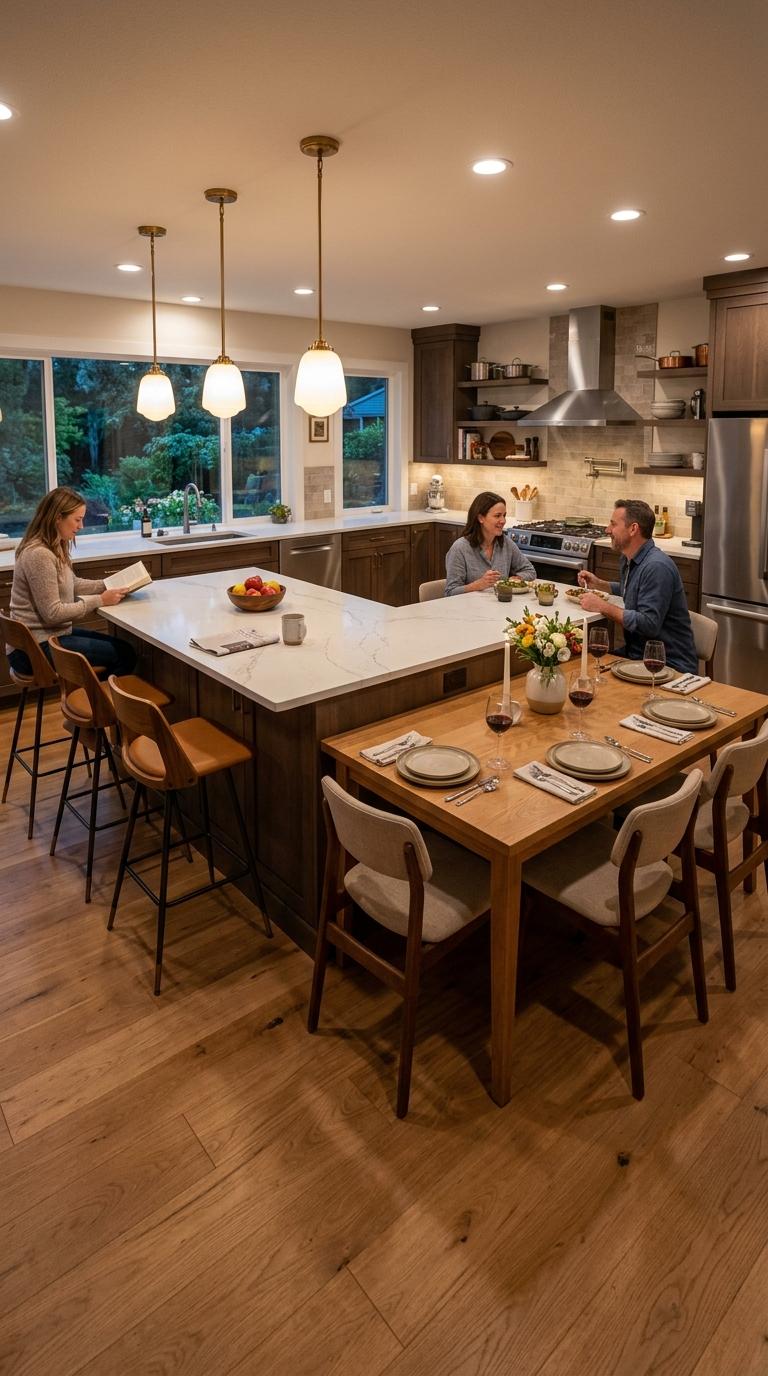
A multi-level island that provides both a casual breakfast bar function and a full dining table function is the most socially comprehensive island configuration available, serving the quick morning meal, the casual lunch, and the proper family dinner all from a single island form by providing seating options at both bar height and table height within the same installation.
This configuration is typically achieved through an island form that is longer than a standard compact island, with the bar height section running along one side or one end and the table height section running along the opposite side or end. The longer island dimension necessary to accommodate both seating types requires a kitchen with sufficient floor area to maintain comfortable aisle clearance on all sides, which makes this configuration most appropriate for kitchens at the larger end of the compact category, from approximately twelve to eighteen square meters of total kitchen and dining zone area.
The social logic of providing both bar and table seating within a single island is compelling in the Indian domestic context where the distinction between formal and informal dining occasions is significant and where the kitchen island is expected to serve both with equal grace. The breakfast bar serves the daily quick meals of the working week and the casual after-school snacks that become the social hub of the household in the afternoon. The table height section serves the extended family meals of the weekend and the formal dining occasions when seating at a proper height communicates the intention of the occasion in a way that bar seating never quite does.
8. Modular and Reconfigurable Multi-Level Systems
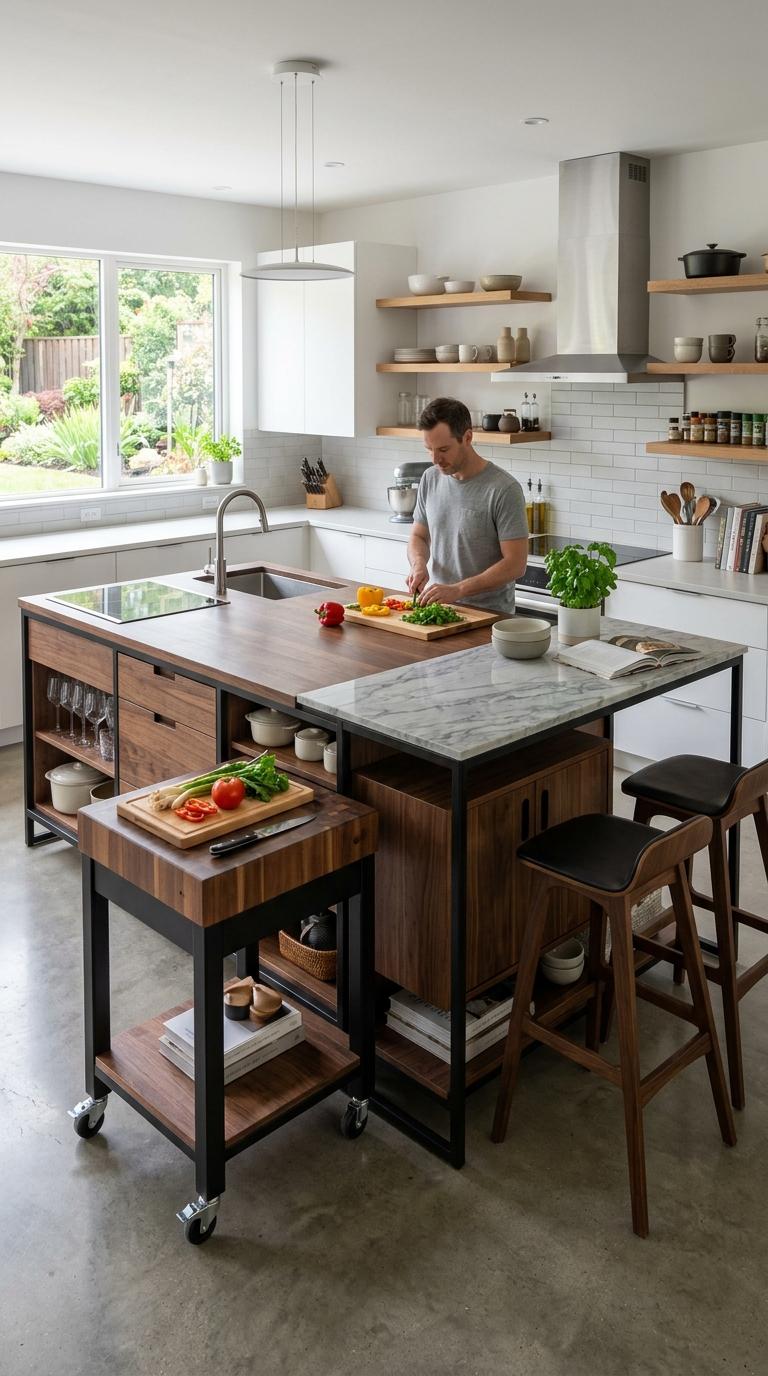
A modular multi-level island system uses separately configurable components that can be arranged and rearranged to create different height configurations and different spatial relationships depending on the current requirements of the kitchen and dining zone. The working counter module, the dining extension module, the storage base module, and the bar height section are each independently designed components that connect to each other through a standard connection system, allowing the overall island form to be modified over time as needs change.
This modularity is particularly relevant to the compact Indian urban home where the kitchen and dining requirements of the household change significantly over time, from the compact, efficient configuration required by a young working couple to the more generous, more family-oriented configuration required when children arrive, and potentially to a smaller, more focused configuration again when the household reduces in size. A modular island system that can be reconfigured rather than replaced accommodates these changing needs without the cost and disruption of a full kitchen renovation every time the household’s requirements shift.
The most practically useful modular multi-level systems available in India are those that use a consistent material palette and a consistent structural logic across all components, so that any combination of modules creates a visually coherent island form rather than a collection of mismatched pieces. Light wood modules with a stone counter surface, consistent hardware across all components, and a structural frame that maintains the same visual profile regardless of the configuration selected, creates a modular system with the design quality of a bespoke installation and the functional flexibility of a reconfigurable furniture system.
9. Multi-Level Island with Built-In Storage at Every Height
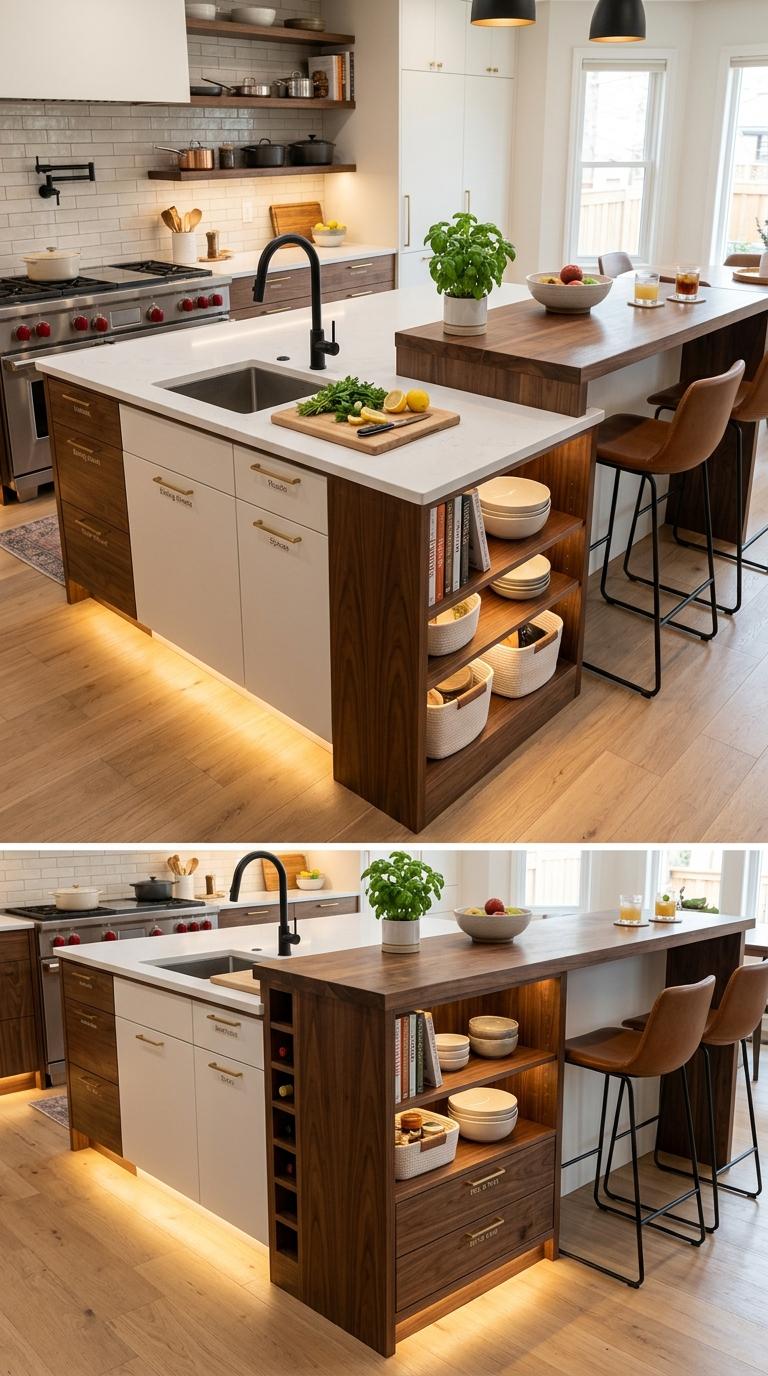
The most storage-efficient multi-level island design treats every level of the island’s profile as an opportunity for dedicated storage calibrated to the items most frequently used at that height and in that zone of the kitchen. The working counter level has below-counter storage for preparation equipment and cooking tools. The raised bar section has storage within its raised base for the items needed at the dining and social zone. The lower baking level, if present, has below-surface storage for the baking equipment and ingredients used at that level.
This height-specific storage philosophy is a direct application of the ergonomic principle that the items used most frequently in any activity should be stored at the height and position from which they are most naturally retrieved during that activity. Chopping boards stored immediately below the preparation surface rather than in a cabinet across the kitchen. Bar glasses and coasters stored within the raised bar section rather than in a cabinet above the counter. Baking trays and rolling pins stored immediately below the baking level rather than in a tall cabinet at the end of the kitchen.
The visual and functional result of this storage philosophy in a multi-level island is an island that works harder per square centimeter of its footprint than any other storage configuration in the kitchen, and that makes the items it stores genuinely accessible in the flow of cooking and dining rather than technically accessible in the sense of being somewhere in the kitchen but requiring a separate trip to retrieve.
10. Natural Material Multi-Level Island for Indian Homes
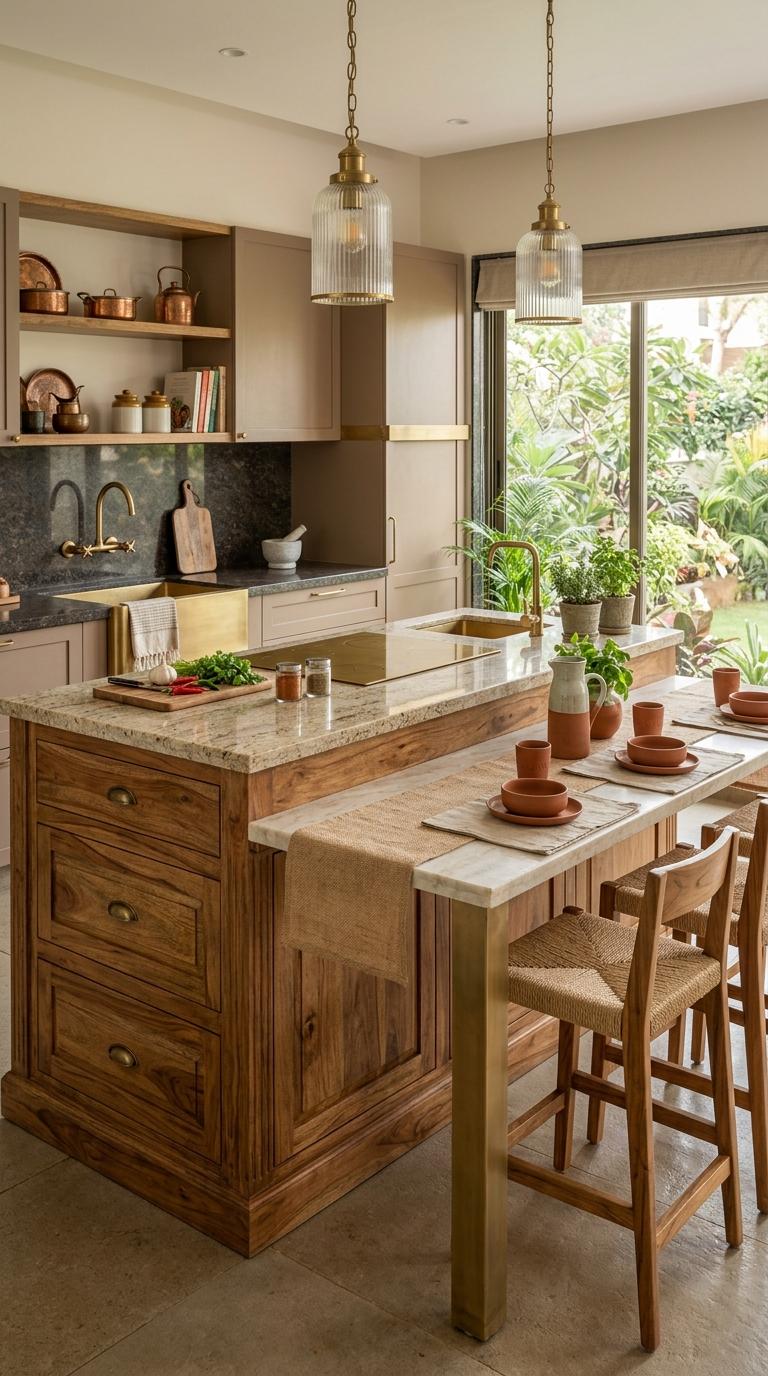
The material selection for a multi-level island with integrated dining in an Indian home context should reflect both the functional demands of the Indian kitchen and the aesthetic direction of contemporary Indian interior design, which in 2026 is moving toward natural materials, warm earthy tones, and the integration of craft traditions into contemporary design forms.
A multi-level island with a sheesham or teak wood base in a natural oil finish, a working counter surface in honed Indian granite or quartzite, a dining extension surface in warm travertine or a lighter stone that creates a tonal shift between the working and dining zones, and brass hardware throughout creates an island of extraordinary material richness and warmth that is simultaneously deeply rooted in Indian craft traditions and completely contemporary in its form and function.
The contrast between the working counter material and the dining surface material is one of the most effective design strategies available in a multi-level island because it reinforces the visual distinction between the two zones through material language as well as height difference. A dark, cool stone on the working side communicates practicality and durability. A lighter, warmer stone or a warm wood surface on the dining side communicates welcome and comfort. Together they create an island whose material narrative tells the story of its two identities, the working kitchen object and the social dining surface, in the most direct and most beautiful way available.
Designing the Multi-Level Island for Your Kitchen
The multi-level island with integrated dining is a kitchen and dining solution of genuine design intelligence, and like all genuinely intelligent design solutions it rewards the investment of careful thought at the planning stage with a result that performs better in daily use than any amount of expensive material and skilled construction applied to a poorly conceived plan could achieve.
The planning of a multi-level island begins with an honest spatial analysis of the available kitchen floor area and the aisle clearances that the island must maintain. It continues with a clear articulation of the specific activities that the island needs to serve and the heights at which those activities are best performed. It includes a careful consideration of the material palette that best serves both the working and the dining identities of the island. And it concludes with the design of the structural and storage systems that make the island function with the efficiency and the precision that its ambitious brief demands.
An Island That Serves Every Moment of Kitchen and Dining Life
A well-designed multi-level kitchen island with integrated dining does something that no other single piece of kitchen furniture achieves. It creates a space where cooking and dining, working and socializing, the preparation of food and the sharing of it, all happen in the same place with equal quality and equal comfort. It is the spatial expression of the belief that the kitchen is not a service room hidden from the social life of the home but the place where that social life is most fully and most warmly expressed, and it is the design form that most completely honors the Indian domestic tradition of the kitchen as the center of family life.

Aarav Sharma is a passionate home and lifestyle writer. He loves exploring kitchen design, home decoration, and interior styling. With a keen eye for beautiful details and practical design ideas. Aarav Sharma shares inspiration to help readers create comfortable and functional living spaces.