
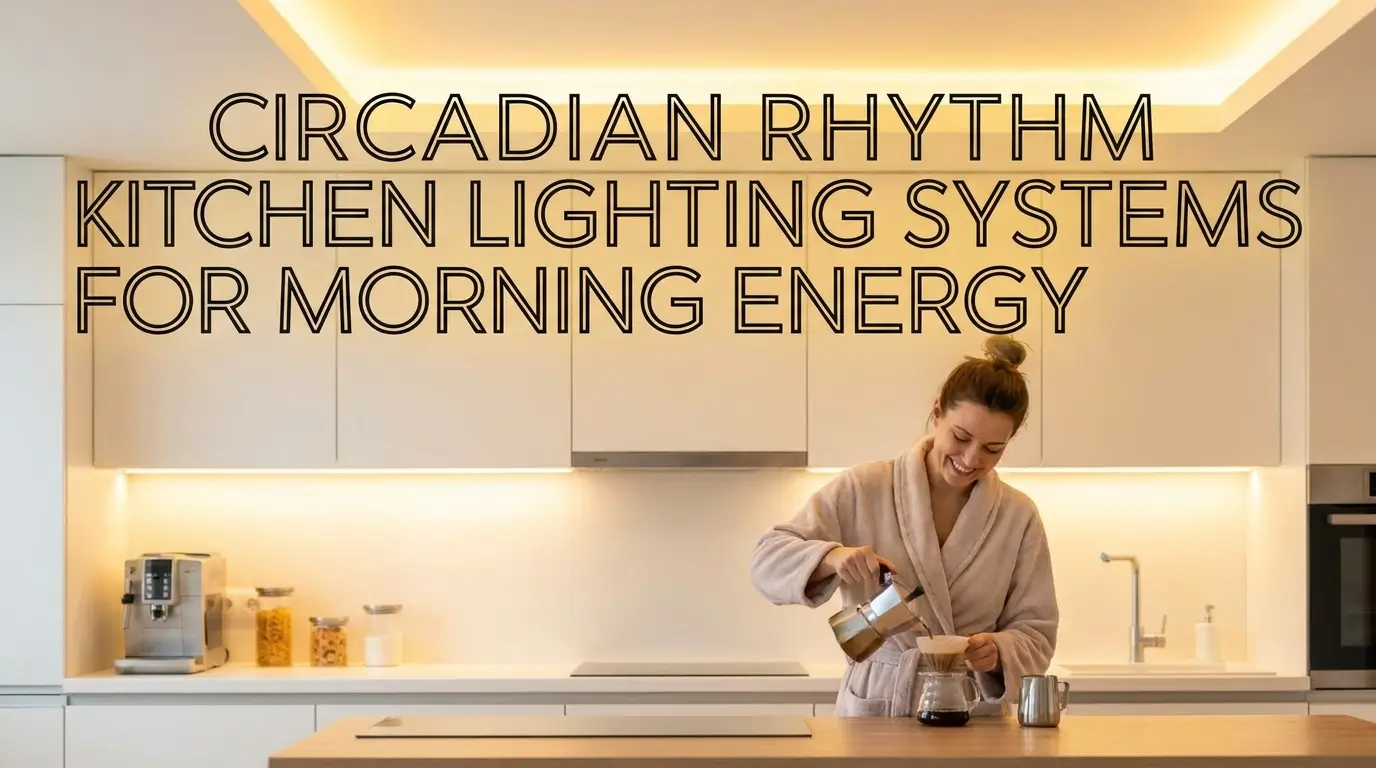
The kitchen is the first room most people enter in the morning. The room where the day genuinely begins. The first conscious decision of the working day is made there in the kitchen, and the quality of the environment in that kitchen during the first thirty to sixty minutes of the morning has a measurable effect. Most people have some intuition about this without being able to name its mechanism precisely. The kitchen that feels good in the morning, that is bright and clear and energizing. The difference is not imaginary. It is biological, and the science that explains it is both well established and increasingly accessible.
The human circadian rhythm is the body’s internal twenty-four-hour clock, a biological timing system. Light is the powerful external cue for synchronizing this internal clock. Morning light signals the brain to suppress the sleep hormone melatonin. It acts as a natural shot of caffeine, waking up the body.
The problem for most people living in urban Indian apartments is that the kitchen’s artificial lighting system is rarely designed to provide this biological morning signal. Standard residential LED systems fixed between 4000K and 5000K regardless of time or biological need deliver a constant photic signal that misaligns with human circadian physiology. Circadian rhythm kitchen lighting systems are the design response to this problem. In 2026, they represent practical, impactful, and scientifically grounded investments available in kitchen renovation.
Circadian Rhythm Kitchen Lighting System Ideas for Morning Energy
1. Understanding the Kelvin Scale for Kitchen Circadian Lighting
Before any specific lighting product is chosen for a kitchen circadian upgrade, the concept of color temperature and its biological effects needs to be clearly understood. Because it is the parameter that determines what lighting system supports. Color temperature is measured in Kelvin and describes the warmth or coolness of a light source. Lower Kelvin values produce warmer light, and higher Kelvin values produce cooler, bluer light.
For a properly functioning circadian kitchen lighting system, the morning window(6-9) calls for 6500K cool white light at full brightness. This mimics the blue hour of the natural morning sky. This is a dramatically different color temperature from the warm 2700K to 3000K lighting. The difference in biological effect between the two is correspondingly dramatic. The 2700K warm light is actively counterproductive in the morning because it fails to provide the blue wavelength.
Studies have shown that exposure to cooler light during the day and warmer light in the evening can help regulate circadian rhythms. This improves sleep quality. Brighter, cooler light in the morning promotes alertness. Softer, warmer light in the evening supports relaxation. A kitchen lighting system that automatically delivers these transitions is the practical expression of this research in a domestic context. The technology to achieve it is available in India at accessible price points.
2. Tunable White LED Systems as the Foundation
The technology that makes circadian kitchen lighting practically achievable in a domestic context is tunable white LED, a lighting system that uses two or more channels of LED chips, one warm and one cool, that can be blended in varying proportions to produce any color temperature across the range from warm residential amber to cool daylight blue. Standard tunable white systems use two channels of LEDs, one warm and one cool, to blend light and shift the color temperature typically from 2700K to 6500K. While effective for basic circadian alignment, this two-channel system is an approximation of natural light.
For a kitchen where circadian morning energy is the primary design goal, a tunable white system installed in the ceiling fixtures, under-cabinet strip lights, and any recessed downlights creates a comprehensive lighting environment that can be programmed to shift from warm, low-intensity amber in the pre-morning hour to full-intensity cool daylight at the time the morning routine begins. The shift does not need to be instantaneous. A gradual transition over fifteen to thirty minutes mimics the natural progression of sunrise more accurately than a sudden switch and is more comfortable to experience while transitioning from sleep to waking.
To use circadian lighting effectively in the kitchen, the system should be set to bright cool-white task lighting for morning meal prep to boost alertness, then automate a shift to a dimmer warmer under-cabinet glow after dinner to gently signal that the day is winding down. This automated daily cycle, set once and running consistently without manual intervention, creates a kitchen lighting environment that actively supports the body’s biological rhythms rather than working against them, which is the core value proposition of a properly designed circadian kitchen lighting system.
3. Under-Cabinet Circadian Strip Lighting

Under-cabinet LED strip lighting is the most practically accessible and most immediately impactful circadian kitchen lighting upgrade available because it is the lighting closest to the primary work surface, it provides the most focused and direct illumination for morning kitchen tasks, and it is the most straightforward category of kitchen lighting to upgrade independently without rewiring the ceiling fixtures.
Tunable white LED strip lights installed under every upper cabinet section, positioned toward the front of the cabinet underside to direct light across the full depth of the counter surface, create a layer of task illumination that transitions from warm amber in the pre-dawn hour to cool daylight at the beginning of the morning routine. The counter surface, which is where the morning’s first tasks happen-, cutting fruit, preparing breakfast, making chai- is the area of the kitchen most directly and most consistently in the visual field during the morning routine, and having that surface illuminated with biologically appropriate cool daylight light is the most direct way to deliver the circadian morning signal through the kitchen lighting system.
Kitchens and studies benefit specifically from daylight-spectrum lighting in the morning, with daylight-tuned lights recommended for peak focus hours from nine in the morning to one in the afternoon. Under-cabinet strips running at 5000K to 6500K during these hours deliver exactly the daylight-spectrum illumination that the research identifies as most beneficial for morning alertness and focus, directly onto the surface where morning kitchen activity happens.
Smart tunable white LED strip systems compatible with Indian smart home ecosystems, including Alexa, Google Home, and Apple HomeKit,t are available in India from brands including Syska Smart, Wipro Smart, Philips Hue Lightstrip, and Yeelight. Each of these systems allows the color temperature and brightness of the under-cabinet strips to be programmed on a daily schedule that runs automatically, delivering the correct light at the correct time without any manual adjustment required.
4. Recessed Ceiling Downlights with CCT Control
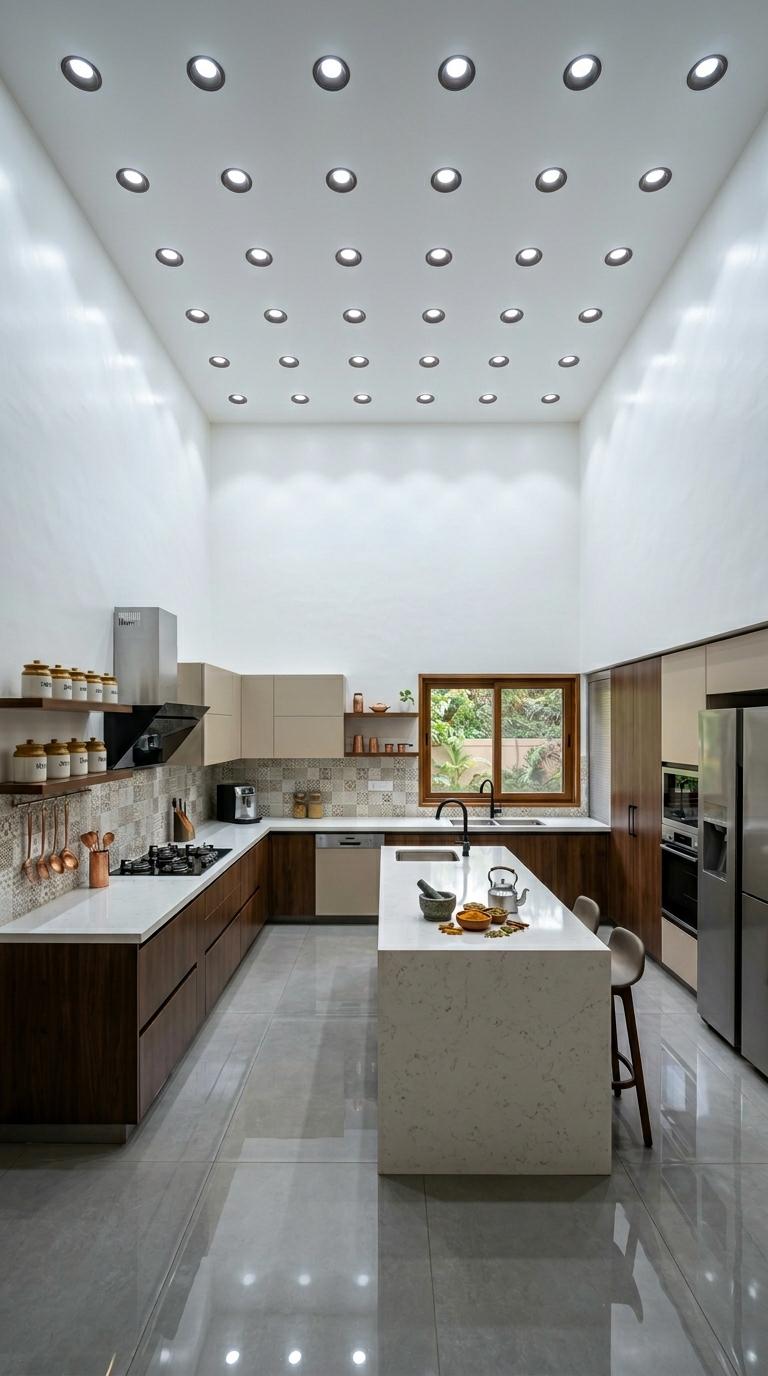
The ceiling lighting in a kitchen provides the ambient illumination layer that sets the overall brightness and color character of the space, and upgrading the ceiling downlights to color-temperature-tunable versions is the change that most comprehensively transforms the kitchen’s circadian performance because it affects the entire room rather than just the counter surface.
Tunable white recessed downlights installed in a grid arrangement across the kitchen ceiling create a complete ambient lighting system that shifts the entire kitchen environment from warm residential to bright daylight at the appropriate morning hour. The brightness and color temperature of these downlights should be controlled together as a single scene rather than independently, so that the kitchen transitions from one consistent lighting environment to another rather than having different areas of the ceiling at different color temperatures simultaneously.
For effective circadian performance, fixtures should meet a minimum CCT range of 2700K to 6500K, with dimming granularity from one to one hundred percent without flicker at the low end, and spectral power distribution that complies with established melanopic lux requirements. Products that only advertise tunable white without spectral power distribution data should be avoided, as many consumer-grade options fail to deliver the biological effect their marketing implies. This technical specification guidance is important for the Indian market where a proliferation of low-cost tunable white products may not deliver genuine circadian benefit despite their marketing claims.
The most effective recessed downlight position for morning circadian performance places lights toward the perimeter of the ceiling rather than only in the center, directing light down the cabinet fronts and walls in a wash that stimulates the ipRGC photoreceptors in the eyes more effectively than purely downward-directed light. These specialized photoreceptors, which are the eye’s primary circadian light sensors, are most responsive to light entering from above the horizontal plane of vision, which means that ceiling light directed toward the walls and reflected into the room stimulates them more strongly than the same light directed straight down at the floor.
5. Smart Lighting Scenes and Automation Scheduling
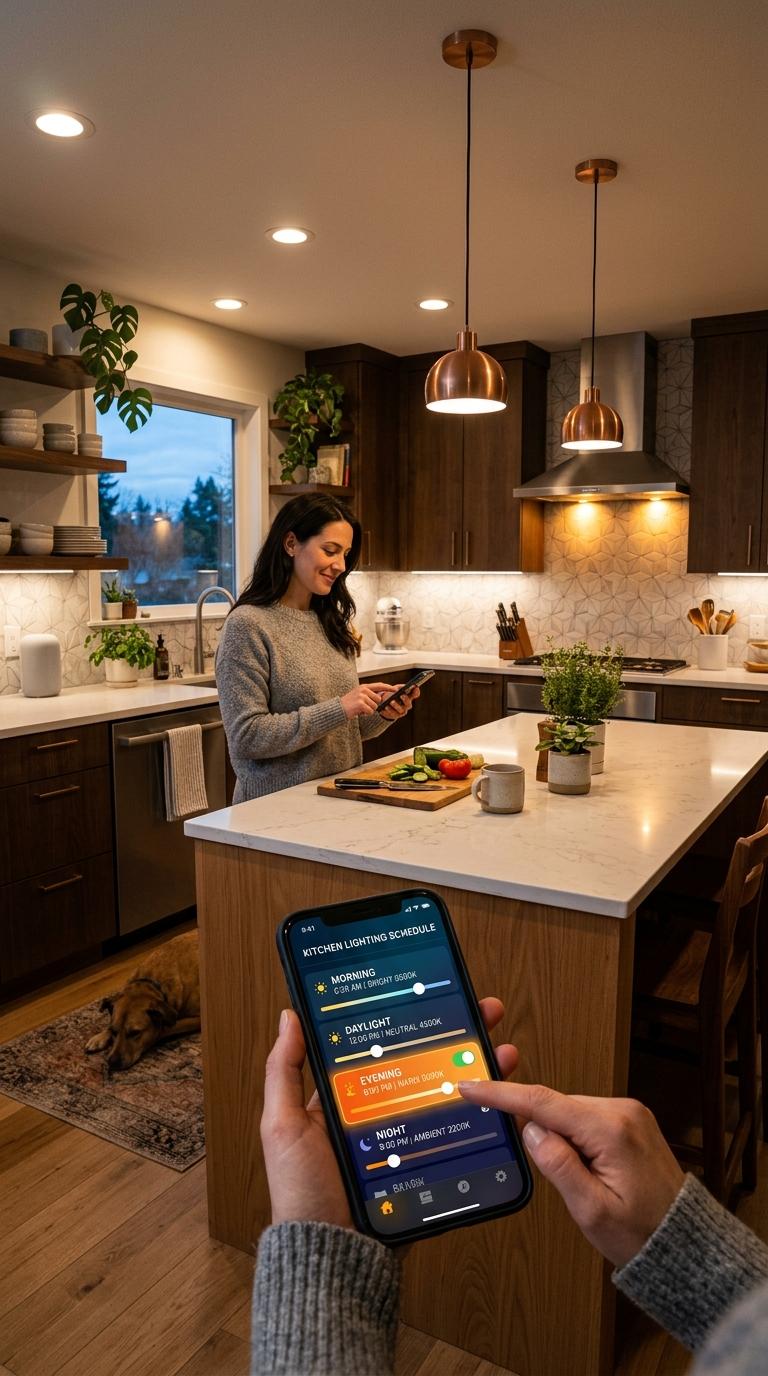
The practical value of a circadian kitchen lighting system depends almost entirely on the quality of the automation that drives it, because a system that requires manual adjustment to deliver its circadian benefits will quickly become a system that is not used as intended, as the morning routine provides neither the time nor the cognitive bandwidth to manage lighting settings before the first cup of chai has been consumed. The system must run automatically, adjusting the kitchen lighting to the appropriate color temperature and brightness for the time of day without requiring any conscious action from the kitchen’s occupant.
Kitchen and primary living areas support daily rhythms with alerting morning light that transitions to relaxed evening ambiance as the day progresses. Most people report improved evening relaxation within a few days and better morning alertness within one to two weeks of consistent circadian lighting use. The two-week timeline for full benefit is important to understand because it reflects the fact that the circadian system responds to consistent patterns of light exposure over time rather than to individual lighting events, and the automation that delivers those consistent patterns without variation is what makes the physiological benefit accumulate.
A well-designed kitchen circadian lighting automation schedule runs approximately as follows, adapted for the Indian context where the morning routine typically begins between six and eight in the morning. From five to six in the morning, a pre-dawn simulation where warm amber light at low intensity gradually brightens to prepare the kitchen for the arrival of the morning cook. From six to nine, full-intensity cool white at 5000K to 6500K providing maximum alerting light during the primary morning preparation and breakfast period. From nine to twelve, a slight softening to 4000K to 5000K that maintains alertness while reducing the intensity of the blue signal as mid-morning approaches. From twelve to four in the afternoon, a neutral 3500K to 4000K that supports continued wakefulness during the day’s working hours. From four to seven, a gradual warm shift to 3000K to 3500K that begins the evening transition. From seven onward, warm 2700K or below at reduced intensity that supports the evening wind-down and the preparation for sleep.
6. Pendant Light Circadian Integration Above the Kitchen Island
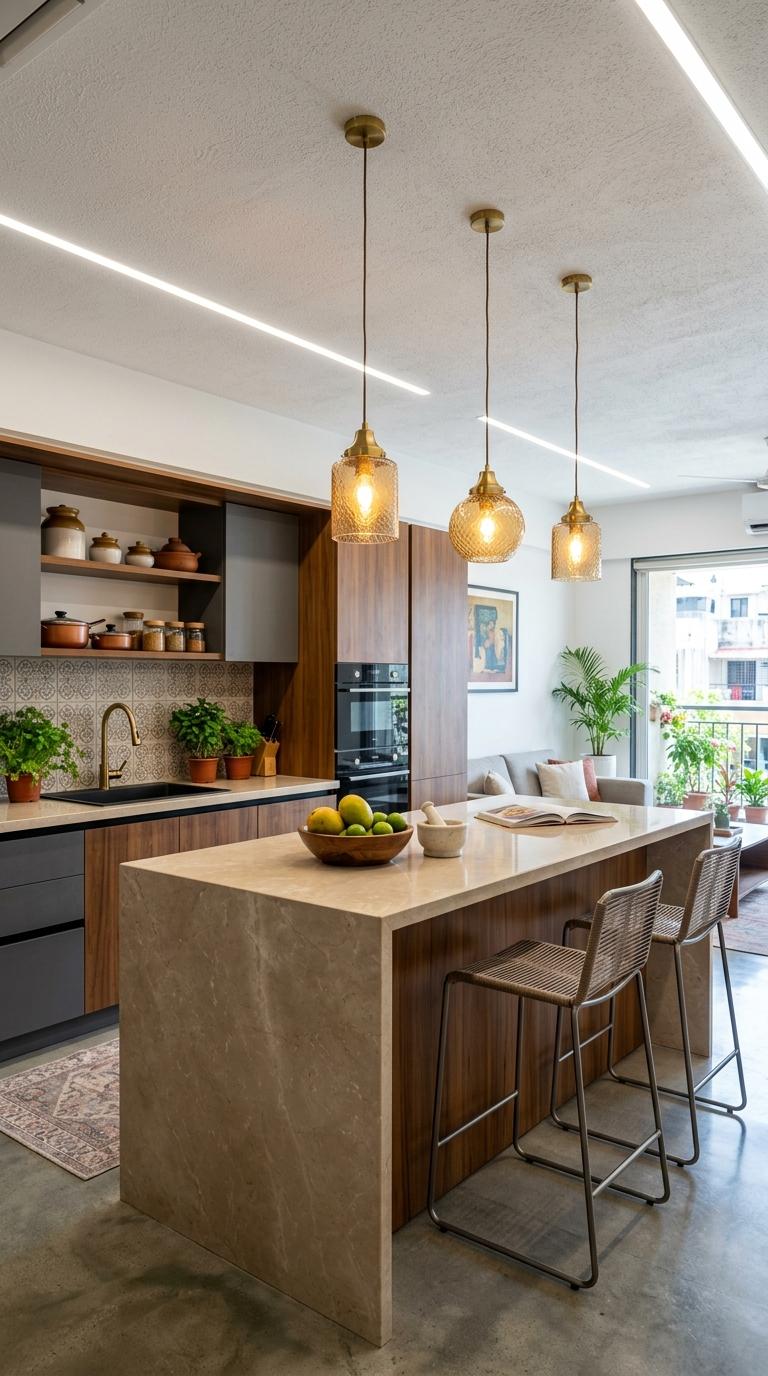
The pendant lights above the kitchen island or dining table are the most visually prominent lighting elements in most open-plan Indian kitchens, and their color temperature contribution to the overall circadian lighting environment is significant because they operate at eye level and below, in the visual field where the ipRGC photoreceptors are most directly stimulated. A pendant light fixture that delivers warm, romantic 2700K illumination throughout the morning hours while the rest of the kitchen lighting system attempts to deliver energizing 6000K coolness is a circadian contradiction that reduces the effectiveness of the overall system.
Smart pendant fixtures with integrated tunable white LED sources are available from international and Indian lighting brands and can be integrated into the same smart lighting scenes and automation schedules that control the ceiling downlights and under-cabinet strips. When all lighting layers shift together as a unified scene, the kitchen’s total circadian signal is considerably stronger than when only one lighting layer is tuned while others remain at a fixed warm temperature.
In Indian kitchens where the pendant fixtures above the island are chosen as much for their design character as their lighting performance, a practical alternative to replacing decorative pendants with smart tunable versions is to install smart tunable recessed downlights at a position that supplements the decorative pendants, directing additional cool morning light into the kitchen from a controlled source while the decorative pendants provide the aesthetic character the room requires. The decorative and the functional lighting layers serve different purposes and can coexist without the decorative layer needing to be compromised.
7. Natural Light Maximization as the Primary Circadian Tool
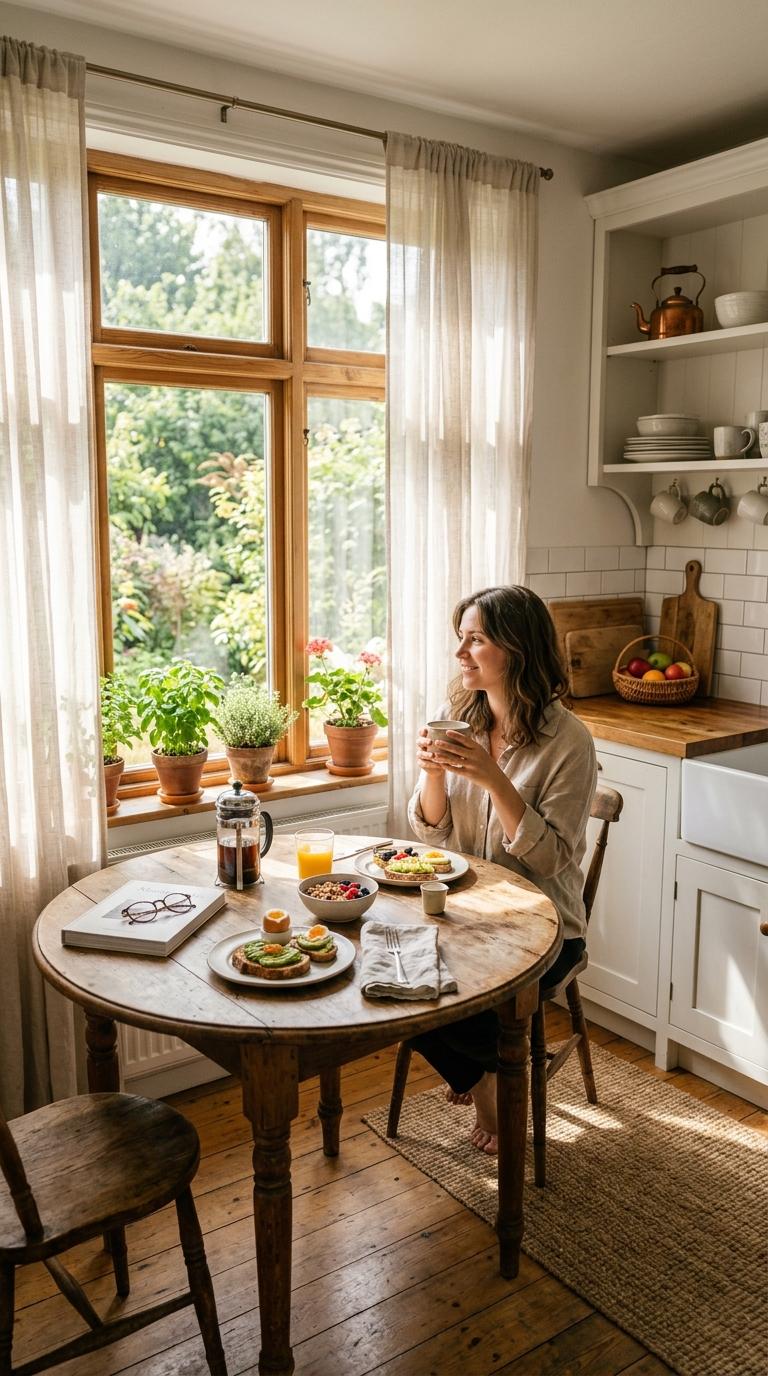
Before any artificial lighting system is considered, the most important circadian kitchen lighting strategy is the maximization of the natural light that the kitchen already receives, because natural daylight is the most biologically complete circadian signal available and no artificial system, regardless of its sophistication or its cost, replicates it with complete fidelity. If outdoor light exposure is not practical due to weather, schedule, or seasonal darkness, bright morning light therapy is therapeutically effective. Full-spectrum LED bulbs provide the complete range of visible wavelengths, including appropriate amounts of blue light that support alertness, focus, and circadian anchoring.
In an Indian kitchen with a window, the most direct circadian morning light strategy is to position the primary breakfast and preparation area as close to the window as possible and to keep the window treatment as light-permeable as possible during the morning hours. A sheer cotton curtain that admits the full intensity of the morning sun while providing partial privacy is a more effective circadian morning tool than any artificial lighting system, and it costs essentially nothing to implement.
For Indian kitchens facing east or northeast, which receive direct morning sun from sunrise through the late morning hours, this natural light alone may be sufficient for strong circadian signaling during the summer months when the sun rises early and high. For kitchens facing other directions, or in the winter months when the sun rises later and lower, the artificial circadian lighting system supplements the natural light rather than replacing it, and the two work together to provide a consistent and biologically adequate morning light signal regardless of the season or the sky conditions on any given day.
8. Light Therapy Panels as Dedicated Morning Circadian Devices
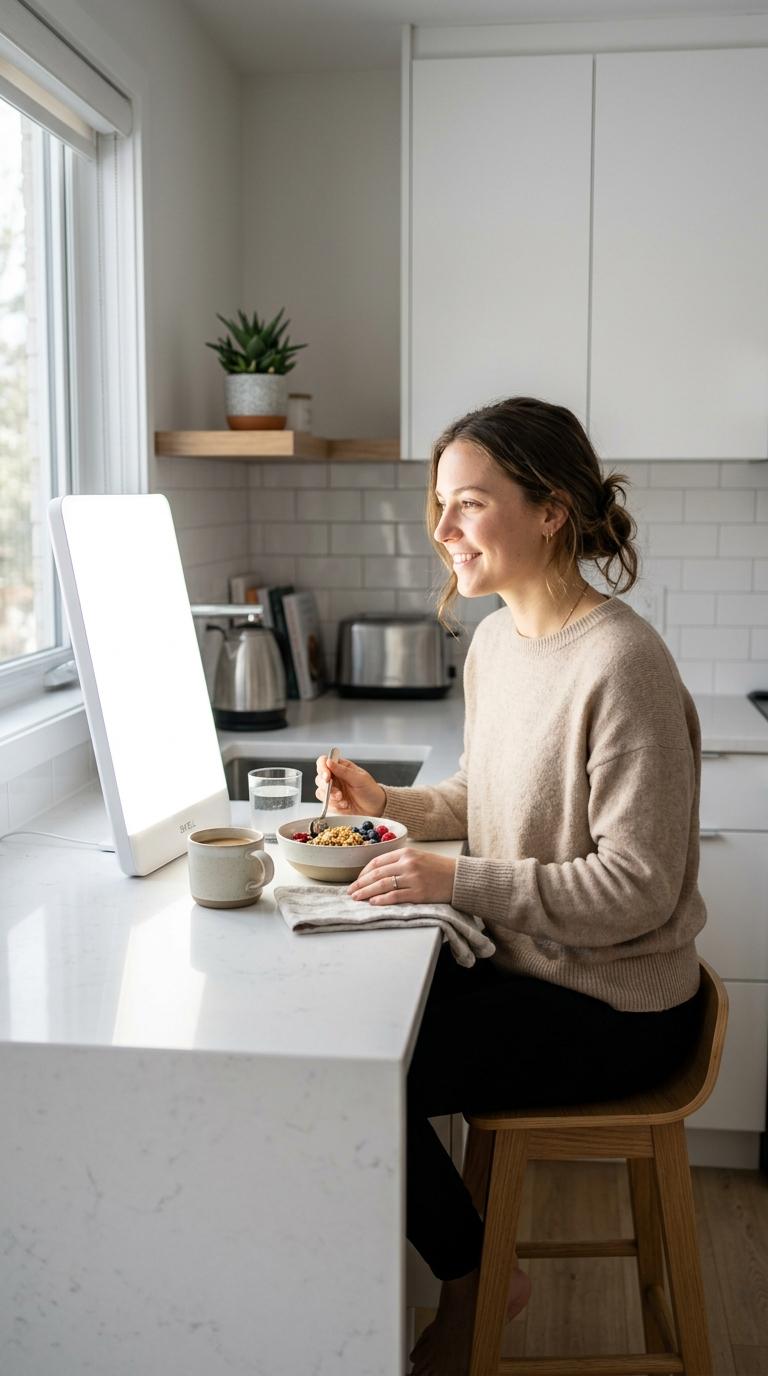
For kitchens in apartments with severely limited natural light, where the window faces an interior courtyard or another building at close range, or where the orientation of the apartment means that useful morning sunlight never reaches the kitchen, a dedicated light therapy panel positioned at the breakfast or preparation area provides the most concentrated and most clinically effective morning circadian signal available from any artificial source.
A ten-thousand-lux light therapy box used for twenty to thirty minutes during breakfast or the morning routine improves mood, alertness, and cognitive performance immediately while strengthening the overall circadian rhythm over time. For people with general difficulty waking, bright morning light therapy is therapeutically effective. A light therapy panel positioned beside the kitchen counter at eye level, used during the fifteen to twenty minutes of morning meal preparation and breakfast, delivers a concentrated dose of biologically appropriate light that has an immediate and measurable effect on morning alertness and a cumulative effect on circadian system calibration over weeks of consistent use.
Light therapy panels in the ten thousand lux range are available in India through online platforms at accessible prices, and their clinical effectiveness is among the most consistently replicated findings in sleep and circadian research. For an Indian urban kitchen dweller struggling with morning fatigue, low energy on dark winter mornings, or the general grogginess that an apartment without adequate morning light produces, a light therapy panel at the kitchen counter is the most direct and most evidence-based intervention available.
9. Advanced RGBTW Five-Channel Systems for Maximum Circadian Accuracy
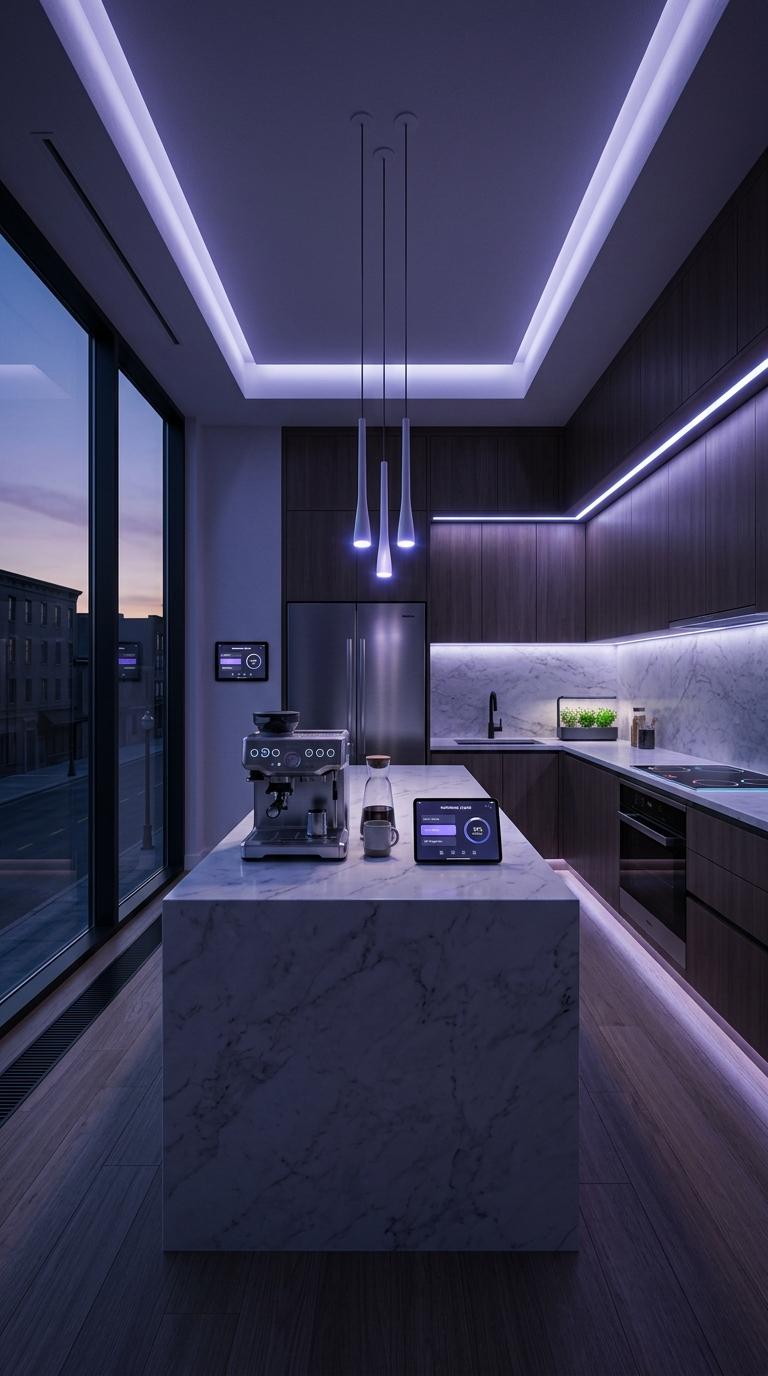
For the most technically sophisticated and most biologically accurate circadian kitchen lighting available in 2026, a five-channel RGBTW system, combining red, green, and blue channels with separate warm white and cool white channels, provides a spectral range and a color mixing precision that two-channel tunable white systems cannot match. RGBTW systems can produce a broader and more accurate color gamut, so the light not only adapts to the time of day but also renders colors more naturally. In the morning, cooler white light enhances alertness and productivity, while in the evening warmer tones reduce blue light exposure, supporting natural melatonin production.
The practical significance of RGBTW in a kitchen context is the ability to add violet wavelengths to the morning light output, which are the specific wavelengths most strongly detected by the eye’s dawn detector mechanism and most effective at triggering the cortisol release and melatonin suppression that constitute the biological morning wake signal. Standard cool white LED light at 6500K provides blue and white wavelengths but limited violet content. A five-channel RGBTW system can be programmed to add a controlled proportion of violet output to the morning lighting scene that more closely mimics the spectral composition of natural dawn light than any two-channel system can produce.
These advanced systems are currently available primarily through specialist smart home integrators and premium lighting retailers in Indian metros. Their installation is more complex, and their cost is higher than standard tunable white systems, but for a homeowner who is serious about the health benefits of circadian lighting and who wants the most biologically complete artificial morning light signal available, they represent the current state of the art.
10. Flicker-Free Technology and Eye Health in Morning Lighting
A circadian kitchen lighting system that provides biologically appropriate morning light while simultaneously producing invisible flicker at the LED driver frequency creates an ironic outcome where the health benefit of the circadian lighting is partially offset by the eye strain and fatigue that flicker-related visual stress produces over the course of an extended morning in the kitchen. Flicker-free technology protects eye health during morning focus and evening reading sessions and is a critical specification for any lighting product used in a circadian rhythm lighting system.
Flicker in LED lighting occurs when the driver that powers the LED chips does not smooth the alternating current to a consistent direct current output, allowing the light output to pulse at the frequency of the alternating current, typically fifty cycles per second in India. This pulsing is generally below the threshold of conscious perception but above the threshold of photoreceptor response, meaning the eye is responding to the flicker without the brain being aware of it, which creates a form of visual stress that manifests as headaches, eye fatigue, and difficulty concentrating after extended exposure.
When specifying tunable white LED products for a kitchen circadian system in India, flicker-free certification, either through the IEEE 1789 standard or through a flicker percentage below one percent at all dimming levels, should be a non-negotiable requirement alongside the color temperature range and dimming performance specifications. The Indian smart lighting market includes products at every quality level, and the difference between a flicker-free premium product and a cheap tunable white strip that flickers significantly at low dimming levels is not visible in a product photograph but is experienced in every morning spent under the kitchen lights.
Building a Complete Kitchen Circadian Lighting System
Getting started with circadian lighting does not mean replacing every fixture in the kitchen. Strategic implementation in key areas delivers most of the benefits without overwhelming complexity or cost, starting with the spaces where lighting most directly impacts the daily rhythm. A practical approach to building a kitchen circadian system begins with the under-cabinet strip lighting, which is the lowest-cost, highest-impact, and simplest-to-install circadian upgrade available. Once the under-cabinet system is running on an automated schedule and its morning energy benefits are being experienced consistently, the ceiling downlights can be upgraded to tunable versions and integrated into the same automation schedule. Finally, the pendant lights and any specialty lighting can be added to the system for complete circadian coherence across every lighting layer in the kitchen.
The total investment in a comprehensive kitchen circadian lighting system in India varies from a few thousand rupees for a basic tunable white under-cabinet strip with a smart controller to significantly more for a fully integrated five-channel RGBTW system with professional installation. At every price point, the return on that investment is measured in something that money cannot otherwise buy: the daily experience of a morning that begins with genuine biological energy rather than the artificial alertness of caffeine fighting against a lighting environment that is telling the body it is still time to sleep.
A Kitchen That Works With Your Biology
A circadian rhythm kitchen lighting system is one of the most genuinely health-supporting design investments available in any home, and it is one of the few interior design decisions whose benefits are measured not in aesthetics but in physiology. The kitchen that delivers biologically appropriate morning light consistently and automatically every day creates a foundation of morning energy and circadian calibration that improves sleep quality, cognitive performance, and daily mood in ways that extend far beyond the kitchen and far beyond the morning. Real luxury today is no longer about owning another designer label. It is about living in a home that quietly adapts to you, your daily rhythm, your biological needs, and your well-being. A kitchen lighting system designed around the circadian rhythm is exactly this kind of quiet, intelligent, body-centered luxury, and it is available to any kitchen in any home at any budget level when the decision is made to design the light environment with the same seriousness that the best kitchen designers bring to every other element of the space.

Aarav Sharma is a passionate home and lifestyle writer. He loves exploring kitchen design, home decoration, and interior styling. With a keen eye for beautiful details and practical design ideas. Aarav Sharma shares inspiration to help readers create comfortable and functional living spaces.