
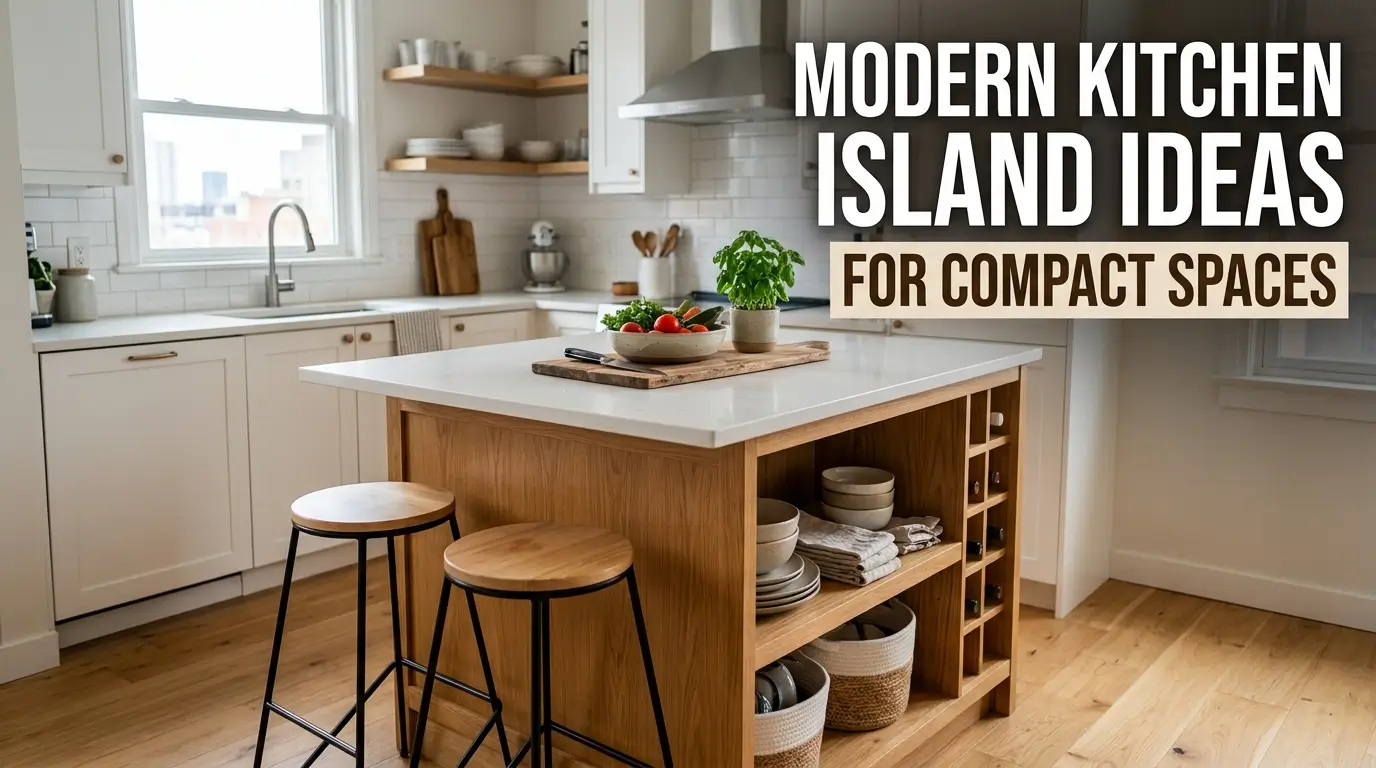
There is a particular irony in how the kitchen island became the most universally desired kitchen feature in Indian homes at precisely the moment when Indian urban apartments began consistently delivering the least space in which to put one. The rise of the open-plan kitchen in Indian apartment design, where the kitchen connects directly to the living and dining areas without a separating wall, coincided with a progressive reduction in the overall floor area of those kitchens as land costs in Indian cities pushed developers toward increasingly compact unit configurations. The result is a generation of Indian homeowners who want kitchen islands more than almost any other home feature and live in kitchens that seem to offer the least possibility of having one.
The response of modern kitchen design to this tension has been genuinely creative. The fixed, heavy, permanently positioned island of a large American or European kitchen has given way to a much broader and more flexible family of island concepts that extract the functional benefits of the traditional island, additional counter space, integrated storage, social dining function, and visual centrality, from configurations that are lighter, smaller, more adaptable, and more honest about the spatial constraints they are working within. Modern compact kitchen islands are not reduced versions of a larger concept. They are a distinct category of kitchen design that has developed its own principles, its own aesthetics, and its own design intelligence in response to the realities of urban living.
Modern Kitchen Island Ideas for Compact Spaces
1. Japandi-Inspired Minimal Island Design
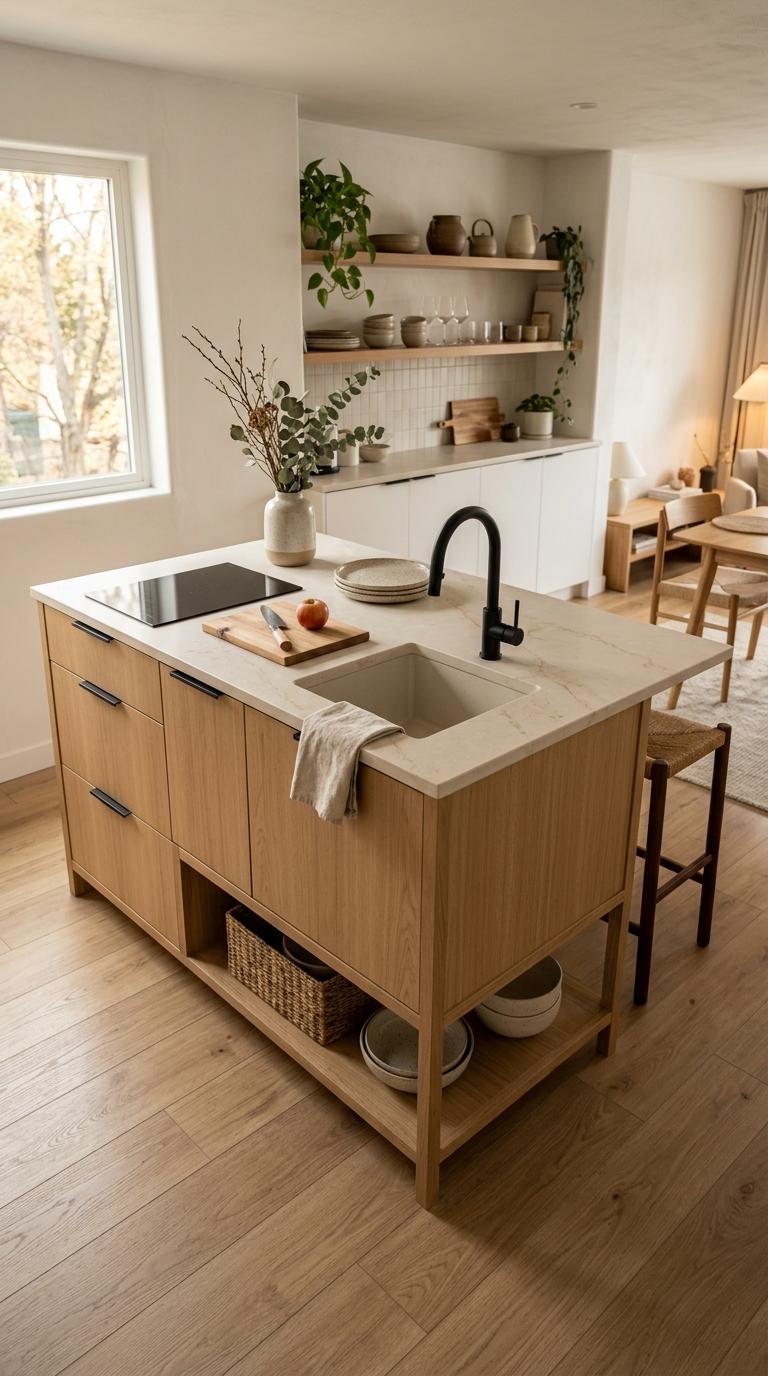
The Japandi design sensibility, which combines the functional clarity of Japanese minimalism with the warm natural material palette of Scandinavian design, is one of the most relevant and most naturally suited design frameworks for a compact kitchen island because it begins from a position of spatial honesty rather than spatial aspiration. Japandi kitchen design does not try to make a small kitchen look like a large one. It makes a small kitchen look exactly like what it is, a carefully considered, beautifully material, spatially efficient cooking environment, and finds the design richness of the space in the quality of its materials and the precision of its details rather than in its scale.
A Japandi compact island is typically a simple rectangular form in natural wood or a wood-effect finish, with clean, unornamented surfaces, minimal hardware in a matte metal finish, and a counter surface in natural stone or a stone-effect material that emphasizes the quality of the material rather than the complexity of the design. The proportions are determined entirely by what the space can accommodate without compromising the aisle clearances that a working kitchen requires, which in a Japandi framework is understood as a design constraint to be respected rather than a limitation to be worked around.
The warmth of the natural wood finish on a Japandi island, combined with the cool clarity of a stone counter and the matte precision of black or brushed brass hardware, creates a visual quality that photographs beautifully and lives even better. In a compact Indian kitchen where the island is visible from the living and dining areas of an open-plan space, a Japandi island creates a design focal point of quiet sophistication that elevates the entire visible environment without demanding attention through complexity or ornamentation.
2. Waterfall Marble Island as a Design Statement
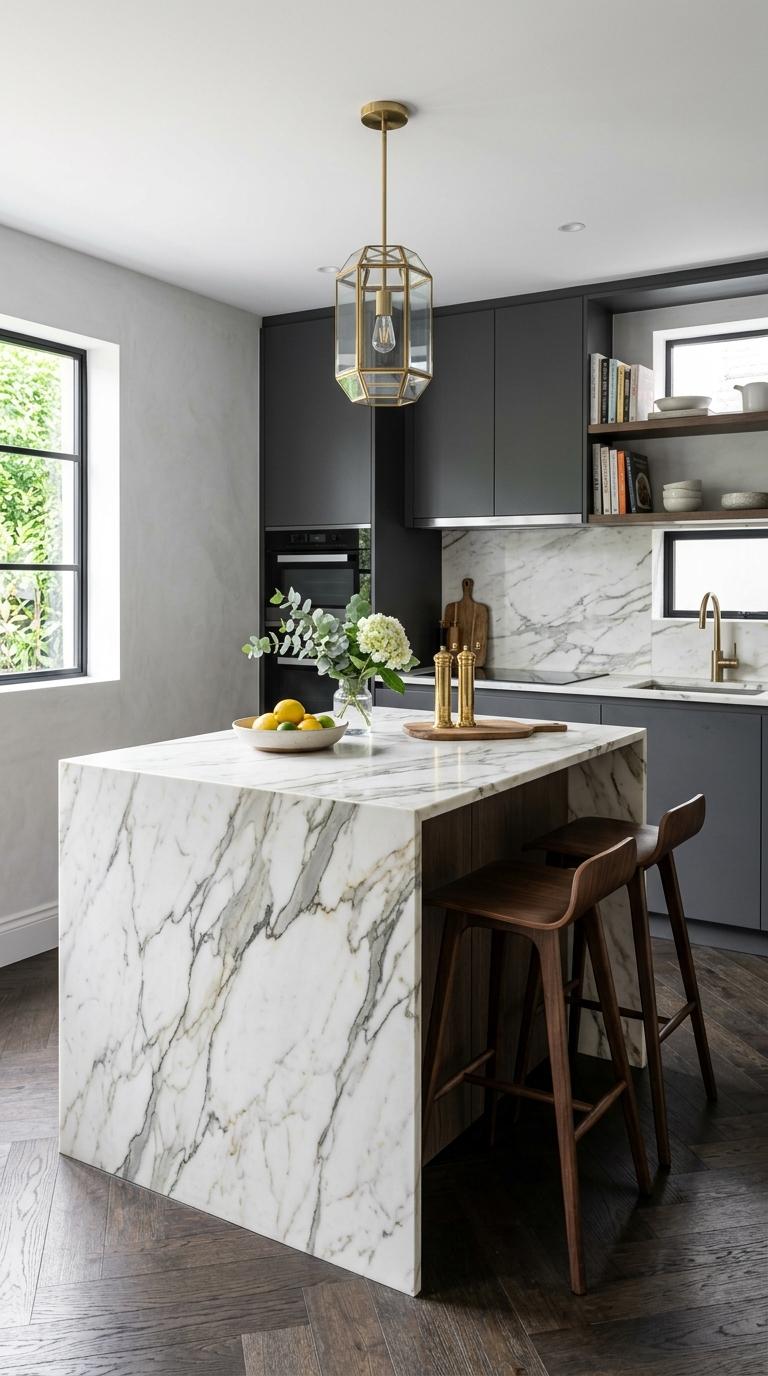
In a compact kitchen where the island is the primary design statement, the investment of a higher proportion of the renovation budget in the quality of the island surface material creates a disproportionate return in visual impact relative to what the same money would achieve spread across multiple more modest improvements. A waterfall marble island, where a marble slab continues over the counter surface and down both ends of the island to the floor in an uninterrupted vertical plane, is one of the most striking and most architecturally resolved kitchen design statements available at any scale.
The waterfall edge detail works particularly well in a compact kitchen because its visual drama is concentrated in a small footprint. A compact island with a waterfall marble edge does not require a large kitchen to look impressive. It requires a large piece of stone, which in India is genuinely accessible because the country’s extensive natural stone quarrying industry produces marble, granite, and quartzite at prices that are competitive with, and often below, the cost of the same materials in international markets.
Statuario marble with its bold grey veining, Rainforest brown marble with its dramatic organic patterning, and Carrara white with its delicate grey veining are all available in Indian stone markets and create waterfall island surfaces of extraordinary design quality. The base cabinet beneath a waterfall marble island should be kept as simple as possible, a clean painted or lacquered finish in a neutral that allows the stone to dominate, because the stone is the design statement and the base is the structure that supports it rather than a second design element competing for attention.
3. Industrial Modern Island with Open Shelving
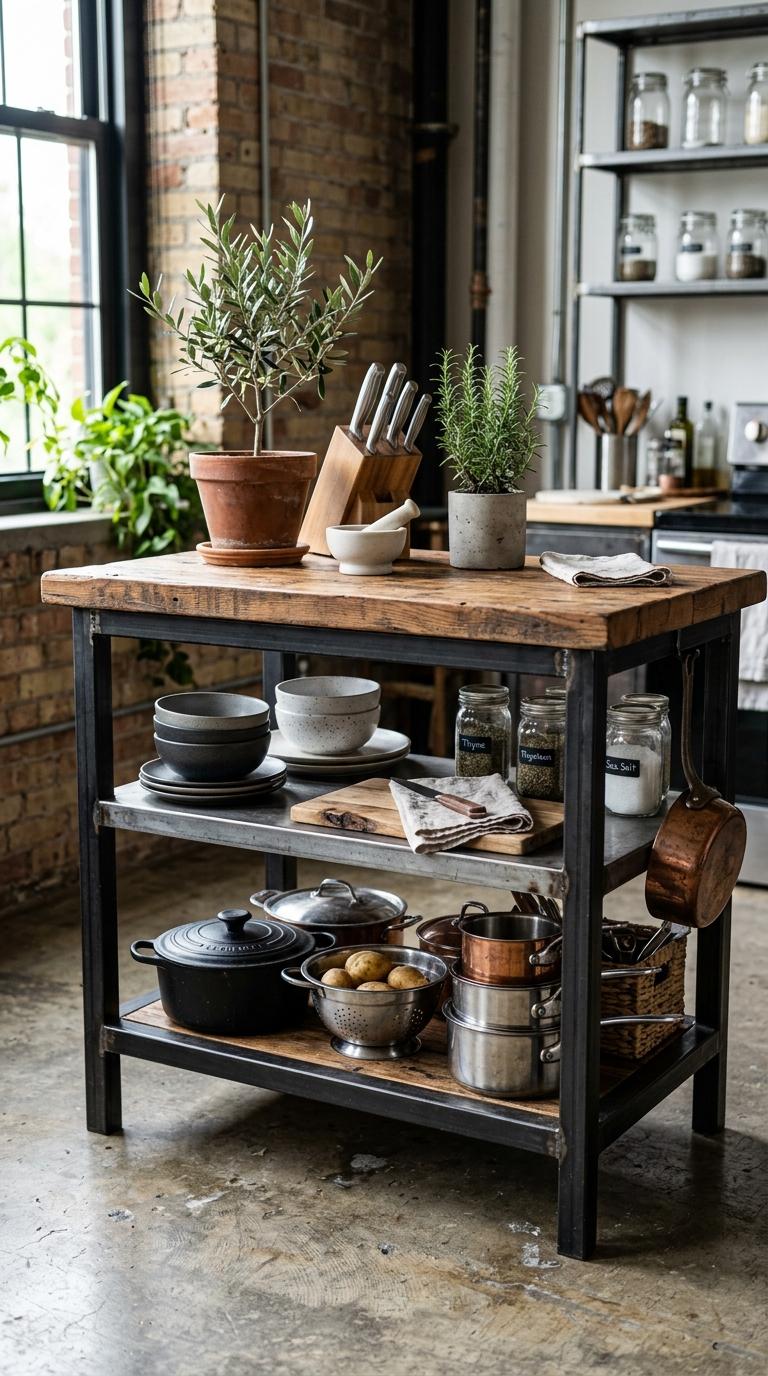
The industrial aesthetic, which draws its design language from the factories, workshops, and commercial kitchens of the twentieth century, translates exceptionally well to compact kitchen islands because its fundamental characteristics, raw materials, visible structure, and the honest expression of function, are all perfectly compatible with the spatial economy that a compact kitchen demands. An industrial modern island uses materials and details that look good precisely because they are utilitarian rather than despite it.
An industrial compact island typically features a base structure of metal or painted steel, open shelving rather than closed cabinet doors below the counter, and a counter surface of either butcher block, poured concrete, or rough-edge stone that references the working surfaces of professional kitchens. The open shelving below is one of the most spatially effective characteristics of industrial island design because it maintains the visual permeability of the island structure, allowing the eye to pass through the base of the island rather than stopping at a solid surface, which makes the compact kitchen feel less congested than a fully enclosed cabinet island of the same dimensions.
In an Indian compact kitchen context, an industrial island with open shelving styled with cast iron vessels, wooden cutting boards, a collection of copper measuring cups, and a few small plants creates a display of warmth and culinary identity that makes the kitchen feel lived-in and personal rather than showroom-fresh. The honest, unadorned quality of the industrial aesthetic is one of the most forgiving design frameworks available for a compact kitchen because it asks only that things look like what they are, which is a considerably easier standard to meet than the flawless perfection that more formal kitchen designs demand.
4. Two-Tone Color Island for Visual Interest
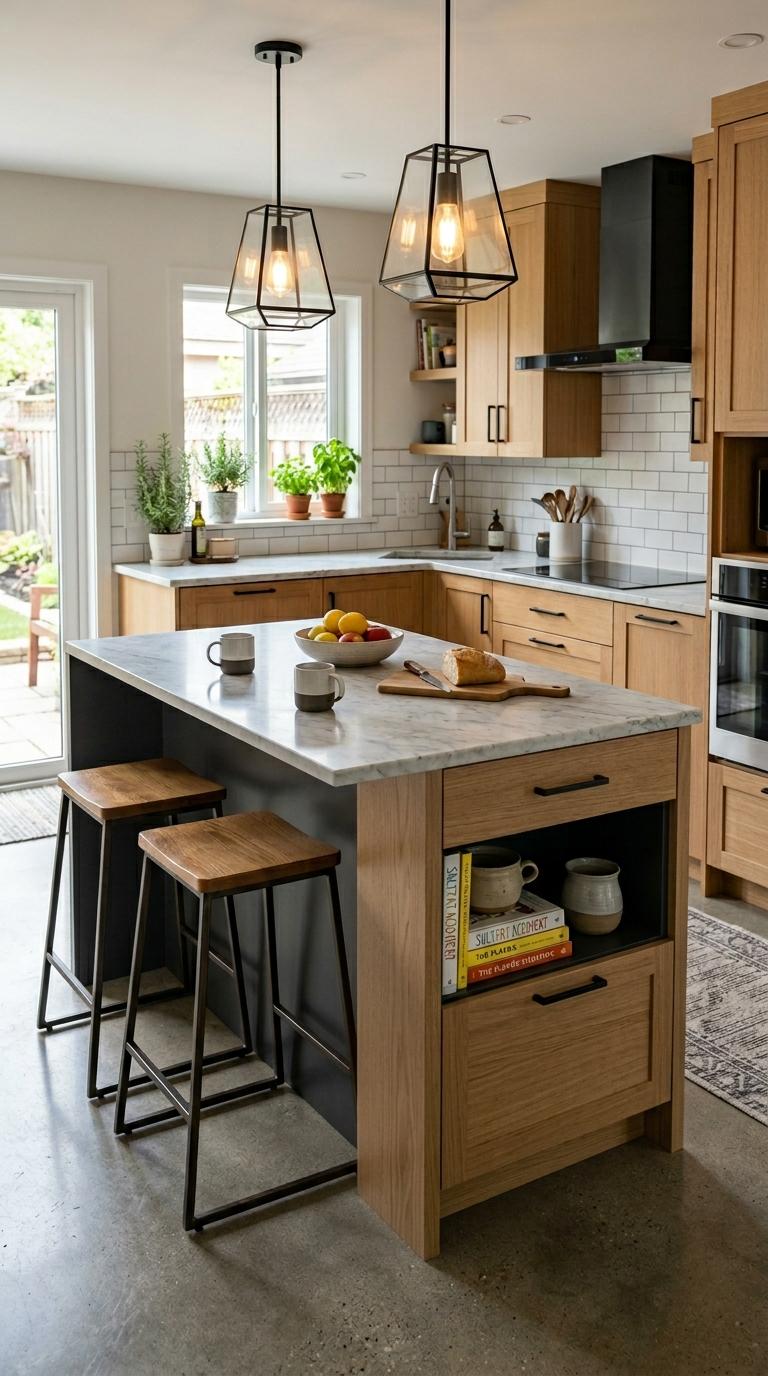
A two-tone kitchen design, where the island is finished in a different color from the surrounding perimeter cabinets, is one of the most effective modern design strategies available for a compact kitchen because it uses color rather than scale to create the visual hierarchy that distinguishes the island as a distinct and special element within the kitchen composition. The island does not need to be large to feel significant when its color makes it the clear focal point of the design.
The most effective two-tone combinations in modern compact Indian kitchen design balance the warmth and earthiness of the broader 2026 interior design palette with the clean contrast that makes the island legible as a separate design element. A navy island against cream perimeter cabinets creates a classic, deeply satisfying contrast that references the best of traditional Indian color sensibility, where deep blues and warm creams have been paired in textiles and architecture for centuries. A forest green island against white cabinets creates a more contemporary, biophilic quality that connects the kitchen to the indoor plant aesthetic increasingly present in modern Indian homes. A terracotta or burnt orange island against grey or greige cabinets creates a warm, earthy composition that feels completely current within the 2026 Indian interior design moment.
The counter material choice in a two-tone kitchen should bridge the two cabinet colors rather than introducing a third dominant color. White marble, pale granite, or light quartz connects a dark island base to lighter perimeter cabinets in a way that reads as deliberate and considered rather than coincidental. Dark stone connects a lighter island to darker design elements in the kitchen and creates a counter surface of grounding visual weight that anchors the island composition.
5. Smart Storage Modern Island
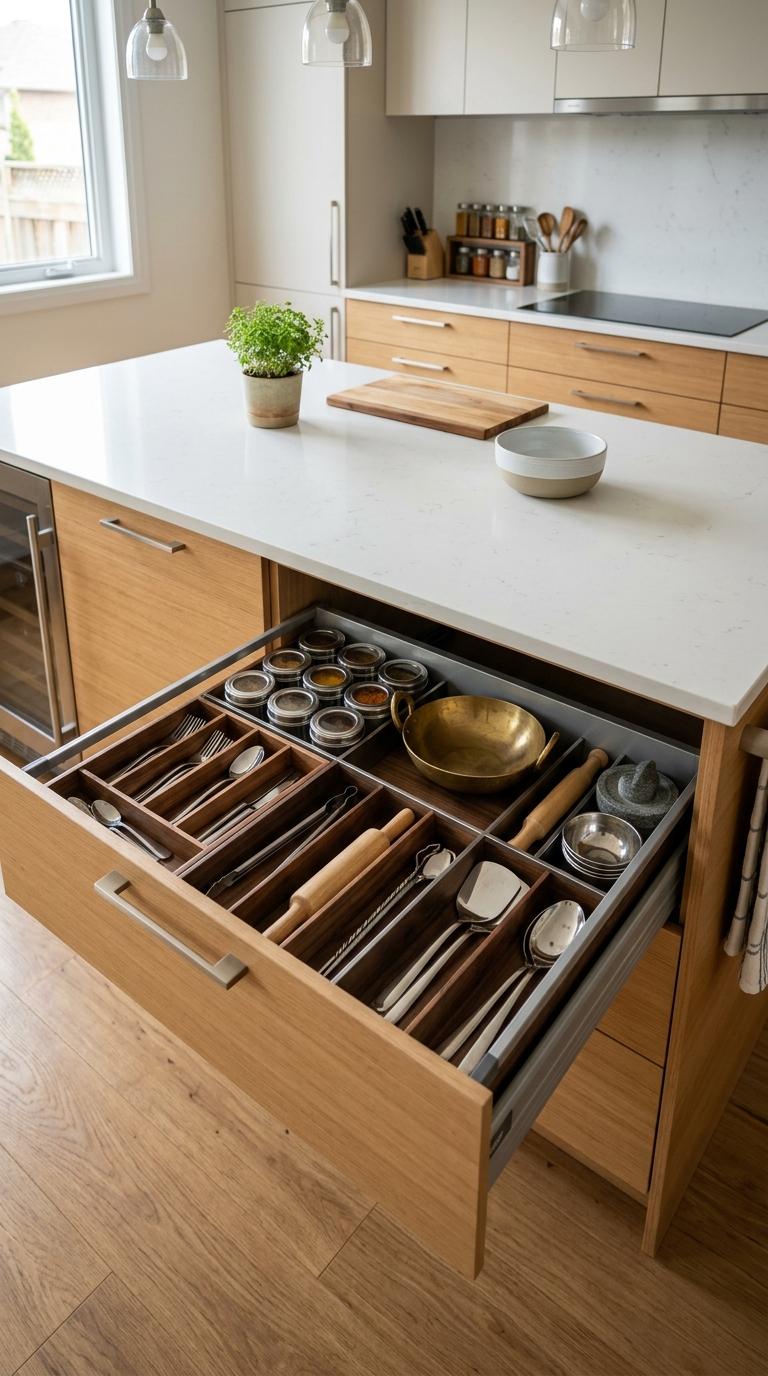
The most functionally intelligent modern compact kitchen island is one that treats its storage capacity as the primary design brief and its visual appearance as the outcome of that brief rather than a separate consideration. In a compact Indian kitchen where the storage challenge is significant and consistent, an island designed from the inside out, beginning with the specific items that need to be stored and working outward to the cabinet configuration that best accommodates them, delivers a functional return that a visually conceived island designed from the outside in rarely matches.
Modern drawer systems with internal organizers designed for specific kitchen items represent the highest evolution of compact island storage thinking. Full-extension drawer slides that allow the entire drawer to be pulled out and every item in it to be visible and accessible, combined with custom drawer inserts that hold specific items in dedicated positions, create a storage system of extraordinary efficiency. A drawer designed specifically for Indian kitchen equipment, with compartments for the pressure cooker gasket, the chakla belan, the masala dabba, and the various other uniquely Indian kitchen tools that standard Western kitchen storage systems fail to accommodate adequately, is a storage solution that only a custom or semi-custom island can provide.
Pegboard or slatted panel insides on the ends of a compact island create additional storage surfaces for hanging tools, hooks for pot handles, and small shelves for frequently accessed items that benefit from being immediately visible and accessible rather than stored in a drawer. These end panel storage surfaces use the vertical surfaces of the island that are typically left bare, converting them into functional storage without adding any floor footprint.
6. Island with Integrated Appliance Storage
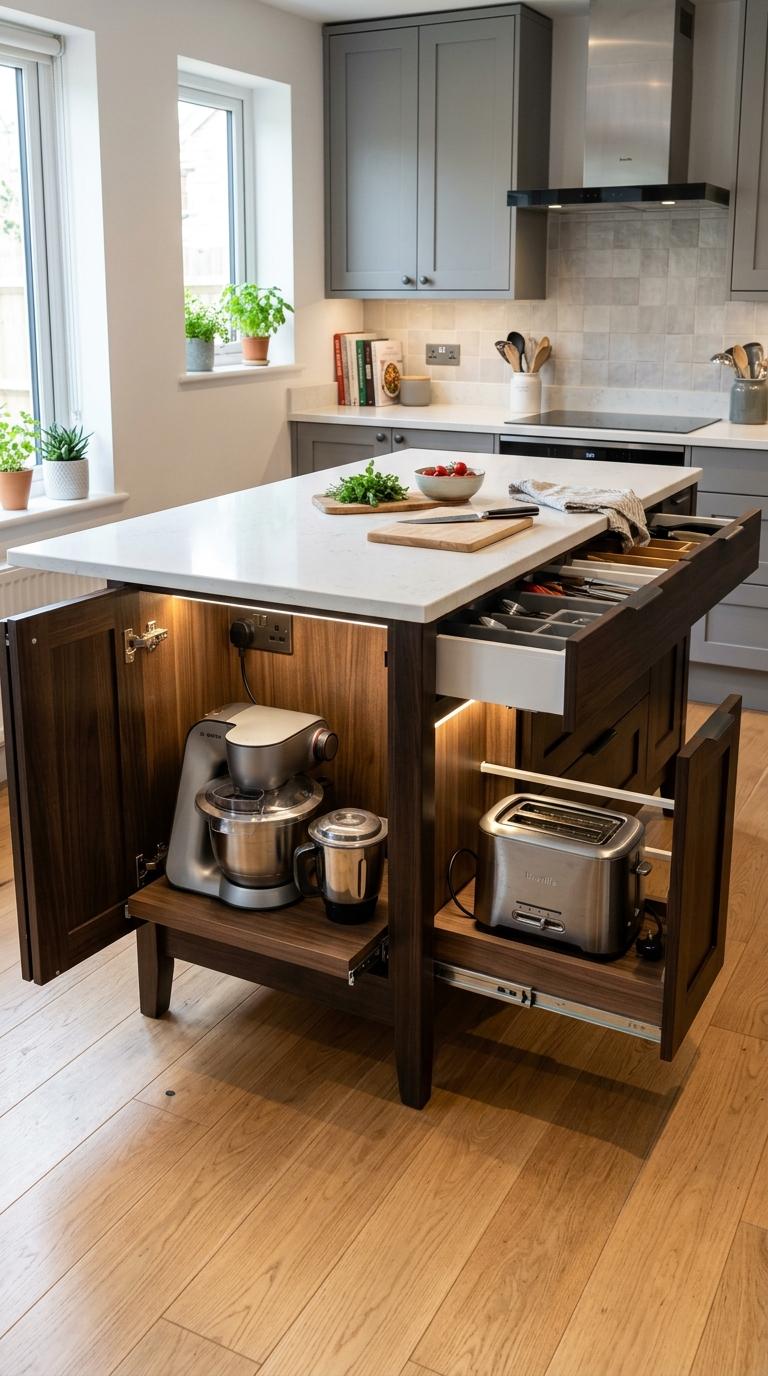
One of the most significant contributors to counter clutter in a compact Indian kitchen is the collection of small appliances, the mixer-grinder, the electric kettle, the toaster, the induction cooktop, and the various other countertop appliances that modern Indian cooking depends on, that have no dedicated storage home and therefore live permanently on the counter surface, consuming the preparation space that a compact kitchen needs most.
A modern compact island designed with dedicated appliance storage, a section of base cabinetry with appropriately sized openings, internal power sockets, and pull-out shelves or lift-up platforms that bring appliances to counter level when needed and store them below it when not in use, removes these appliances from the counter permanently and creates the clear, unobstructed preparation surface that a compact kitchen needs to function well.
The appliance garage concept, a section of upper cabinet or island base with a tambour or lift door that conceals a row of small appliances behind it when not in use and reveals them when the door is opened, is one of the most practically effective modern kitchen design solutions available for a compact Indian kitchen where appliance clutter is one of the most persistent and most visually disruptive organizational problems. The door conceals the visual chaos of multiple different appliances in a single movement, creating a clean, organized kitchen surface in seconds rather than requiring the individual stowage of each appliance.
7. Curved and Organic Form Islands
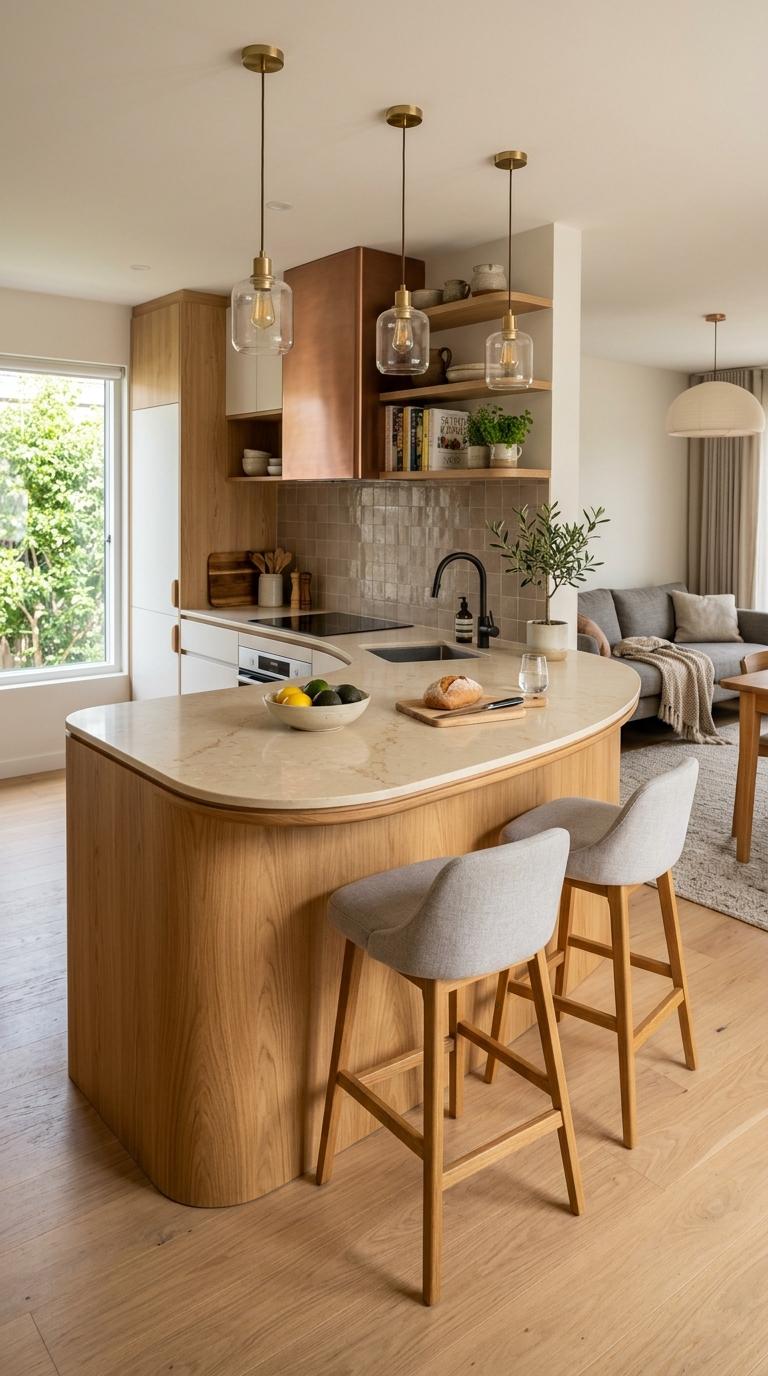
The shift in modern kitchen design toward softer, more organic shapes that is part of the broader 2026 interior design movement toward curved and rounded furniture forms has produced a genuinely interesting new category of compact kitchen island, the curved island, that deserves consideration beyond its purely aesthetic appeal. A curved or oval island in a compact kitchen creates a spatial dynamic that is fundamentally different from a rectangular island of the same footprint, and in some compact kitchen configurations that difference is spatially beneficial.
A curved island has no sharp corners projecting into the aisle space around it, which means that the effective clearance around the island feels more generous than the measured clearance because the body can pass a curved surface more comfortably than it can pass a sharp corner. In a compact kitchen where the aisle clearance is at or near the minimum comfortable width, this ergonomic advantage of curved form is a genuine functional benefit rather than merely an aesthetic one.
The visual quality of a curved island in a compact modern kitchen is one of warmth and welcome rather than the structured clarity of a rectangular form. It creates a kitchen that feels more residential and more inviting, particularly when the curved edge is on the side that faces the living and dining areas of an open-plan space, which softens the transition between the cooking environment and the living environment in a way that a sharp rectangular edge does not.
8. Multifunctional Modern Island with Tech Integration
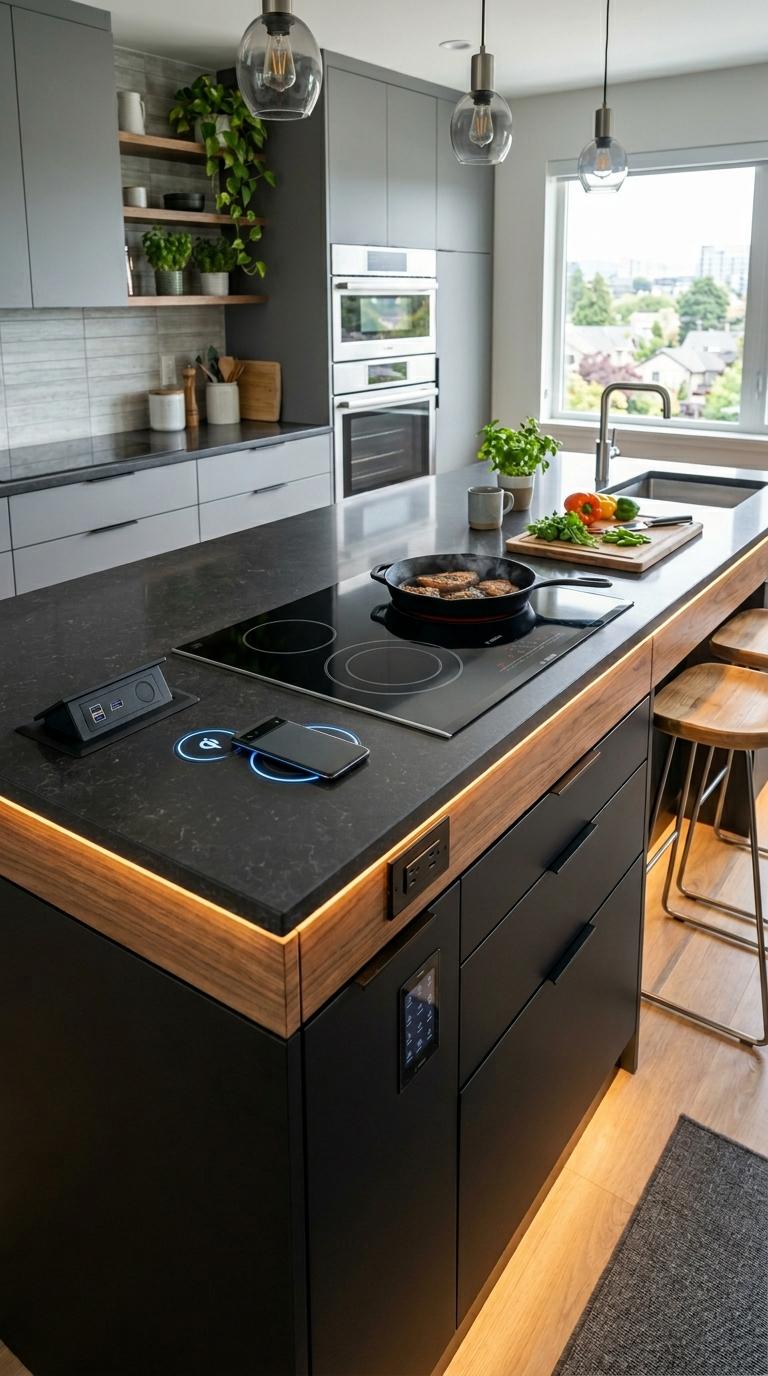
The modern compact kitchen island that integrates technology into its design in ways that reduce clutter, improve functionality, and make the island more intelligent in its daily use is increasingly available in the Indian market as smart home technology becomes more accessible and more relevant to everyday cooking. A compact island with integrated USB and standard power sockets recessed into the counter surface, wireless charging pads for phones, under-counter LED strip lighting on a smart dimmer, and a built-in Bluetooth speaker creates a kitchen island that serves the full range of activities that happen in the modern Indian kitchen, cooking, music, recipe reference, charging, and casual work, without adding any of these functions as visible clutter on the counter surface.
The integration of induction cooktop into the island counter surface is a modern kitchen design decision that transforms the island from a preparation and storage unit into a full cooking station. In a compact kitchen where the primary cooking surface is already on the perimeter counter, an integrated induction panel in the island creates a second cooking position that is valuable for complex Indian meals requiring simultaneous preparation on multiple heat sources. The island cooktop position also creates a more sociable cooking experience by facing the cook toward the living and dining areas rather than toward the kitchen wall, which changes the social dynamic of cooking in an open-plan compact home from a solitary activity to a communal one.
9. Floating Island with Visible Legs
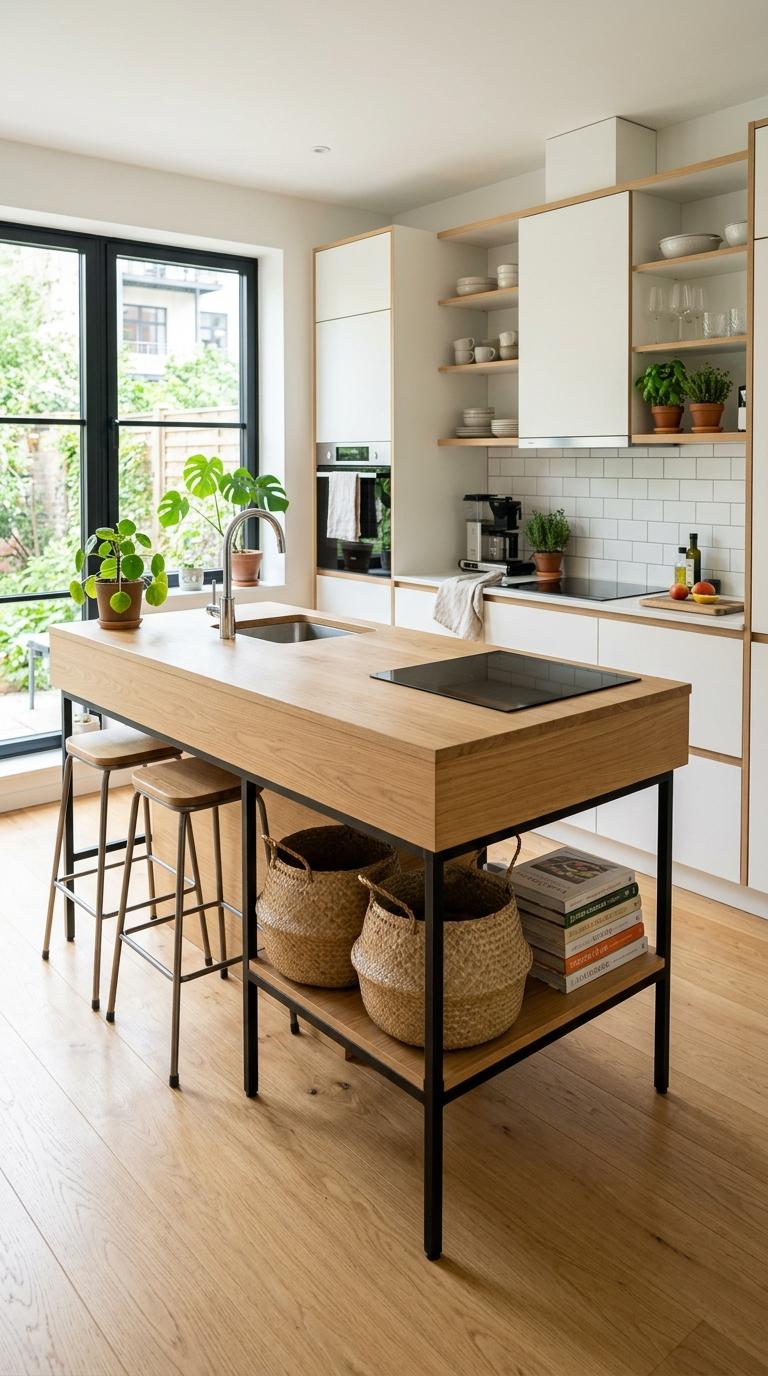
A kitchen island that sits on visible legs rather than extending as a solid base to the floor creates a visual lightness that makes a compact kitchen feel more open and more spacious than an island with a fully enclosed base of the same dimensions. The floor visible beneath a legged island extends the apparent floor area of the kitchen because the eye reads the continuous floor surface as a single uninterrupted plane rather than being stopped by the solid base of the cabinet.
The floating island aesthetic is particularly well suited to compact kitchens in Indian homes where the available floor area is limited and the priority is maintaining as much visual openness as possible while still providing the functional benefits of an island. Solid wood legs in a turned or tapered profile create an island with a warm, almost furniture-like quality that sits naturally in an open-plan kitchen-living space. Metal tube legs in a matte finish create a more industrial, more contemporary quality. Hairpin legs in powder-coated steel create a mid-century modern aesthetic that has genuine longevity in contemporary Indian interior design.
The counter overhang on a legged island can extend further than on a fully enclosed cabinet island because the structural requirements of an overhang supported by solid legs are more forgiving than those of an overhang cantilevered from a cabinet carcass. A generous overhang on a legged island, forty to fifty centimeters, provides comfortable knee clearance for bar seating without requiring the same structural complexity as achieving equivalent overhang on a cabinet-base island.
10. Island as Room Divider in Open Plan Layouts
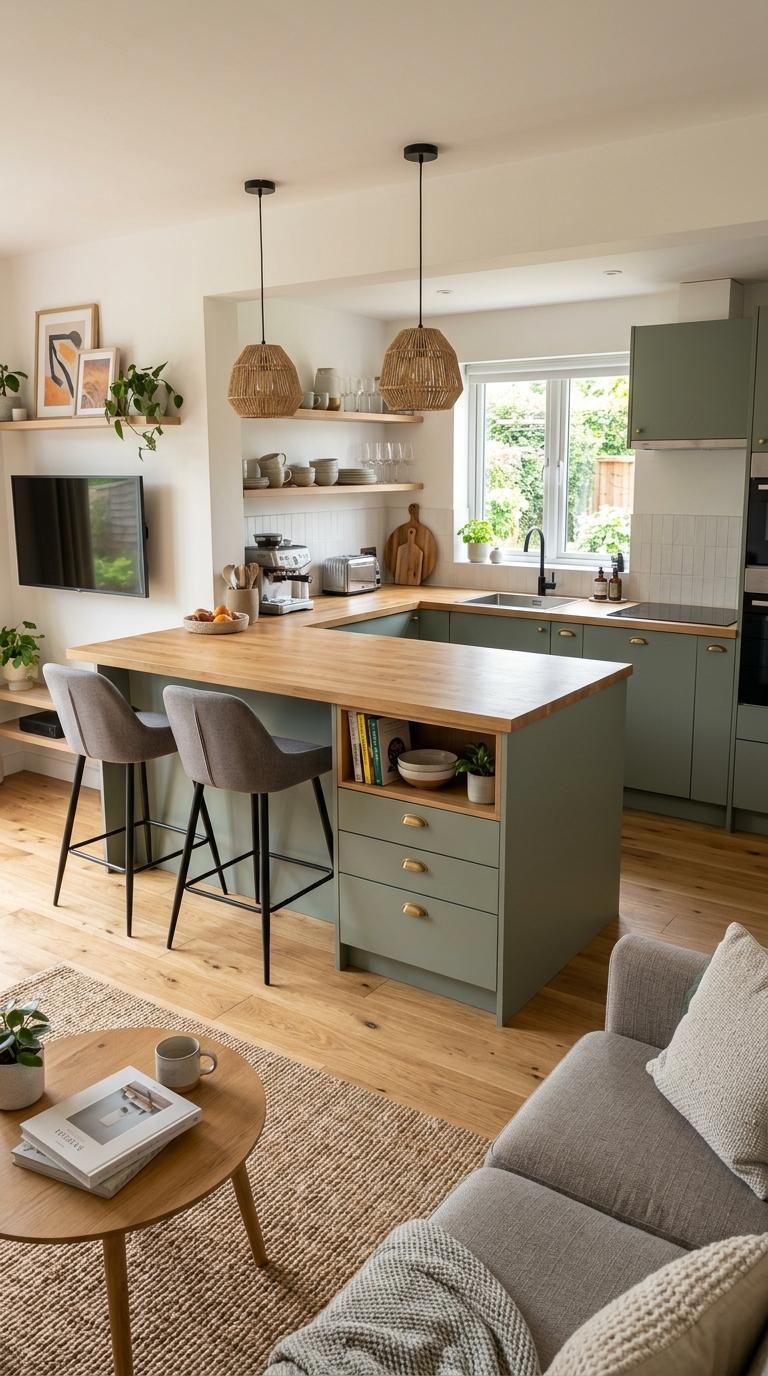
In a compact open-plan home where the kitchen opens directly into the living and dining areas, the island positioned at the boundary between the kitchen zone and the living zone serves a room dividing function in addition to its kitchen preparation and storage functions. This positioning makes the island one of the highest-value pieces of furniture in the entire home because it is doing the work of a room divider, a dining surface, a kitchen preparation counter, and a storage unit simultaneously in a single compact footprint.
An island used as a room divider should be designed with both sides of the divide in mind. The kitchen-facing side handles the preparation and storage functions with drawers, shelves, and appliance storage configured for the cooking workflow. The living-facing side handles the dining and social functions with an overhang for bar seating, a cleaner finish that suits the living area aesthetic, and perhaps open shelving styled with books, plants, and decorative objects that belongs to the living room language rather than the kitchen language.
The design of the living-facing side of a room-dividing island is one of the most interesting compact kitchen design challenges available because it requires the island to speak two design languages simultaneously, kitchen functionality on one side and living room aesthetics on the other, in a way that feels coherent from both perspectives. The counter material and the hardware finish are the elements that most effectively bridge the two functions, and choosing materials and finishes that work in both a kitchen and a living room context, warm wood, natural stone, brushed brass, matte black, is the most reliable strategy for achieving that coherence.
Getting the Island Right for Your Compact Kitchen
The modern compact kitchen island that works is the one whose configuration, size, material, and functionality have been chosen in response to the specific dimensions, layout, and cooking habits of a particular kitchen rather than in response to a general aspiration toward having an island. The spatial analysis of available floor area and required aisle clearances must come before any design decisions about style or material, because no amount of beautiful design compensates for an island that makes the kitchen harder to work in. Within the space that the spatial analysis identifies as available, the design decisions about form, material, color, and functional configuration can be made with genuine creative freedom because they are being made within a framework that guarantees the island will work as well as it looks. That combination, an island that works perfectly in the space it occupies and looks exactly right in the kitchen it belongs to, is the standard that modern compact kitchen island design is capable of meeting, and it is the standard worth holding every island decision to.

Aarav Sharma is a passionate home and lifestyle writer. He loves exploring kitchen design, home decoration, and interior styling. With a keen eye for beautiful details and practical design ideas. Aarav Sharma shares inspiration to help readers create comfortable and functional living spaces.