
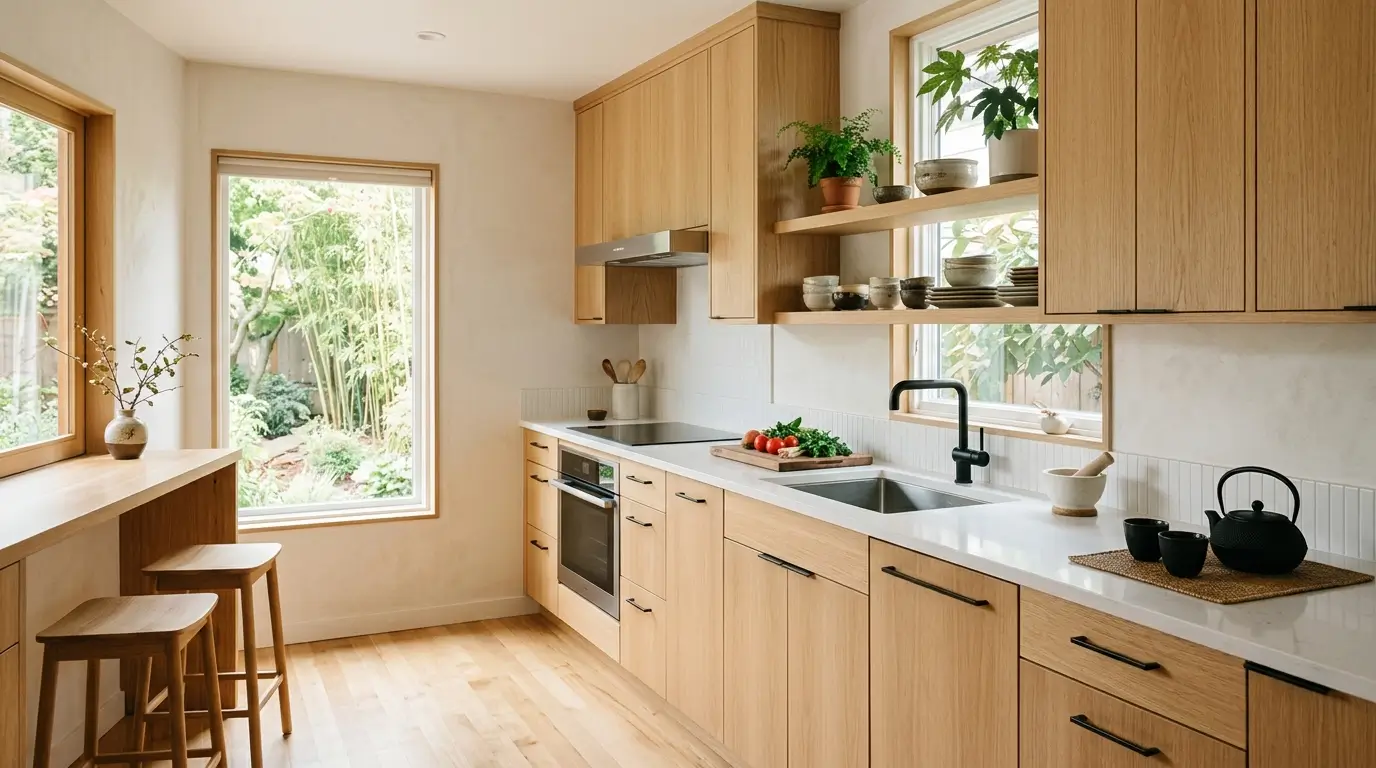
There is a quality that the best Japanese interiors possess that is genuinely difficult to name precisely but immediately recognisable when experienced. It is not minimalism in the reductive sense that the word has come to mean in Western design discourse, where minimalism often functions as an aesthetic of removal, of stripping away until only the irreducible remains. Japanese domestic design is not about removal. It is about resolution. It is about the careful and considered arrangement of exactly the right elements in exactly the right relationships to each other, where nothing is present that does not earn its place and nothing that earns its place is absent. The result is a quality of spatial calm that is not emptiness but fullness of a very particular and very refined kind.
In the kitchen, this philosophy produces a design approach that is simultaneously the most demanding and the most rewarding available. A modern Japanese kitchen asks more of its design than any other kitchen style because it offers no cover. There is no ornament to distract from imprecision, no complexity to obscure a poorly resolved detail, no layering to compensate for a material that is merely adequate rather than genuinely right. Every surface, every joint, every material choice is visible and consequential in a way that more complex, more decorative kitchen styles never quite demand. And the reward for meeting that demand is a kitchen of extraordinary beauty and daily pleasure, a space where the act of cooking feels elevated by the quality of the environment in which it happens.
Light wood cabinetry is the material foundation of the modern Japanese kitchen aesthetic, and its choice is not merely aesthetic but philosophical. Wood is the primary material of traditional Japanese architecture and craft because of its warmth, its naturalness, its ability to age gracefully rather than deteriorating, and its capacity to create a quality of visual calm that no manufactured material can replicate. Light wood, specifically the pale, warm-toned timbers that characterise Japanese interior design, creates a kitchen environment that feels simultaneously warm and serene, natural and refined, deeply traditional and completely contemporary.
Modern Japanese Kitchen Design Ideas with Light Wood Cabinets
1. The Ma Principle in Kitchen Spatial Planning
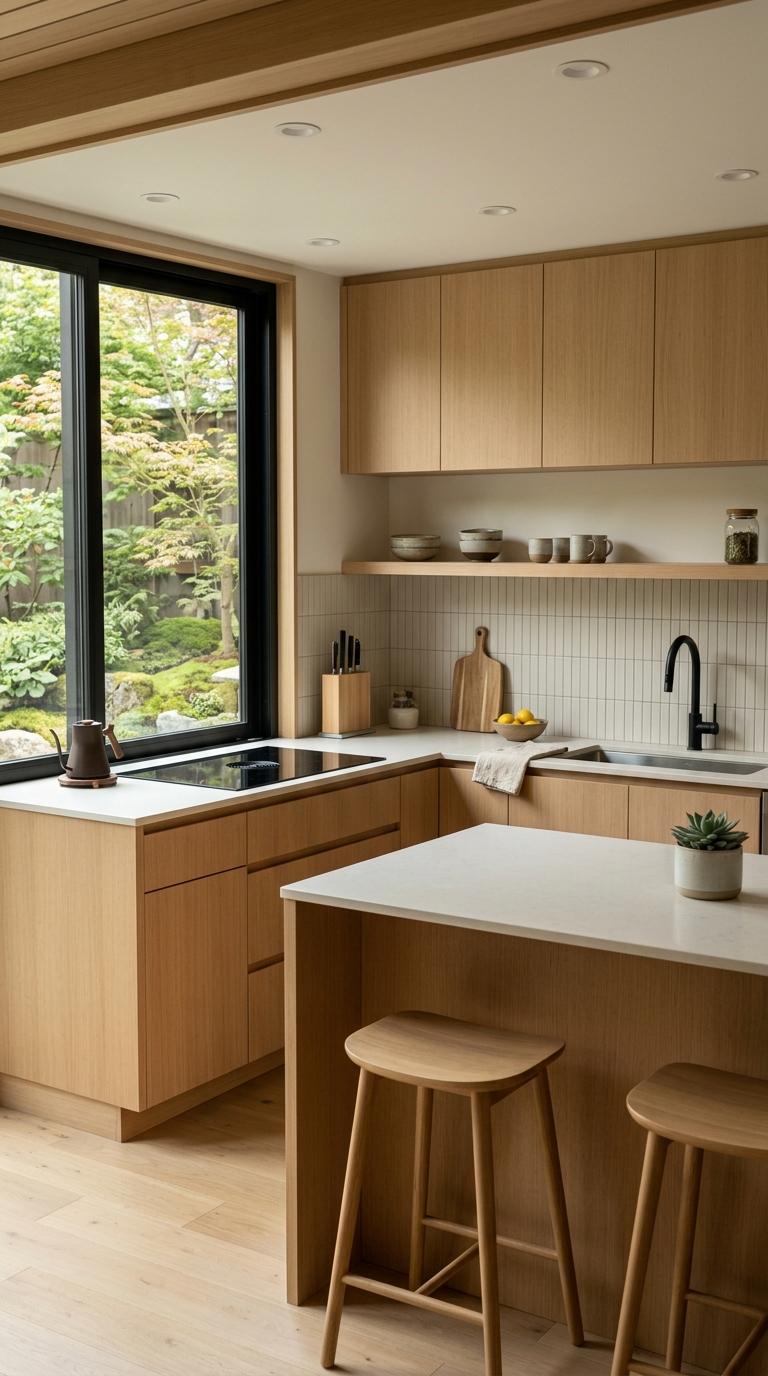
Ma is one of the most important concepts in Japanese aesthetic philosophy and one of the most directly relevant to kitchen design. It translates approximately as negative space, the deliberate and meaningful emptiness that gives the positive elements of a composition their clarity and their significance. In a Japanese kitchen, ma is expressed as the empty counter surface that is kept clear, not because there is nothing to put on it,t but because the emptiness itself is valued as a quality of the space. It is expressed as the gap between cabinet runs that creates a visual breathing space within the composition. It is expressed as the unadorned wall section that allows the eye to rest between areas of material interest.
Understanding ma is essential to designing a modern Japanese kitchen with light wood cabinets because it explains why the restraint that characterises Japanese kitchen design is not a form of deprivation but a form of generosity. The clear counter surface is generous because it makes the stone or wood of the counter visible in its full material beauty rather than obscuring it with objects. The unadorned wall section is generous because it creates a visual pause that makes the adjacent cabinetry more beautiful by contrast. The empty shelf is generous because it gives the single object placed on it the full attention it deserves rather than competing with a shelf full of objects for the viewer’s notice.
In a small Indian kitchen designed on Japanese principles, the discipline of ma is particularly valuable because the spatial constraints of the kitchen create a natural pressure to fill every available surface with storage and equipment. Resisting that pressure, maintaining clear surfaces, preserving visual breathing space within the cabinet composition, and editing the kitchen’s contents to only what is genuinely used and genuinely beautiful, creates a kitchen that feels significantly more spacious and more resolved than one that has succumbed to the pressure to use every available inch.
2. Light Wood Cabinet Selection and Specification
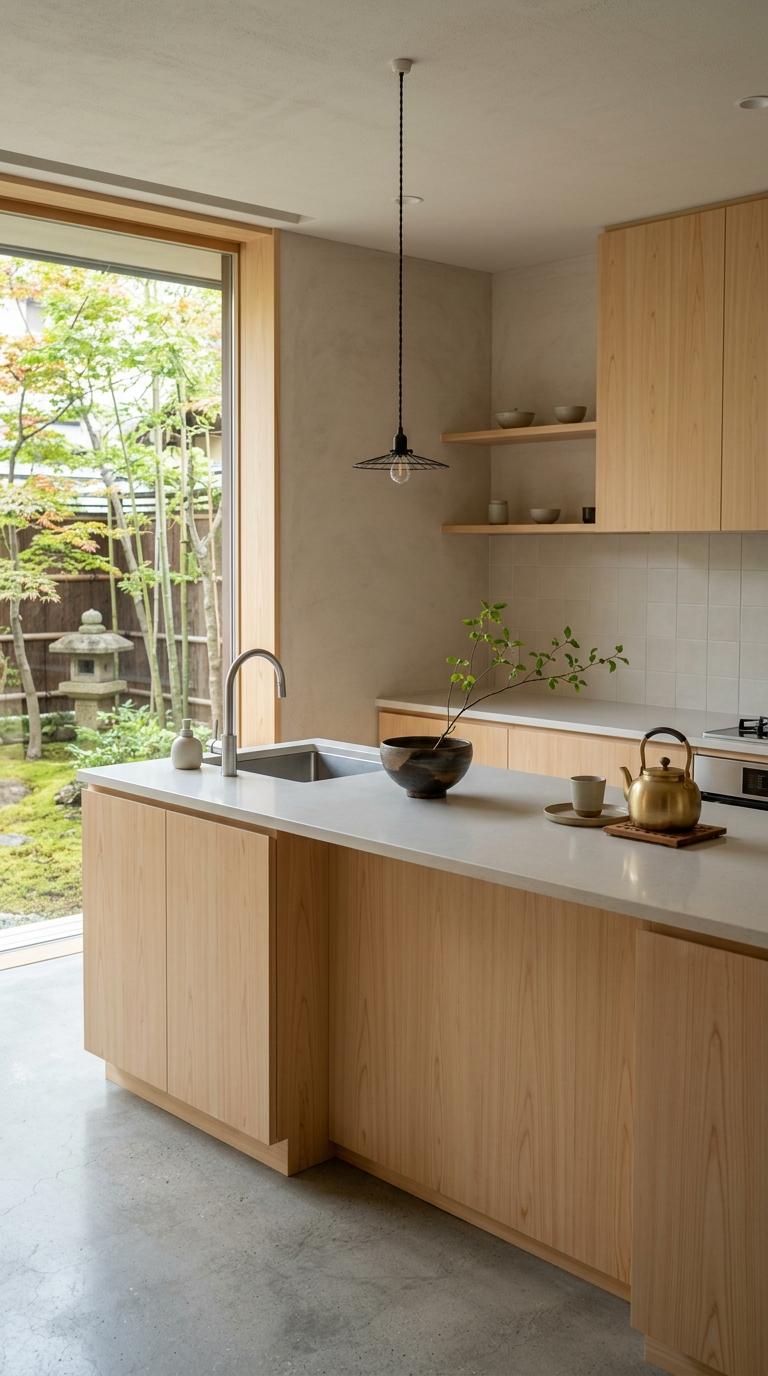
The choice of light wood for the cabinets of a modern Japanese kitchen is the most important material decision in the entire design because the wood’s grain, colour, and surface treatment determine the visual character of the space more completely than any other single element. The light woods most associated with Japanese kitchen design are hinoki cypress, sugi cedar, and ash, all of which have a pale, warm-toned grain that creates a surface of quiet natural beauty. In the Indian context, where these Japanese timber species are not locally available, equivalent visual and material qualities can be achieved through locally or regionally available alternatives.
Ash wood, which is available in India through timber importers and speciality wood suppliers, has a pale, straight-grained profile that is almost identical in character to the Japanese timber varieties most commonly used in contemporary Japanese kitchen design. Its grain is fine and consistent, its colour is warm without being orange, and it takes natural oil and wax finishes beautifully, developing a patina over time that makes the surface more beautiful with age rather than less. Rubber wood, which is widely available in India as a sustainable timber from plantation sources, has a similar pale, fine-grained character and is available at a price point that makes light wood cabinetry accessible at a range of renovation budgets.
The surface finish of the light wood cabinet is as important as the wood species itself. A natural oil finish that penetrates the wood rather than sitting on its surface preserves the tactile quality of the wood grain, allowing the material to be felt as well as seen, and creates a surface that ages gracefully by absorbing the natural oils of the hands that touch it over the years of use. A satin lacquer finish creates a slightly more protective and more easily cleaned surface that maintains the pale colour of the wood more consistently over time but at the cost of some of the tactile warmth that the natural oil finish provides.
3. Shaker-Influenced Cabinet Profile with Japanese Restraint
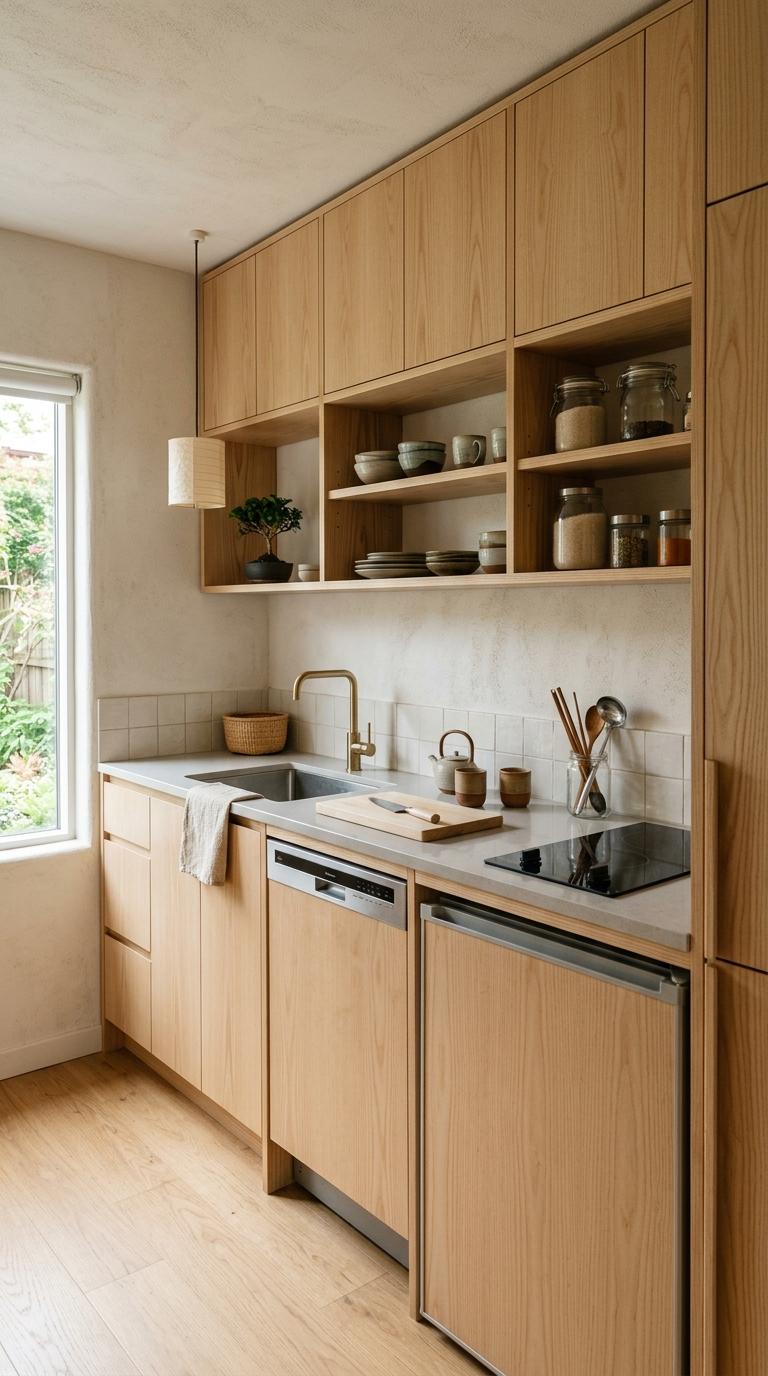
The Shaker cabinet profile, with its simple recessed panel door and its emphasis on honest construction and functional detail over decorative ornamentation, is the Western cabinetry tradition most closely aligned with Japanese aesthetic values and the one that most naturally produces a cabinet form appropriate to a modern Japanese kitchen. The Shaker door’s recessed panel creates a single line of shadow that gives the door visual definition without introducing ornamentation, and its proportions can be adjusted to suit the specific dimensions of the cabinet run in a way that produces a composition of visual harmony across the entire kitchen.
In a modern Japanese light wood kitchen, the Shaker profile should be executed with greater restraint than in its more traditional Western applications. The shadow gap between the door panel and its frame should be minimal, the door proportions should be precisely calibrated to the dimensions of the cabinet, and the wood grain should run consistently in the same direction across all the cabinet fronts to create a visual continuity that makes the entire cabinet run feel like a single composed surface rather than a collection of individual door panels.
Handle-free versions of the Shaker-influenced door, where the recessed panel provides a finger pull without any additional hardware, are the most resolved expression of this cabinet profile in a Japanese kitchen context because they maintain the visual discipline of the cabinet surface without the interruption of projecting hardware. In a light wood cabinet, the shadow line of the recessed panel and the natural variation in the wood grain together provide all the visual interest that the door surface needs.
4. Natural Stone Counter in Harmony with Light Wood
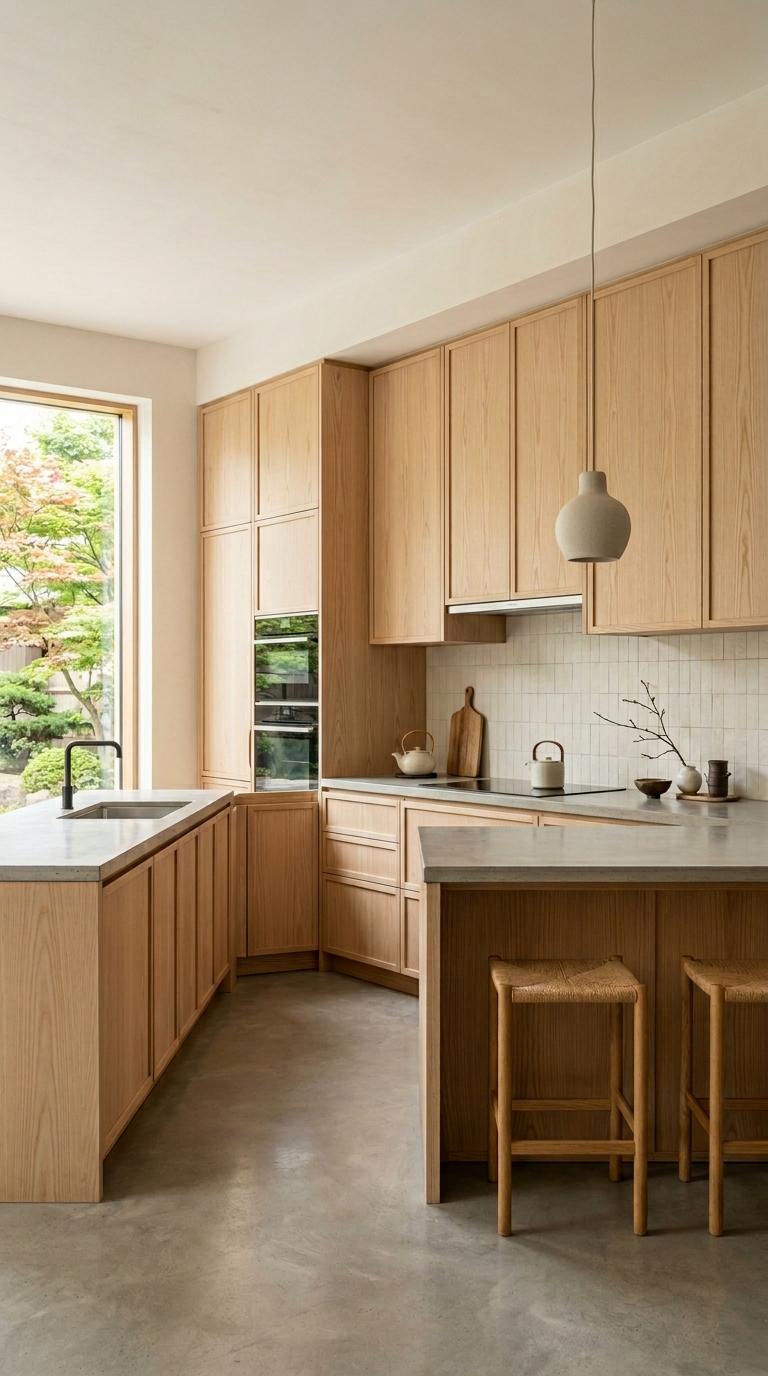
The counter material in a modern Japanese kitchen with light wood cabinets should be chosen for its ability to create a harmonious relationship with the wood rather than a contrasting one. Japanese design sensibility is fundamentally about harmony rather than contrast, and the counter surface that works best in a light wood kitchen is one whose colour, texture, and material character amplify and extend the qualities of the wood rather than competing with them.
Light grey or warm white natural stone, particularly honed rather than polished, creates the most natural and beautiful relationship with light wood cabinetry. The honed finish of the stone has a matte, slightly textured surface that shares the quiet, non-reflective quality of an oiled wood surface. The pale grey or warm white colour of the stone creates a tonal continuity with the light wood that makes the counter and cabinet appear to belong to the same material family, even though they are different materials. The slight variations in colour and texture visible across a honed stone surface add a depth and naturalness that a polished stone or a laminate surface cannot provide.
Japanese white granite, Indian milky white granite, and light grey quartzite are all available in Indian stone markets and create counter surfaces of genuine natural beauty that work harmoniously with light wood cabinetry. The choice between them should be made by looking at large samples of each stone in the actual light conditions of the kitchen, because stone colours shift significantly under different lighting conditions, and a sample that appears warm and compatible in a showroom may appear cool and discordant in the specific light of a particular kitchen.
5. Integrated Sink in Natural Materials
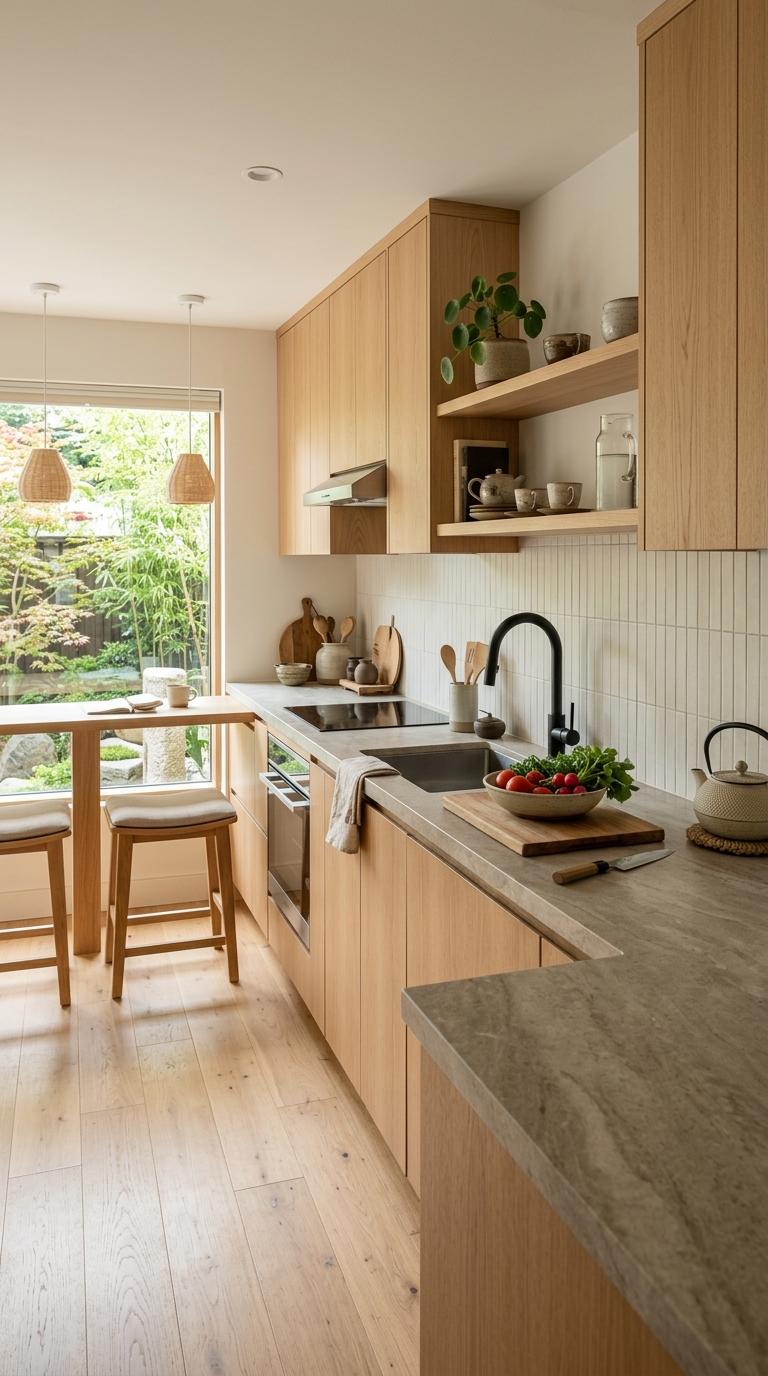
The kitchen sink in a Japanese design context is understood as a functional element that should integrate into the material composition of the kitchen as seamlessly as possible, rather than announcing itself as a separate, visually distinct object. The most resolved sink solutions in modern Japanese kitchens are those where the basin, the drain detail, and the faucet together create a sink area of functional beauty rather than utilitarian adequacy.
A wide, shallow stone sink, either carved from the same stone as the counter or set as an undermount in a closely matched stone, creates a sink area of extraordinary material coherence in a light wood Japanese kitchen. The wide, shallow profile of the basin, which is a characteristic of traditional Japanese sink design, creates more usable basin surface area than a deep, narrow basin of the same total volume and makes the common kitchen tasks of washing vegetables and rinsing vessels more comfortable and more efficient.
The faucet above a Japanese-influenced sink should be of the highest quality available within the kitchen’s budget because it is the one piece of hardware in a handle-free light wood kitchen that is necessarily visible and prominent. A tall, single-lever faucet in a brushed stainless finish, or a more architecturally resolved pull-out faucet with a swan neck profile in matte white or brushed nickel, creates a faucet that reads as a considered design object rather than a functional fitting. Japanese faucet brands, including Grohe, TOTO, and KV,K are available in India through premium sanitary ware distributors and represent the highest available standard of both functional performance and design quality.
6. Open Shelving with Japanese Styling Discipline
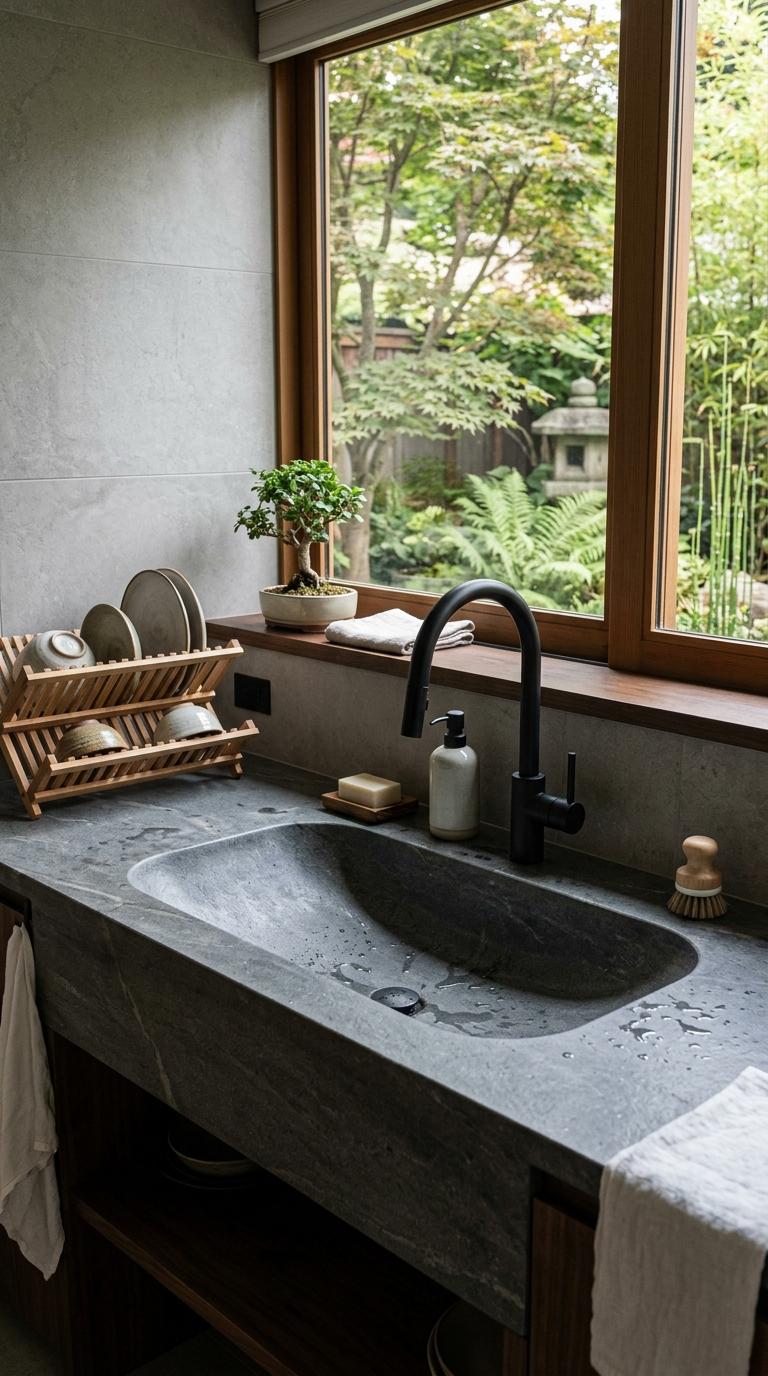
A single run of open shelving within a light wood Japanese kitchen, positioned between two sections of closed cabinetry or above the counter in the section of wall between the upper and lower cabinets, provides the visual warmth and personal identity that a fully closed cabinet system lacks while maintaining the discipline of a curated, controlled display that Japanese aesthetic values demand.
The styling of open shelving in a Japanese kitchen is governed by principles that are different from the maximalist, layered displays of Western open kitchen shelving. Japanese shelf styling is characterised by restraint, by the use of generous negative space between objects, by the selection of objects for both their functional quality and their visual character, and by the use of consistent material tones that create a cohesive visual palette rather than a collection of visually competing items.
In an Indian Japanese kitchen context, the objects worth displaying on open shelving might include a set of handmade ceramic tea cups in a consistent glaze colour, a wooden tray with a small collection of brass measuring spoons, a single ceramic vessel containing cooking chopsticks or wooden spoons, and a small plant in a simple terracotta pot. The selection is small, the objects are beautiful in their simplicity, and the space between them is as carefully considered as the objects themselves. This is the quality of curation that Japanese shelvingdisplays, whichy requires and transforms an open shelf from a storage solution into a small composition of visual pleasure.
7. Wabi-Sabi in Kitchen Material Choices
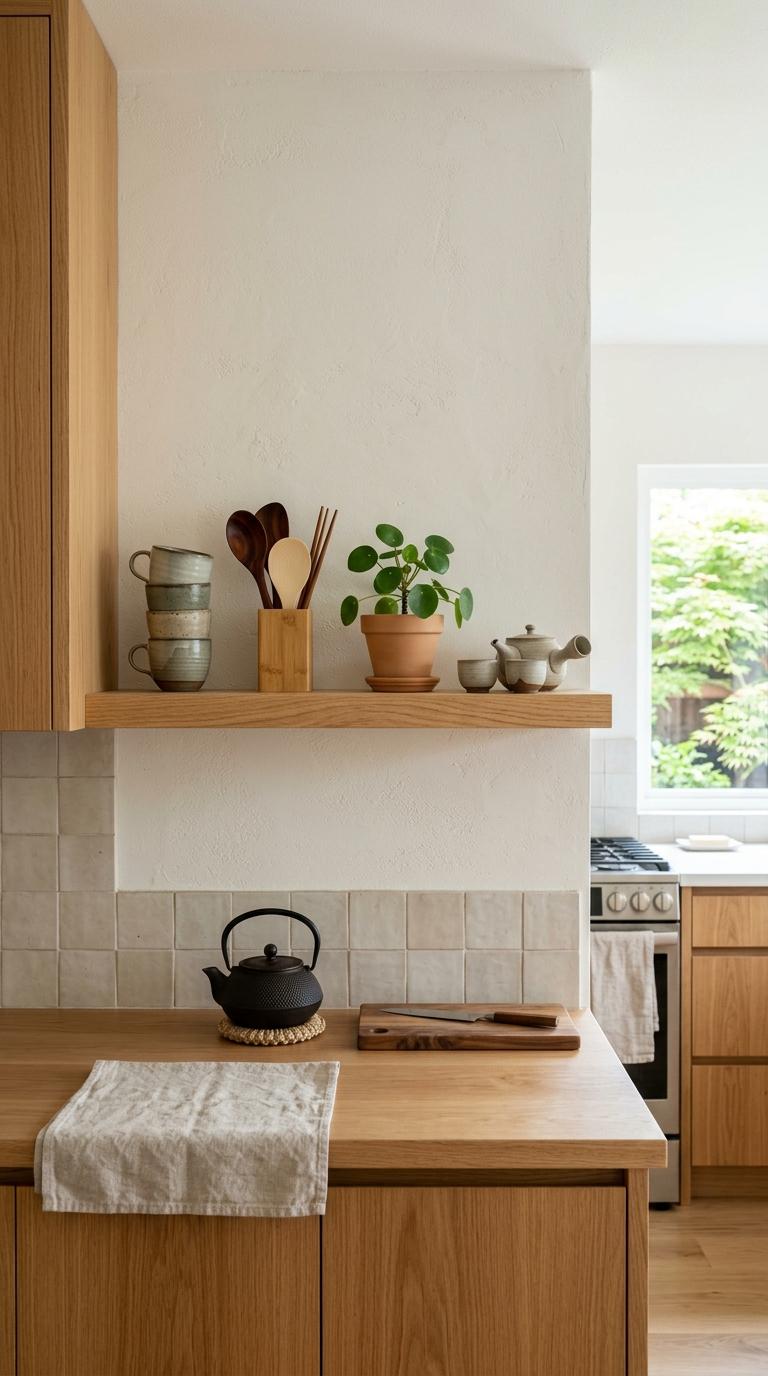
Wabi-sabi, the Japanese aesthetic philosophy that finds beauty in imperfection, incompleteness, and the natural processes of ageing and use, is perhaps the most important conceptual framework for understanding why a modern Japanese kitchen with light wood cabinets looks and feels so different from a conventional modern kitchen despite sharing many of the same functional elements. Wabi-sabi is the philosophy that explains why a kitchen designed according to Japanese principles becomes more beautiful over time rather than less, because the materials chosen in a wabi-sabi sensibility are those that age gracefully rather than deteriorate.
Light wood cabinets, oiled and cared for over years of kitchen use, develop a patina that reflects the history of their use in a way that lacquered or laminated cabinets never do. The areas most frequently touched become slightly darker and more richly colored. The grain becomes more visible as the oil penetrates deeper over time. Small marks and imperfections accumulate that tell the story of meals prepared and family life lived in the kitchen. These are not flaws in a wabi-sabi kitchen. They are evidence of authentic use, and that authenticity is precisely what gives the space its warmth and its character.
Honed stone that shows the slight variations of its natural mineral composition, a ceramic basin with the subtle irregularities of hand-firing, a wooden cutting board with the marks of years of chopping, a cast iron pot whose surface changes with every use, these are the wabi-sabi materials of a Japanese kitchen and they create a cooking environment of genuine emotional depth that a kitchen of uniformly perfect, perpetually pristine surfaces can never achieve.
8. Shoji-Inspired Cabinet Glass Inserts
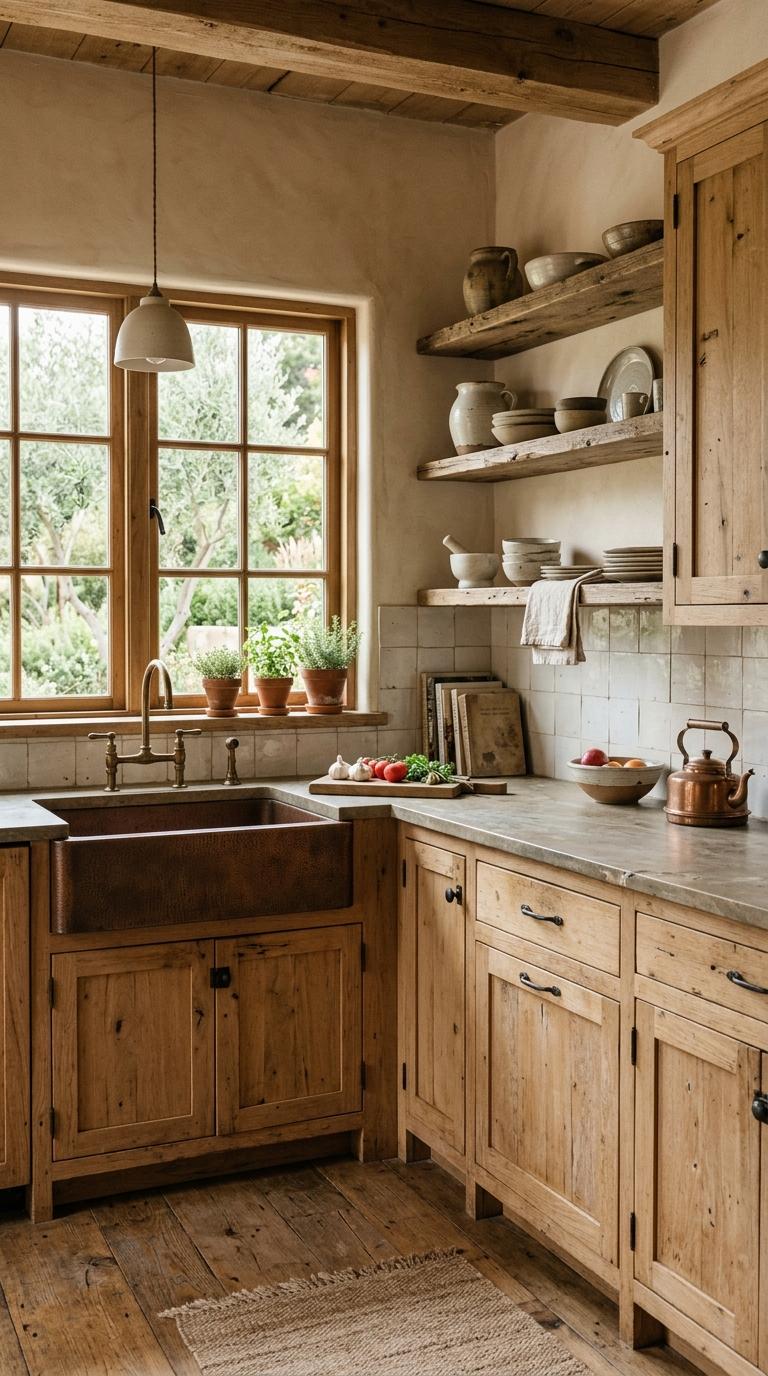
The Shoji screen, the traditional Japanese room divider made from a lightweight timber grid infilled with translucent washi paper, is one of the most beautiful and most influential design elements in Japanese architecture, and its aesthetic principles, the interplay of light and shadow through a geometric grid, the diffusion of light through a translucent material, and the visual rhythm of a regular structural pattern, translate directly and beautifully into kitchen cabinet glass inserts.
Cabinet doors with a simple timber grid of slim horizontal and vertical bars, infilled with frosted, fluted, or reeded glass, create a cabinet front that references the Shoji screen’s aesthetic while providing the light-filtering and interior-concealing function that a kitchen cabinet requires. The grid of timber bars divides the glass panel into sections that create a visual rhythm across the cabinet front, and the frosted or textured glass behind the grid diffuses the interior light and reveals the approximate contents of the cabinet without exposing them in full detail.
In a light wood kitchen, Shoji-inspired glass cabinet inserts in the upper cabinets create a visual lightness in the upper section of the kitchen that balances the more solid, more grounded character of the lower light wood base cabinets. The diffused light from within the cabinets, whether from integrated LED strips inside the cabinets or simply from the ambient light of the kitchen filtered through the frosted glass, creates a quality of soft interior illumination that gives the Shoji-inspired cabinet fronts a warmth and depth that solid doors completely lack.
9. Tatami-Inspired Texture in Kitchen Surfaces
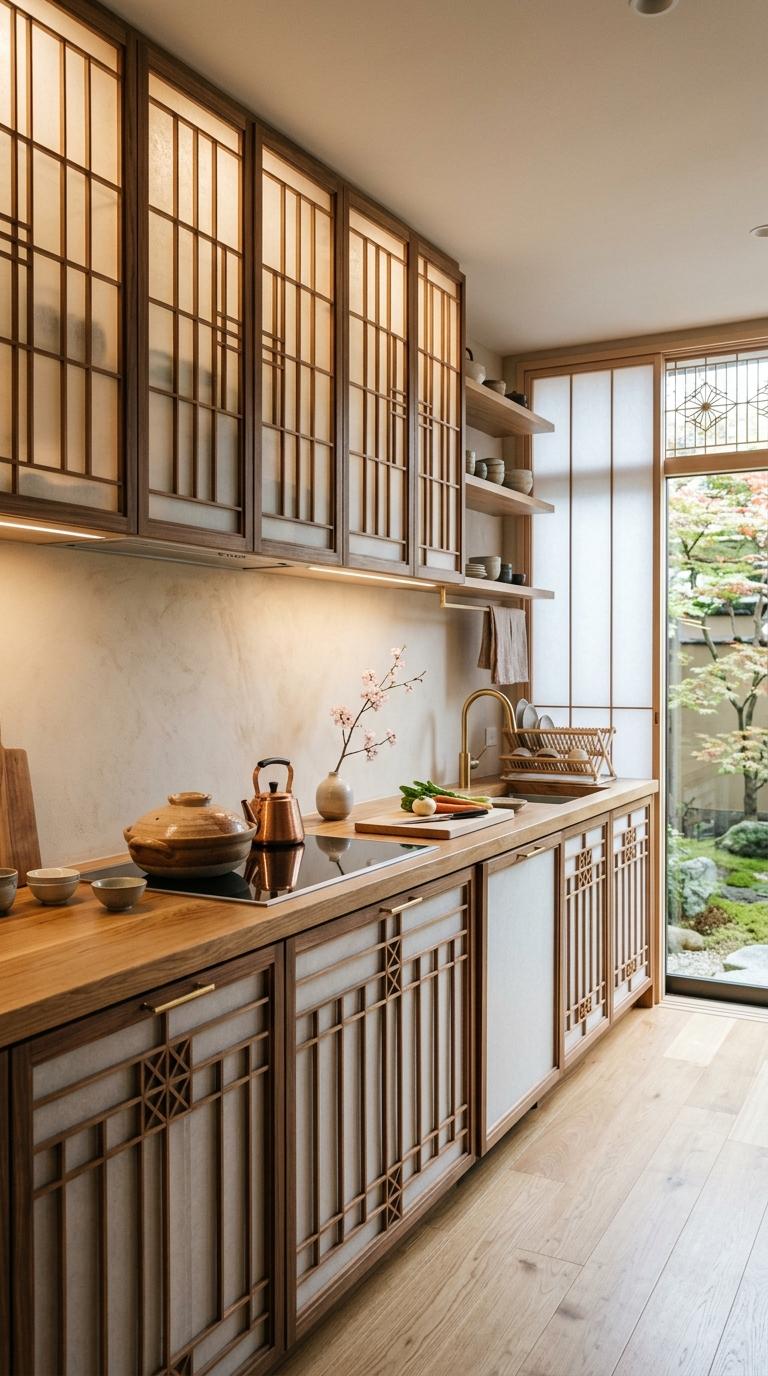
The tatami mat, the traditional Japanese floor covering of woven rush grass framed in a fabric border, introduces into the Japanese domestic interior a texture of extraordinary fineness and regularity that has influenced Japanese surface design across every material category. The tight, consistent weave of tatami grass creates a surface pattern that is simultaneously geometric and organic, man-made and natural, which is precisely the quality that gives Japanese surface design its distinctive character.
In a modern Japanese kitchen, tatami-inspired texture appears in several surface applications that bring this quality of fine, regular natural texture into the kitchen environment. Woven grasscloth or natural fibre wall panels in the section of kitchen wall above the counter create a tactile, organic surface that softens the hard material environment of stone, wood, and ceramic without introducing the visual complexity of a patterned wallpaper. Fluted or reeded glass in the Shoji-inspired cabinet inserts creates a surface texture that references the regular geometry of tatami weave in a transparent material. Natural fibre seat cushions on kitchen stools in a woven rush or seagrass fabric bring tatami texture into the dining component of the kitchen island.
The consistent use of natural, finely textured materials across multiple surfaces in a modern Japanese light wood kitchen creates a sensory environment of extraordinary richness and calm that is simultaneously visually interesting and physically restful, which is the defining quality of the best Japanese domestic interiors.
10. Japanese Approach to Kitchen Organisation
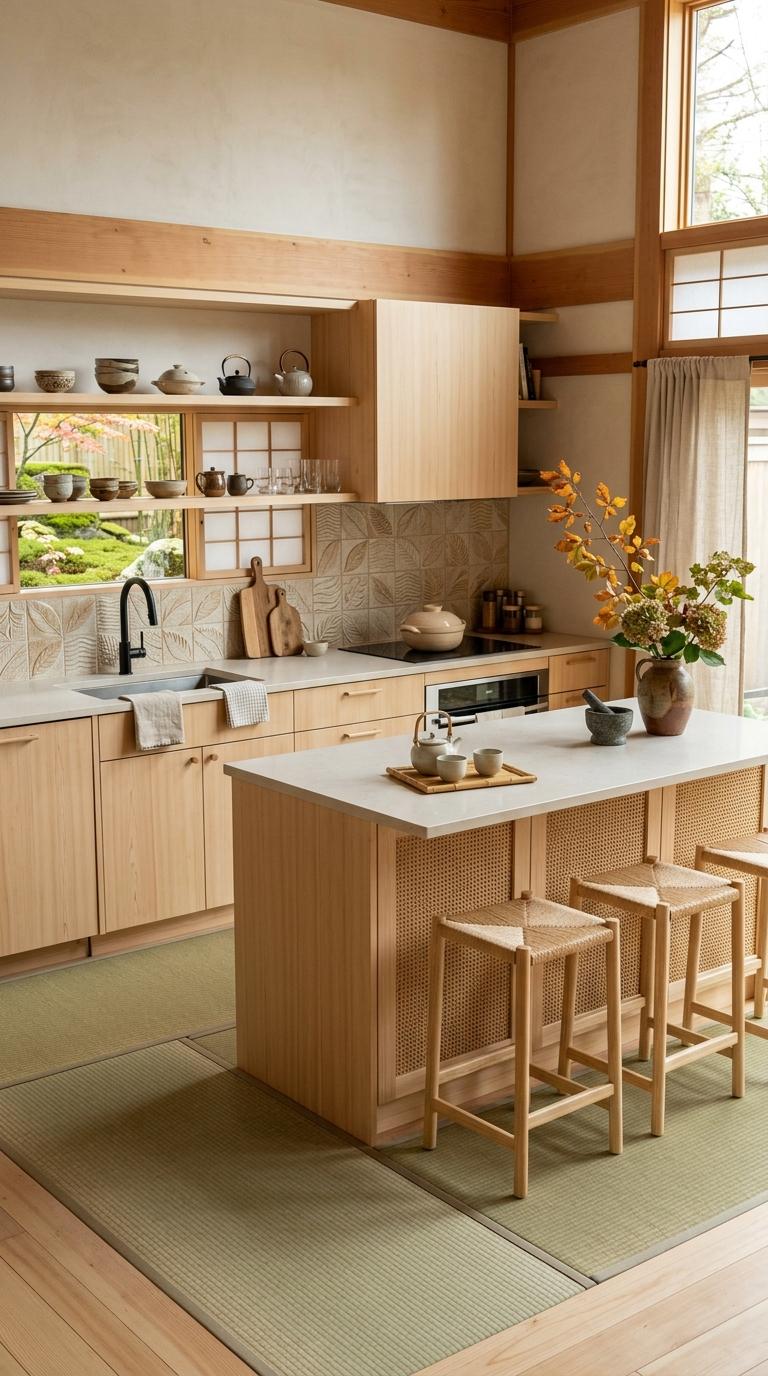
The organisational principles of the Japanese kitchen are as important to the quality of the space as its material and aesthetic choices, because a beautifully designed Japanese kitchen that is poorly organised is not a Japanese kitchen in any meaningful sense. The Japanese approach to kitchen organisation is governed by the same principles that govern every other aspect of Japanese domestic design. Each item has a precise and dedicated home, which is determined by the frequency and logic of use, and the discipline of returning every item to its home after use is maintained as a consistent practice rather than an occasional aspiration.
QIn a modern Japanese kitchen with light wood cabinets, the internal organisation of every cabinet and every drawer is designed with the same level of precision and intentionality as the external cabinet fronts and counter surfaces. Drawer dividers that hold each utensil in a specific position. Shelf heights calibrated to the exact dimensions of the vessels they hold. A dedicated position for every spice, every cutting board, and every small appliance. The organisation of the cabinet interior is not visible from outside the kitchen, but it is experienced every time a cabinet is opened, and that daily experience of a perfectlyorganisedd interior is one of the most genuinely luxurious qualities that a Japanese kitchen possesses.
The Japanese practice of owning only what is needed and used, of maintaining the kitchen’s contents at a level that the kitchen’s storage capacity can accommodate comfortably without being crowded, is the organisational discipline that makes the beautifully designed light wood cabinet system look as good in daily use as it does in a photograph. A light wood Japanese kitchen with half-empty, precisely organised interiors is more beautiful and more functional than a light wood Japanese kitchen with overfull, disorganised ones, and the difference between the two is entirely a matter of the organisational intention brought to the space.
The Daily Experience of a Japanese Light Wood Kitchen
A modern Japanese kitchen with light wood cabinets is not a kitchen that impresses visitors with its complexity or its ostentation. It is a kitchen that improves the daily experience of the person who uses it through the quality of its materials, the precision of its design, and the calm of the environment it creates. The act of cooking in a Japanese kitchen is elevated not by the drama of the space but by its quality, by the warmth of the light wood under the hand, the coolness of honed stone under the knife, the softness of the light from the integrated ceiling system, and the quiet precision of a drawer that opens and closes with complete smoothness and complete silence.
These are the qualities of a space designed with genuine care for the person who lives and cooks in it, and they are the qualities that distinguish a modern Japanese kitchen from any other kitchen design approach available. The philosophy of Japanese design, that beauty is found in the quality of materials, the precision of detail, and the discipline of restraint rather than in complexity, ornamentation, or scale, is a philosophy that produces kitchens of enduring excellence and daily pleasure regardless of how large or how small the space in which it is applied. In a compact Indian kitchen, that philosophy is not a constraint. It is an invitation to design with the highest level of intention available, and the result is a kitchen that is genuinely and completely exceptional.

Aarav Sharma is a passionate home and lifestyle writer. He loves exploring kitchen design, home decoration, and interior styling. With a keen eye for beautiful details and practical design ideas. Aarav Sharma shares inspiration to help readers create comfortable and functional living spaces.