
There is a small architectural detail at the base of kitchen cabinets. Most people have never consciously noticed it. It has a more direct and daily impact on physical comfort. The kitchen plinth, also called the toe kick, is the recessed panel running. It is typically finished to match or complement the cabinet doors. It is always in the peripheral vision of anyone standing at the counter.
The plinth is not a decorative detail. It is a structural ergonomic element whose dimensions directly determine the posture of every person. The toe kick’s primary function is to provide comfort and improve ergonomics while working in the kitchen. The space allows users to stand closer to the countertop without uncomfortable leaning. This is especially important for individuals who spend extended periods in the kitchen. It also helps prevent back pain and fatigue. When the plinth is correctly dimensioned, the cook stands in a natural, upright posture.
In India, the average duration of daily kitchen activity is among the highest in the world. Due to the complexity and time investment of Indian cooking, European kitchen design has been adopted without adjustment for the average Indian body height. The ergonomic cost of a poorly specified plinth is paid daily in back fatigue.
Ergonomic Kitchen Plinth Height Ideas and Principles
1. Understanding the Relationship Between Plinth Height and Posture
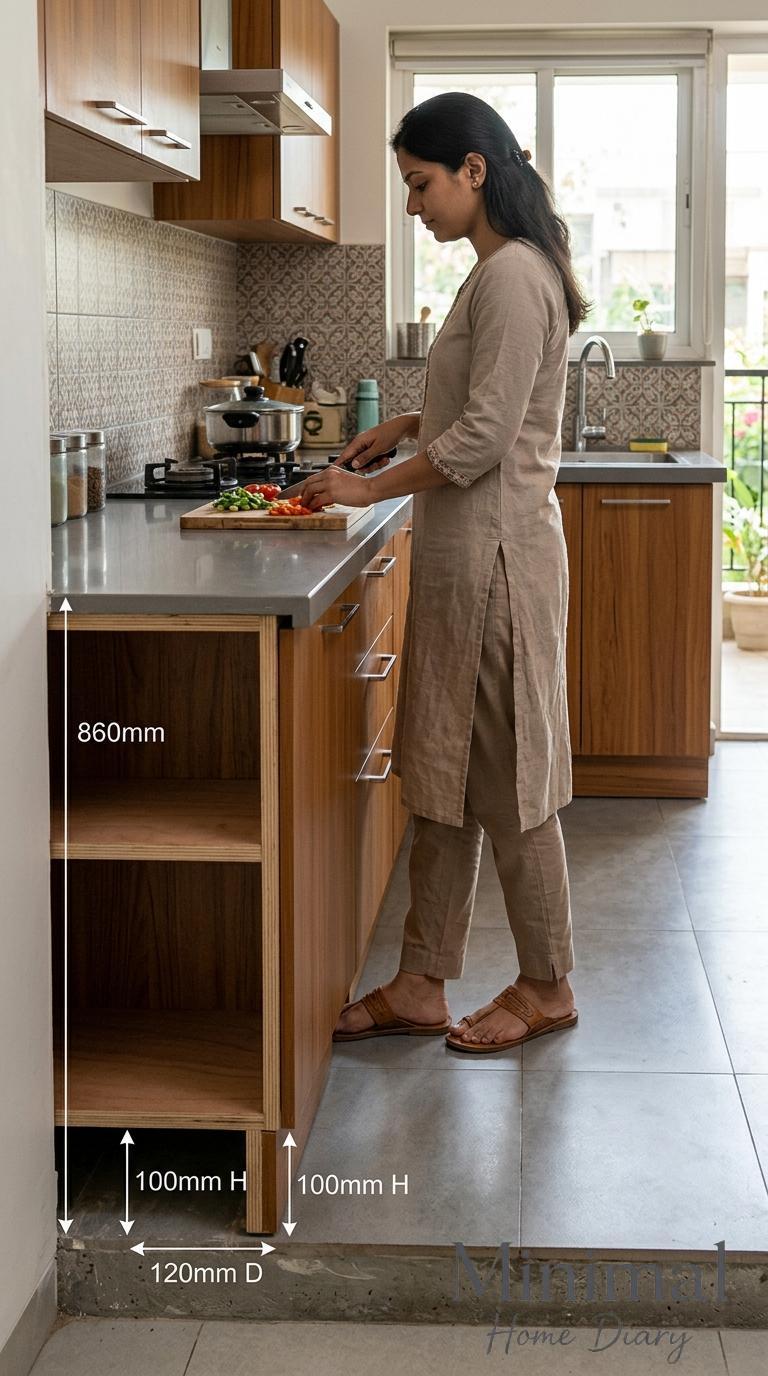
The mechanism through which plinth height affects back fatigue is straightforward enough to be explained simply. It is specific enough to be worth understanding precisely before any plinth height decision is made. When a person stands at a kitchen counter without any toe recess available, their feet rest flat on the floor with their toes touching the cabinet face. In this position, the feet cannot move forward under the cabinet, which means the entire body must lean forward from the waist to bring the hands close enough to the counter surface. This forward lean activates the erector spinae muscles of the lower back continuously to hold the torso in the leaned position, and those muscles, like any muscles under sustained load, fatigue progressively over the duration of the cooking session.
Without a toe kick, your feet cannot move under the cabinet, forcing you to stand farther back and lean forward. Over time, this posture can lead to fatigue and discomfort, especially at sinks and prep areas where standing time is longest. Some homeowners consider eliminating toe kicks for a furniture-style or ultra-minimal look. While this approach can work visually, it often creates a less comfortable kitchen. For this reason, many designers recommend keeping the toe kick but adjusting its finish or visual treatment rather than removing it completely.
When a properly dimensioned plinth recess is present, the feet slide forward under the cabinet base, the body’s center of gravity shifts over the feet rather than in front of them, and the torso maintains an upright or near-upright posture without muscular effort to sustain it. The lumbar spine rests in its natural curve rather than being held in a flexed position by the continuous work of the erector muscles. The result is a posture that can be maintained for significantly longer periods without fatigue accumulating in the lower back, which, in an Indian kitchen where a single meal preparation session can last sixty to ninety minutes, is a difference that is felt every single day.
2. Standard Plinth Height and Its Limitations for Indian Kitchens
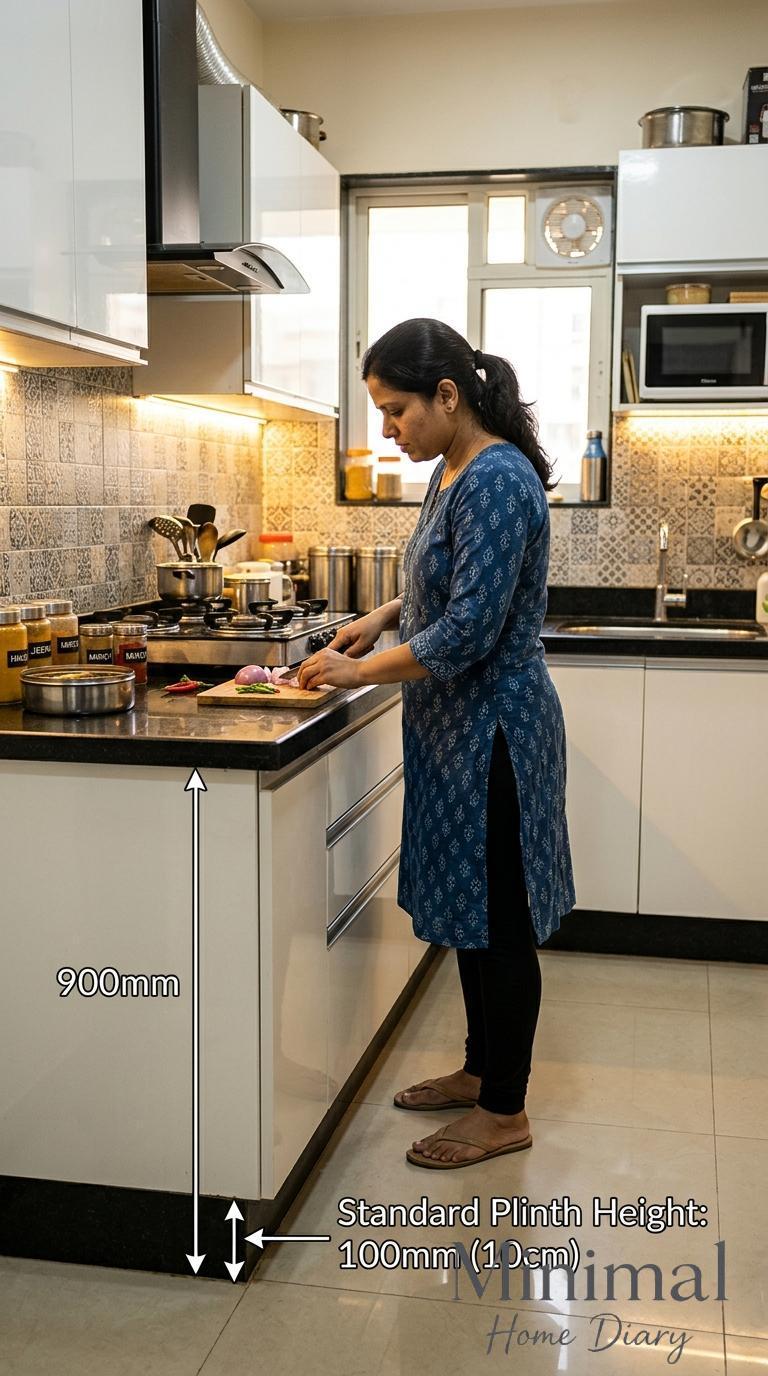
In a well-designed kitchen, skirting heights are typically between 90 and 120 millimeters, with 100 millimeters being the preferred standard. This height provides sufficient foot space without compromising too much storage in the base cabinet. A toe-kick height of 100 millimeters combined with a recess of 60 to 70 millimeters promotes a neutral stance, allowing your torso to sit closer to the work surface and reducing the need for a forward reach.
The 100 millimeter standard plinth height that has been adopted in Indian modular kitchen design was developed in the context of European kitchen manufacturing and European body anthropometry. The average European male height is approximately 177 centimeters, and the average female height is approximately 165 centimeters. The average Indian male height is approximately 165 centimeters, and the average Indian female height is approximately 152 centimeters. These are significant anthropometric differences that have direct implications for the ergonomic adequacy of a plinth height standard derived from European measurements applied to an Indian kitchen user population.
A plinth height that provides adequate toe clearance for a person of 165 to 177 centimeters standing height may provide less than optimal clearance for a person of 152 to 165 centimeters because the relationship between foot size, the angle of the foot during forward reach, and the height of the plinth recess changes with overall body scale. Shorter individuals with proportionally smaller feet require a plinth of different dimensions to achieve the same quality of neutral posture that the standard 100 millimeter plinth provides for taller individuals. The Indian kitchen plinth height conversation needs to begin from this anthropometric reality rather than from the uncritical adoption of a standard designed for a population of significantly different average dimensions.
3. The Height-Specific Plinth Formula
The most ergonomically rigorous approach to specifying plinth height for an Indian kitchen is to calculate the appropriate height based on the specific standing height of the primary kitchen user rather than applying a universal standard. The ergonomic literature provides several formulas for this calculation, all of which produce results within a consistent range that confirms the inadequacy of a single standard height for a population with significant height variation.
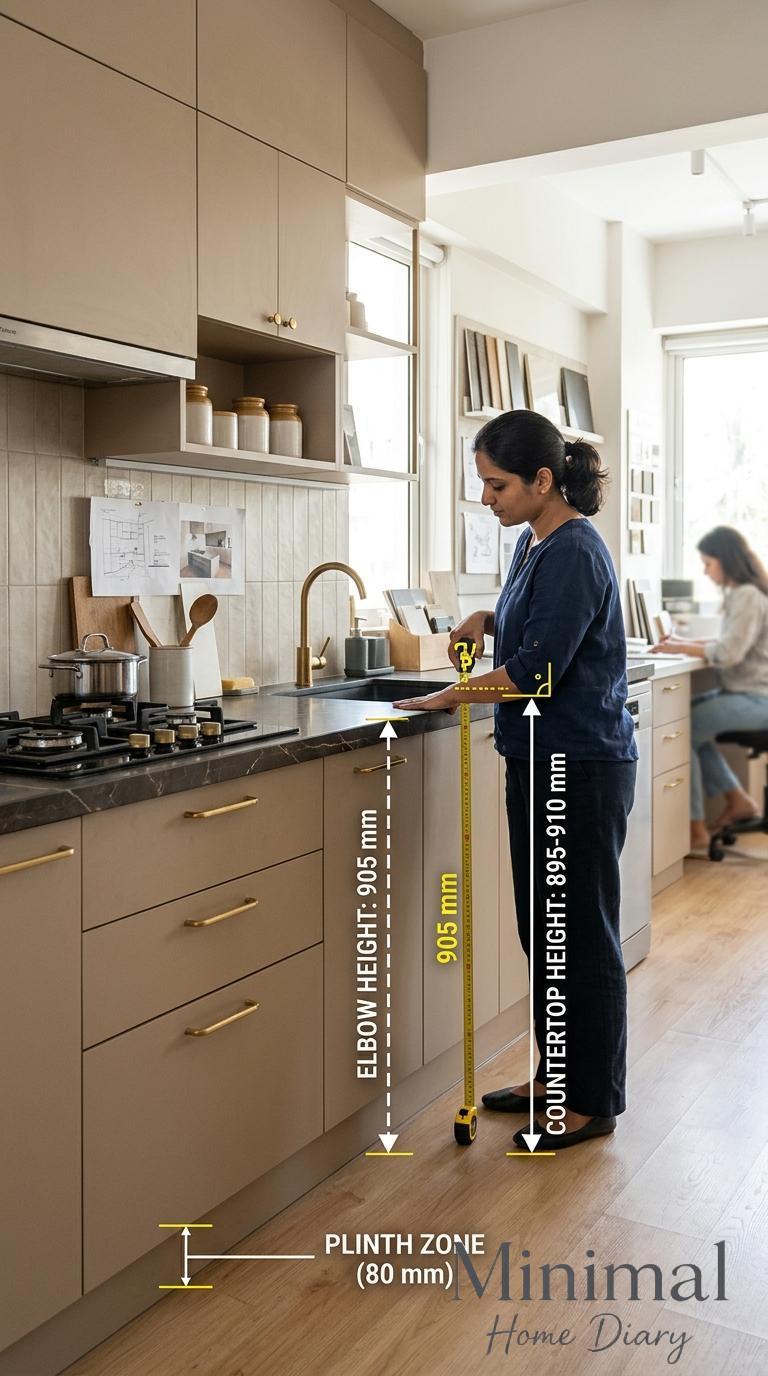
The most widely cited ergonomic formula for counter height, from which plinth height is derived, specifies the ideal counter height as standing elbow height minus twenty to thirty millimeters. This positions the counter surface slightly below the relaxed elbow height, which is the position at which the arms can work without raising the shoulders or dropping the wrists into a flexed position that creates wrist strain. For shorter individuals under five feet three inches, a counter height of 28 to 30 inches or 71 to 76 centimeters may provide better ergonomics. Taller individuals over six feet may prefer counters ranging from 38 to 42 inches or 96 to 107 centimeters to avoid back pain caused by bending over.
In the Indian kitchen context, the counter height is determined by the cabinet height of 870 millimeters plus the counter thickness of typically 25 to 40 millimeters, producing a finished counter height of approximately 895 to 910 millimeters. The plinth height is the dimension available to tune the total cabinet height to suit the primary user within the constraint that the cabinet carcass height is typically fixed by the modular kitchen manufacturer. A plinth height of 120 to 130 millimeters rather than the standard 100 millimeters raises the finished counter height by 20 to 30 millimeters to better suit a taller Indian user, while a plinth height of 80 to 90 millimeters lowers the counter height by 10 to 20 millimeters to better suit a shorter user. This plinth height adjustment is the most accessible ergonomic tuning available within a standard modular kitchen system.
4. Task-Specific Plinth Heights for Different Kitchen Zones
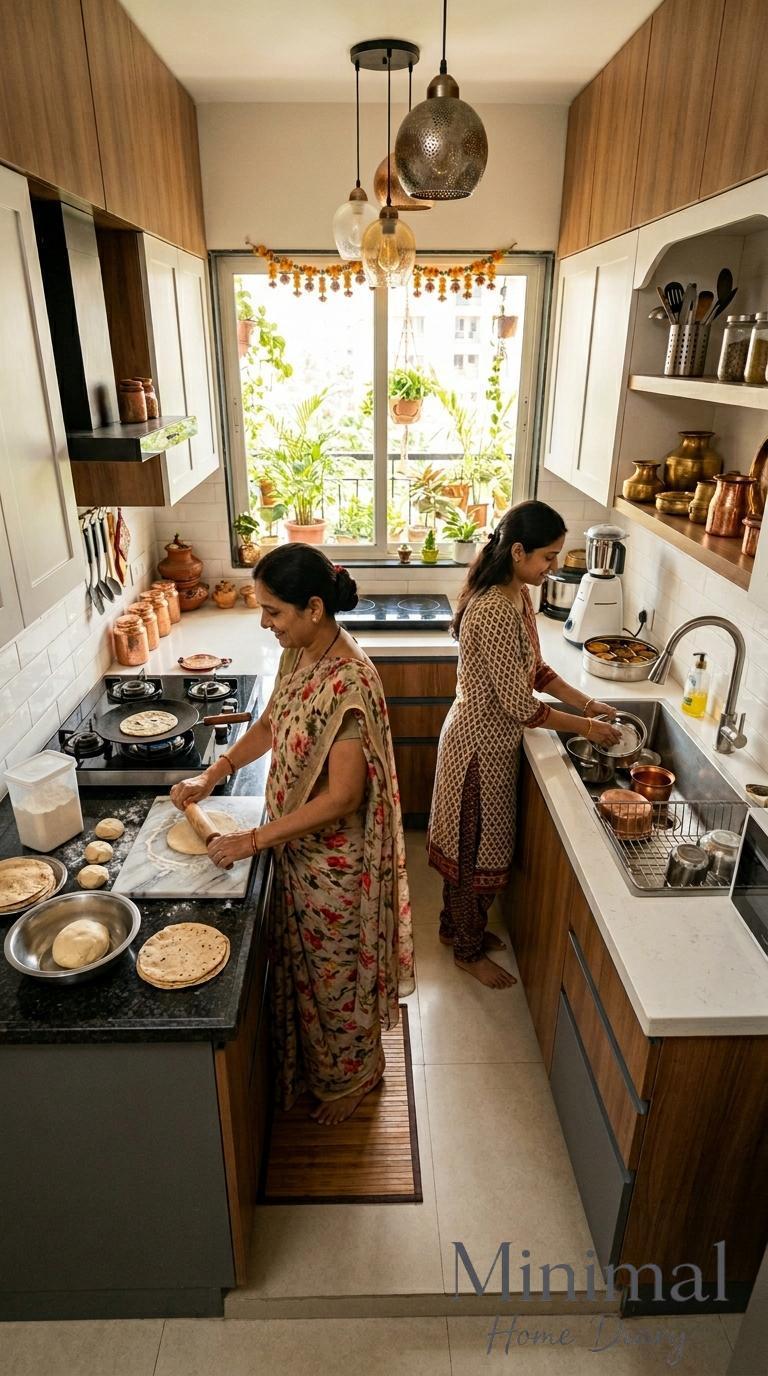
The most ergonomically sophisticated kitchen design approach applies different plinth heights to different zones of the kitchen based on the specific tasks performed in each zone and the specific posture those tasks require. Rather than a single uniform plinth height running the entire length of the cabinet installation, a zone-differentiated plinth system creates a kitchen where each activity happens at the height most appropriate for that activity’s specific ergonomic demands.
Some homeowners choose to have designated counter areas for tasks like food prep which are lower or higher depending on their needs. Modern kitchen design trends often incorporate multi-level counters to improve both functionality and aesthetics. Custom heights can make tasks easier and more comfortable. For example, someone taller might prefer a slightly higher counter, while a shorter person may find a lower one works better. Even the task itself matters: food prep surfaces are often lower for chopping and mixing, while bar counters are usually taller for seated comfort.
In an Indian kitchen, the task-specific plinth height approach has specific application to the chapati and roti preparation zone, which requires a lower counter surface than standard for the same reason that professional bakeries use lower benches. The downward pressure required to roll chapati and knead bread dough is most naturally and most efficiently applied from a counter surface ten to fifteen centimeters below standard height, where the arms can exert force through the full extension of the shoulder joint rather than from a raised position that creates shoulder fatigue. A dedicated Indian bread preparation section of the counter with a plinth height of 130 to 150 millimeters rather than 100 millimeters, lowering the working surface by 30 to 50 millimeters, creates a zone of genuinely better ergonomic quality for this specific and time-intensive Indian cooking task.
The sink zone, where dishes are washed and vegetables are cleaned, typically requires a slightly higher counter than the preparation zone because the task involves reaching down into the sink basin rather than working on the counter surface itself. A plinth height of 80 to 90 millimeters at the sink zone raises the sink position slightly, reducing the depth to which the user must reach down into the basin and reducing the forward lean that deep sink washing requires.
5. The Plinth Depth Dimension
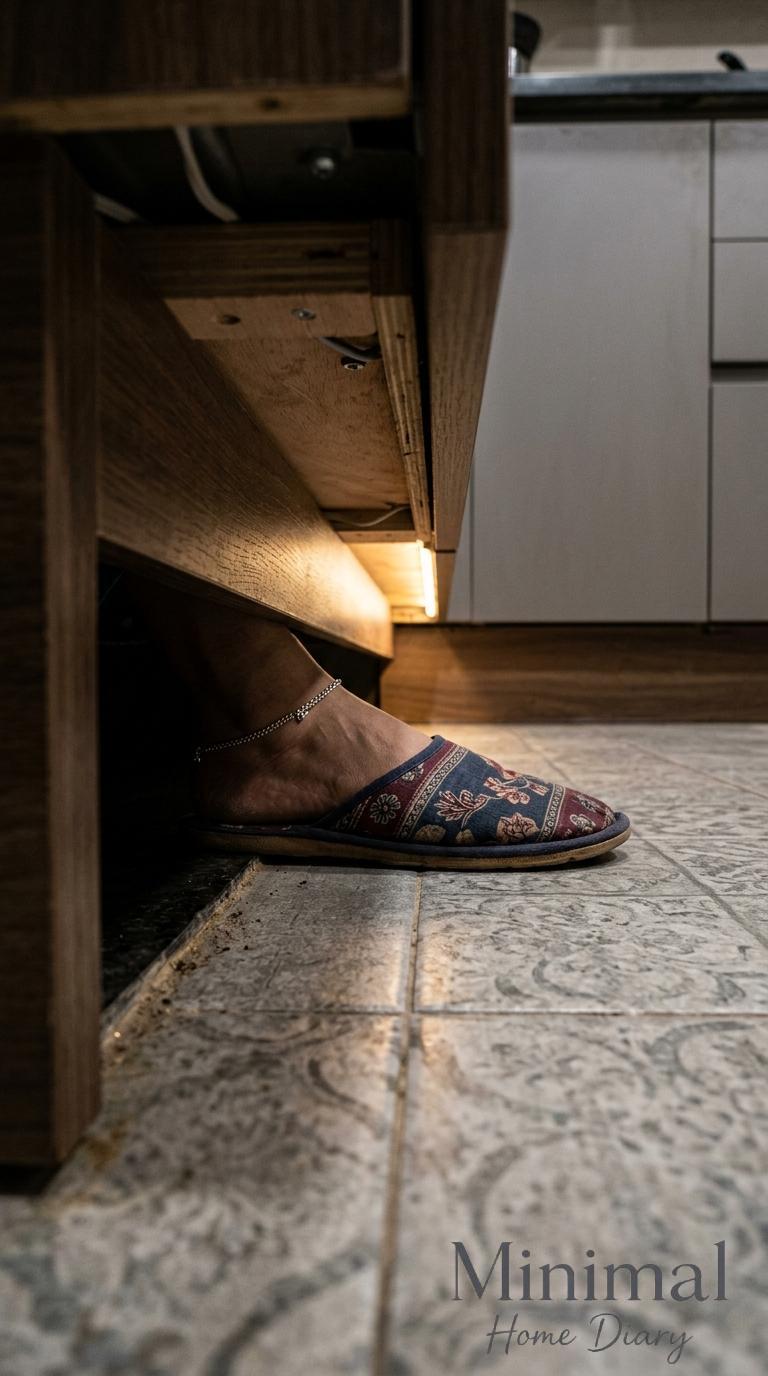
Plinth height is the most discussed ergonomic dimension of the kitchen toe kick, but plinth depth, the horizontal distance by which the recess extends back from the cabinet face, is equally important for posture quality and is even more consistently under-specified in Indian modular kitchens where the standard plinth depth of 50 to 60 millimeters is at the lower end of the ergonomically adequate range.
A toe-kick height of 100 millimeters combined with a recess of 60 to 70 millimeters promotes a neutral stance, allowing your torso to sit closer to the work surface and reducing the need for a forward reach. WELL v2 emphasizes posture-friendly designs and suggests that if you must lean forward, you will experience increased shoulder and lower back fatigue.
A plinth depth of 70 to 80 millimeters rather than 50 millimeters allows the foot to slide further under the cabinet, bringing the body closer to the counter surface in the horizontal dimension as well as allowing the natural foot angle during standing to be accommodated without constraint. For Indian kitchen users with larger foot sizes, a depth of 75 to 80 millimeters is the minimum that comfortably accommodates the foot width without the shoe upper pressing against the cabinet face when the foot is in its natural toe-under position. The combination of adequate height and adequate depth in the plinth recess creates the full ergonomic benefit that the toe kick is designed to provide, and specifying both dimensions thoughtfully rather than accepting default standards delivers a meaningfully better kitchen posture experience.
6. Adjustable Plinth Systems for Multi-User Kitchens
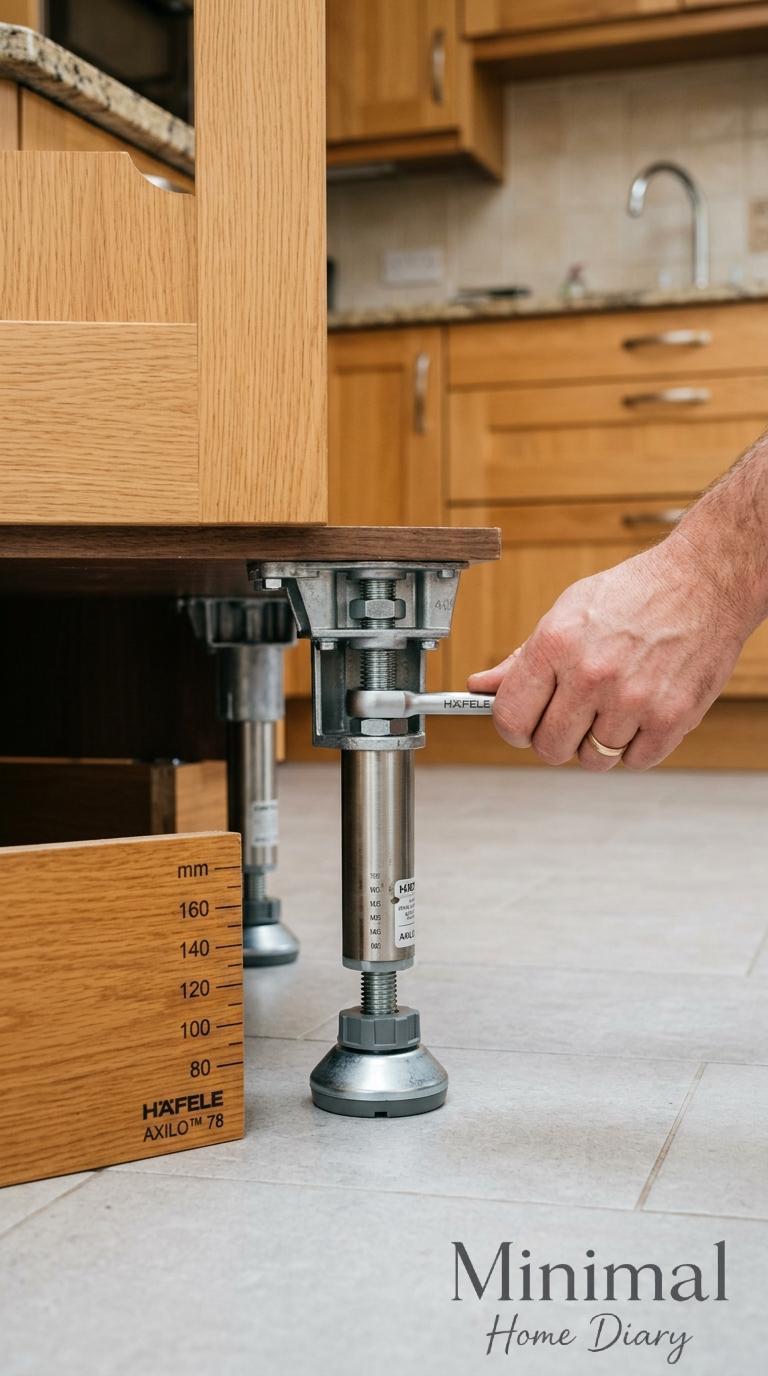
In a household where the primary kitchen users have significantly different heights, a single fixed plinth height creates an ergonomic compromise that suits neither user optimally. An adjustable plinth system, where the plinth panel can be raised or lowered on an adjustable leg system within a defined height range, provides the ability to customize the kitchen height for different users without requiring structural changes to the cabinet installation.
Adjustable cabinet leg systems that allow plinth height variation of plus or minus 20 to 30 millimeters from a center position are available from cabinet hardware suppliers in India, including Hafele and Hettich. They are typically used during installation to level cabinets on uneven floors, but their adjustability range is sufficient to provide meaningful ergonomic tuning when applied specifically to plinth height optimization rather than leveling. In a multi-user Indian kitchen where the height difference between the primary cooks is significant, specifying adjustable legs with the ergonomic height adjustment function explicitly in mind rather than purely for leveling creates a kitchen with genuine flexibility to serve users of different heights comfortably.
Note that kitchen counter height does not always have to be the same. Depending on who is using them and what they are used for, custom heights can make tasks easier and more comfortable. The adjustable plinth system is the mechanism that makes this customization practically achievable without requiring bespoke cabinet manufacturing for each kitchen project.
7. Plinth Height and Anti-Fatigue Mat Compatibility
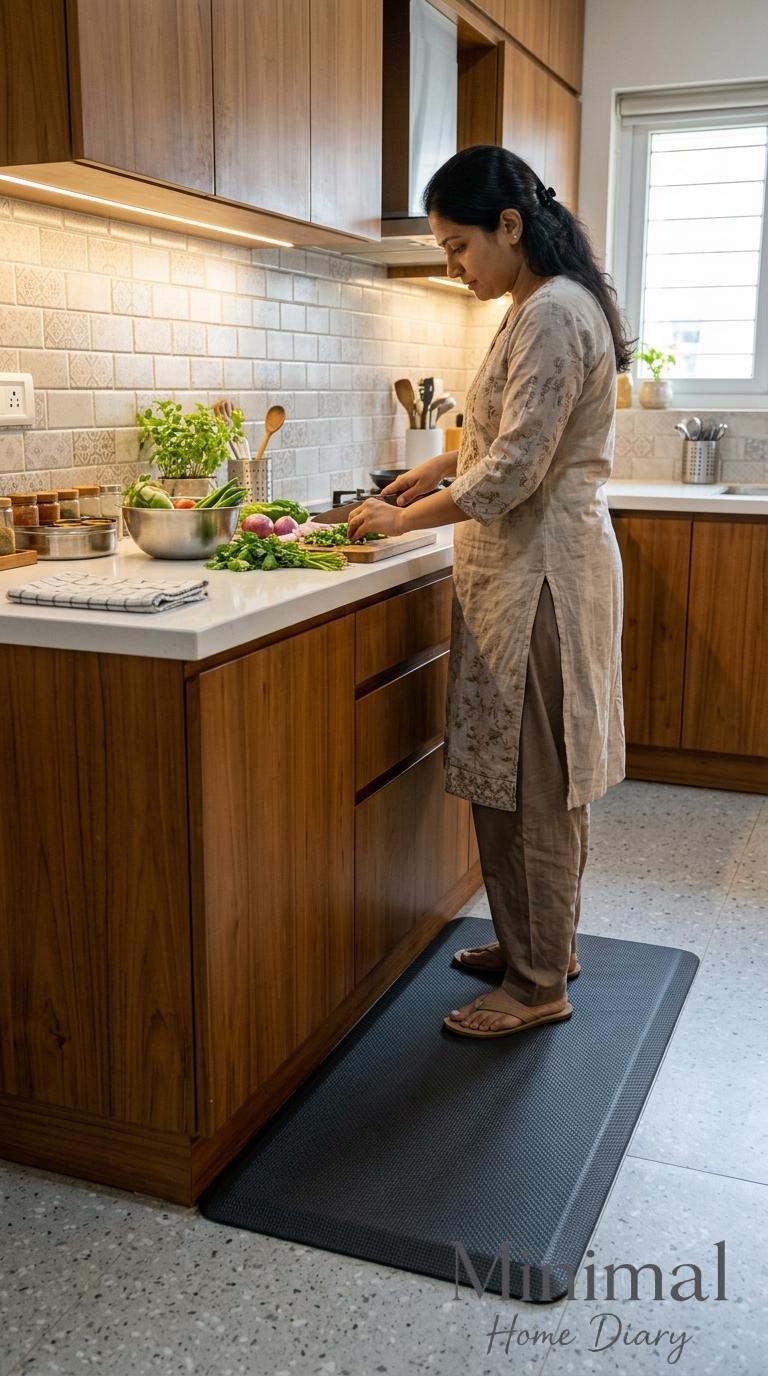
Anti-fatigue mats are one of the most evidence-based and most immediately accessible interventions available for reducing kitchen back fatigue, and their relationship to plinth height is a design consideration that is rarely addressed in either kitchen design or anti-fatigue mat guidance, but that has significant practical implications for the combined ergonomic performance of the two systems together.
A study published in PubMed examining the impact of anti-fatigue mats on low back pain and muscle activation found that anti-fatigue mats significantly decreased subjective low back pain levels in fifteen out of sixteen participants compared to standing on a hard surface. Anti-fatigue mats introduce a slight instability, causing the body to make continuous micro-adjustments that help distribute pressure more evenly and keep the muscles active, reducing the likelihood of fatigue.
An anti-fatigue mat placed at the kitchen counter raises the standing surface by the thickness of the mat, which for mats of adequate ergonomic effectiveness is typically between 20 and 25 millimeters. This mat thickness effectively raises the position of the feet relative to the counter surface, reducing the relative counter height by 20 to 25 millimeters from the cook’s perspective, which means that a counter height that was already at the lower end of ergonomic adequacy becomes ergonomically problematic when a mat is added. The plinth height, and therefore the counter height, should be specified with the mat thickness included in the ergonomic calculation rather than treating the mat as an afterthought that is added after the kitchen height decisions have been finalized.
For multi-generational use, a standard height of 100 to 110 millimeters offers a comfortable stance and allows for anti-fatigue mats without posing tripping hazards at the base edge. This specific guidance confirms that the compatibility between plinth height and anti-fatigue mat use is an established design consideration that should be explicitly addressed in kitchen height planning rather than discovered as a problem after installation.
8. Plinth Materials and Their Practical Performance
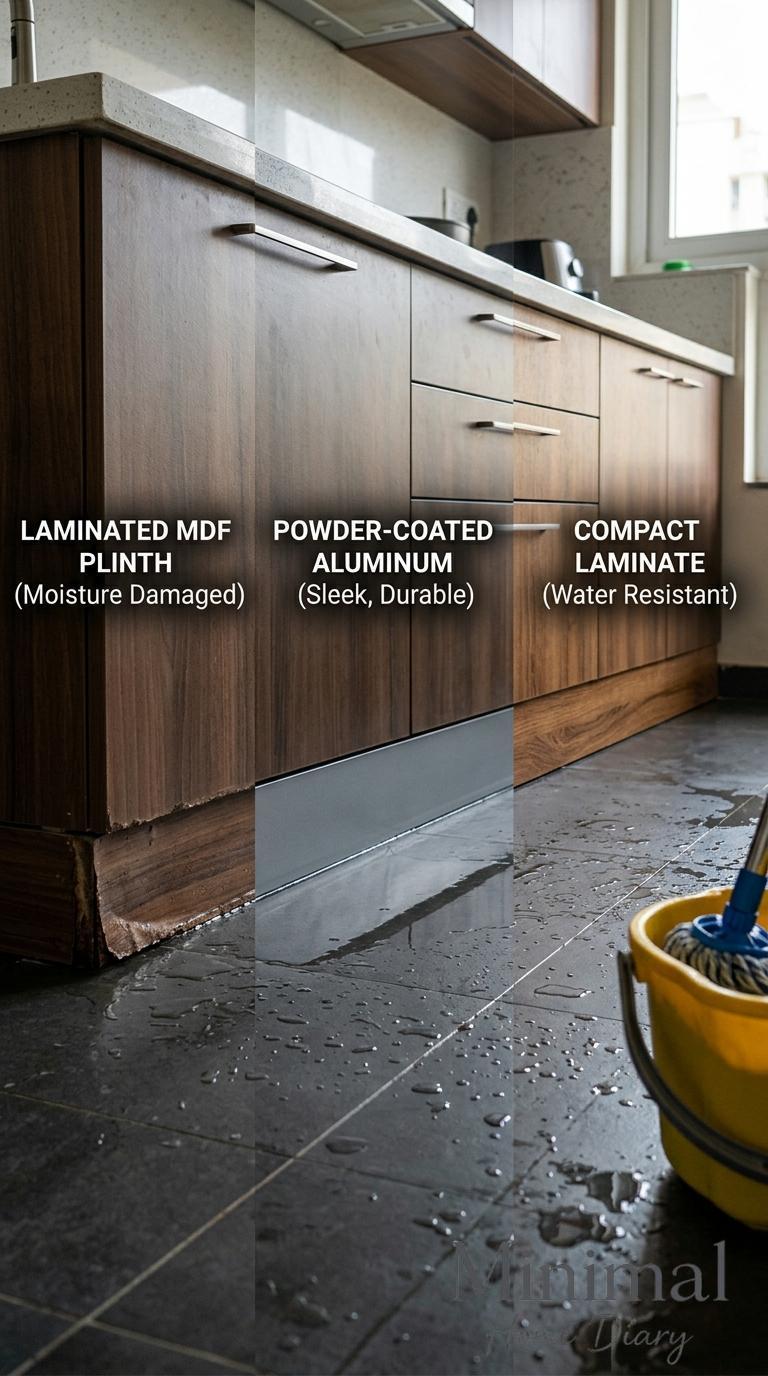
The material of the kitchen plinth is a practical specification decision as well as an aesthetic one, and in an Indian kitchen context where the plinth is exposed to the most demanding floor-level conditions in the space, the material choice has a direct impact on the plinth’s longevity, its cleanability, and its resistance to the moisture, cooking oil, food debris, and the physical contact of feet and cleaning equipment that it experiences constantly.
Standard modular kitchen plinths in India are typically made from MDF with a laminate finish matching the cabinet doors. MDF plinth panels are adequate for moderate conditions but are vulnerable to the moisture that accumulates at floor level in an Indian kitchen where wet mopping is the standard cleaning method and where water from the cooking and washing area regularly reaches the floor. The MDF substrate absorbs moisture at its exposed edges and bottom face, swelling and deteriorating over time in a way that is both aesthetically unsatisfactory and structurally weakening.
Aluminum or powder-coated steel plinth panels are the most durable and most moisture-resistant materials available for the demanding floor-level environment of an Indian kitchen. Powder-coated aluminum or steel is an excellent choice for moisture-prone areas. For home budgets, laminated MDF with sealed edges performs robustly. Compact laminate is a premium option known for its water resistance. Compact laminate plinths, which are made from high-density phenolic resin rather than MDF, offer moisture resistance comparable to aluminum at a lower cost and with a wider range of color and finish options that match the aesthetic of the cabinet system more naturally than metal alternatives.
9. Toekick Drawer Storage and Its Impact on Plinth Ergonomics
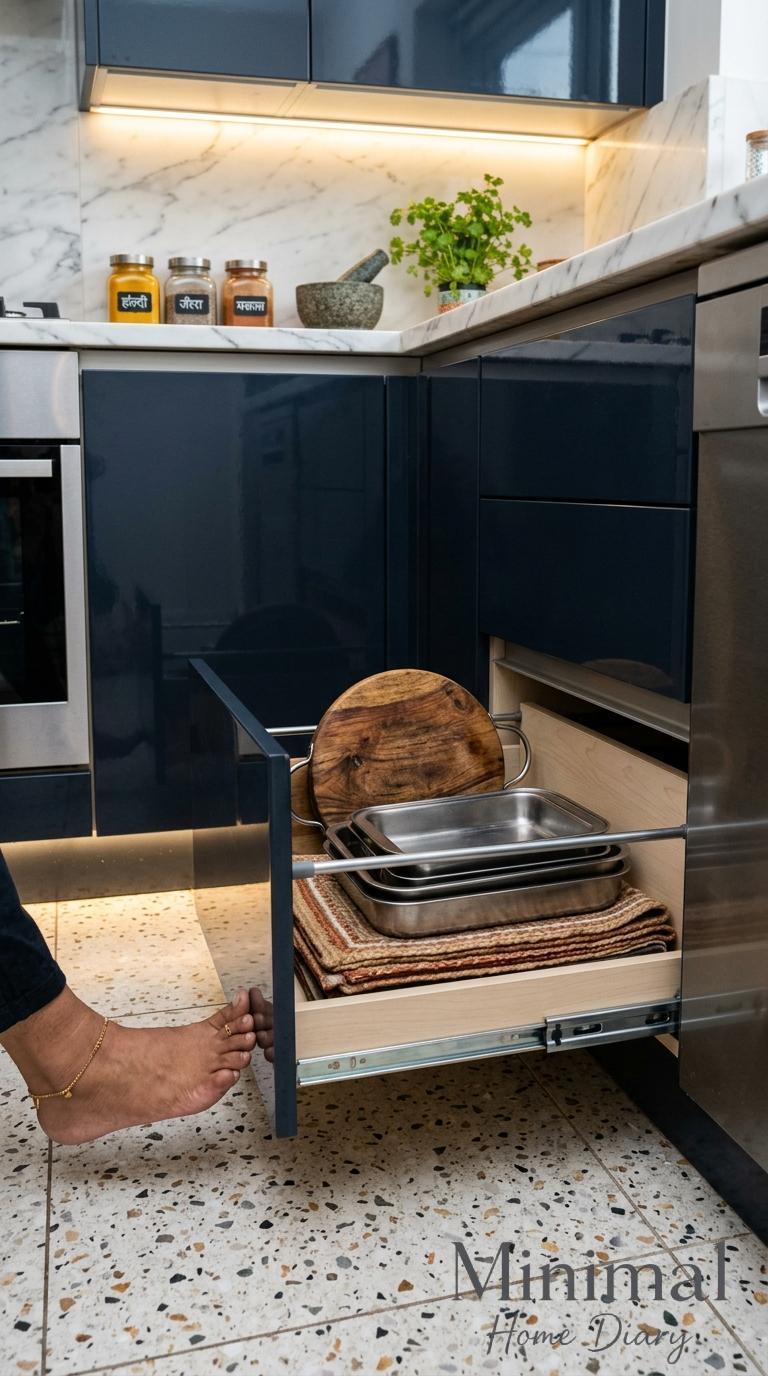
The plinth zone at the base of kitchen cabinets, typically between 100 and 150 millimeters in height, represents a strip of storage potential that most Indian modular kitchens leave entirely unused. Toe kick drawers, thin pull-out drawer units that fit within the plinth zone and are activated by pressing the plinth face or by a notch handle at the top edge, convert this otherwise wasted space into storage for flat items that are ideally suited to the dimensions of the plinth zone: baking trays, chopping boards, flat lids, placemats, and trivet stands.
The ergonomic impact of toe kick drawers on plinth design is that their installation requires the plinth zone to be specified at the maximum height compatible with the ergonomic requirements of the kitchen rather than at the minimum standard height, because the drawer unit needs sufficient internal height to accommodate the items stored within it. A plinth of 130 to 150 millimeters in height provides the internal clearance for a toe kick drawer that can hold a standard-size Indian chopping board lying flat, which is the most practically useful single item that a toe kick drawer can store in an Indian kitchen.
The activation mechanism of a toe kick drawer also has ergonomic implications. A toe-activated drawer that opens by pressing the plinth face with the foot eliminates the need to bend down to pull a low drawer open, which is one of the most back-fatiguing movements in the kitchen when performed repeatedly. This foot-activation feature makes the toe kick drawer one of the most ergonomically considered storage solutions available in a kitchen and justifies specifying a slightly higher plinth than standard to accommodate the drawer mechanism while maintaining adequate toe clearance.
10. Plinth Height in the Context of Complete Kitchen Ergonomics
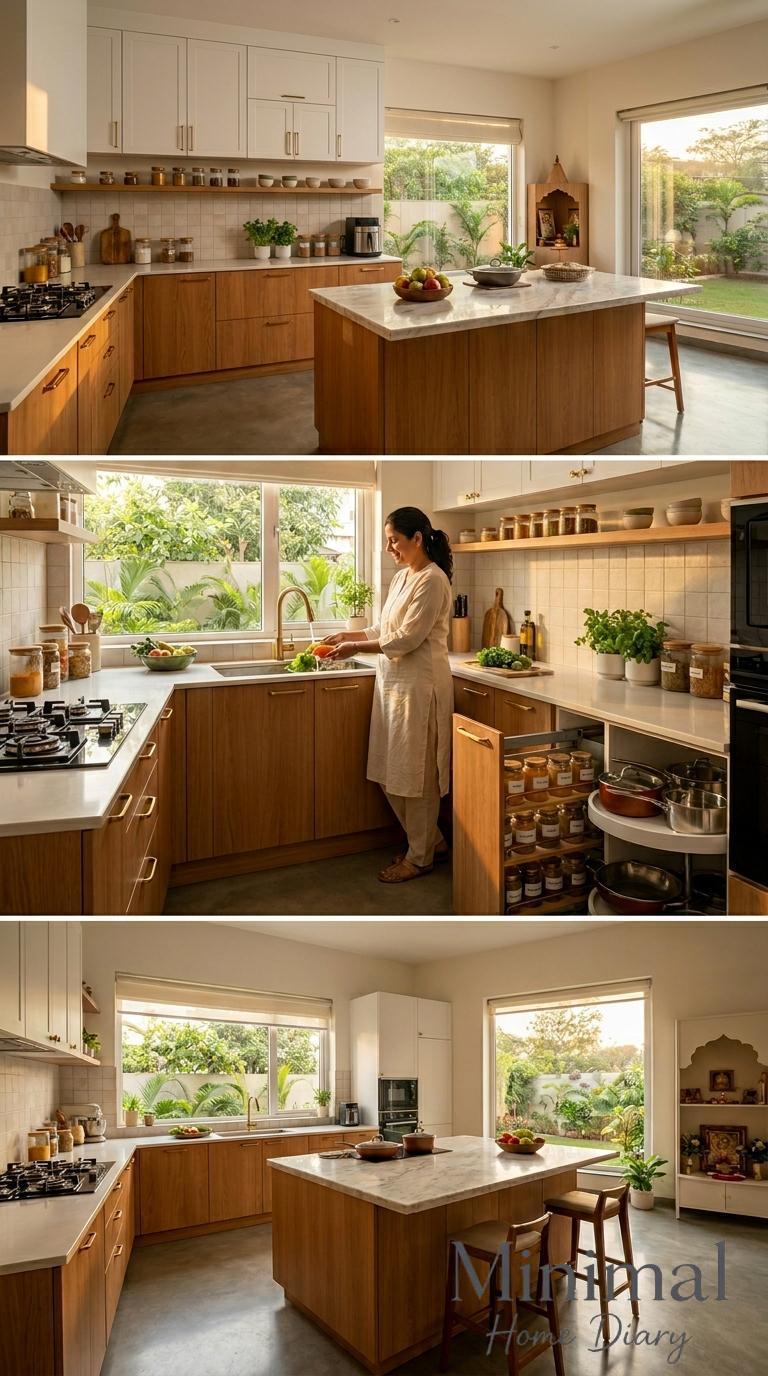
The plinth height decision does not exist in isolation from the other ergonomic dimensions of the kitchen. It is the foundation measurement from which counter height, upper cabinet height, and the vertical organization of the entire kitchen storage system derive. A plinth height specification that is made thoughtfully, with reference to the specific users of the kitchen and the specific tasks they will perform in it, creates a foundation for a counter height that is genuinely correct rather than merely conventional, and a counter height that is correct creates conditions in which the upper cabinet positioning, the shelf heights within the base cabinets, and the placement of the most frequently used items can all be optimized for the specific ergonomic profile of the household.
A seminal 2026 ergonomic study published by the International Journal of Home Design identified that positioning the lowest usable shelf of a wall cabinet at 54 to 58 inches or 137 to 147 centimeters from the finished floor provides optimal reach for frequently accessed items, effectively reducing cumulative reach fatigue by 10 to 12 percent for most users throughout the day. This upper cabinet ergonomic standard is correctly interpreted relative to the counter height, which is itself derived from the plinth height. A plinth height adjustment that changes the counter height by 20 millimeters changes the ergonomically optimal upper cabinet shelf height by the same amount, which means that the plinth decision propagates through the entire vertical ergonomic specification of the kitchen.
Well-designed cabinets and drawers can reduce the need for excessive bending, reaching, or awkward postures when accessing stored items. Features such as pull-out shelves, lazy susans, and adjustable shelving can help bring items within comfortable reach, reducing strain on the back and shoulders. These cabinet interior features deliver their maximum ergonomic benefit when the cabinet itself is positioned at the height established by a correctly specified plinth, because the ergonomic calculation for shelf height within the cabinet assumes a counter height that is ergonomically appropriate for the user.
Building an Ergonomically Complete Kitchen Height Specification
The ergonomic kitchen plinth height specification for an Indian home begins with the measurement of the standing elbow height of the primary kitchen users, applies the elbow-height-minus-25-millimeters formula to determine the optimal counter height, works backward from that counter height through the fixed cabinet carcass height and counter thickness to arrive at the required plinth height, and then adjusts that plinth height for the mat thickness if anti-fatigue mats are to be used, for the task-specific requirements of different counter zones, and for the compatibility requirements of any toe kick drawers or appliance ventilation requirements.
This calculation produces a plinth height specification that is personal to the specific household and the specific kitchen rather than a default standard applied without consideration of who will use the kitchen or how they will use it. The difference in daily experience between a kitchen specified this way and one specified to a universal standard is not dramatic in any single use. It accumulates over thousands of cooking sessions into a significant difference in back health, physical comfort, and the pleasure of spending time in a room that was designed to fit the body that uses it rather than a statistical average that may correspond to nobody in the household at all.
A Kitchen That Fits the Body That Cooks In It
Back fatigue in the kitchen is not an inevitable consequence of cooking. It is a design failure, the consequence of a kitchen whose height dimensions were specified without adequate consideration of the specific person who would be standing in it daily for the rest of its useful life. The right kitchen counter height is essential for comfort and ergonomics. If your kitchen counters are too high or too low, you may experience back and wrist strain while preparing meals, washing dishes, or performing other tasks. Proper counter height helps reduce fatigue and makes your kitchen more comfortable to work in. This is particularly important for people who spend long hours cooking or cleaning. The plinth, as the foundational dimension from which counter height derives, is the place where that design failure begins and the place where it can most effectively be corrected. A plinth height specified with genuine ergonomic intelligence for the specific users of a specific kitchen is one of the most health-preserving and most daily-life-improving design decisions available in any kitchen renovation, and it costs nothing beyond the thoughtfulness required to make it correctly.

Aarav Sharma is a passionate home and lifestyle writer. He loves exploring kitchen design, home decoration, and interior styling. With a keen eye for beautiful details and practical design ideas. Aarav Sharma shares inspiration to help readers create comfortable and functional living spaces.