
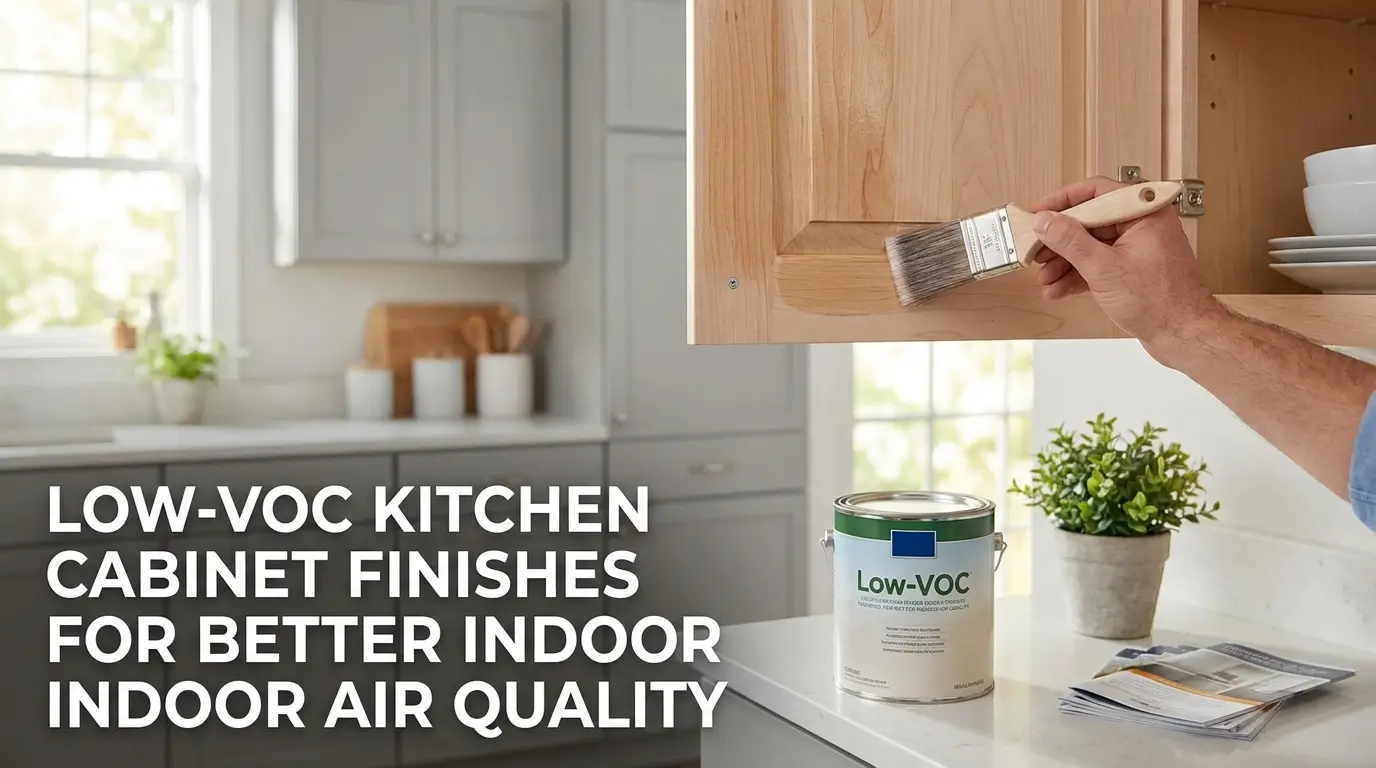
The kitchen is the room in any home where more time is spent breathing the air than almost anywhere else. It is where the household gathers multiple times every day, where food is prepared in conditions of heat and moisture that amplify the release of airborne compounds from every material surface in the space, and where children, elderly family members, and anyone with respiratory sensitivity spends significant daily time at close range to the cabinet surfaces that line most of its walls. Given all of this, it is remarkable how little attention is paid to the chemical composition of the finishes applied to those cabinet surfaces when most Indian kitchen renovations are planned.
The standard Indian modular kitchen cabinet is almost universally finished with solvent-based lacquers, synthetic laminates, or PU coatings that were chosen for their durability, their glossy appearance, and their resistance to the heat and moisture that an Indian kitchen generates in abundance. These are legitimate practical requirements, and the finishes that meet them most conveniently happen also to be among the most significant contributors to poor indoor air quality in the modern home. Most traditional kitchen cabinets are built using materials like MDF, plywood, and particleboard which contain formaldehyde-based adhesives. Over time these adhesives emit formaldehyde into the home’s air, a process known as off-gassing that can continue for years after installation. Traditional cabinets are also often finished with solvent-based paints and sealants which release VOCs into the air, causing various health issues including headaches, dizziness, and respiratory problems even long after the cabinets have been installed.
The off-gassing problem in a kitchen is compounded by the cooking environment itself. Kitchens are particularly vulnerable because cooking produces heat and moisture which can exacerbate off-gassing from cabinet materials and finishes. The heat of daily Indian cooking, which involves open flames, pressure cookers, and wok-style high heat that raises the kitchen’s ambient temperature significantly above other rooms in the home, accelerates the release of VOCs from surrounding cabinet surfaces at precisely the moment when the kitchen is most occupied and most ventilated by the cook’s breathing. The result is a daily exposure to chemical compounds from cabinet finishes that most homeowners are entirely unaware of because the compounds are colorless, largely odorless after the initial installation period, and have health effects that accumulate slowly enough to be invisible in their early stages.
Modern homeowners in 2026 are acutely aware of indoor air quality. Traditional cabinets often use adhesives and finishes that release VOCs which can lead to sick building syndrome. By demanding low-VOC or formaldehyde-free cabinetry, families are prioritizing their respiratory health. The clean look now includes clean air. The demand for low-VOC kitchen cabinet finishes is not a niche concern for the chemically sensitive. It is a mainstream health consideration that is reshaping the global cabinet industry and that is increasingly relevant to Indian homeowners as awareness of indoor air quality grows.
Low-VOC Kitchen Cabinet Finish Options and Ideas
1. Understanding VOCs and Their Sources in Kitchen Cabinets
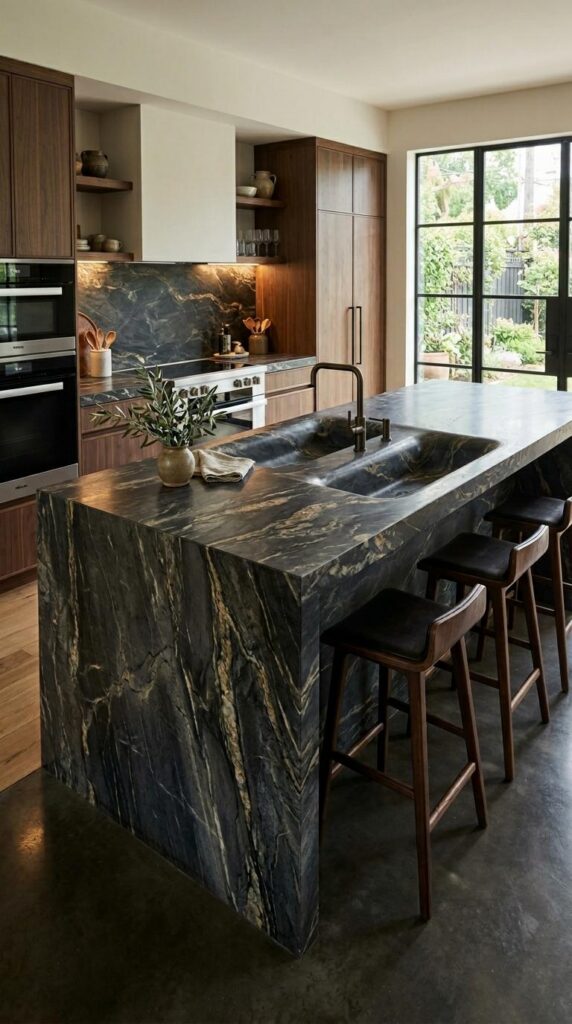
Volatile organic compounds are carbon-based chemicals that evaporate at room temperature and enter the indoor air as gases. In kitchen cabinets they originate from three primary sources, the substrate material that forms the cabinet box, the adhesive that bonds the substrate layers together, and the finish coat applied to the cabinet surfaces. Each of these sources contributes to the total VOC load in the kitchen environment, and addressing indoor air quality comprehensively requires attention to all three rather than focusing only on the finish layer while ignoring the chemical composition of the materials beneath it.
The substrate materials most commonly used in Indian modular kitchen cabinets, particleboard, MDF, and standard plywood, are all bonded with urea-formaldehyde adhesives that off-gas formaldehyde continuously from the moment they are manufactured. It can be difficult to completely avoid composite wood materials, especially when designing a kitchen on a budget. However, composite wood that incorporates little to no formaldehyde is available. Wood composite materials that meet the California Air Resources Board CARB standard for low formaldehyde emissions are labeled California Phase 2 Compliant. Labels to look for include ULEF meaning ultra-low emitting formaldehyde and NAF meaning no added formaldehyde.
In the Indian market, E0 grade plywood, which meets the most stringent formaldehyde emission standard and is designated with a formaldehyde emission level of 0.5mg per liter or below, is available from premium plywood manufacturers including Greenply, CenturyPly, and Kitply. Specifying E0 grade substrate material for kitchen cabinet boxes is the single most important low-VOC decision in any kitchen cabinet project because the substrate is the largest volume of material in the cabinet and therefore the largest potential source of formaldehyde emission into the kitchen environment.
2. Water-Based Cabinet Paints and Lacquers
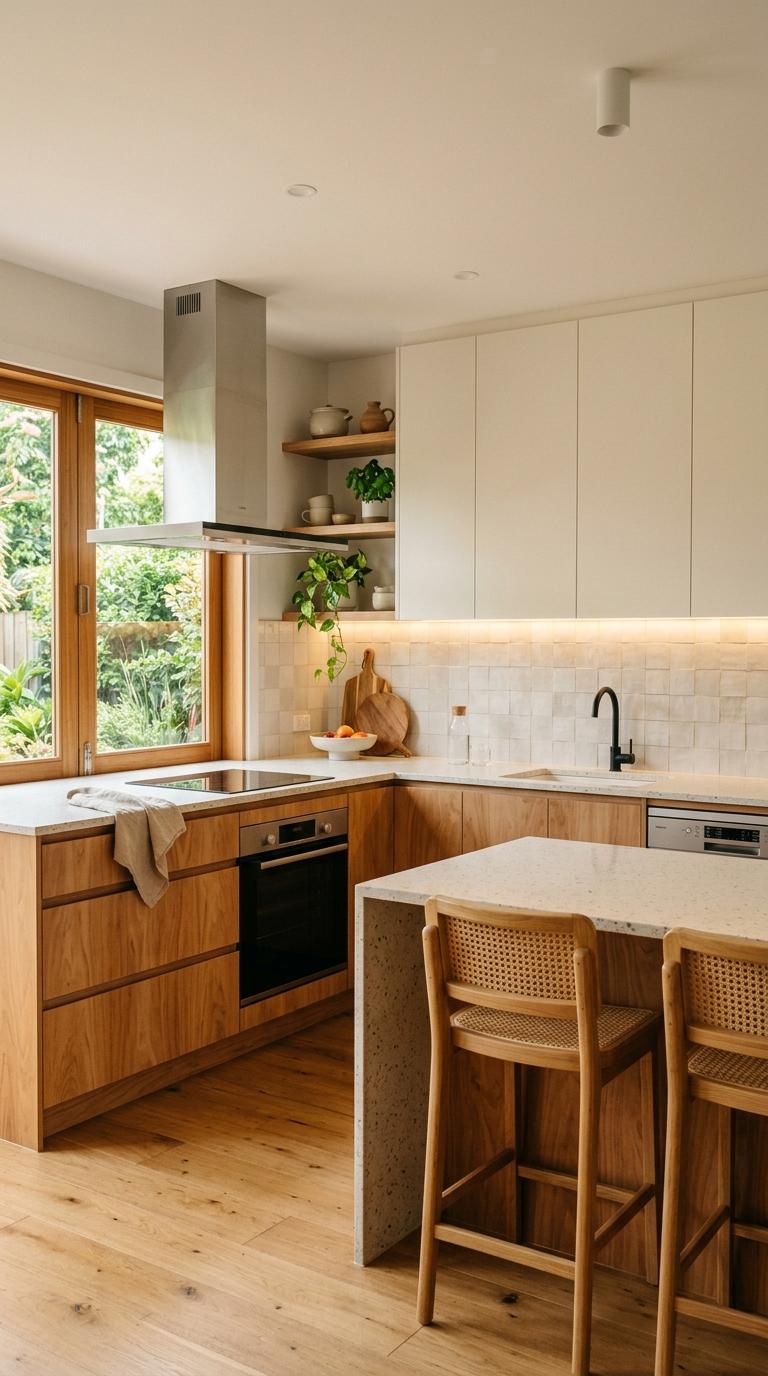
Water-based cabinet paints and lacquers are the most widely available and most practically accessible low-VOC finish option for kitchen cabinets in India, and the quality of these finishes has improved dramatically over the past decade to the point where the performance gap between water-based and solvent-based alternatives is now minimal in most kitchen applications. Water-based low-VOC finishes show minimal off-gassing with VOC levels below 50 grams per liter compared to 380 to 450 grams per liter in traditional solvent-based finishes, and they offer faster curing times, being ready to use in 24 to 48 hours versus weeks for oil-based products.
The practical advantages of water-based cabinet finishes extend beyond their lower VOC content. They dry significantly faster than solvent-based finishes, which reduces the installation timeline and the period during which the kitchen is generating peak off-gassing. They clean up with water rather than requiring solvent-based thinners and cleaners, which reduces the chemical exposure of the applicator and the household during and after application. And their lower odor level during application makes the installation process less disruptive and less unpleasant for families who remain in the home during cabinet painting.
In India, water-based cabinet paints are available from Asian Paints through their Apcolite and Royale range, from Berger Paints through their Silk and Easy Clean lines, and from Dulux through their Weathershield and Aquatech water-based formulations. Premium water-based cabinet lacquers specifically formulated for kitchen cabinetry applications, with the hardness and moisture resistance that kitchen use demands, are available through specialty paint distributors in major Indian cities.
The application of water-based cabinet finishes to achieve a kitchen-grade durable surface requires more coats than solvent-based alternatives, typically three to four coats compared to two for oil-based products, and the surface between each coat must be lightly sanded to achieve the smoothness and adhesion that a properly finished kitchen cabinet requires. Water-based finishes may need recoating approximately twenty percent more frequently than their solvent-based counterparts and are more sensitive to application temperature conditions. These are manageable practical considerations that do not significantly undermine the substantial health benefits of choosing water-based over solvent-based finishes for kitchen cabinets.
3. Natural Oil and Wax Finishes for Solid Wood Cabinets
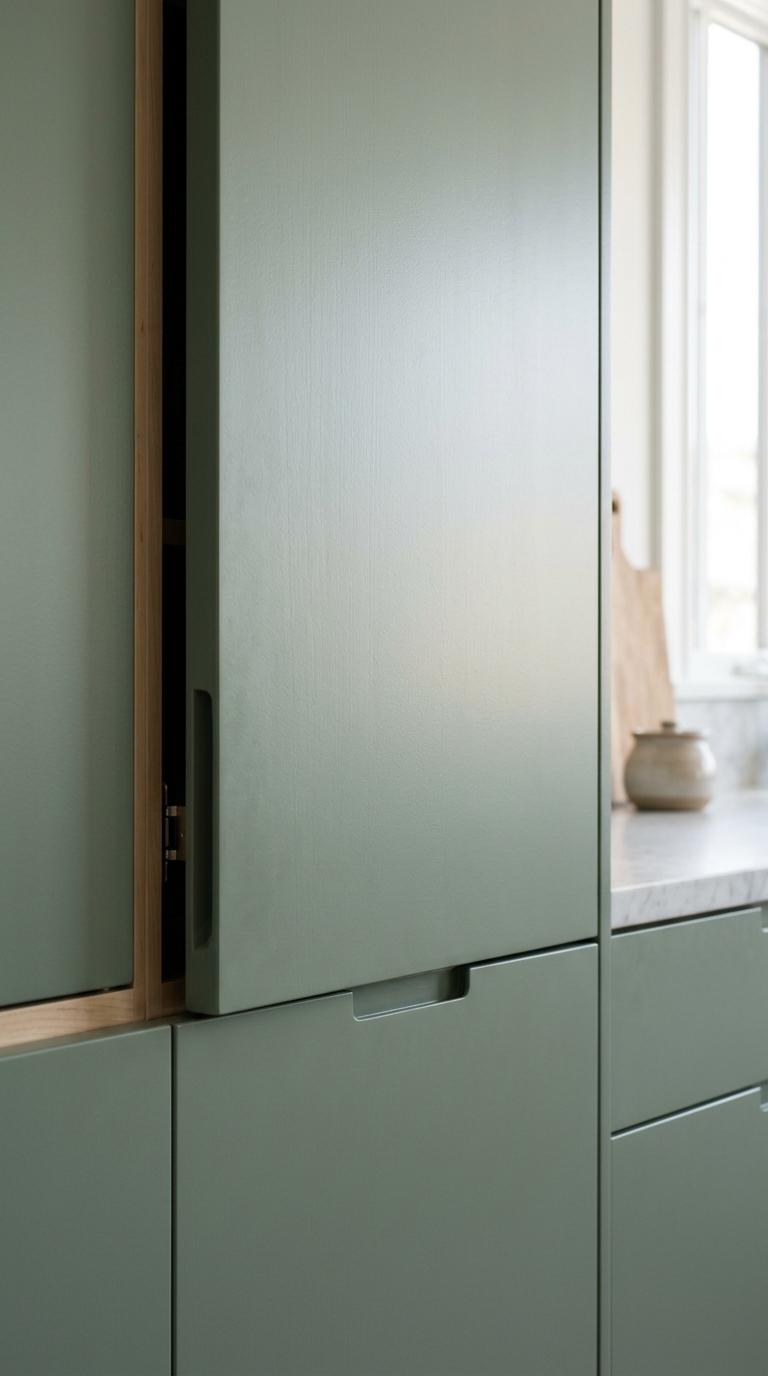
For kitchen cabinets made from solid wood rather than composite substrates, natural oil and wax finishes represent the most genuinely low-VOC finish option available because they are derived entirely from plant-based materials with no synthetic chemical solvents, no formaldehyde-releasing resins, and no petroleum-derived compounds. The oldest and most traditional finish system for interior woodwork, natural oils and waxes have been used on domestic furniture and cabinetry for centuries and continue to produce surfaces of extraordinary beauty and material authenticity.
Tung oil, linseed oil, and their various formulations with natural wax and resin additives penetrate the wood surface rather than sitting on it, creating a finish that enhances the natural grain and color of the wood while providing meaningful protection against the moisture and staining that kitchen use generates. The surface quality of a properly oiled solid wood cabinet is fundamentally different from a lacquered or painted surface, it has a warmth and a depth and a tactile quality that manufactured finishes cannot replicate, and it develops a patina over time that makes the cabinet more beautiful with age rather than less.
The practical limitations of natural oil finishes for Indian kitchen cabinets are real and should be understood clearly before specifying them. They provide less resistance to the high heat and heavy moisture of Indian cooking than hard synthetic finishes, and they require periodic reapplication every one to three years depending on the intensity of use to maintain their protective qualities. They are not appropriate for MDF or particleboard substrates, which cannot absorb oil penetrating finishes and require surface-building film finishes to achieve adequate durability.
For a kitchen designer or homeowner committed to the lowest possible VOC finish while accepting a higher maintenance regime, natural oil finishes on solid teak, sheesham, or mango wood cabinets create a kitchen of extraordinary material quality and complete chemical safety that no synthetic finish system can approach in terms of indoor air quality performance.
4. UV-Cured Water-Based Finishes
There is a massive rise in water-based UV-cured finishes and natural oils that provide a beautiful matte or textured look. These finishes are not only safer for indoor air quality because of low VOC levels but are also exceptionally durable. UV-cured finishes represent the most technically sophisticated end of the low-VOC cabinet finish spectrum, combining the chemical safety of water-based formulations with a curing process that uses ultraviolet light rather than heat or air drying to achieve a hardness and durability that conventional water-based finishes cannot match.
In a UV-cured water-based finish system, the coating is applied as a water-based liquid and then exposed to ultraviolet light that instantly cross-links the polymer chains in the coating, creating a fully cured surface in seconds rather than hours. The result is a finish of exceptional hardness, scratch resistance, and chemical resistance that meets or exceeds the durability of solvent-based finishes while having a VOC content that is dramatically lower, often below ten grams per liter compared to the four hundred grams per liter typical of conventional nitrocellulose lacquers.
UV-cured finishes are primarily available through cabinet manufacturers who have invested in UV curing equipment rather than as site-applied finishes, because the UV curing process requires specialized light equipment that is not practical for on-site application. Specifying UV-cured water-based finish cabinets from a manufacturer who uses this technology is therefore a procurement decision rather than a specification decision for site application. In India, several premium modular kitchen manufacturers are beginning to adopt UV-cured water-based finish systems in response to growing demand for healthier cabinet finishes, and asking specifically about UV curing when evaluating modular kitchen suppliers is a useful screening question for homeowners prioritizing indoor air quality.
5. Powder Coating for Metal Cabinet Frames and Components
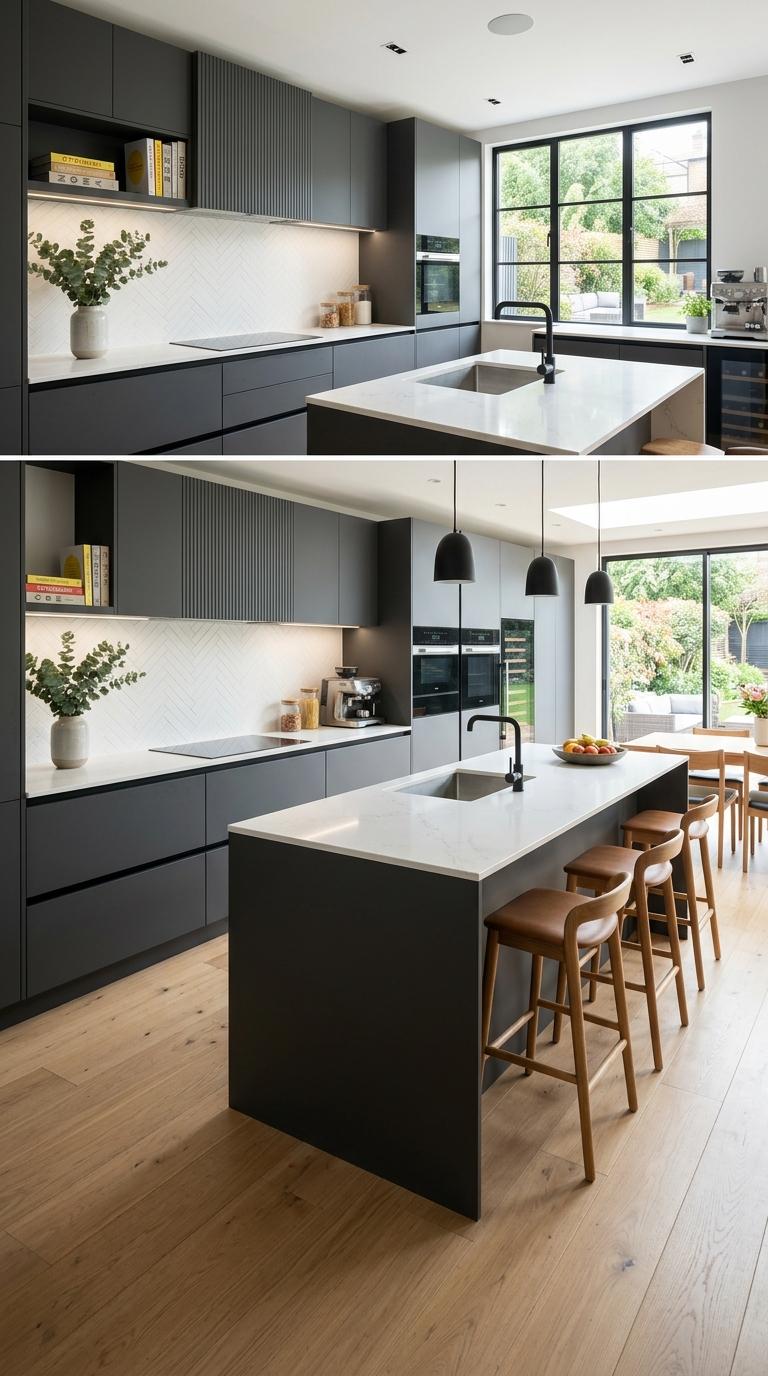
For kitchen cabinets with aluminum or steel frame components, which are increasingly common in contemporary Indian kitchen design as the frameless European kitchen aesthetic gains popularity, powder coating is the finish technology that provides the best combination of low VOC performance, durability, and design flexibility. Powder coating applies a dry powder of resin and pigment electrostatically to the metal surface and then cures it in an oven at high temperature, producing a finish that releases essentially zero VOCs during application and zero VOCs after curing because the cross-linked polymer formed in the curing process is chemically inert.
The durability of powder-coated metal cabinet frames is exceptional, resisting impact, scratching, moisture, and chemical exposure at a level that painted finishes cannot match. In an Indian kitchen environment where the combination of cooking heat, moisture, cooking oil vapors, and regular cleaning with various detergents creates demanding conditions for any cabinet finish, powder-coated aluminum frames with low-VOC panel inserts create a cabinet system of both superior chemical safety and superior long-term durability.
Powder coating is not available for site application because it requires both electrostatic application equipment and industrial ovens for curing. It is exclusively a factory-applied finish, which means that powder-coated components must be specified at the procurement stage and cannot be applied or repaired on-site in the conventional sense. Touch-up powder coating for minor damage is available through specialist automotive and industrial finishing shops in most Indian cities.
6. Hardwax Oil Finishes for Interior Cabinet Surfaces
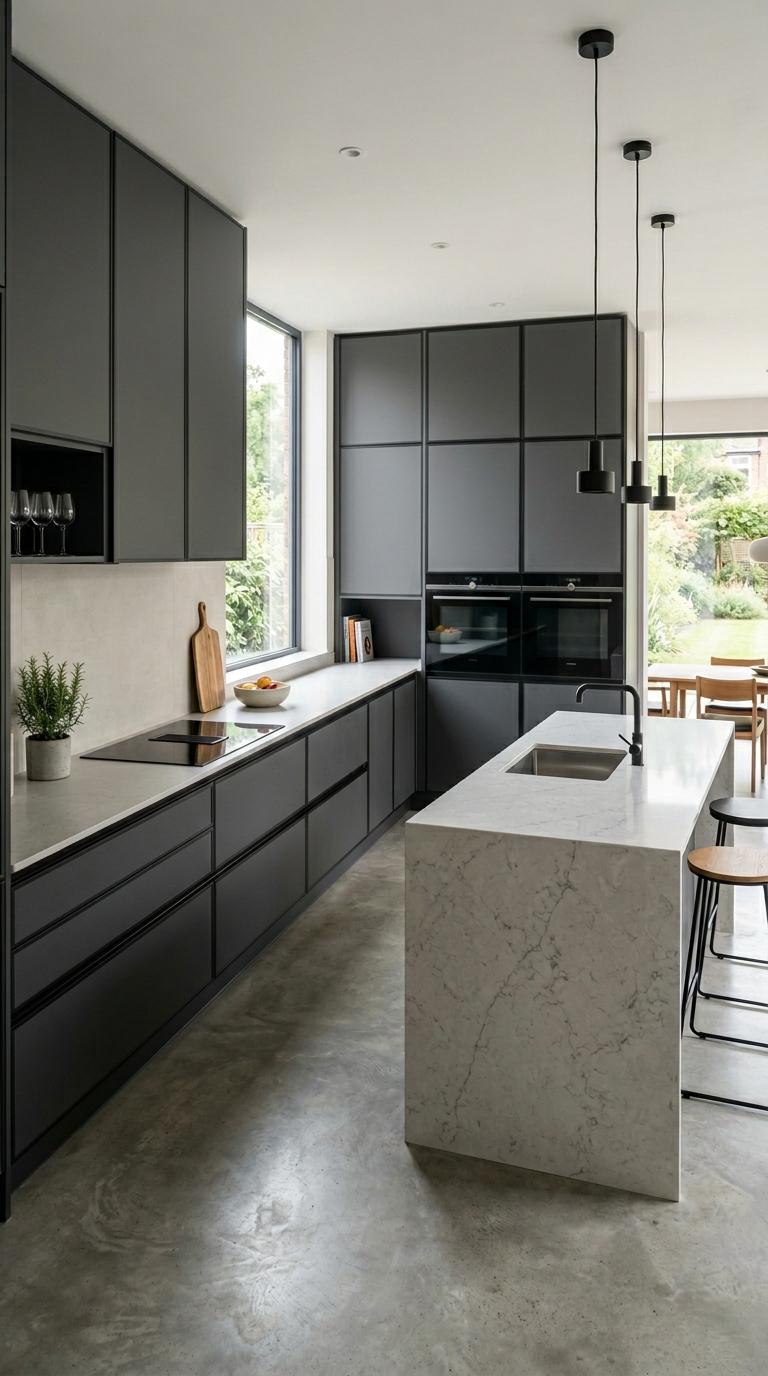
Hardwax oil is a specific category of natural finish that combines the penetrating quality of natural oil with the surface-building protection of natural wax in a single-product formulation that is significantly easier to apply than traditional two-stage oil and wax systems while delivering comparable or superior protection and appearance. The best hardwax oil products are formulated entirely from plant-based materials, linseed oil, carnauba wax, sunflower oil, and natural resin, with no synthetic solvents, no formaldehyde-releasing compounds, and no petroleum-derived ingredients.
Hardwax oil finishes are particularly well suited to the interior surfaces of kitchen cabinets, the shelf surfaces and interior walls where food contact is possible and where the chemical safety of the finish material is most directly relevant to health. Applying a hardwax oil to the interior of kitchen cabinets finished with a different low-VOC material on the exterior creates a comprehensive finish system that addresses indoor air quality from both the visible and the hidden surfaces of the cabinet installation.
The application of hardwax oil to interior cabinet surfaces is straightforward enough for a homeowner to undertake independently. The oil is applied with a cloth or a brush, worked into the wood surface, and the excess wiped off before it dries. A single coat provides meaningful protection and a beautiful finish. Two coats provide excellent durability for the demanding environment of kitchen interior surfaces. The total VOC content of a hardwax oil finish applied by these means is minimal because the product has a very high proportion of non-volatile components that remain in the wood after the slight solvent content has evaporated.
7. Low-VOC Laminate and Veneer Applications
Laminates and wood veneers are among the most widely used cabinet finish materials in Indian modular kitchen design, and their VOC contribution depends primarily on the adhesive used to bond them to the cabinet substrate rather than on the laminate or veneer material itself. Conventional contact adhesives used to apply laminates to cabinet surfaces are among the highest VOC-content materials in the entire kitchen cabinet system, releasing significant quantities of solvent vapors during and after application.
Water-based contact adhesives for laminate bonding, which have been developed to replace solvent-based contact cements in applications where VOC reduction is required, are available from adhesive manufacturers in India including Pidilite, which markets water-based contact adhesives under the Fevicol brand for interior furniture applications. Specifying water-based adhesive for all laminate bonding in a kitchen cabinet project reduces the VOC contribution of the adhesive system dramatically compared to solvent-based alternatives while providing adequate bonding strength for the thermal and moisture conditions of an Indian kitchen environment.
Decorative laminates themselves vary significantly in their formaldehyde content depending on the resin system used in their manufacture. Melamine-faced laminates made with low-formaldehyde or formaldehyde-free resin systems are available from premium laminate manufacturers and are identifiable through the same CARB Phase 2 and E0 emission standards that apply to composite wood substrates. Asking laminate suppliers specifically for emission test data rather than accepting general assurances of low-VOC compliance is the most reliable way to ensure that the laminate specified for a kitchen project genuinely meets the standard claimed.
8. GreenGuard and Green Seal Certifications as Selection Tools
Navigating the low-VOC cabinet finish market in India is complicated by the proliferation of unverified environmental claims from manufacturers and suppliers whose marketing describes their products as eco-friendly, natural, or low-VOC without providing the technical data to substantiate those claims. Independent third-party certification provides the most reliable basis for evaluating the genuine indoor air quality performance of cabinet finish products and substrate materials.
Asking your cabinet provider for finish certifications like GreenGuard or Green Seal provides verification that the products meet established standards for indoor air quality and low chemical emissions. GreenGuard certification, issued by UL Environment, requires products to meet specific chemical emission limits for over three hundred VOCs and chemical compounds, and GreenGuard Gold certification applies the more stringent standards appropriate for schools and healthcare environments where chemical sensitivity is most critical. Products carrying GreenGuard certification can be verified through UL’s online certification database.
In the Indian market, GreenGuard-certified cabinet materials and finishes are available primarily through premium and international brand suppliers rather than through the standard modular kitchen market. Their availability is growing as Indian manufacturers and suppliers respond to the increasing demand from health-conscious consumers and from projects seeking LEED or IGBC green building certification where low-emission materials are a scoring criterion. The price premium for certified low-VOC materials over conventional alternatives is typically in the range of ten to twenty percent, which is modest relative to the total cost of a kitchen renovation and the lifetime health benefit of breathing cleaner air in the kitchen every day.
9. Ventilation as a Complement to Low-VOC Finishes
The specification of low-VOC cabinet finishes significantly reduces the chemical load in the kitchen’s indoor air, but it does not eliminate it entirely, and complementing the low-VOC material strategy with adequate kitchen ventilation ensures that whatever residual chemical emissions do occur from cabinet surfaces, cooking byproducts, and other kitchen sources are effectively removed from the indoor air rather than accumulating to levels of health concern.
An effective range hood with external venting, rather than the recirculating type that filters and returns air to the kitchen rather than exhausting it outside, is the most important ventilation component for an Indian kitchen where the cooking process itself generates significant quantities of combustion byproducts, cooking oil vapors, and moisture that would overwhelm any cabinet finish’s contribution to indoor air quality if they were not exhausted. A range hood with a minimum extraction capacity of 400 to 600 cubic meters per hour for a standard Indian compact kitchen, fitted with a grease filter that is cleaned regularly, removes the primary chemical load from the kitchen air and makes the remaining contribution of cabinet off-gassing a smaller fraction of the total indoor air quality picture.
Cross-ventilation through a kitchen window open during and after cooking provides additional dilution of indoor chemical concentrations at no cost and with no energy consumption. The Indian tradition of cooking with the kitchen window open, which persists in many households despite the encroachment of air conditioning into the kitchen environment, is one of the most effective and most natural indoor air quality management strategies available and should be actively maintained rather than abandoned in the pursuit of a fully climate-controlled kitchen environment.
10. The Cabinet Renovation Approach for Existing Kitchens
For homeowners with existing kitchens whose cabinets were installed with conventional high-VOC finishes, a complete cabinet replacement to achieve low-VOC performance is rarely necessary and rarely the most practical approach. The off-gassing rate of existing cabinet finishes decreases significantly over time as the volatile compounds deplete, which means that cabinets installed five or more years ago have already released the majority of their initial VOC load and are off-gassing at rates substantially lower than newly installed high-VOC cabinets.
Because cabinets off-gas over time, older cabinets at some point will off-gas relatively little formaldehyde. Refinishing used cabinets with no-VOC stains and paints is the least expensive option. Buy used cabinets that you can repaint and reseal using no-VOC paints and sealants. For existing kitchen cabinets in good structural condition, refinishing with a low-VOC water-based paint applied over the existing finish after appropriate surface preparation creates a significant improvement in the chemical emission profile of the cabinet surfaces while renewing their appearance and extending their service life at a fraction of the cost of replacement.
The refinishing approach involves cleaning the existing cabinet surfaces thoroughly, lightly sanding to create adhesion for the new coat, applying a water-based primer, and finishing with two to three coats of water-based cabinet paint in the chosen color. The new water-based finish coats seal the surface of the existing cabinet material, reducing off-gassing from the substrate and previous finish layers while introducing minimal new chemical compounds of their own. The result is a kitchen that looks completely renewed and that has a significantly better indoor air quality profile than before the refinish, achieved at a cost that makes the health investment genuinely accessible to any household regardless of renovation budget.
Building a Complete Low-VOC Kitchen Cabinet System
A comprehensively low-VOC kitchen cabinet system addresses every layer of the cabinet construction simultaneously, substrate material, adhesive system, primer, and finish coat, rather than substituting a low-VOC finish over a high-VOC substrate and claiming the result as a healthy kitchen. Low-VOC kitchen cabinets are typically made from formaldehyde-free plywood, eco-friendly MDF, and sustainable hardwoods, with water-based finishes and low-VOC adhesives ensuring that these cabinets contribute to a healthier indoor environment while still offering durability and aesthetic appeal.
The practical specification for a comprehensive low-VOC Indian kitchen cabinet project would include E0 grade formaldehyde-free plywood or solid wood for cabinet boxes, water-based contact adhesive for all laminate bonding, GreenGuard-certified low-VOC or zero-VOC primer, water-based cabinet lacquer or UV-cured water-based finish for all exterior surfaces, and hardwax oil for interior surfaces where food contact is possible. This complete system specification produces a kitchen cabinet installation of genuine indoor air quality integrity rather than the partial benefit of a low-VOC finish applied to a high-VOC substrate.
A Kitchen Worth Spending Time In
The kitchen is where food is prepared and where the household gathers multiple times every day. It is the room in the home where indoor air quality most directly affects the health of everyone who lives there, and it is the room where the materials chosen for its construction have the most immediate and most sustained contact with the people it serves. For modern homes in 2026, the clean look now includes clean air. Styles that provide the minimalist aesthetic popular in modern homes while ensuring cabinetry meets rigorous low-emission standards represent the convergence of aesthetic intelligence and health responsibility that the best contemporary kitchen design demands. A kitchen whose cabinet finishes have been chosen with the same care and the same intelligence applied to its layout, its material palette, and its lighting is a kitchen that is beautiful to look at and genuinely healthy to be in, which is the only standard that a room where food is prepared and family life is centered should ever be asked to meet.

Aarav Sharma is a passionate home and lifestyle writer. He loves exploring kitchen design, home decoration, and interior styling. With a keen eye for beautiful details and practical design ideas. Aarav Sharma shares inspiration to help readers create comfortable and functional living spaces.