
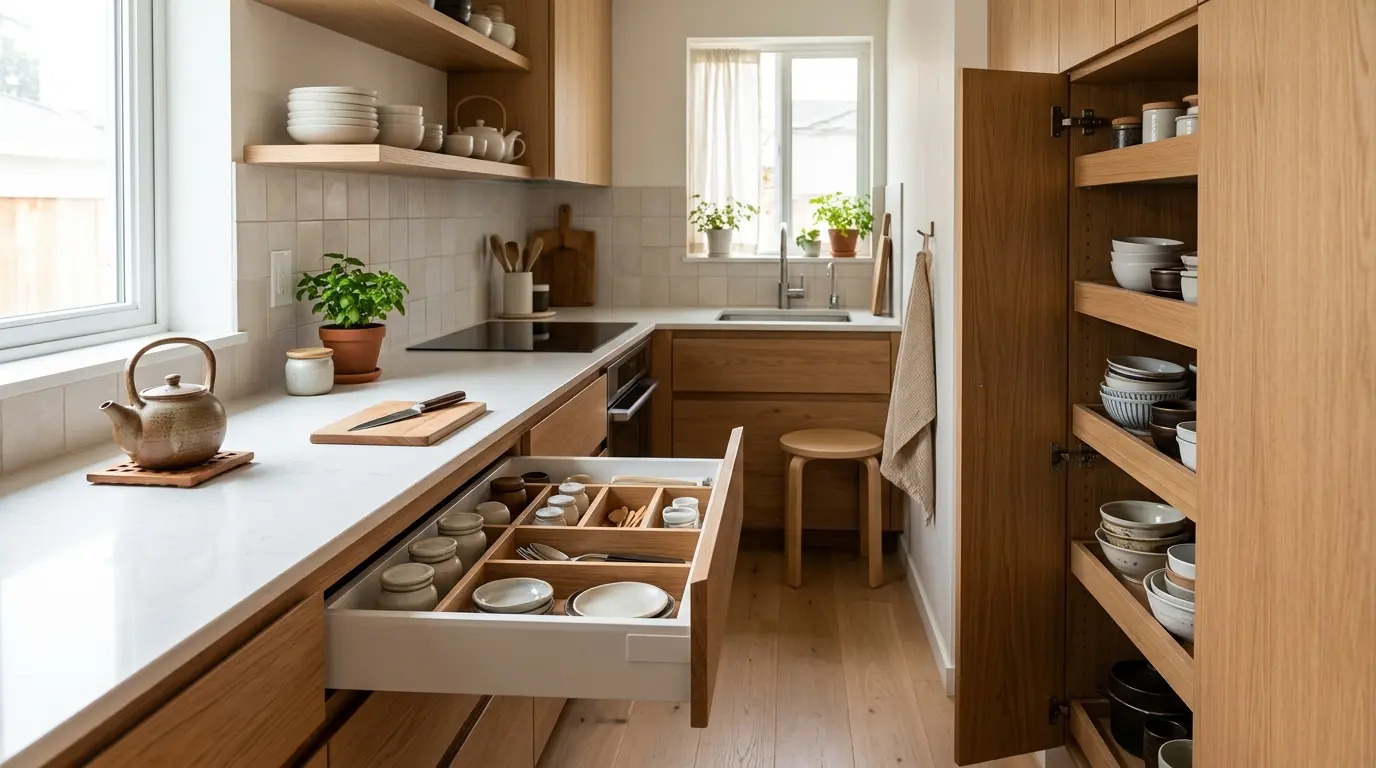
A minimalist Japanese kitchen is designed to do more with less. Clean lines, natural materials, and an uncluttered layout all work together to create a space that feels calm, purposeful, and highly functional. But achieving that look takes more than simply reducing the number of items on display. The real key is storage that keeps everyday necessities close at hand while allowing the kitchen itself to remain visually quiet.
Hidden storage ideas are one of the most effective ways to create this balance. Whether you are designing a compact apartment kitchen or a larger open-concept space, concealed storage can help preserve the simplicity that defines Japanese-inspired interiors. If you’re looking for ways to combine minimalism, warmth, and practicality, the following ideas can help show you how.
1. Flat-Front Cabinetry for a Seamless Look
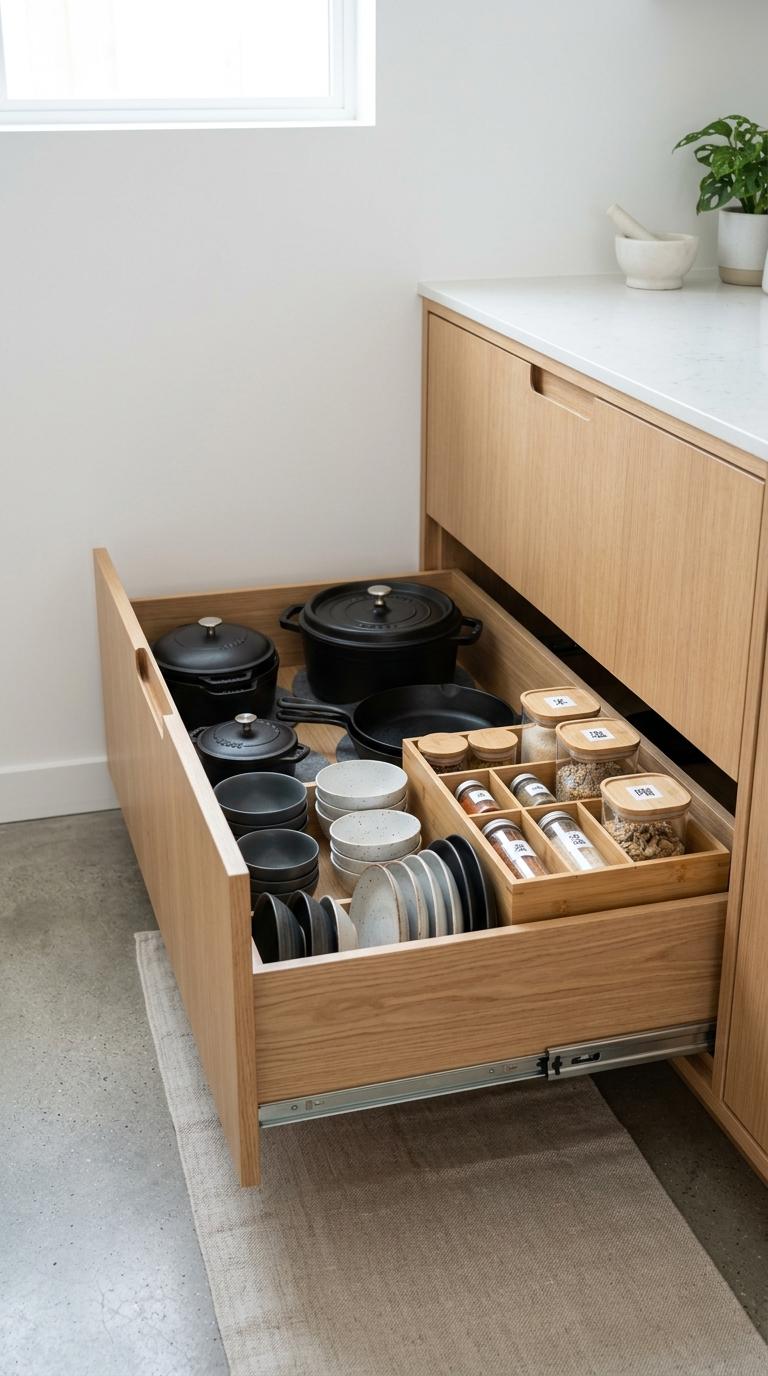
One of the most recognizable features of a minimalist Japanese kitchen is the use of flat-front cabinets. Without heavy molding, ornate panels, or visible hardware, the cabinetry blends into the architecture of the room. This helps reduce visual noise and creates a more peaceful environment.
Integrated finger pulls or push-latch systems make it possible to open cabinets without interrupting the smooth surface. The result is storage that remains fully functional while almost disappearing into the background.
2. Toe-Kick Drawers for Overlooked Space
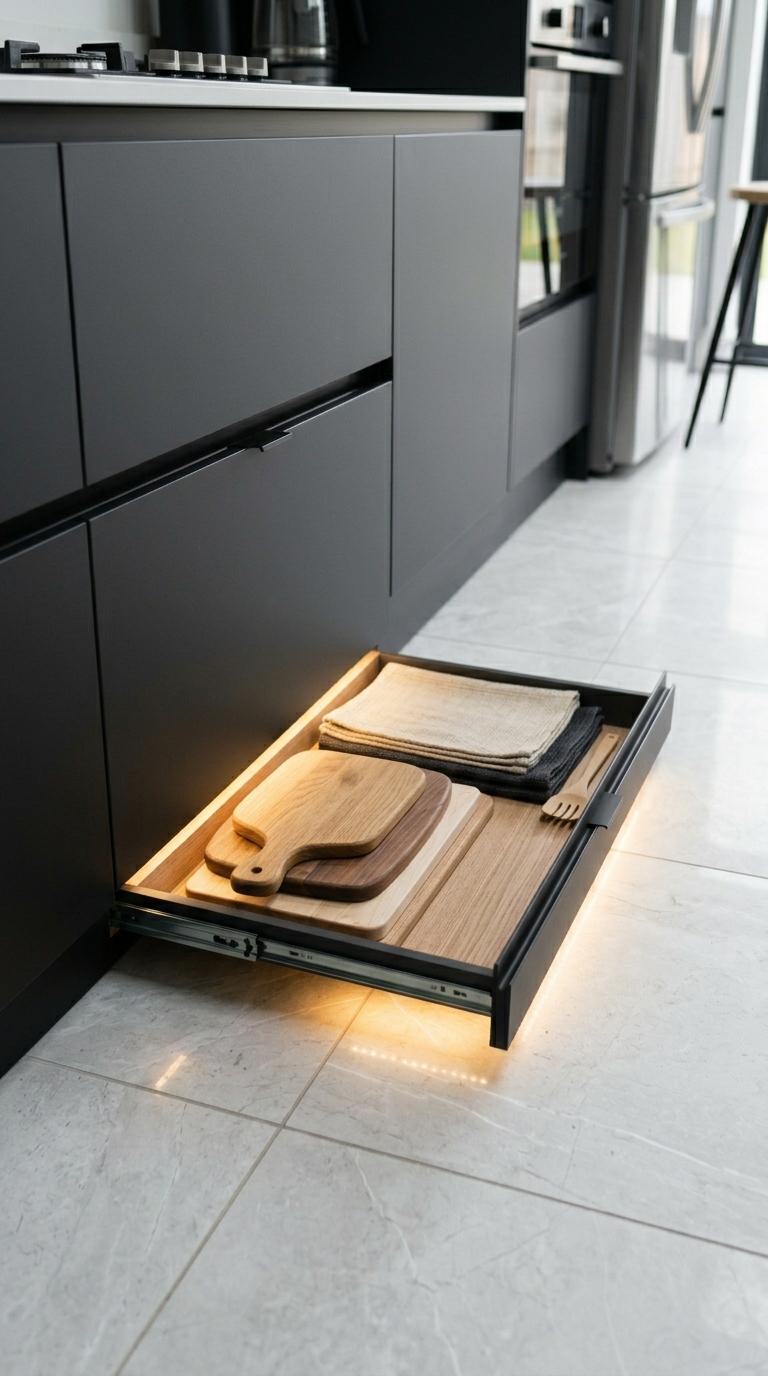
In a minimalist kitchen, every inch matters. Toe-kick drawers make use of the narrow space beneath lower cabinets, turning an often-unused area into practical hidden storage.
These drawers are ideal for flat or infrequently used items such as trays, placemats, linens, or cutting boards. Because they are tucked below the main cabinetry line, they stay almost completely out of sight while still adding meaningful storage capacity.
3. Appliance Garages to Reduce Counter Clutter
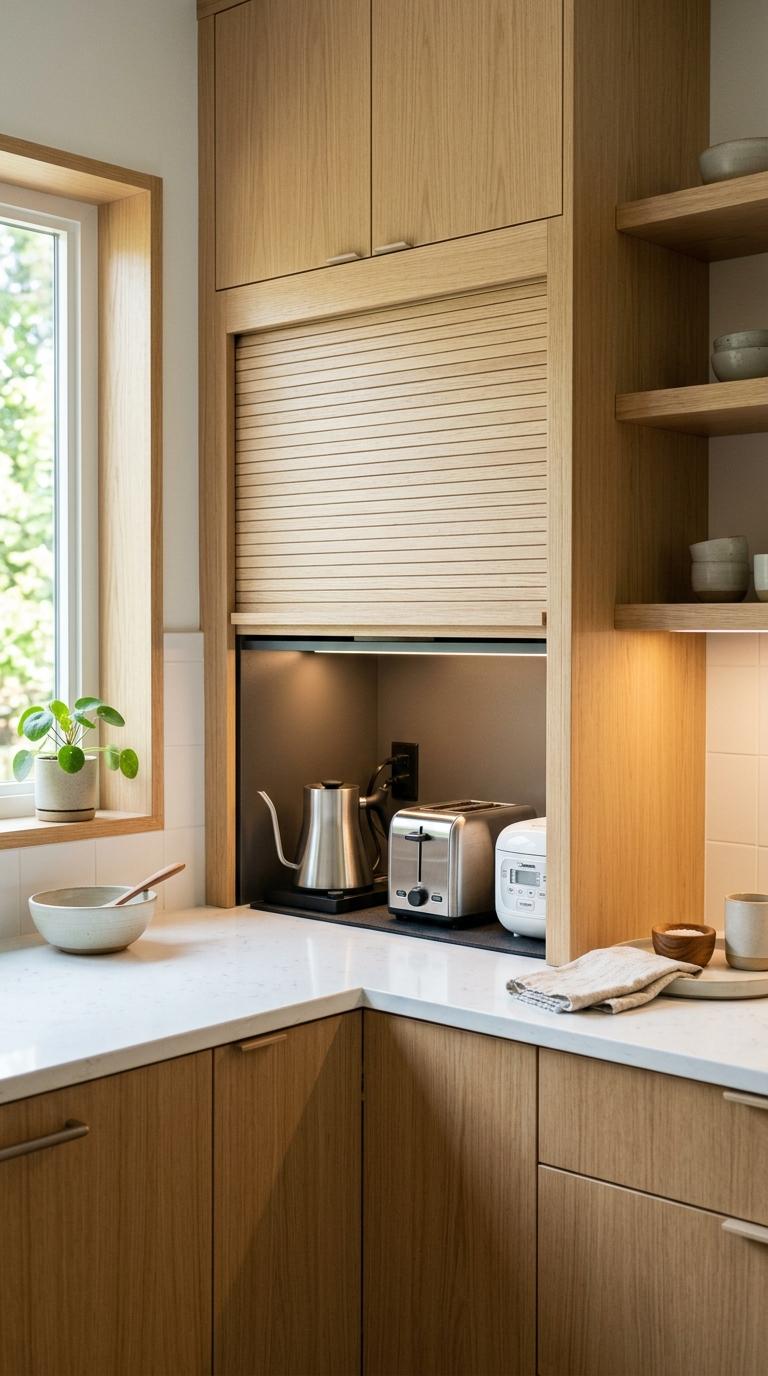
Japanese-inspired kitchens often emphasize clear countertops and intentional surfaces. Small appliances, while useful, can quickly disrupt that look. Appliance garages offer a simple solution by concealing coffee makers, toasters, rice cookers, and blenders behind retractable or lift-up doors.
This allows you to keep the tools you use every day nearby without letting them dominate the room visually. It also helps the kitchen feel more restful and organized throughout the day.
4. Pull-Out Pantry Columns
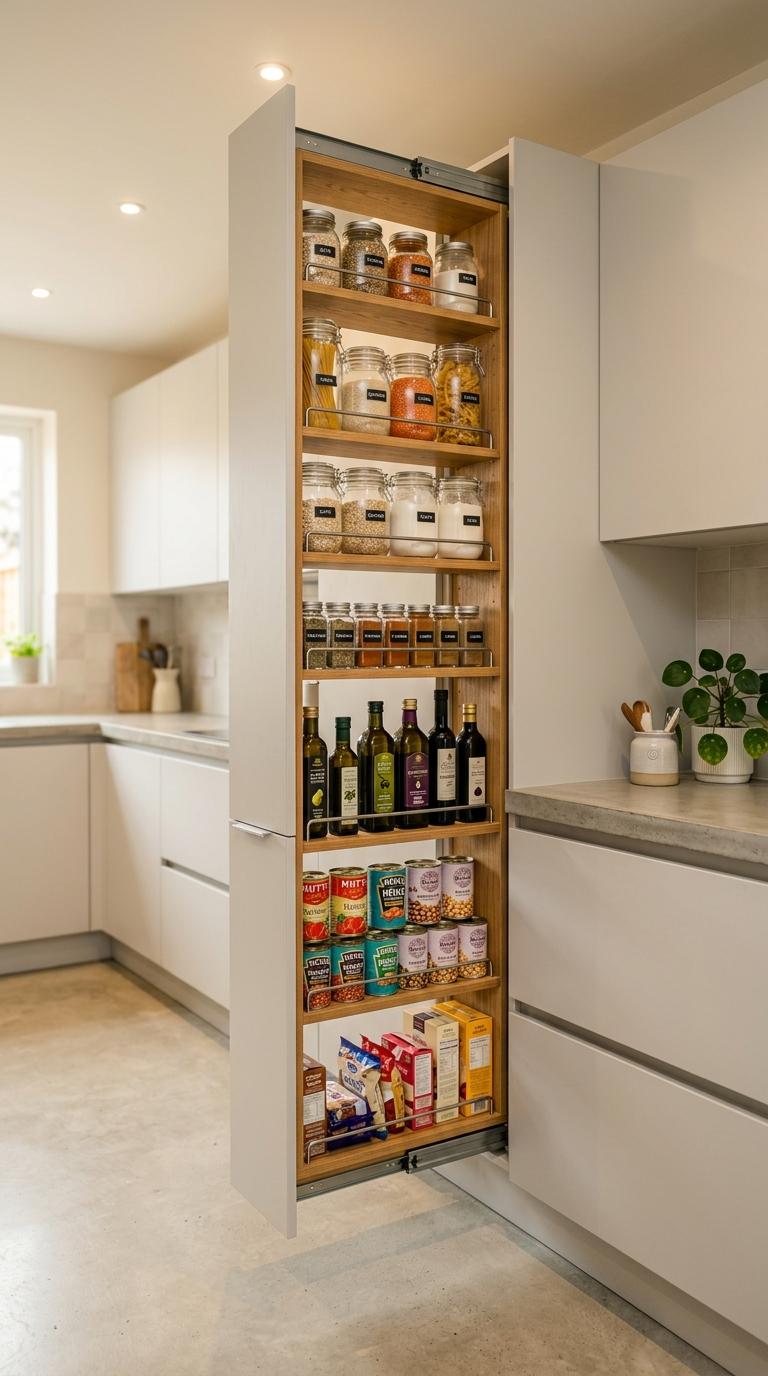
Tall pantry storage does not need to feel bulky or intrusive. Pull-out pantry columns can be built into cabinetry so that dry goods, oils, spices, and other essentials stay hidden until needed.
From the outside, the pantry reads as a clean vertical panel. Inside, it offers efficient access and organization. This is especially useful in smaller kitchens, where compact, high-capacity storage can make the room function much more effectively.
5. Concealed Refrigerator Panels
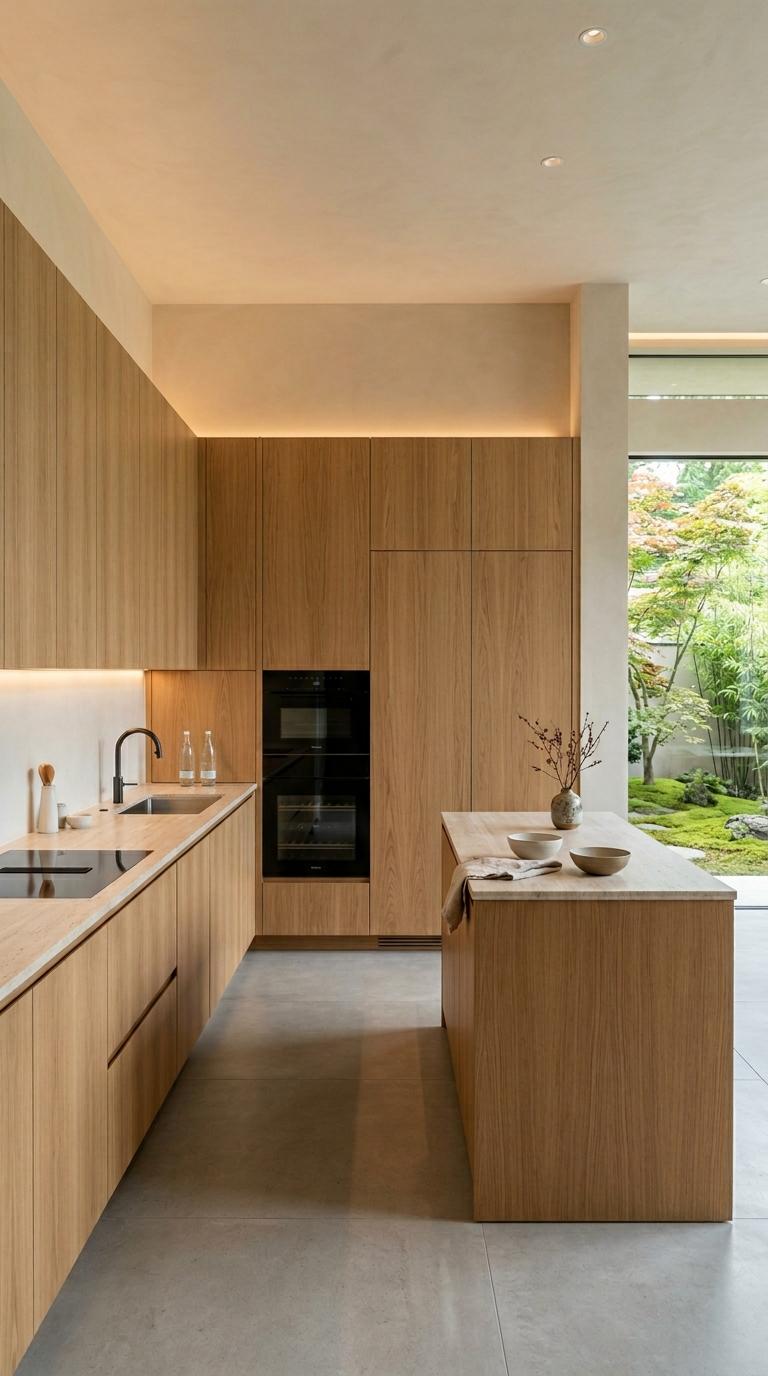
Large appliances can easily become the focal point of a kitchen, which works against a minimalist design. Panel-ready refrigerators help solve this by allowing the appliance door to match the surrounding cabinetry.
When finished in wood veneer, muted paint, or another natural-looking material, the refrigerator blends into the wall of cabinets rather than standing apart from it. This keeps the room visually balanced and supports a more unified design.
6. Hidden Drawers Within Drawers
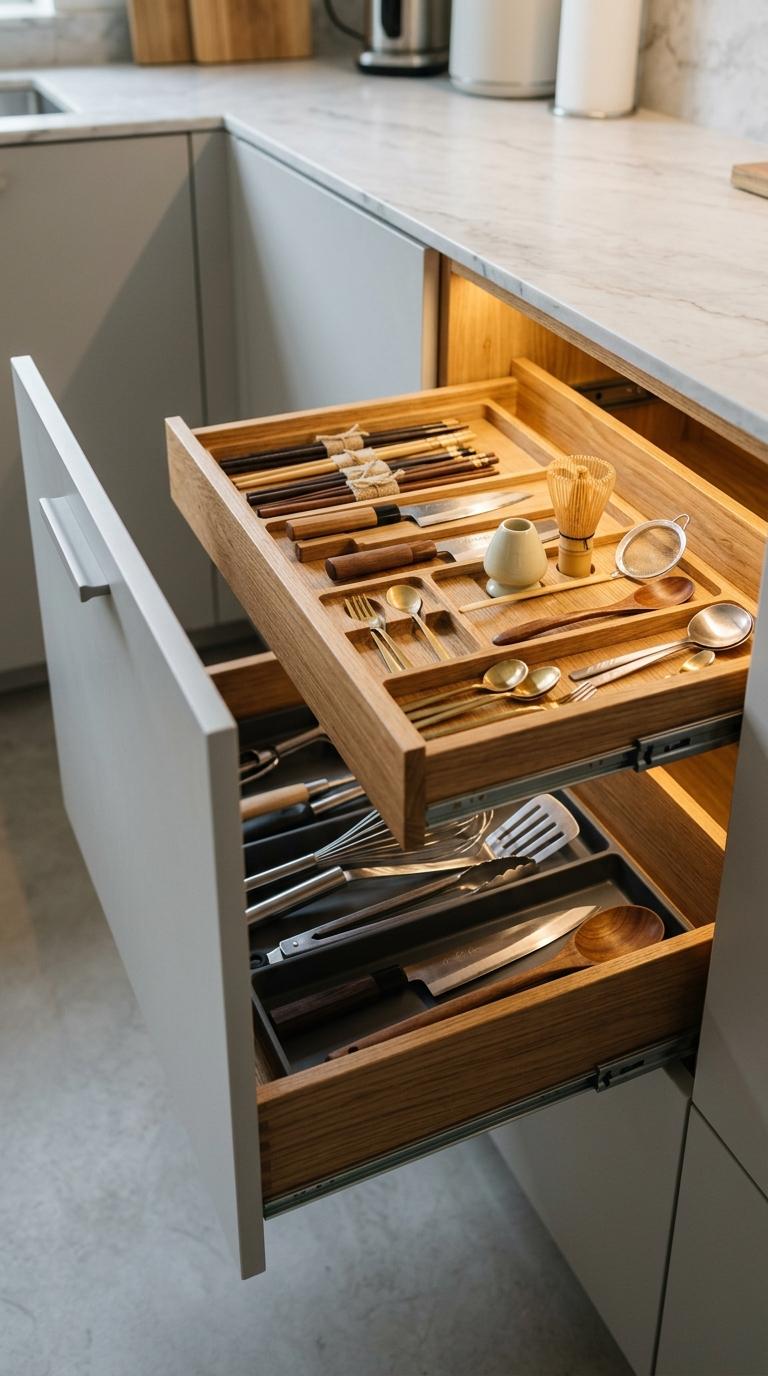
Deep drawers are useful, but they can also become disorganized quickly. One smart hidden storage idea is to place a shallow inner drawer above a deeper one. From the outside, it appears to be a single drawer front, but inside it offers layered storage.
This approach works particularly well for utensils, tea tools, knives, and smaller kitchen accessories. It helps maintain order while making the most of the available cabinet depth.
7. Sliding Panels for Flexible Concealment
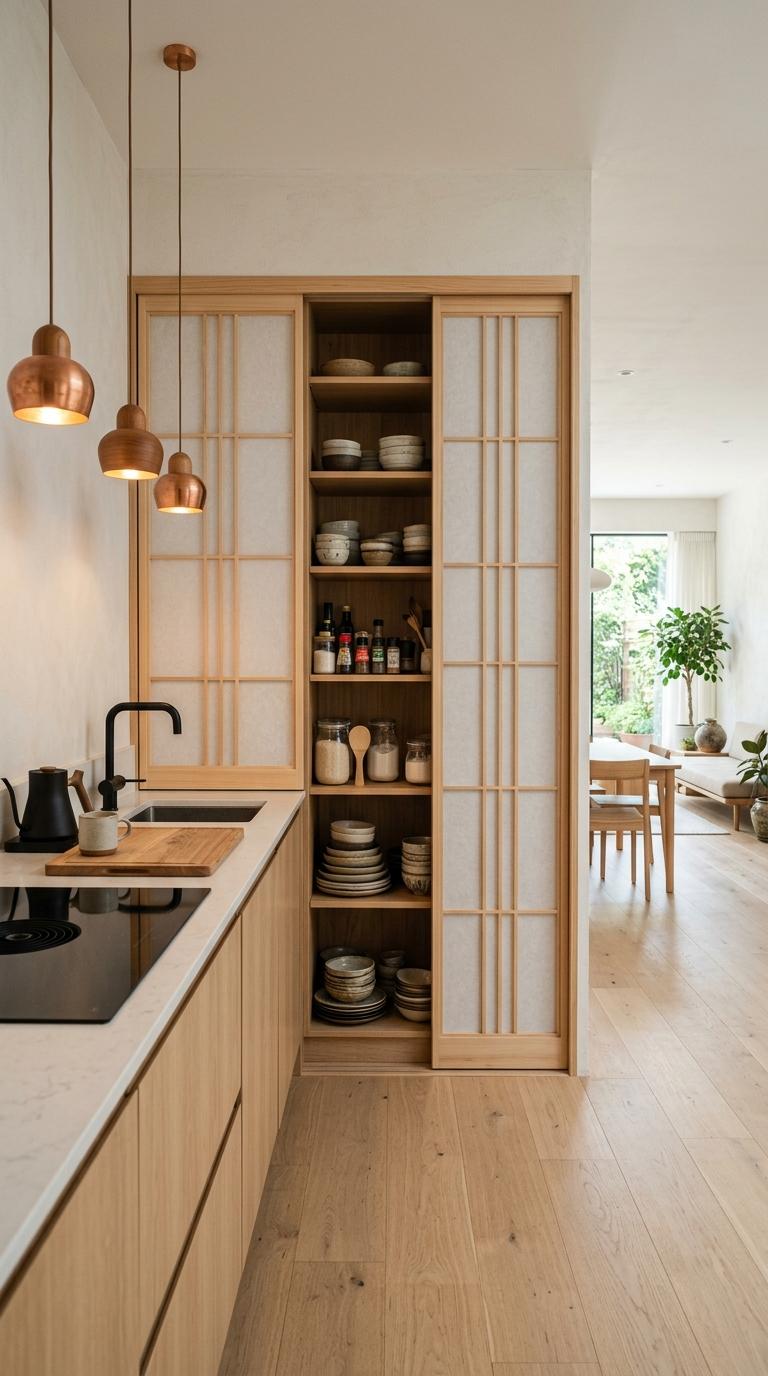
Inspired by traditional Japanese interiors, sliding panels can be used to conceal storage zones without the swing clearance required by standard doors. They can hide open shelving, pantry sections, or even an entire working counter.
This creates flexibility in the kitchen. You can reveal active preparation areas when cooking, then slide them closed when the work is done. The effect is especially helpful in open-plan homes where the kitchen is always visible.
8. Built-In Niche Storage Behind Clean Surfaces
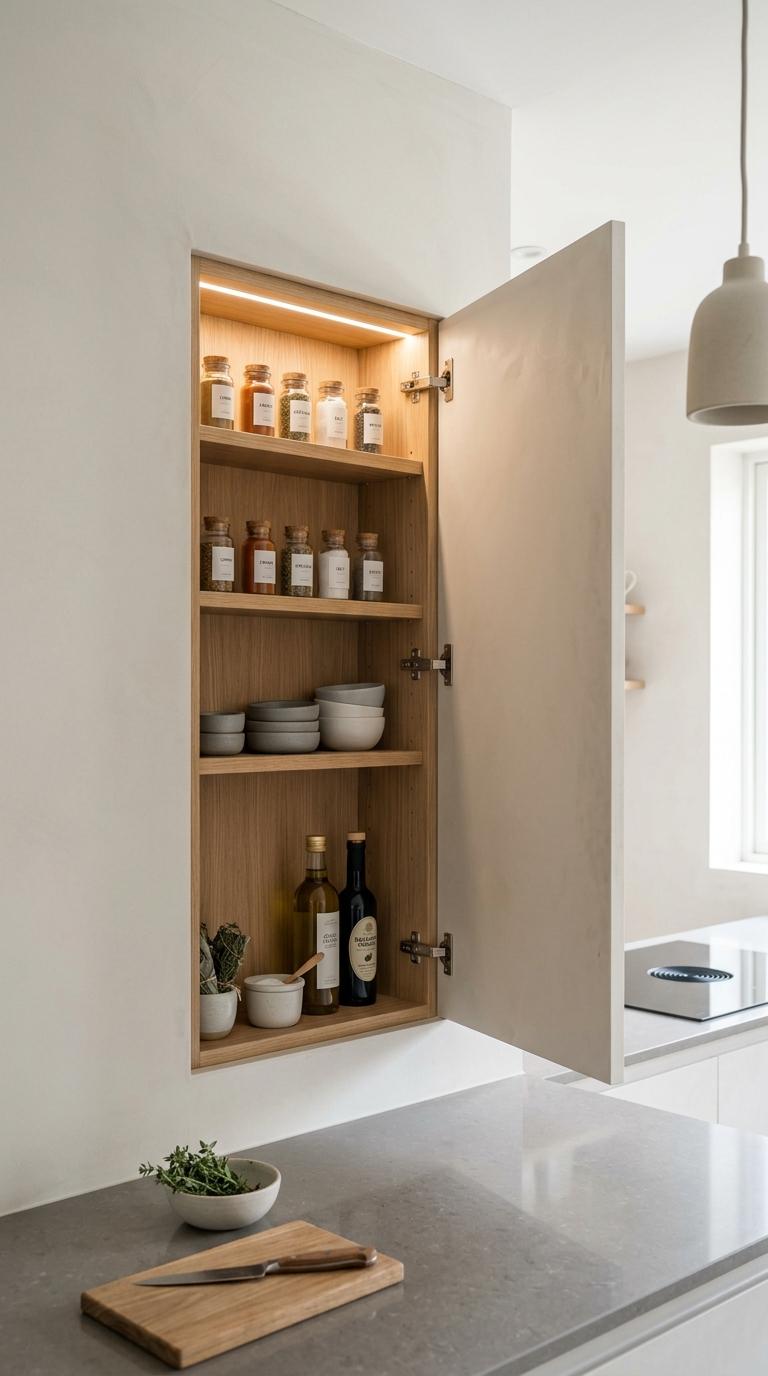
Minimalist kitchens benefit from thoughtful storage built into the walls themselves. Recessed niches behind cabinet doors or flush panels can hold spices, dishes, or cooking essentials without pushing cabinetry farther into the room.
This helps preserve circulation space while supporting the clean, lean proportions common in Japanese design. When closed, the storage disappears and allows the surfaces around it to remain calm and uninterrupted.
9. Bench Seating With Under-Seat Storage
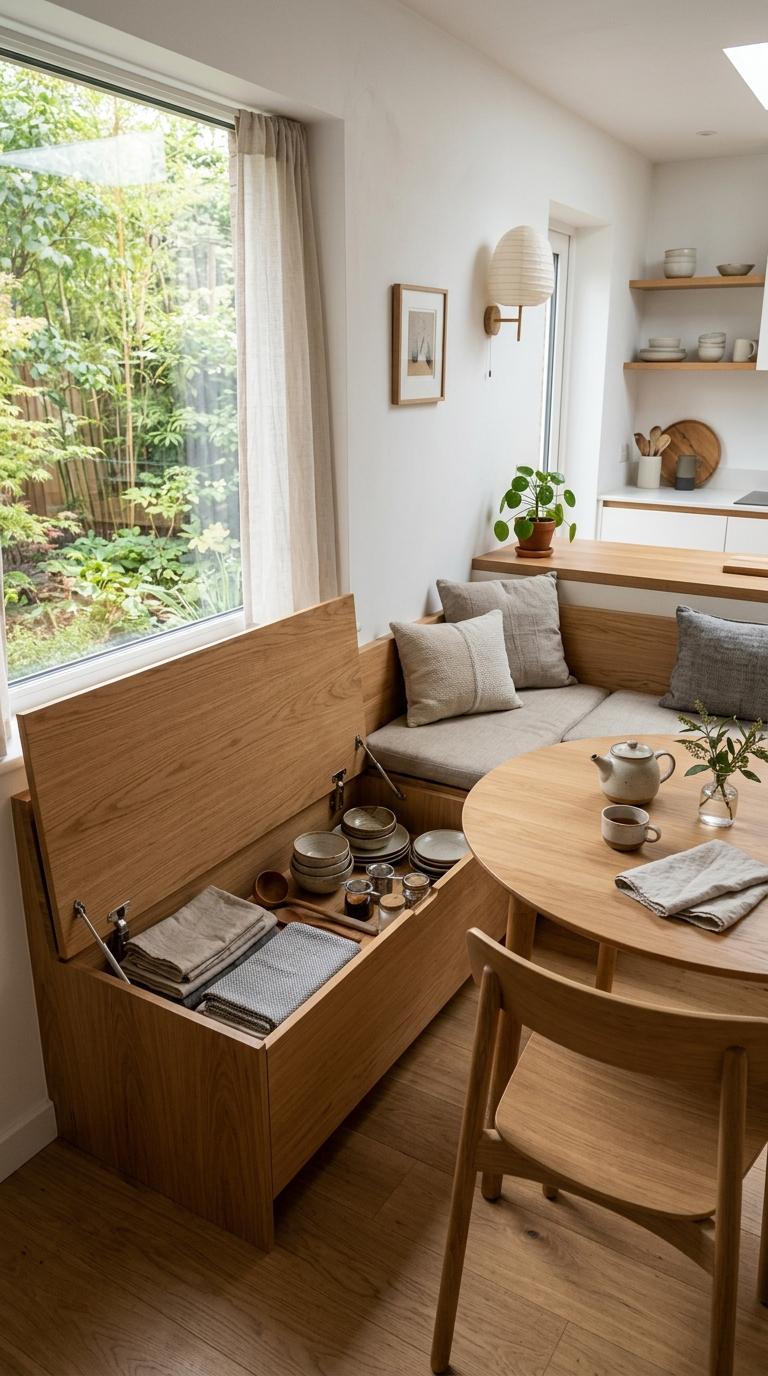
If your kitchen includes a breakfast nook or dining corner, built-in bench seating can provide hidden storage while reinforcing a simple architectural look. Lift-up seats or drawer bases can hold table linens, small appliances, or infrequently used serving pieces.
This type of storage is especially effective in smaller homes, where each furnishing element needs to serve more than one purpose. It also helps keep surrounding cabinets from becoming overloaded.
10. Integrated Waste and Recycling Stations
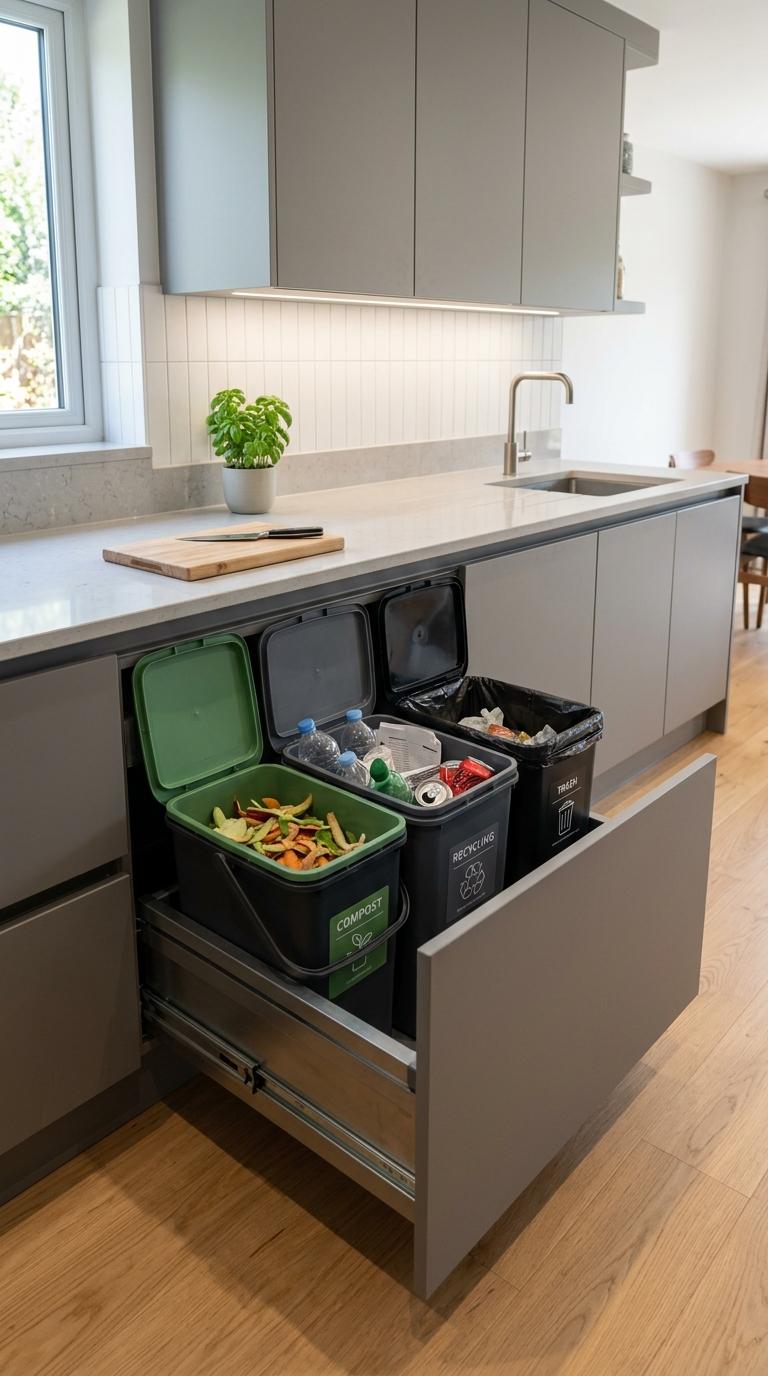
Visible trash bins can interrupt the serenity of a minimalist kitchen very quickly. Integrated waste and recycling pull-outs keep these necessities hidden behind matching cabinet fronts.
By assigning a dedicated concealed area for waste, compost, and recycling, you can maintain cleaner sightlines and improve the daily function of the room. It is a simple feature, but it makes a major difference in keeping the kitchen looking composed.
11. Hidden Open Shelving Behind Pocket Doors
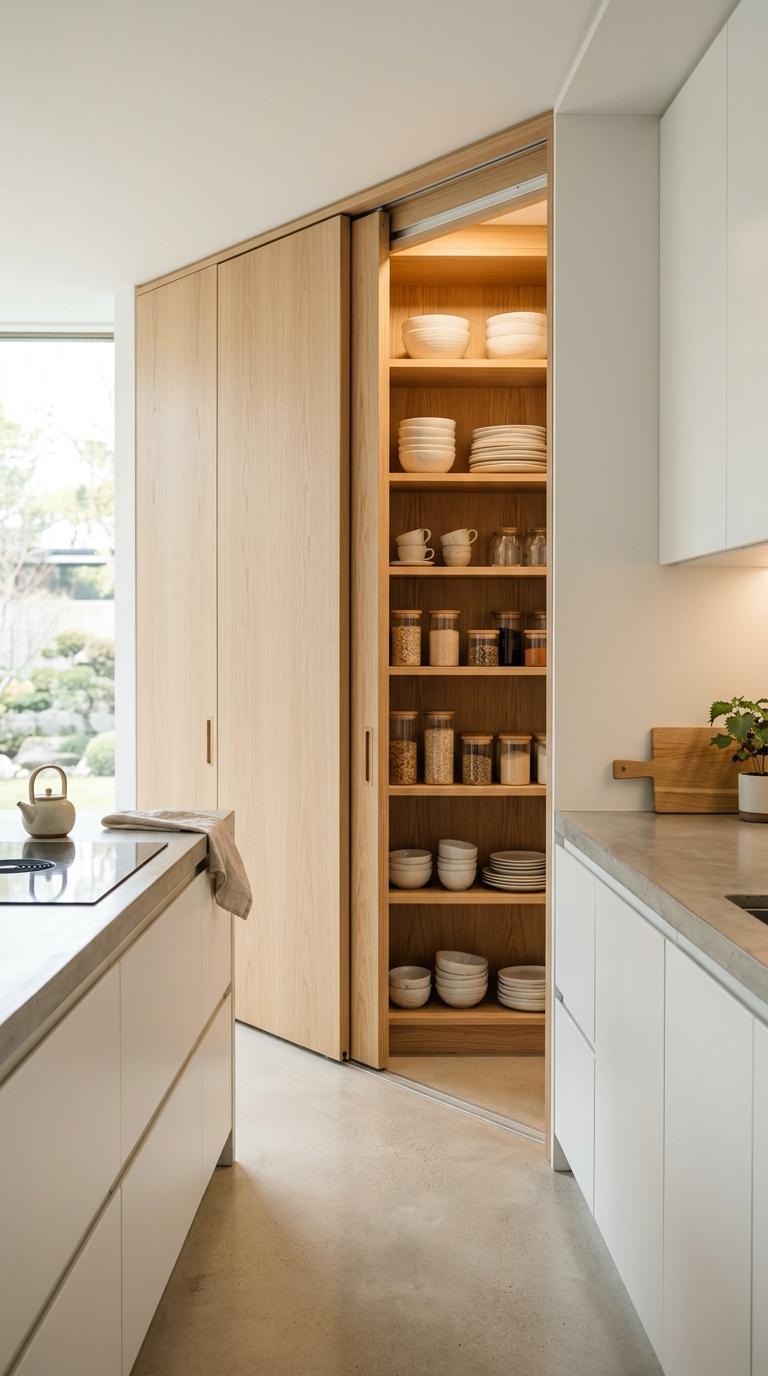
Open shelving can be beautiful, but it requires constant styling and upkeep. In a Japanese minimalist kitchen, pocket doors can be used to hide shelves when you want a cleaner appearance.
This allows you to enjoy easy access to dishes, bowls, or pantry items while still preserving the option to close everything away. It creates a kitchen that feels adaptable and intentional rather than busy.
12. Multipurpose Island Storage
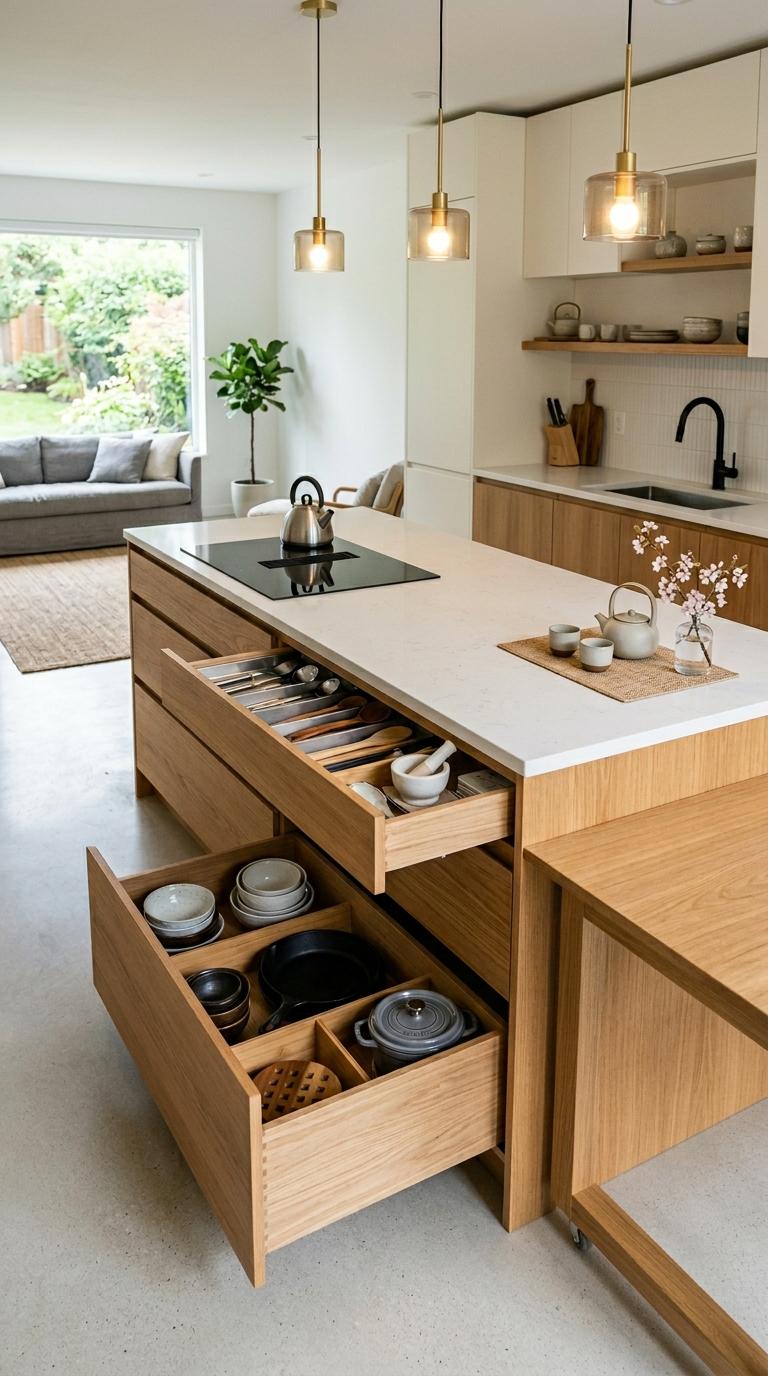
A kitchen island can do much more than provide extra workspace. In a minimalist layout, it can house concealed drawers, pull-out tables, hidden outlets, and storage for cookware or dining essentials.
When carefully designed, the island becomes a quiet powerhouse at the center of the room. Its storage remains largely invisible, helping the kitchen stay uncluttered while increasing efficiency and usability.
Create a Kitchen That Feels Calm and Complete
A minimalist Japanese kitchen is not about having less for the sake of less. It is about creating a space where everything has a purpose and a place. Hidden storage supports that goal by reducing clutter, improving flow, and allowing the beauty of the materials and layout to stand out.
Whether you choose concealed appliances, sliding panels, toe-kick drawers, or integrated bench storage, the right solutions can help transform your kitchen into a space that feels more peaceful and more practical at the same time. With careful planning, you can create a kitchen that stays organized behind the scenes while presenting a simple, refined face every day.

Aarav Sharma is a passionate home and lifestyle writer. He loves exploring kitchen design, home decoration, and interior styling. With a keen eye for beautiful details and practical design ideas. Aarav Sharma shares inspiration to help readers create comfortable and functional living spaces.