
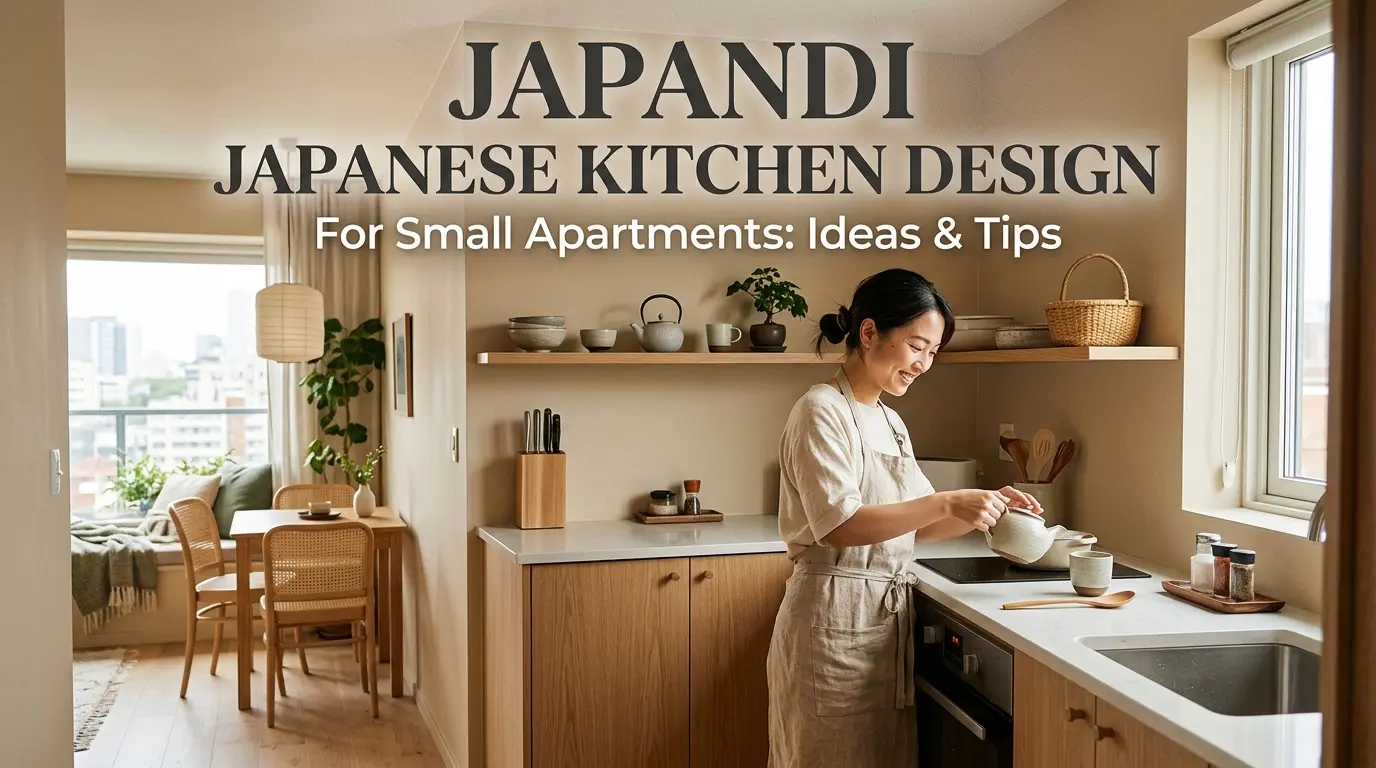
Small apartment kitchens need to do a lot with very little. They need to be practical enough for daily cooking, efficient enough to keep clutter under control, and stylish enough to make the entire home feel more intentional. That’s one reason Japandi kitchen design has become such a strong fit for compact spaces. By blending Japanese simplicity with Scandinavian warmth, Japandi creates kitchens that feel calm, functional, and beautifully balanced without requiring a large footprint.For small apartments in particular, this style works because it focuses on what matters most. Clean lines, natural materials, muted color palettes, and highly functional layouts all help make a compact kitchen feel more open and usable. Rather than overfilling the room with ornament or bulky details, Japandi design emphasizes thoughtful choices that improve both form and function.If you’re looking for ways to create a small kitchen that feels serene, organized, and timeless, the following Japandi design ideas can help show you how.
1. Keep the Color Palette Soft and Minimal
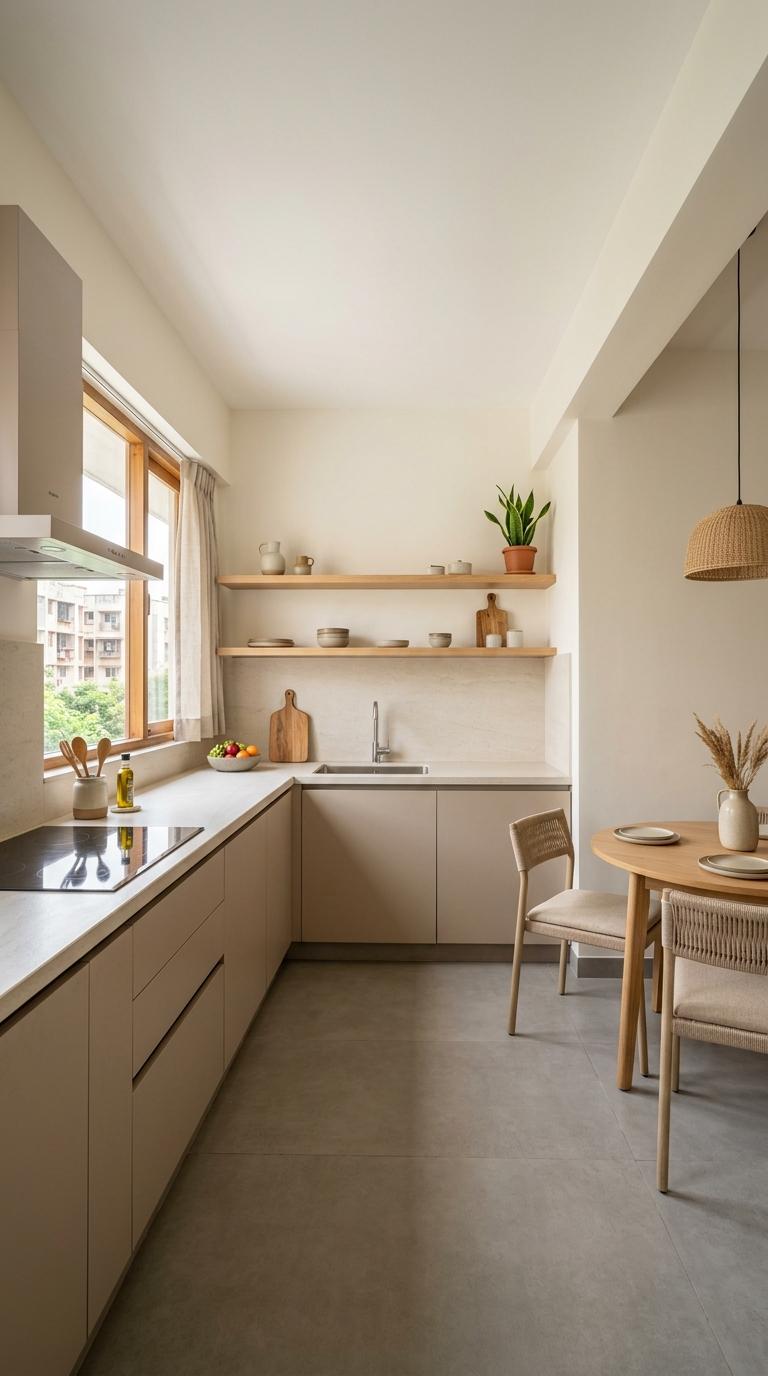
One of the most recognizable elements of Japandi design is its restrained use of color. In a small apartment kitchen, this can make a major difference in how spacious the room feels. Soft whites, warm beige tones, light taupe, muted gray, and natural wood shades all help create a quiet backdrop that reflects light and reduces visual noise.A minimal palette also helps unify the kitchen with adjacent living or dining areas, which is especially important in open-plan apartments. When cabinets, walls, and finishes all work within a cohesive range, the space feels less broken up and more expansive.
2. Use Natural Wood for Warmth
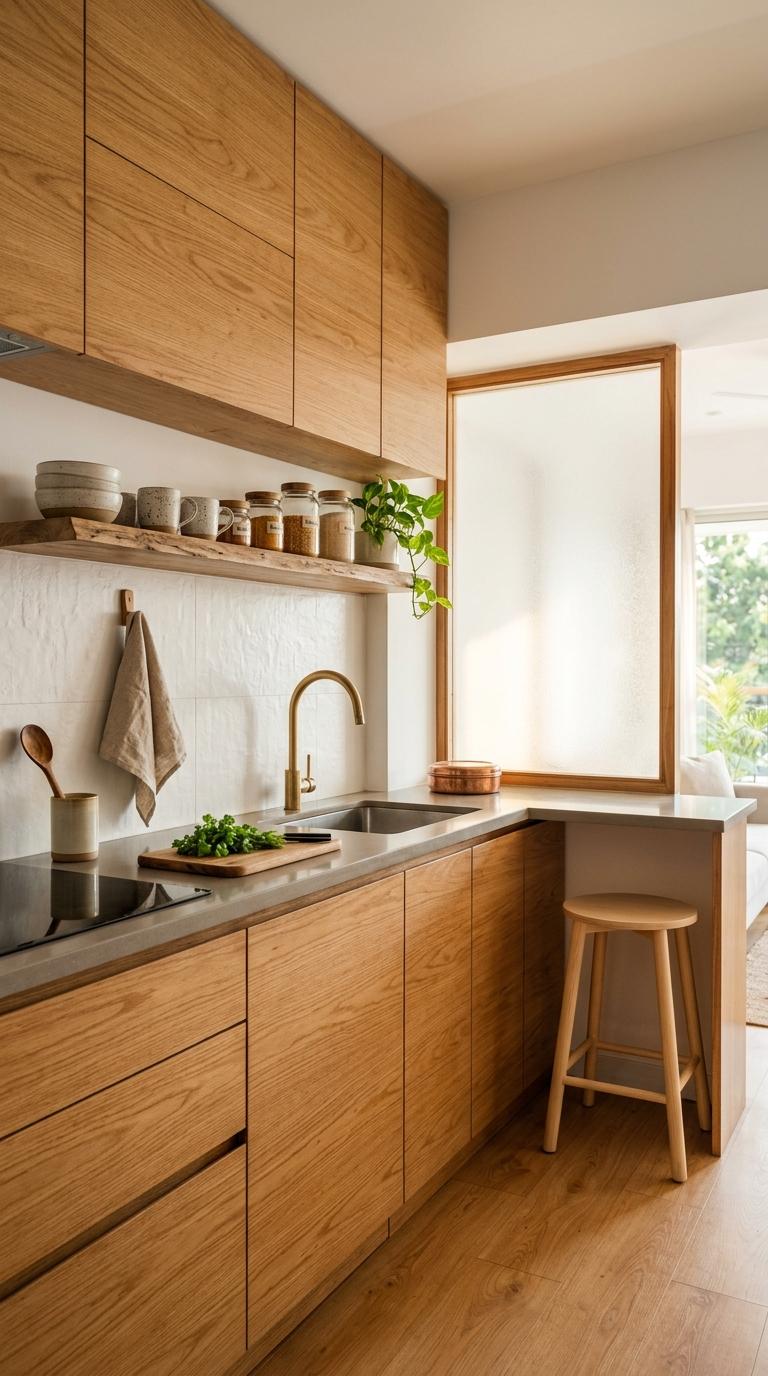
Japandi interiors are never stark for the sake of being modern. They balance simplicity with warmth, and natural wood is one of the best ways to achieve that. In a small kitchen, light oak, ash, birch, or walnut accents can soften the space and keep it from feeling cold.Wood cabinetry, floating shelves, stool seating, or even a simple wood trim detail can help bring in that warmth. In smaller apartments, lighter wood tones tend to keep the kitchen airy, while darker woods can work beautifully when used more selectively for contrast.
3. Choose Flat-Front Cabinetry
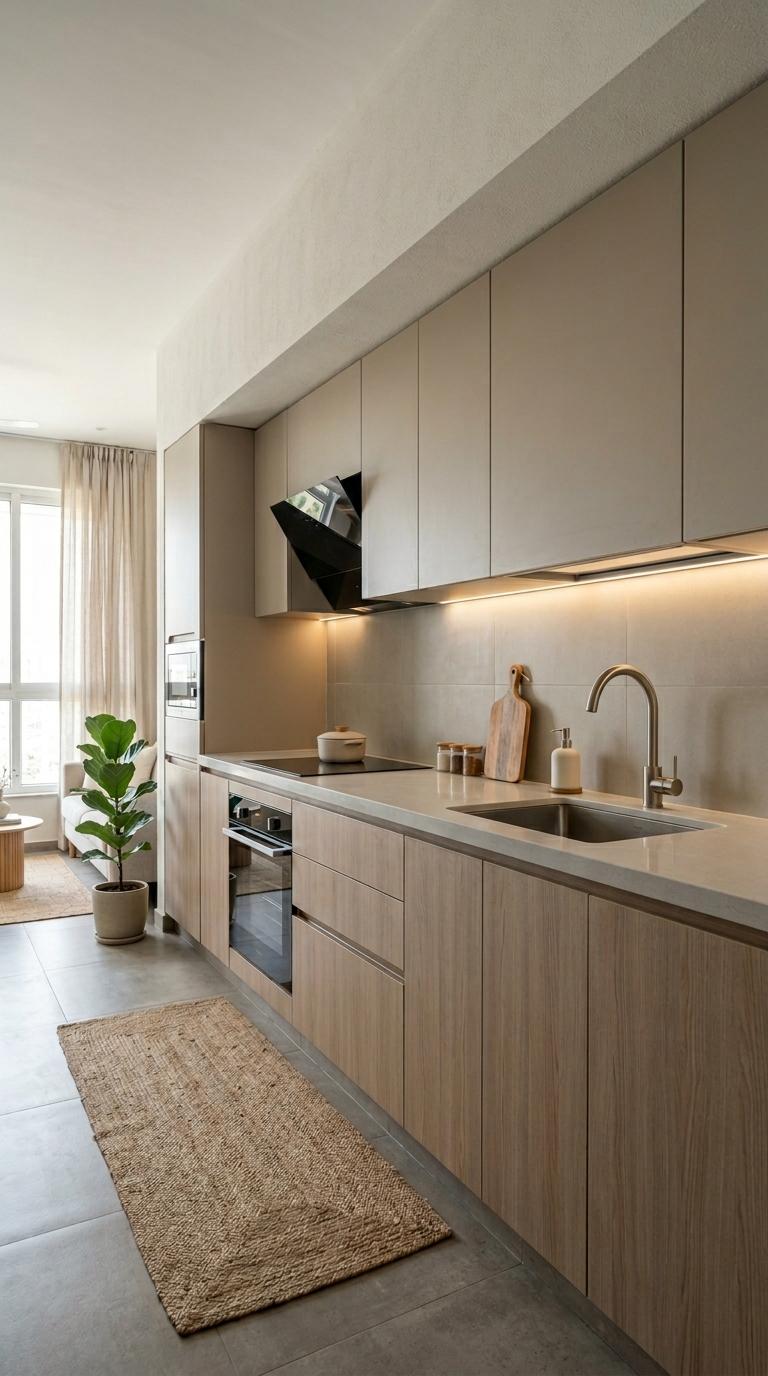
Clean-lined cabinetry is central to Japandi kitchen design. In a small apartment, flat-front cabinet doors help minimize visual interruptions and make the room feel more streamlined. Without ornate paneling or heavy hardware, the kitchen appears calmer and more cohesive.This type of cabinetry also supports the understated look that defines both Japanese and Scandinavian design. If you want to keep the appearance especially minimal, consider integrated pulls, recessed handles, or touch-latch doors that allow the cabinetry to read as a continuous surface.
4. Prioritize Smart Storage
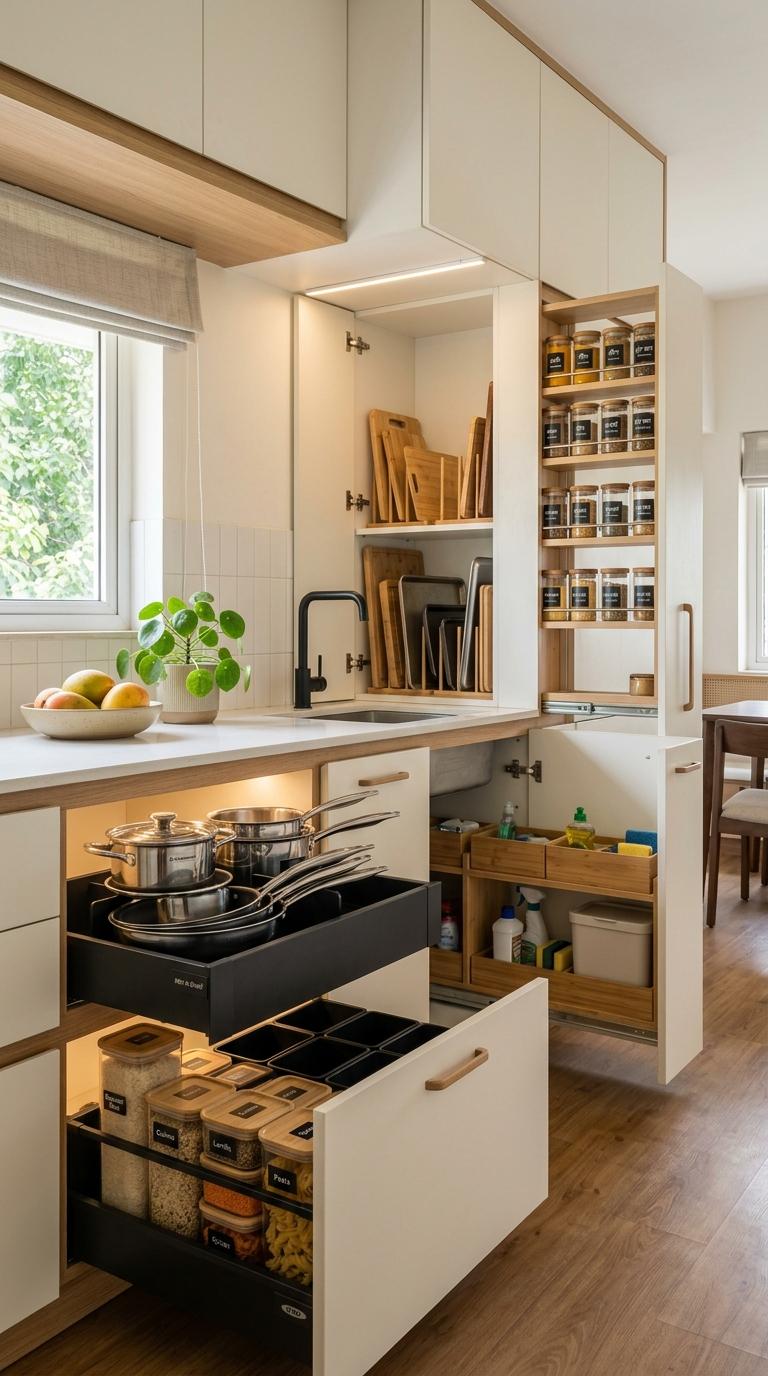
Small kitchens rarely have room for anything unnecessary, which makes storage one of the most important parts of the design. Japandi style aligns naturally with this need because it values intentional living and a clutter-free environment.Deep drawers for cookware, vertical dividers for trays and cutting boards, pull-out pantry storage, and concealed organizers can all help maximize every inch. Open shelving can work as well, but it should be used carefully. A few shelves displaying everyday ceramics or neatly arranged essentials can add character, while too many open surfaces can quickly make a small kitchen feel busy.
5. Incorporate Open Shelving Sparingly
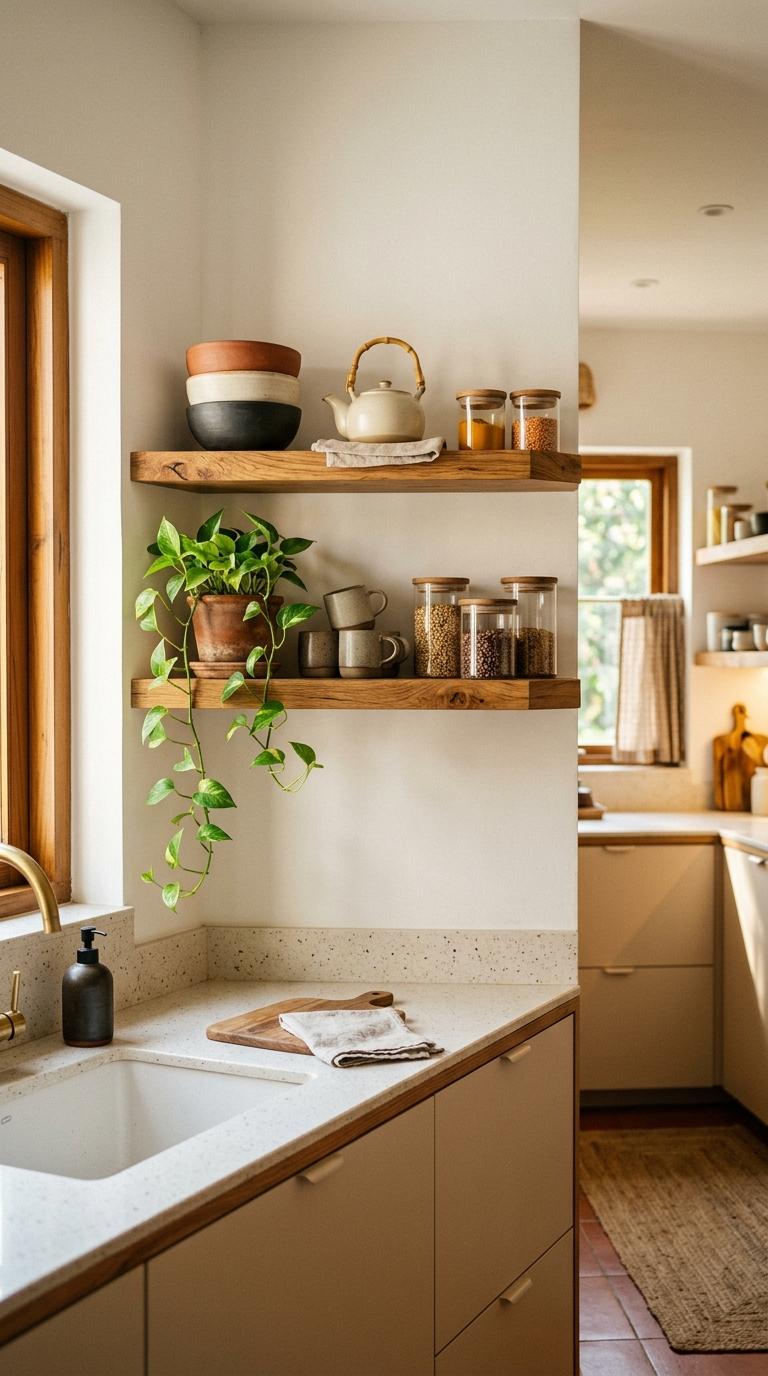
Open shelving has a place in Japandi kitchens, but the effect is best when it feels curated rather than crowded. In a compact apartment kitchen, one or two floating wood shelves can create a light, open look that breaks up upper cabinetry and keeps the room from feeling closed in.These shelves work best when they hold practical but attractive items such as stoneware bowls, glass jars, teacups, or a few simple cooking essentials. The goal is not to create display walls, but to let a few well-chosen objects contribute to the calm and lived-in feeling of the space.
6. Embrace a Functional, Uncomplicated Layout
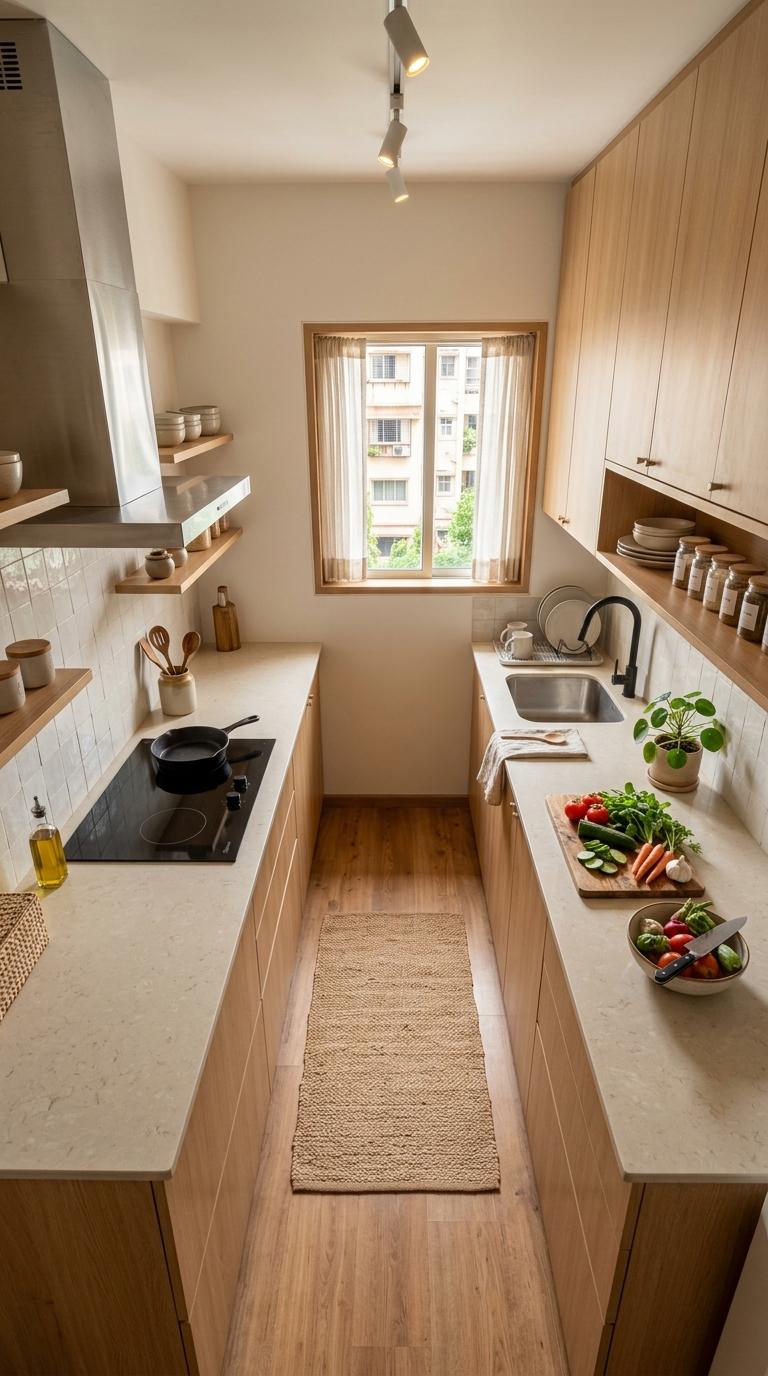
Japandi design puts strong emphasis on usability. In a small apartment kitchen, that means working with the layout you have and making it as intuitive as possible. Galley kitchens, one-wall kitchens, and compact L-shaped kitchens can all benefit from this approach.Keep movement simple and work zones clear. Place daily-use items close to where they’re needed, reduce unnecessary countertop objects, and make sure every addition has a purpose. A kitchen that functions smoothly will naturally feel more peaceful, which is one of the defining goals of Japandi interiors.
7. Select Simple, Matte Finishes
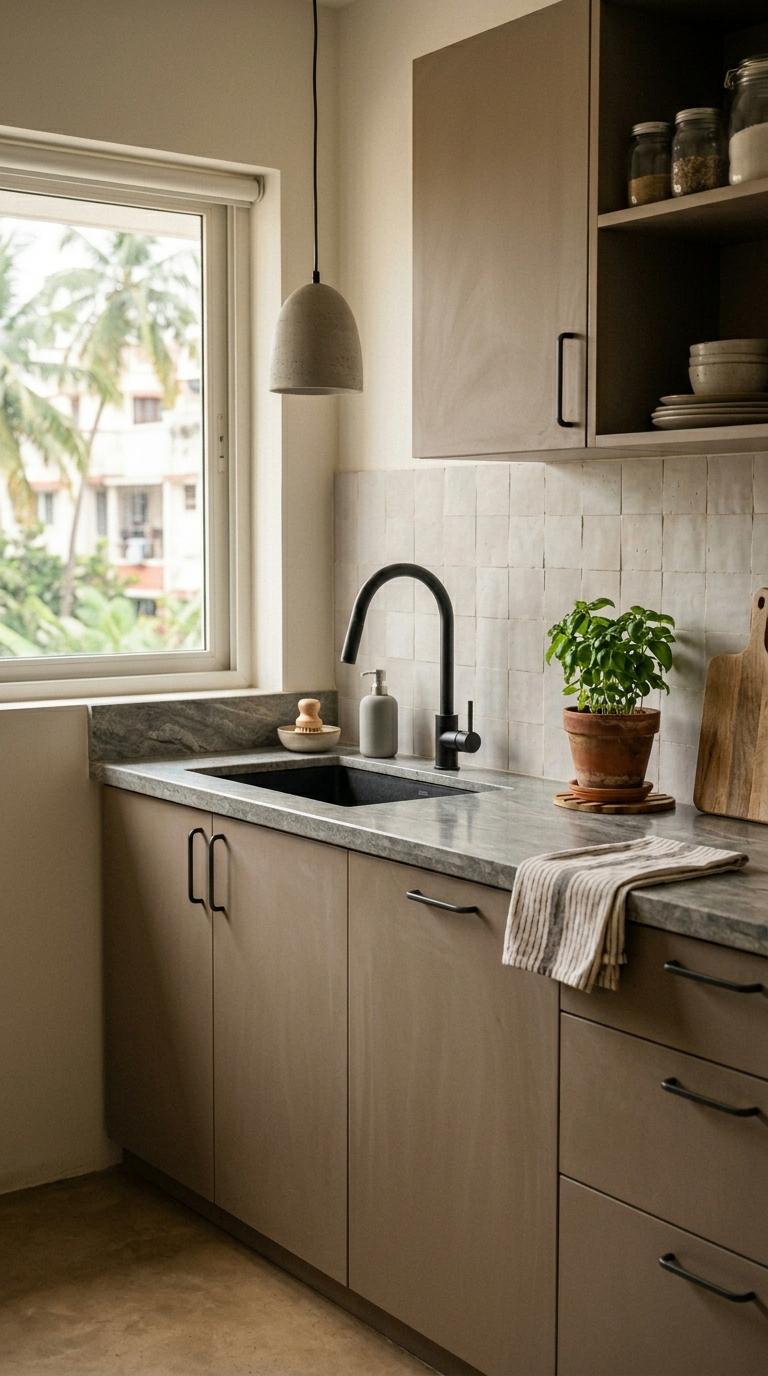
Glossy finishes can sometimes make small kitchens feel overly sharp or artificial. Japandi style tends to favor more natural and understated surfaces, which is why matte finishes are often such a good choice. Matte cabinet fronts, honed stone countertops, brushed metal fixtures, and textured ceramic backsplashes all help add depth without overwhelming the room.These finishes also support the tactile quality that makes Japandi spaces feel inviting. Instead of relying on shine for impact, the design uses texture, tone, and craftsmanship to create interest.
8. Bring in Handmade or Organic Details
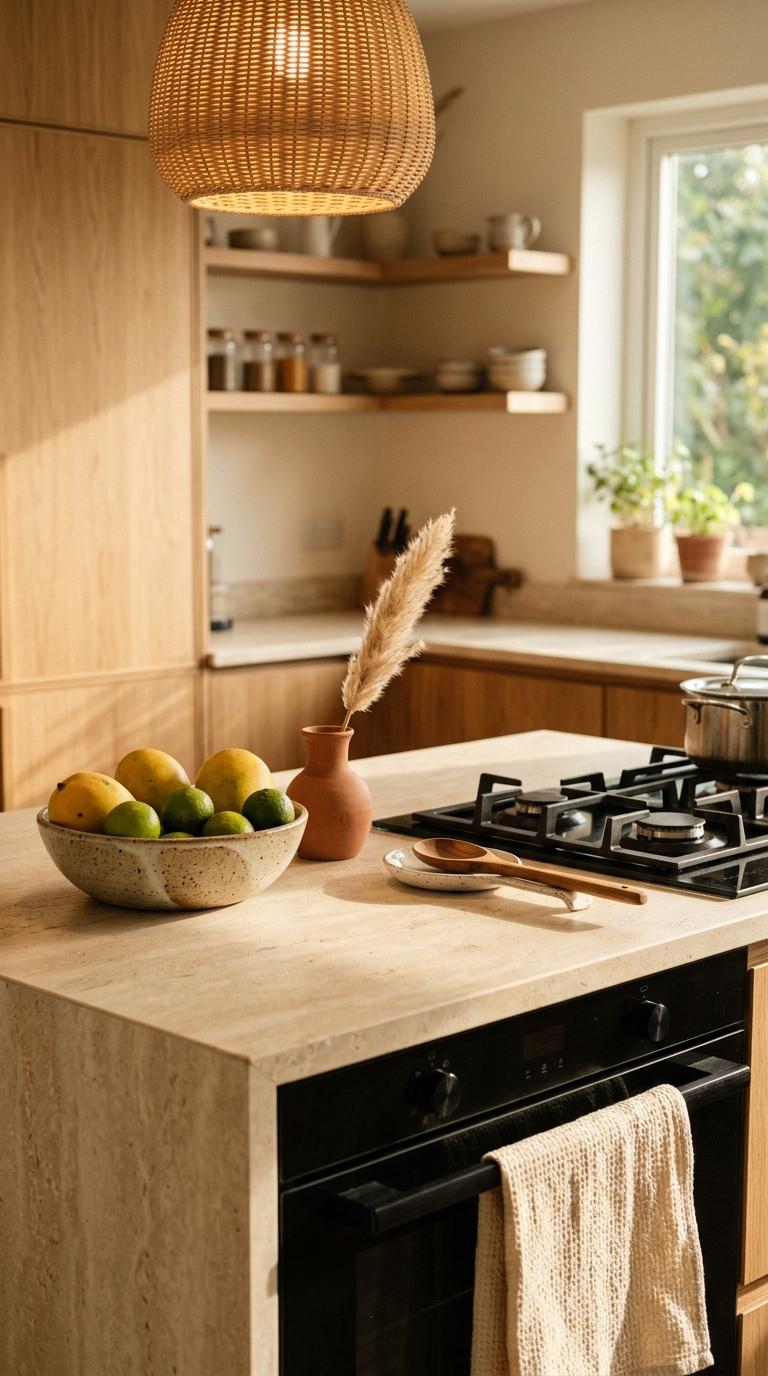
A Japandi kitchen should feel refined, but not overly polished. One of the best ways to keep the space grounded is by incorporating a few handmade or organic elements. This might include handcrafted pottery, a linen towel, a softly textured pendant light, or a ceramic fruit bowl left on the counter.In a small apartment kitchen, these details can have a big impact because they add personality without taking up much room. They also reinforce the sense of calm and authenticity that gives Japandi design its lasting appeal.
9. Let Lighting Stay Soft and Intentional
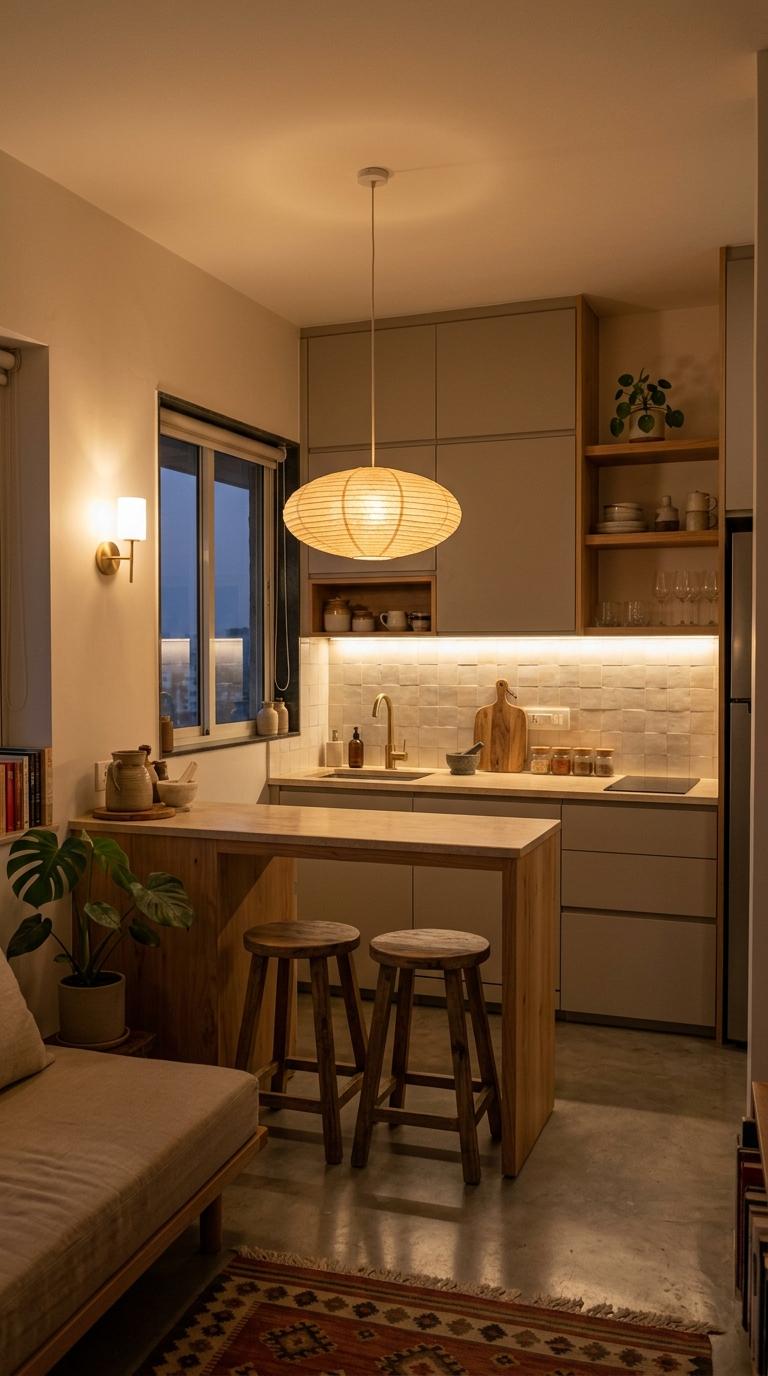
Lighting can dramatically shape the mood of a kitchen, especially in a smaller apartment where the kitchen may be visible from the main living area. Japandi spaces typically avoid harsh or overly decorative lighting in favor of fixtures that feel simple, sculptural, and warm.A compact pendant in natural material, an understated wall sconce, or warm under-cabinet lighting can all help make the kitchen feel softer and more welcoming. If natural light is available, avoid blocking it with heavy treatments or oversized visual elements.
10. Add Texture Through Materials, Not Clutter
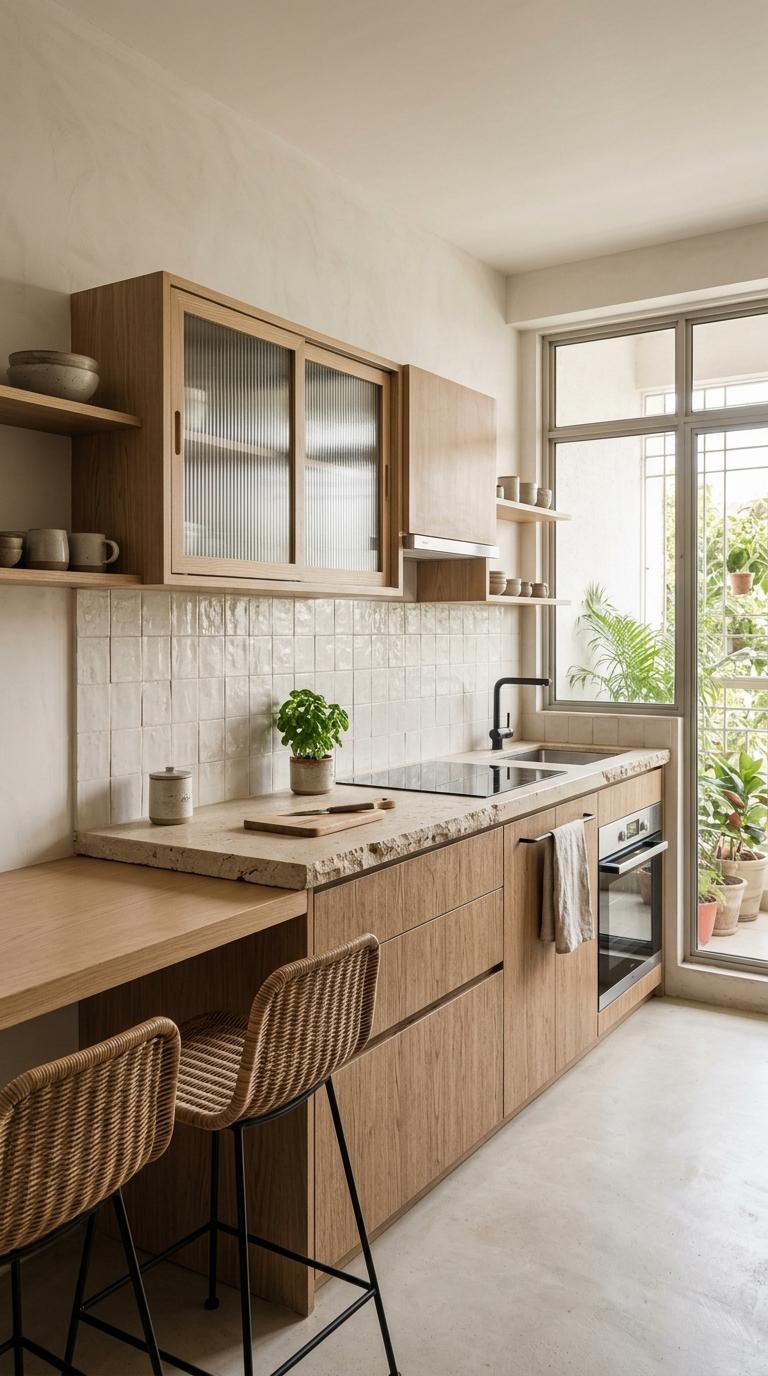
Because Japandi kitchens use restrained color palettes, texture becomes especially important. The good news is that texture does not require more stuff. In fact, in a small apartment, it’s better when texture comes from the materials themselves.Wood grain, woven seating, ribbed glass, linen textiles, stone counters, clay ceramics, and subtle plaster-like wall finishes can all add dimension. These layered surfaces keep the kitchen from feeling flat while preserving the minimal, uncluttered look that small spaces need.
11. Keep Decor Purposeful
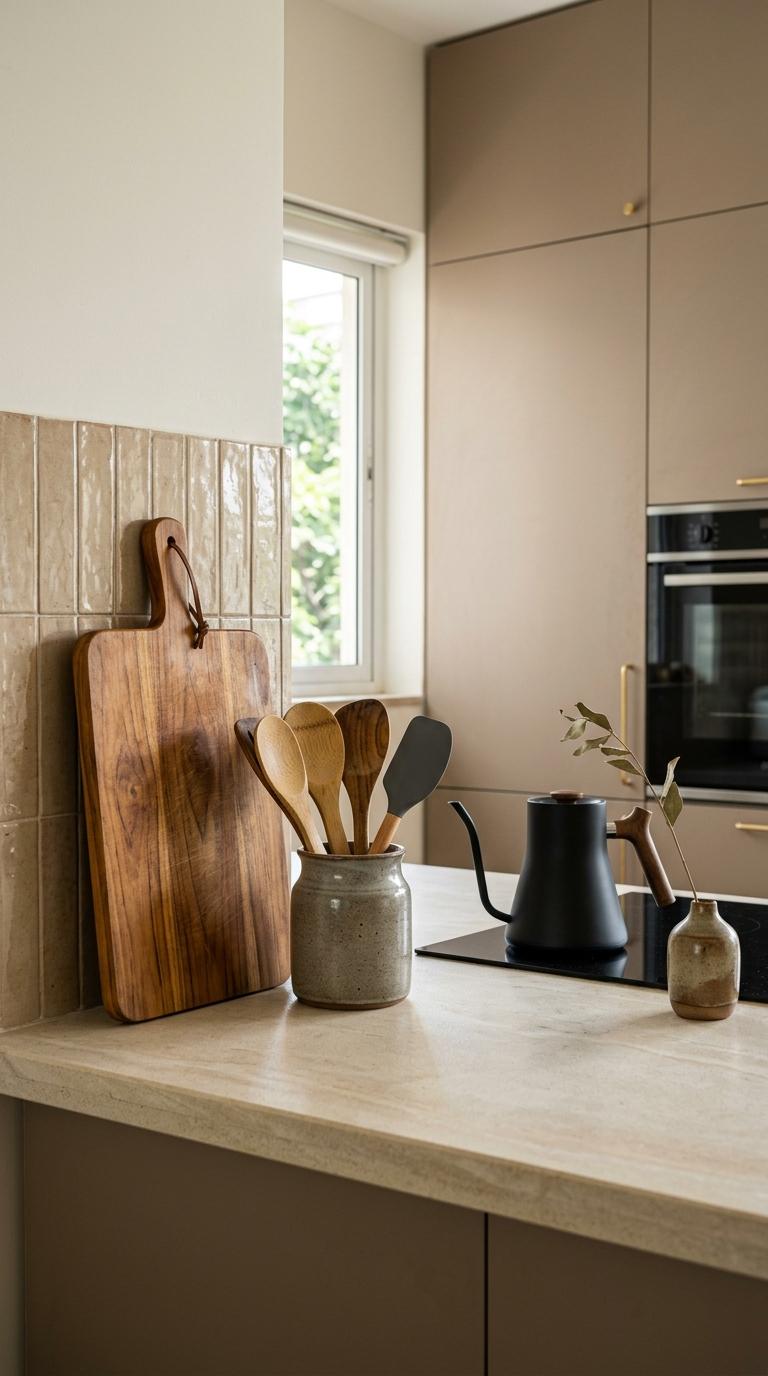
Decor in a Japandi kitchen should never feel excessive. In a small apartment, this matters even more because decorative items can quickly compete with usable space. Instead of filling countertops with accents, choose a few pieces that are both beautiful and functional.A teak cutting board leaned against the backsplash, a ceramic utensil holder, a small branch in a vase, or a well-made kettle on the stove can all contribute to the aesthetic without becoming visual clutter. The overall effect should feel edited and calm.
12. Make the Space Feel Connected
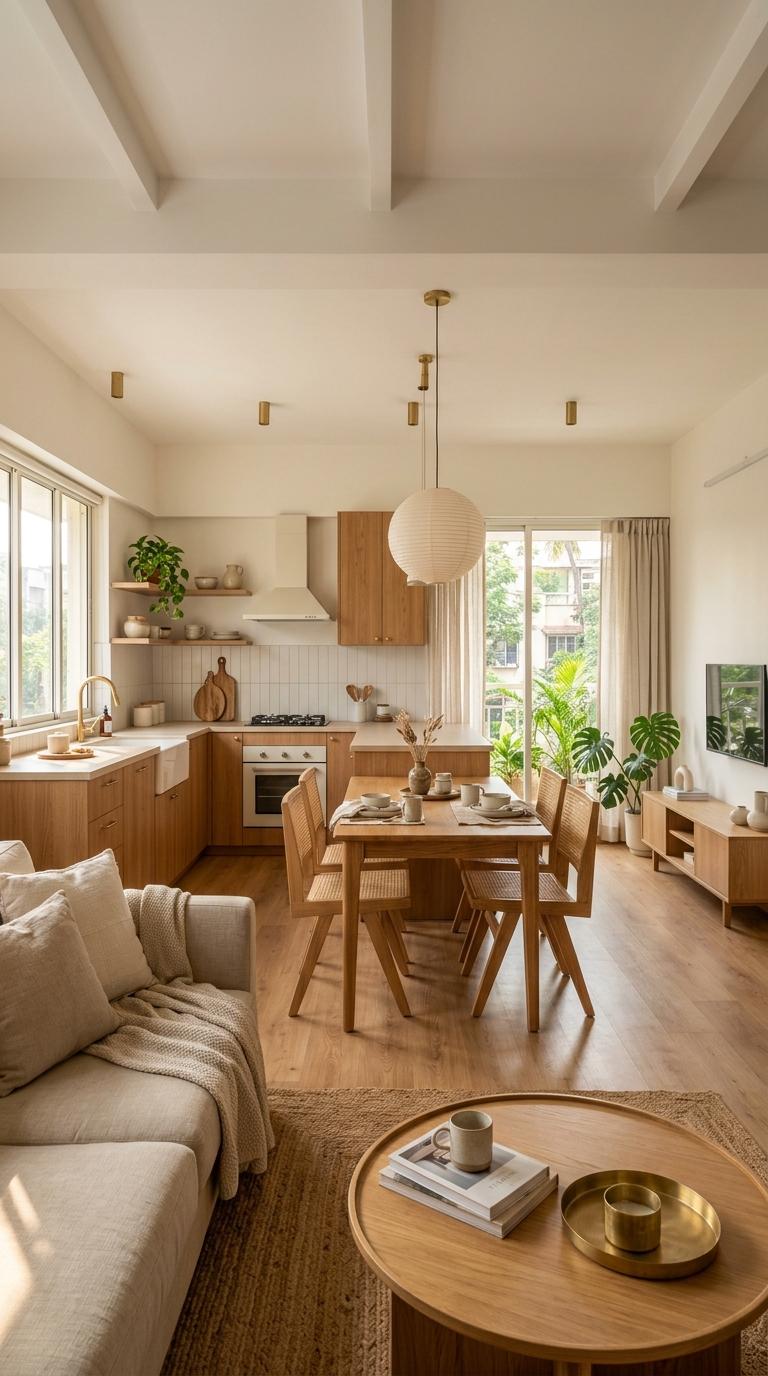
Many apartment kitchens are part of a larger open-plan room, so the design should feel connected to the rest of the home. Japandi style works especially well here because it extends easily into dining and living spaces through its shared use of warm woods, soft neutrals, clean lines, and natural textures.Using similar materials or tones in the kitchen and nearby areas can make the apartment feel larger and more cohesive. This continuity is especially useful in studio apartments or smaller one-bedroom layouts, where every design decision affects the overall sense of space.
Create a Small Kitchen That Feels Calm and Complete
Japandi Japanese kitchen design for small apartments is about more than just aesthetics. It’s about creating a room that feels balanced, useful, and comfortable to live in every day. By combining functional layouts with natural materials, restrained colors, and thoughtful storage, even the smallest kitchen can feel elevated and serene.Whether you’re planning a full renovation or simply refreshing a compact apartment kitchen, Japandi design offers a clear path toward simplicity without sacrificing warmth. With the right details, your kitchen can feel bigger, calmer, and far more intentional than its square footage might suggest.

Aarav Sharma is a passionate home and lifestyle writer. He loves exploring kitchen design, home decoration, and interior styling. With a keen eye for beautiful details and practical design ideas. Aarav Sharma shares inspiration to help readers create comfortable and functional living spaces.