
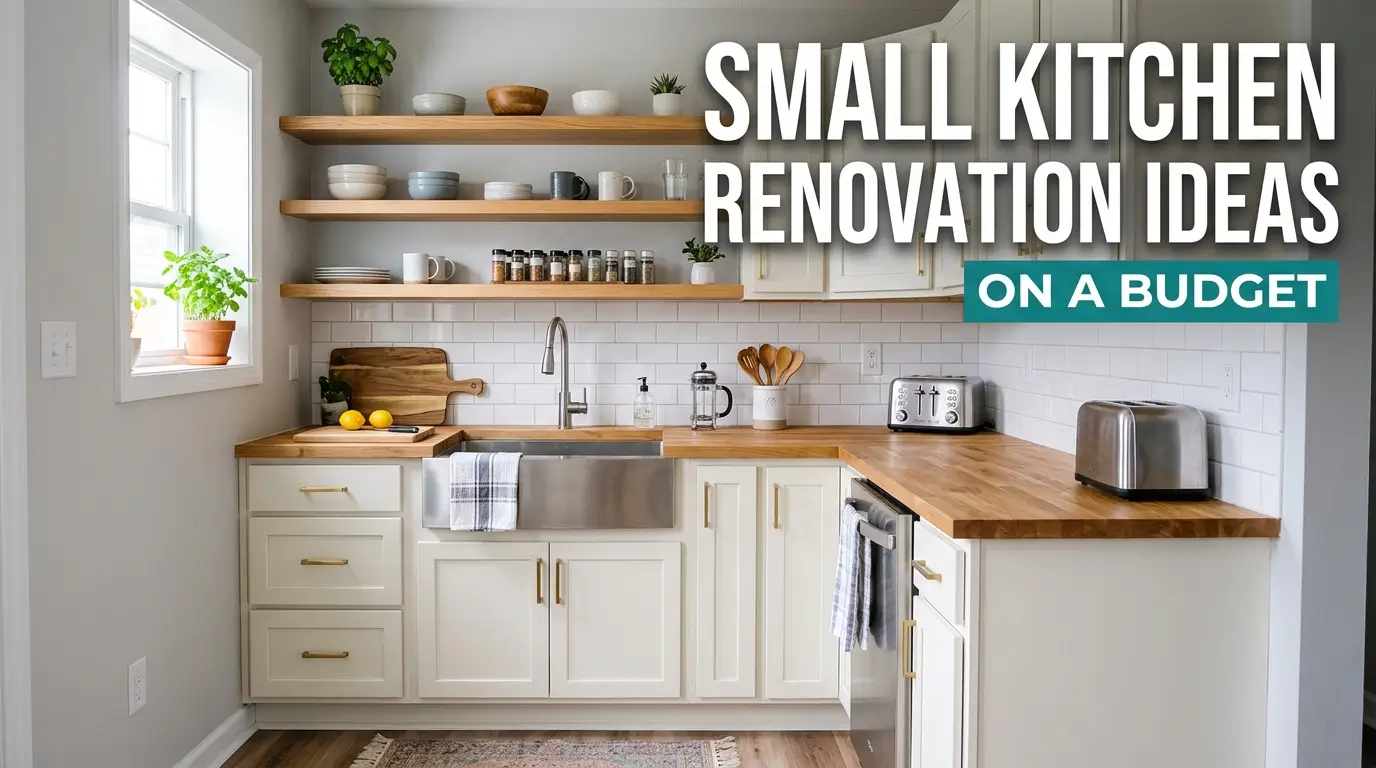
Kitchen renovation has a reputation for being one of the most expensive undertakings in any home improvement project. The combination of plumbing, electrical work, cabinetry, appliances, and specialist materials creates a cost structure that escalates quickly and that most renovation cost estimates significantly understate in their initial projections. A full modular kitchen renovation in an Indian city, including new cabinets, new countertop, new appliances, and professional installation, routinely runs into several lakhs before the first meal is cooked in it, and for the majority of homeowners dealing with a small kitchen in a standard Indian apartment, that level of investment is not available or not justified by the scale of the space.
The good news is that the most impactful improvements available to a small kitchen are almost never the most expensive ones. The transformation that a kitchen undergoes when its cabinets are repainted, its hardware replaced, its lighting upgraded, and its storage reorganized is frequently more dramatic and more satisfying than what a full replacement of the same cabinets achieves, because the fundamental problem in most small Indian kitchens is not the quality of the cabinetry but the way the space has been organized, lit, and finished. These are problems that can be solved for a fraction of the cost of structural renovation, and solving them well produces results that look indistinguishable from a far more expensive intervention.
Budget kitchen renovation is not about accepting compromise. It is about identifying the changes that deliver the highest impact for the lowest cost and executing those changes with the same level of care and intention that a much larger budget would bring to a more comprehensive project.
Small Kitchen Renovation Ideas on a Budget
1. Repaint the Cabinets Instead of Replacing Them
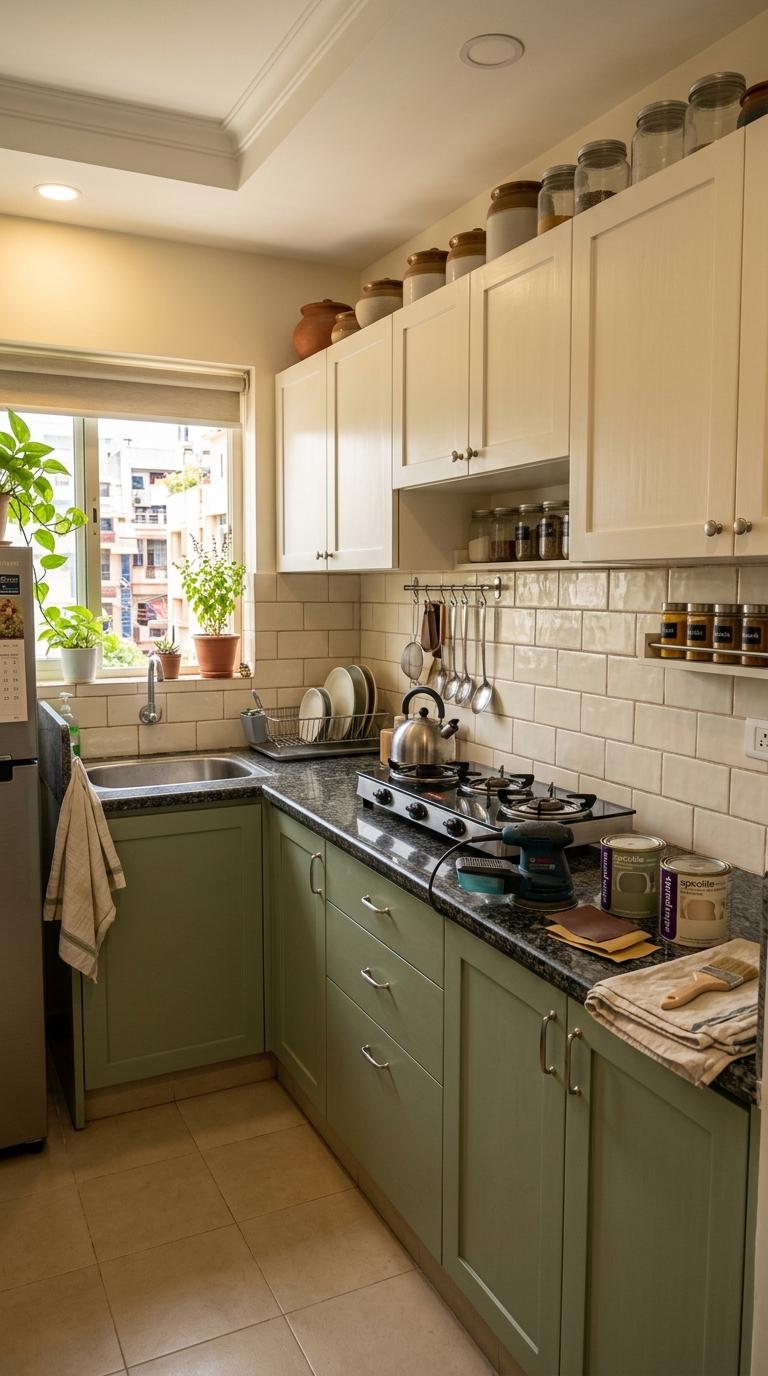
Cabinet replacement is the single most expensive line item in any kitchen renovation, and it is also the item most frequently replaced when the real problem is not the cabinets themselves but their color, their finish, and the way they make the kitchen feel visually heavy and dated. Repainting existing cabinets achieves ninety percent of the visual transformation of replacement at roughly ten percent of the cost, and in a small Indian kitchen where the cabinets are structurally sound but aesthetically tired, it is the single highest-impact budget renovation decision available.
The preparation is the most critical part of a cabinet repainting project and the part that most people underinvest in. Cabinets need to be thoroughly cleaned, lightly sanded to create a key for the new paint, and primed with an appropriate bonding primer before the topcoat is applied. Skipping any of these steps produces a finish that peels, chips, and looks worse within months than the original finish it replaced. Done properly, a repainted cabinet finish is durable, cleanable, and indistinguishable from a factory finish at normal viewing distances.
Color choice is the design decision that determines how much the kitchen changes with the repaint. A shift from the dark wood laminate that characterizes most Indian kitchen cabinets of the 2000s and 2010s to a warm off-white, sage green, soft terracotta, or muted navy creates a kitchen that looks completely different from the one that existed before without a single structural change. In a small kitchen where the cabinet surface area is significant relative to the total wall area, the color of the cabinets determines the color of the kitchen more than any other single element.
2. Replace Cabinet Hardware for Immediate Impact
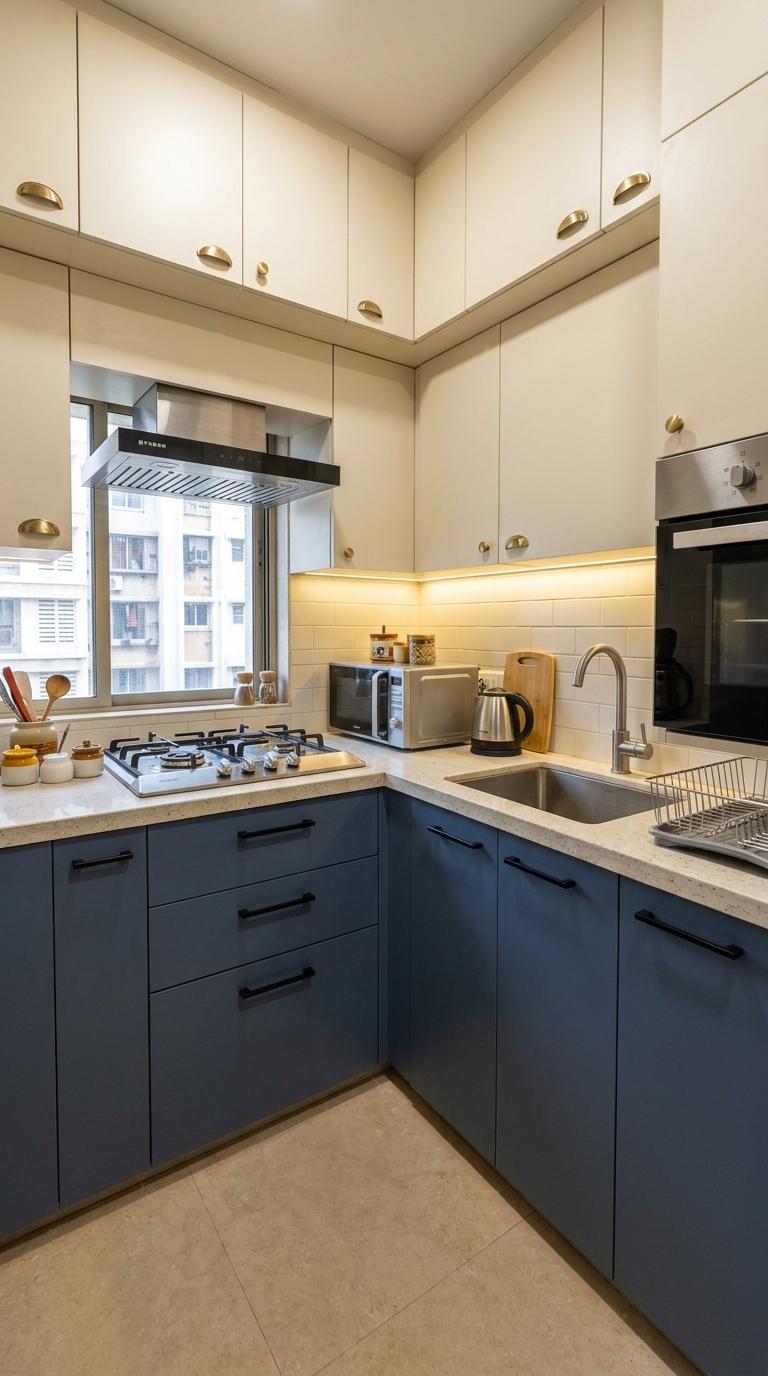
Cabinet hardware, which most people do not consciously notice until it is changed, has a disproportionate influence on the perceived quality and style of a kitchen. Old plastic handles, dated brass pulls, or the standard chrome hardware that comes fitted on most Indian modular kitchens creates a visual impression of budget and era that newer, better-chosen hardware can completely transform at very low cost.
Replacing every handle and pull in a small kitchen with new hardware in a consistent metal finish takes a few hours and costs a few thousand rupees at most, yet the transformation it delivers is consistently one of the most remarked-upon improvements in any kitchen renovation. Matte black hardware on white or cream cabinets creates a crisp, contemporary contrast that photographs extremely well and reads as high-end design. Brushed brass handles on sage green or navy cabinets creates a warm, sophisticated combination that references the best of contemporary Indian interior design. Minimal bar handles in brushed stainless steel on any cabinet color creates a clean, timeless result that will not date quickly.
Hardware is available at hardware stores, home improvement stores, and online platforms across India at a wide range of price points. The investment in slightly better quality hardware than the cheapest available option is justified because handles and pulls are touched and pulled dozens of times every day, and the tactile quality of a well-made handle contributes to the kitchen’s feeling of quality every single time it is used.
3. Install a New Splashback
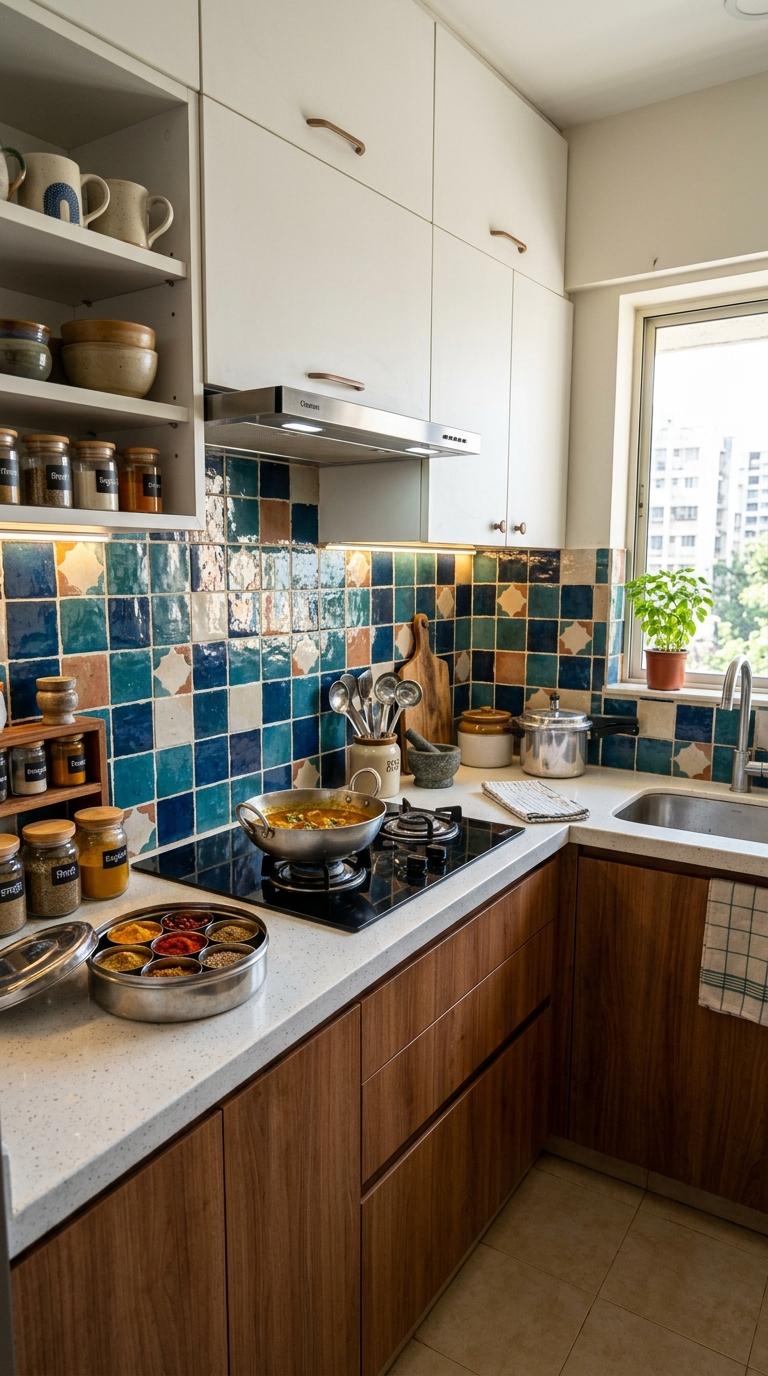
The splashback, the vertical surface between the kitchen counter and the upper cabinets, is one of the most visible surfaces in a small kitchen and one of the most transformative to update. In most Indian kitchens it is tiled in a standard ceramic tile that was chosen for practicality rather than design, and changing it to something with more visual character creates an immediate and dramatic improvement in how the kitchen looks and feels.
The most budget friendly splashback renovation options in India include peel-and-stick tile stickers that apply directly over existing tiles without any removal, grouting, or specialist installation. High quality tile stickers in geometric patterns, zellige-inspired designs, or classic subway tile arrangements are available online and from home decor stores and can be applied in an afternoon at a fraction of the cost of new tiling. They are also removable, making them a particularly attractive option for rental kitchens where permanent changes are not permitted.
For kitchens where the budget allows for actual new tiles, handmade terracotta tiles, encaustic cement tiles in geometric patterns, or subway tiles in an unusual color are all available in India at accessible price points and create splashbacks of genuine design quality. The splashback is a relatively small surface area compared to the rest of the kitchen, which means that even premium decorative tiles that would be prohibitively expensive across an entire floor or wall are affordable as a splashback treatment.
4. Upgrade the Kitchen Lighting
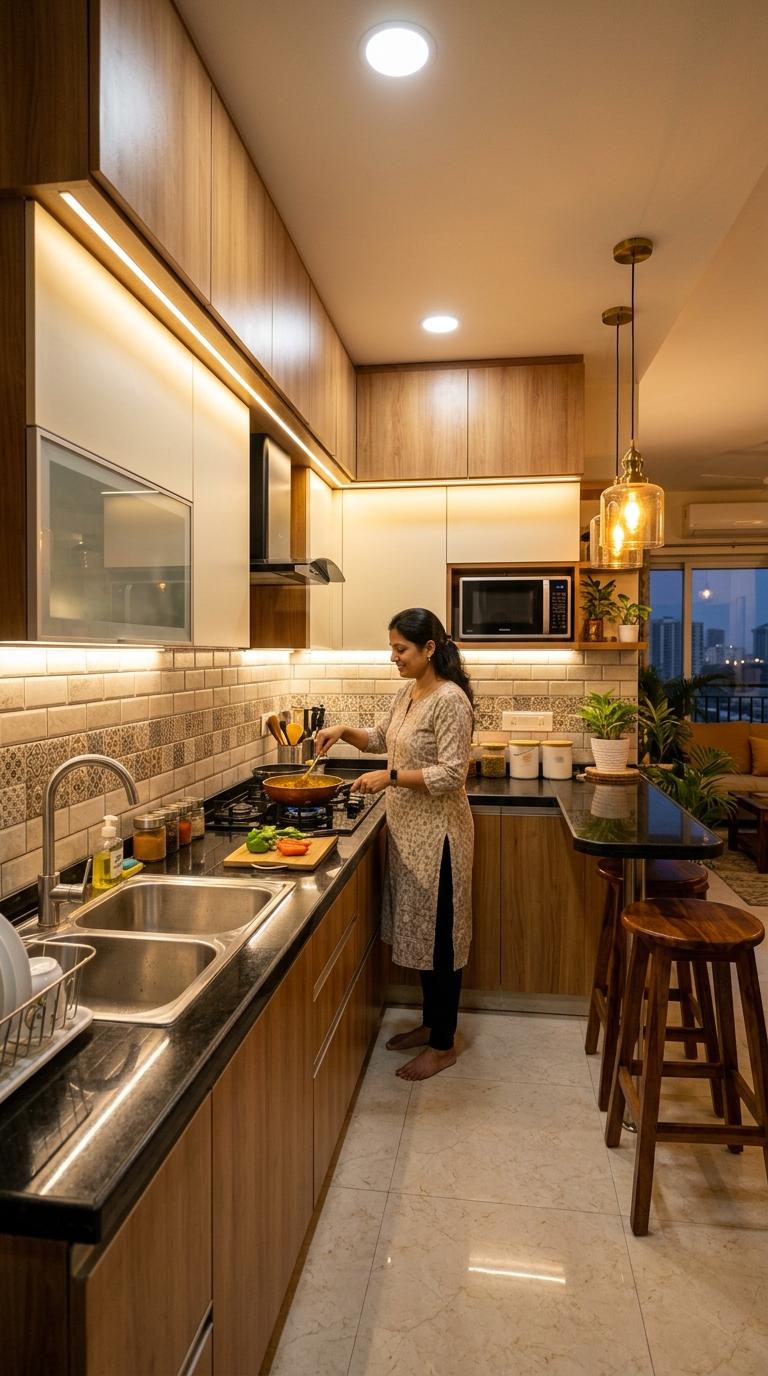
The lighting in most small Indian kitchens is a single fluorescent tube or a basic LED batten that provides flat, harsh overhead illumination with no differentiation between task areas and ambient space. This quality of light makes the kitchen look smaller, makes food preparation more difficult, and creates an environment that feels functional at best and oppressive at worst. Upgrading the kitchen lighting is one of the most cost-effective and most immediately impactful renovations available because good lighting changes not just how the kitchen looks but how it feels to work in it.
Under-cabinet LED strip lights are the most practically transformative lighting upgrade available in a small kitchen. They direct focused light onto the counter surface directly below, illuminating the primary work area with the precise, even light that food preparation actually requires while eliminating the shadows cast by overhead lighting. LED strip lights under cabinets are available at very reasonable prices from electrical and home improvement stores in India and can be installed with basic electrical knowledge using plug-in rather than hardwired configurations that require no electrician and no structural work.
A warm pendant light above the kitchen counter or dining area, replacing a functional overhead batten, changes the atmosphere of the kitchen in the evening from a working space to a more residential and more pleasant environment. The combination of under-cabinet task lighting and a warm ambient pendant light creates a layered lighting system in the kitchen that is both more functional and more attractive than any single overhead fixture of equivalent total output.
5. Refinish or Replace the Kitchen Counter
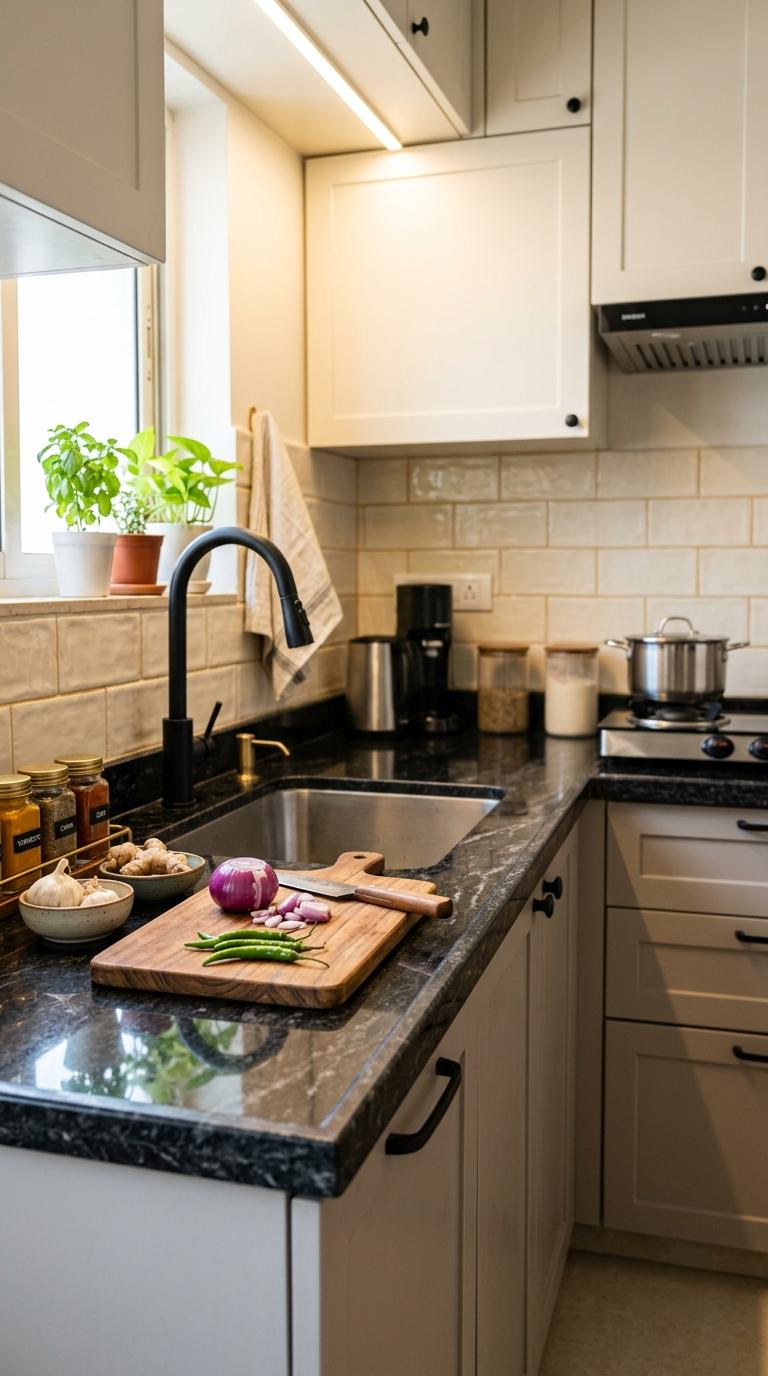
The kitchen counter is the most physically used surface in the home and one of the most visible. A counter that is stained, scratched, or simply dated in its material and color significantly undermines the overall quality of the kitchen regardless of how well everything else has been renovated. Replacing or refinishing the counter is therefore one of the highest-impact budget renovation decisions available, particularly in kitchens where the existing counter is in poor condition.
The most budget friendly counter replacement option in Indian cities is a new laminate counter fitted by a local carpenter or modular kitchen supplier. Laminate counters in stone-effect finishes, solid color finishes, or wood-effect finishes are available at a wide range of price points and can be fitted over existing cabinet frames without replacing the cabinets themselves. The quality of laminate available today is significantly better than what was available a decade ago, with surfaces that are durable, easy to clean, and convincingly realistic in their material-effect finishes.
Natural stone counters, including granite, marble, and quartzite, are available at genuinely accessible prices in India because the country is one of the world’s largest producers of these materials. A granite counter in a small kitchen uses a relatively small quantity of stone, which means that even premium stone varieties are achievable at reasonable cost for a small kitchen footprint. A new stone counter transforms the kitchen’s material quality more dramatically than almost any other single change and has a longevity that laminate alternatives cannot match.
6. Add Open Shelving for Character and Storage
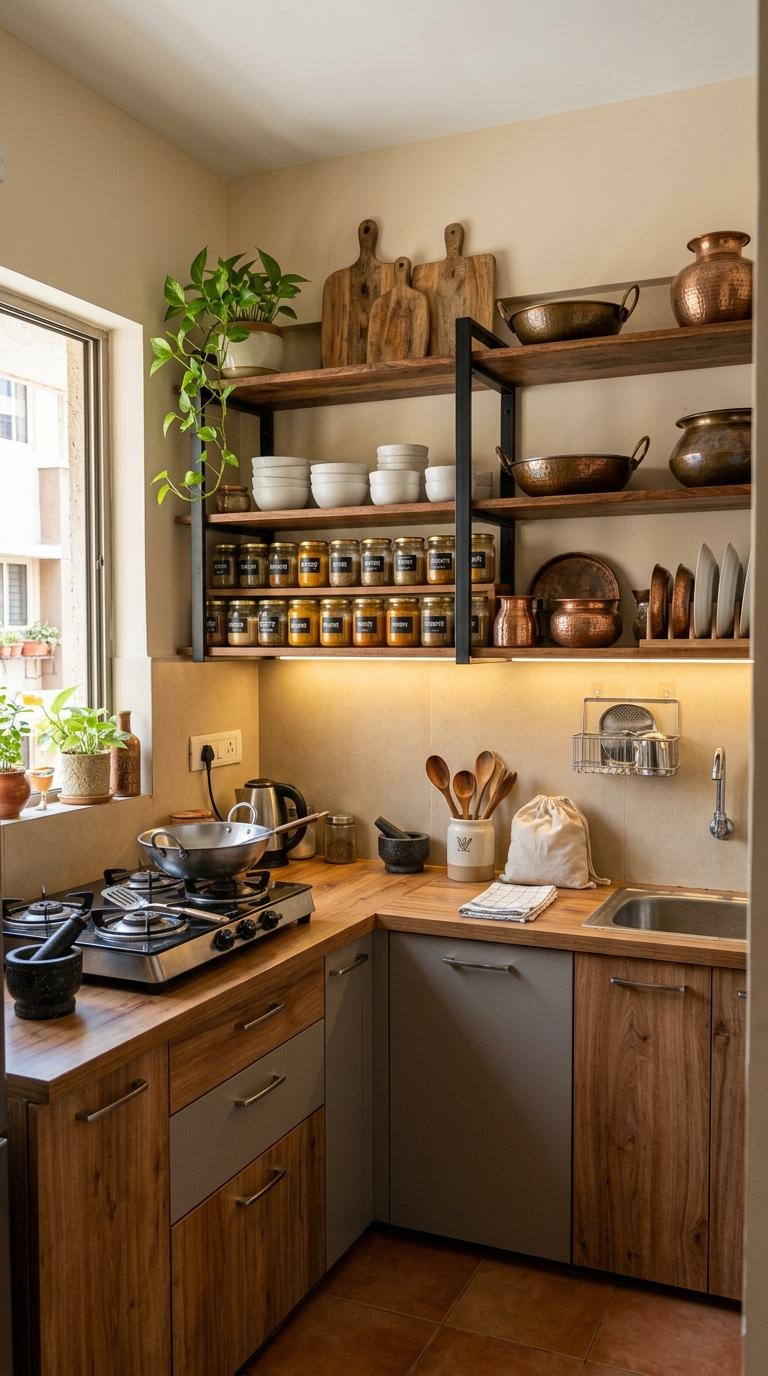
Removing one or two upper cabinet doors and converting those cabinets to open shelving is a budget renovation technique that costs almost nothing and delivers two distinct benefits simultaneously. It makes the kitchen feel more open and less boxy by removing the visual mass of closed cabinet fronts and replacing them with an airy, layered display of everyday items. And it provides a surface for the kind of styled, displayed storage that makes a kitchen feel personal and inhabited rather than institutional.
Open shelving works best in a small kitchen when the items displayed on it are genuinely attractive and consistently well organized. A shelf of matching glass spice jars, a row of white ceramic bowls, a set of wooden cutting boards, a collection of copper or brass vessels, and a small plant creates a display that adds warmth and character to the kitchen while keeping everyday items accessible and visible. The discipline of maintaining the open shelf as a curated display rather than allowing it to become a dumping ground for whatever doesn’t have somewhere else to go is the habit that determines whether open shelving enhances or undermines the kitchen.
Standalone open shelving units added beside or between existing cabinets provide additional storage without the cost of new cabinetry and introduce the warmth of natural wood or metal into a kitchen that may otherwise be dominated by laminate and painted surfaces.
7. Paint the Walls a New Color
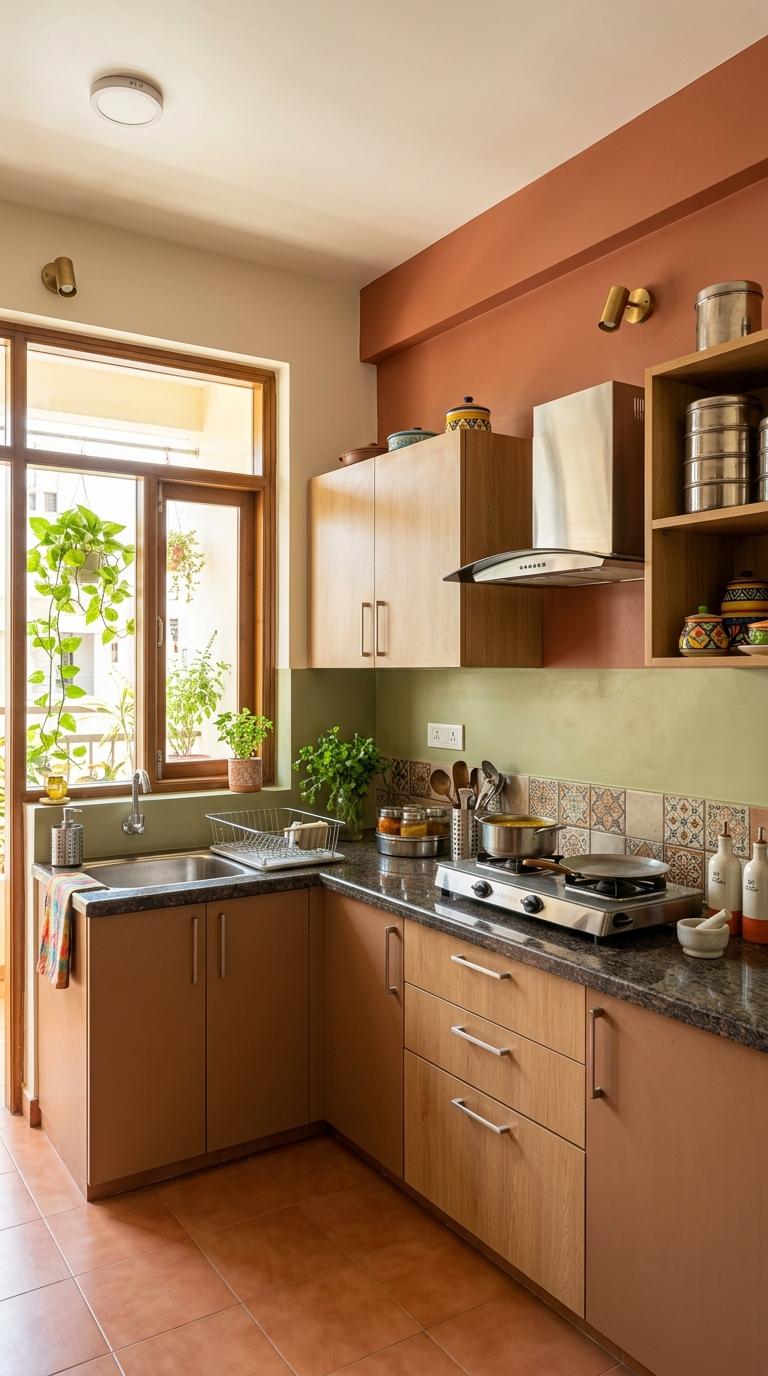
Wall color in a small kitchen has an outsized impact on the perceived size and atmosphere of the space because kitchen walls are often visible in only small sections between cabinets, windows, and the splashback, making each visible section a concentrated statement of color and finish. A new wall color in the kitchen is one of the lowest cost and highest impact changes available in any renovation budget.
Warm white and off-white wall colors make a small kitchen feel larger and more luminous by reflecting the available light evenly across every surface. Warm earthy tones like terracotta, sand, and clay create a kitchen that feels warm and inviting even when the space itself is minimal. Sage green and soft olive walls create a fresh, contemporary atmosphere that has become one of the defining characteristics of the best contemporary Indian kitchen design. Any of these directions represents a significant improvement over the default magnolia or contractor white that most Indian kitchens are delivered in.
The paint finish matters as much as the color in a kitchen environment where splashing, steam, and grease are constant features of daily use. A satin or semi-gloss finish on kitchen walls is more practical than a matte finish because it is easier to wipe clean and more resistant to the moisture and splatter that accumulate on kitchen walls over time.
8. Install New Flooring or Refinish the Existing Floor
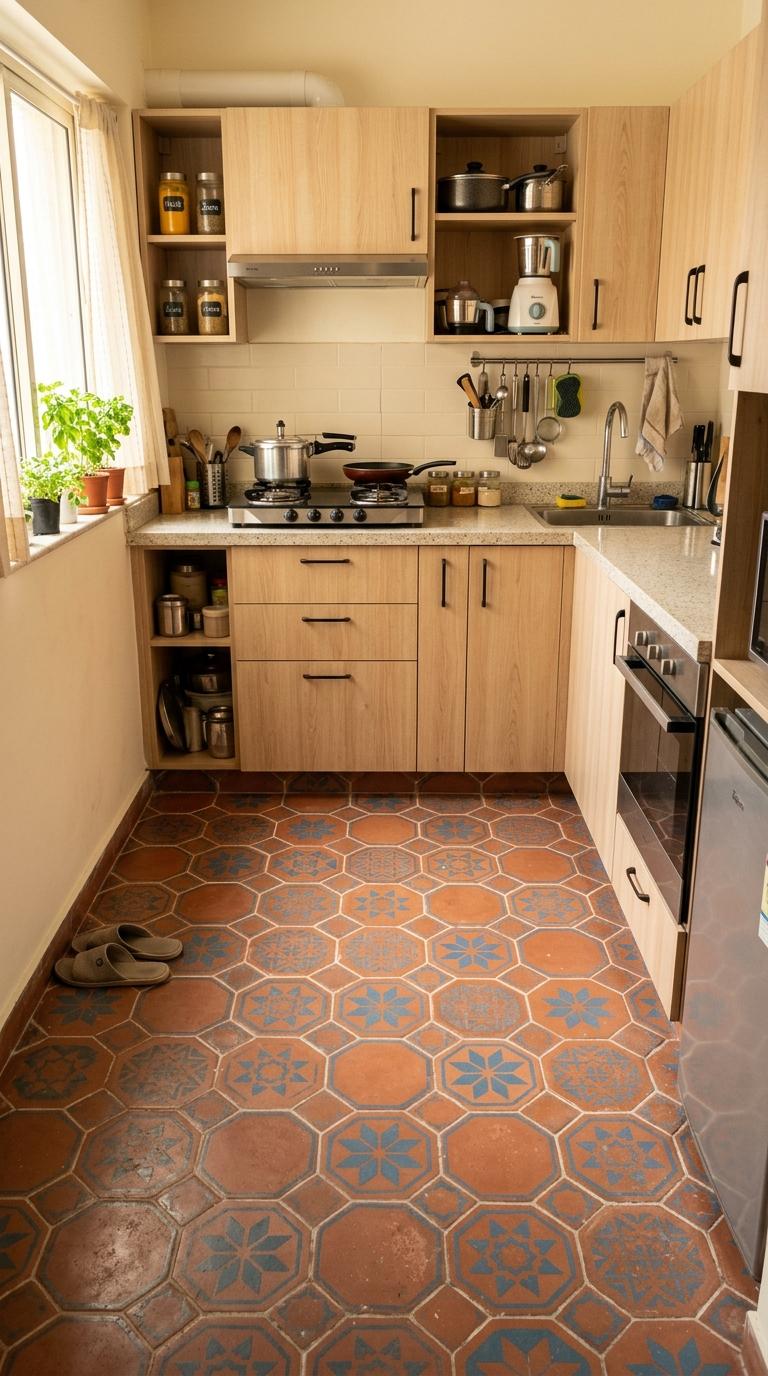
The kitchen floor is the surface that sets the visual foundation of the entire space, and an old, stained, or simply dated floor undermines the quality of every other renovation decision made in the kitchen. Flooring renovation need not be as expensive as it initially appears because a small kitchen floor is a small area, and the cost per square foot of even moderately premium flooring translates to a manageable total cost when the kitchen footprint is compact.
Vinyl plank flooring, which is available in realistic wood and stone effect finishes, is one of the most practical and most affordable flooring options for a small Indian kitchen. It is waterproof, easy to clean, comfortable underfoot, and available at price points that are accessible across a wide range of renovation budgets. It installs as a floating floor directly over existing tiles or concrete without the need for adhesive or specialist installation, which significantly reduces the installation cost.
For kitchens with existing ceramic or stone tile floors that are in good condition but visually dated, tile paint offers the most budget friendly transformation available. Specialist tile paint adheres to glazed ceramic surfaces and is available in a range of colors that can completely change the character of the kitchen floor without the cost and disruption of full tile replacement. Geometric stencil patterns applied over a base coat of tile paint create a floor with the character of encaustic cement tiles at a fraction of the cost.
9. Upgrade the Sink and Faucet
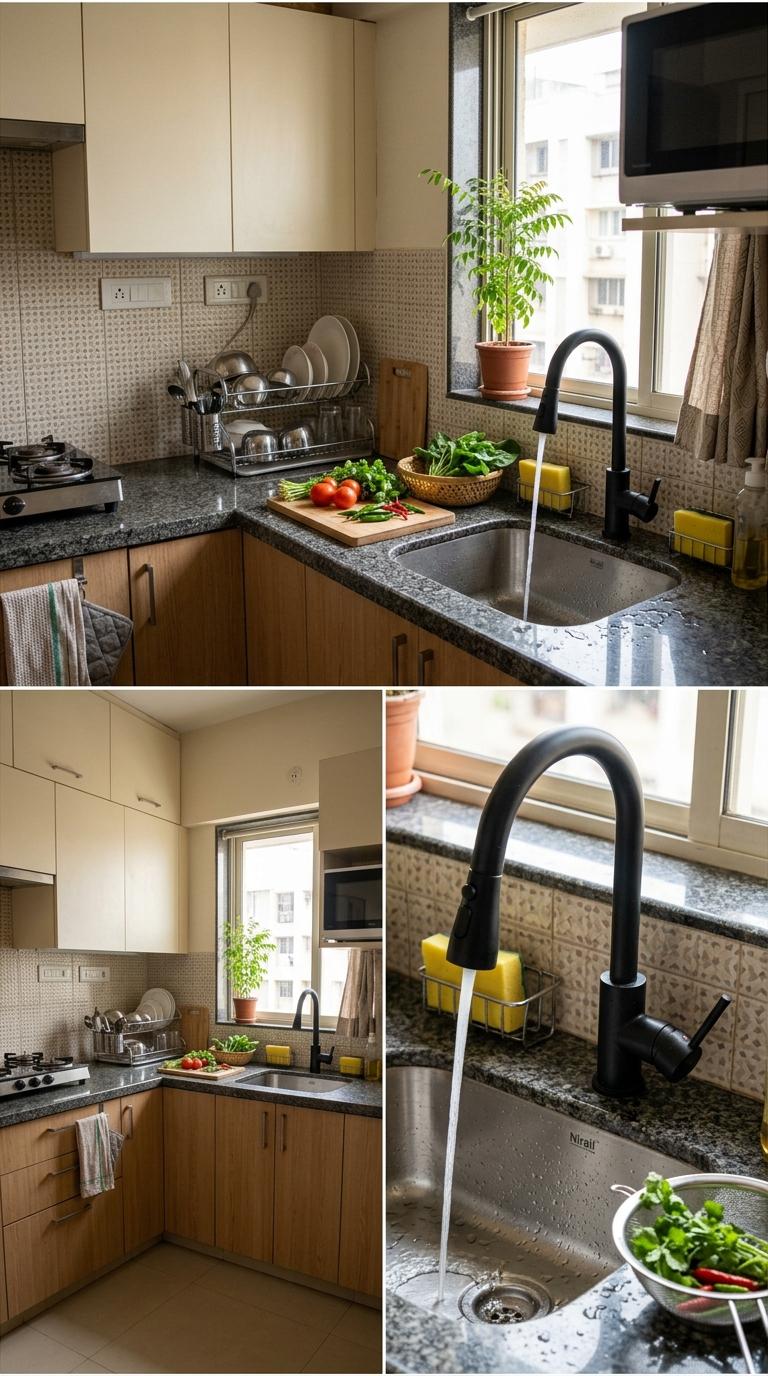
The kitchen sink and faucet are touched and used more than any other single fixture in the kitchen, and their quality, their condition, and their design have a daily impact on the experience of cooking and cleaning that is disproportionate to their physical size. An old stainless steel sink with a basic chrome faucet creates an impression of economy and age that a new sink and faucet combination can transform at a surprisingly accessible cost.
A deep, single-bowl stainless steel undermount sink fitted with a tall, graceful faucet in matte black or brushed brass creates a kitchen fixture of genuine design quality that elevates the counter area in which it sits. These fixtures are available from sanitary ware suppliers and online platforms in India at a wide range of price points, and the installation, which involves disconnecting and reconnecting water supply and drain lines, is straightforward enough for a competent plumber to complete in a half day.
The faucet alone, changed from a standard chrome mixer to a matte black or brushed brass alternative, creates a significant visual improvement in the sink area without requiring any changes to the sink itself. In a small kitchen where every fixture contributes to the overall design impression, a well-chosen faucet is one of the most cost-effective design upgrades available.
10. Declutter and Reorganize Before Spending Anything
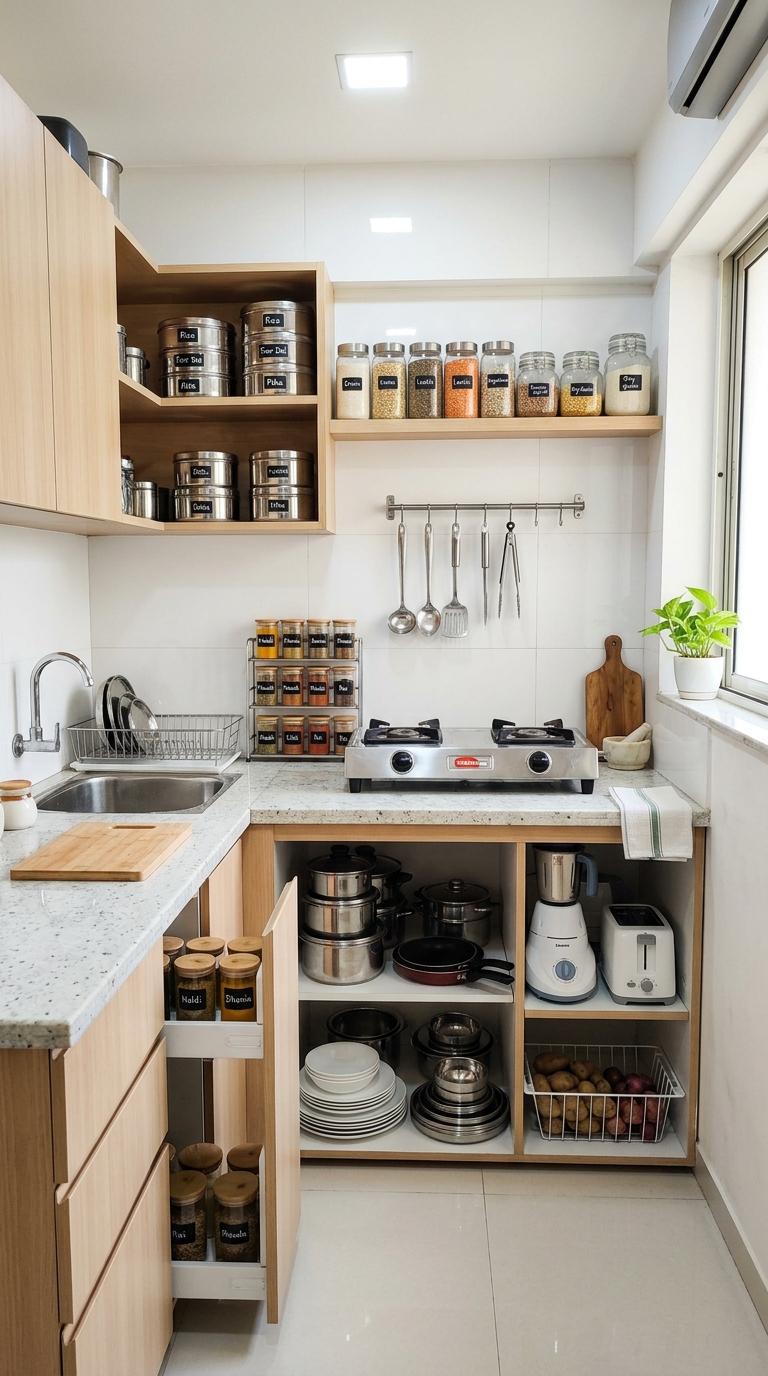
The most budget friendly kitchen renovation available is the one that costs nothing and is done before any money is spent. A thorough declutter of the kitchen, removing everything that is broken, duplicated, unused, or simply taking up space that better-used items need, followed by a reorganization of what remains according to how the kitchen is actually used, transforms the experience of working in the kitchen more directly than any physical renovation.
In a small Indian kitchen where storage is always insufficient relative to the volume of equipment, vessels, and ingredients that need to be accommodated, the accumulation of unused items in prime storage positions is one of the primary reasons the kitchen feels inadequate. Expired pantry items, duplicate utensils, appliances used once a year occupying daily-access shelves, and vessels kept out of habit rather than need collectively consume a significant portion of a small kitchen’s storage capacity and make it feel perpetually more chaotic and more cramped than it actually needs to be.
A kitchen that has been properly decluttered, organized, and labeled before any renovation work begins always looks better, functions better, and feels larger than the same kitchen before the declutter. It also makes the subsequent renovation work more effective because every change is made to a space that is already performing at its best organizationally, making the impact of the physical renovations easier to see and easier to evaluate.
Prioritizing Budget Kitchen Renovation Decisions
The sequence in which budget kitchen renovation decisions are made matters as much as the individual decisions themselves. The most common mistake in budget kitchen renovation is spending money on visible, decorative changes before addressing the fundamental organizational and functional problems that make the kitchen feel inadequate. A beautiful new splashback in a kitchen that is still poorly lit, poorly organized, and cluttered looks beautiful but does not feel better to work in. A kitchen that has been properly organized, well lit, and decluttered looks significantly better even before any decorative changes are made.
The renovation sequence that delivers the best results on a limited budget starts with declutter and organization, moves to lighting upgrades, then to paint and color changes, then to hardware and fixture replacements, and finally to the more substantial changes like counter replacement and flooring that deliver the highest visual impact but require the most investment. Each step in this sequence builds on the previous one and makes the next step’s impact clearer and more effective.
A Kitchen That Works as Well as It Looks
A small kitchen renovated thoughtfully on a limited budget is not a kitchen that looks like a compromise with money. It is a kitchen that reflects the intelligence of its renovation decisions, the care with which each change was chosen and executed, and the understanding that the best renovation outcomes come not from spending the most but from spending well on the changes that matter most. The daily experience of cooking, cleaning, and living in a kitchen that has been improved in these ways is the measure of a successful renovation, and that experience is available to any kitchen in any home at any budget level when the right decisions are made in the right sequence with the right level of intention.

Aarav Sharma is a passionate home and lifestyle writer. He loves exploring kitchen design, home decoration, and interior styling. With a keen eye for beautiful details and practical design ideas. Aarav Sharma shares inspiration to help readers create comfortable and functional living spaces.