The outdoor kitchen used to be a feature reserved for large properties with sprawling gardens and generous budgets. A built-in grill, a long counter, a bar area, a sink — the full setup required serious space and serious investment.
That picture has changed. Compact design thinking, modular outdoor furniture, and a growing appetite for outdoor living have made the outdoor kitchen accessible to homes with much smaller backyards. Whether you have a narrow terrace behind a row house, a compact garden behind a city flat, or a modest backyard that needs to do more than just hold a lawn, a thoughtfully designed outdoor kitchen is entirely achievable.
The challenge with a small backyard is not the cooking itself — a single good burner and a clean surface are enough to cook almost anything. The challenge is designing a setup that handles cooking, storage, and entertaining without overwhelming the space or making the garden feel like a construction site.
Here are 12 modern outdoor kitchen design ideas built specifically for small backyards.
Modern Outdoor Kitchen Design Ideas
1. The Single-Wall Outdoor Kitchen
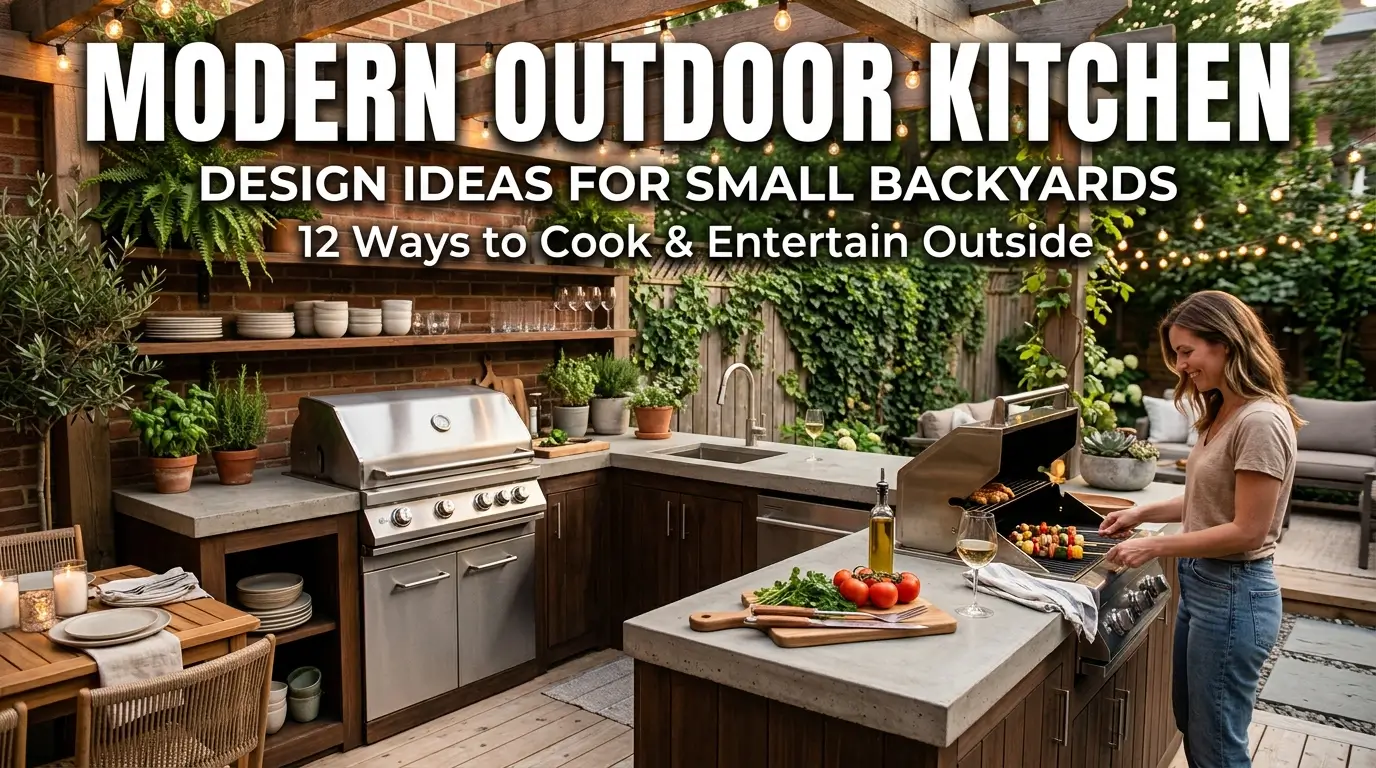
The most space-efficient outdoor kitchen layout for a small backyard is a single counter run fixed against one boundary wall. A built-in grill or burner unit, a small prep surface, and an under-counter storage cabinet — all in one straight line — keeps the footprint minimal while delivering full cooking functionality.
Fixing the kitchen against the boundary wall means the rest of the backyard remains open. The cooking area becomes a clearly defined zone without consuming the entire garden. Use weather-resistant materials — stainless steel, concrete, or natural stone — that handle outdoor conditions without requiring excessive maintenance.
2. The Corner Outdoor Kitchen
A corner layout uses two adjacent boundary walls to create an L-shaped outdoor kitchen that maximises counter space without projecting far into the garden. One arm of the L holds the cooking equipment — grill, burner, or pizza oven. The other arm provides prep counter and storage.
Corner outdoor kitchens feel anchored and considered. They tuck neatly into the backyard without taking up central space, leaving the middle of the garden free for seating, planting, or simply breathing room. A corner layout also naturally creates a sense of enclosure around the cook — which makes outdoor cooking feel more comfortable and less exposed.
3. A Freestanding Modular Grill Station
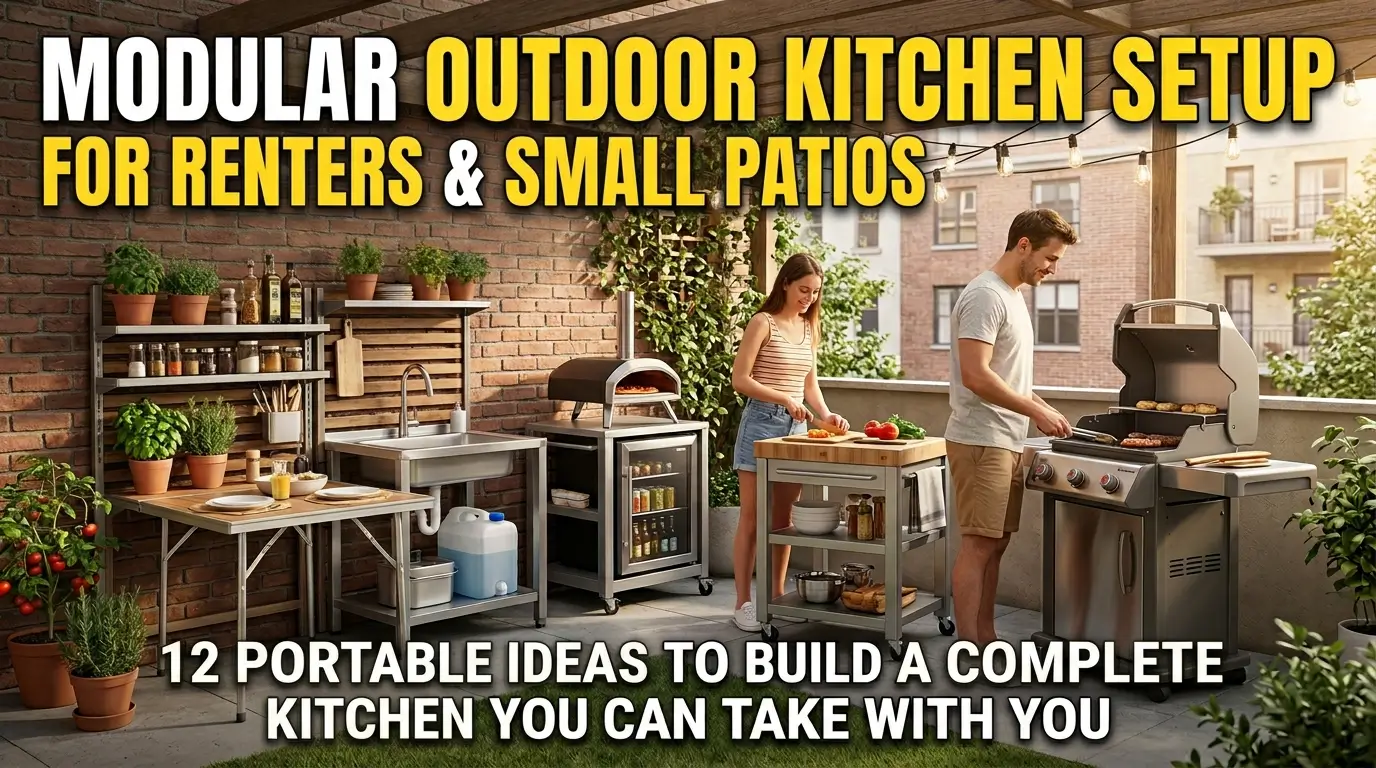
For backyards where permanent construction is not practical — rental properties, small terraces, or gardens where the layout might change — a freestanding modular grill station offers full outdoor cooking capability without any fixed installation.
Modular outdoor kitchen systems — available from several outdoor living brands — use weather-resistant cabinet units that bolt together and can be reconfigured or relocated as needed. A basic two or three module setup with a built-in grill, a side burner, and a storage cabinet delivers a complete outdoor kitchen in a footprint no larger than a single piece of furniture.
4. Concrete Counter with Built-In Grill
Poured concrete is one of the most versatile materials available for small outdoor kitchen counters. It can be formed to any shape, requires no joints or seams, handles heat and weather well, and has a raw, modern aesthetic that works with a wide range of backyard styles.
A concrete counter built over a simple block base — with a built-in grill unit dropped into a cutout — creates a permanent outdoor kitchen that looks custom and intentional without a complex construction process. Seal the concrete properly for outdoor use and finish the edges cleanly. The result is a surface that improves with age and weathering rather than deteriorating.
5. Outdoor Kitchen with a Pizza Oven as Centrepiece
In a small backyard where the outdoor kitchen is as much about atmosphere as it is about cooking, a wood-fired pizza oven as the centrepiece creates a focal point that justifies the entire setup. Pizza ovens are social — people gather around them, watch the fire, and wait together for the food.
Compact wood-fired ovens designed for residential use are available in sizes that work for small backyards. Build the oven on a solid raised base that also serves as the prep counter, add a storage section below for wood and tools, and the result is a complete outdoor kitchen built around a single dramatic element.
6. A Slim Outdoor Kitchen Along a Fence Line
A fence line is often the most underused boundary in a small backyard. Running a slim outdoor kitchen counter — 50 to 60 centimetres in depth — along the fence creates a fully functional cooking area that uses virtually no floor area from the garden itself.
Keep the counter at standard kitchen height — 90 centimetres — for comfortable standing use. Use the fence itself as the back wall for hanging storage, hooks for utensils, or a simple shelf for condiments and herbs. Weatherproofed timber, steel, or composite decking boards make appropriate materials for a fence-line counter that blends with the garden rather than contrasting it.
7. Built-In Outdoor Sink and Water Point
The addition of a water point to an outdoor kitchen removes one of the most persistent friction points of outdoor cooking — having to go inside for water. A built-in outdoor sink connected to the mains supply makes prep work, cleaning, and washing up entirely self-contained in the backyard.
For small outdoor kitchens, a single-bowl compact sink — 30 to 40 centimetres wide — is sufficient. Position it at one end of the counter run, away from the cooking equipment. A simple wall-mounted tap rather than a tall mixer tap keeps the profile low and the look clean. In mild climates, drain the supply pipe before winter to prevent freezing.
8. Shade Structure Over the Cooking Area
Cooking outdoors in direct sun — or rain — is uncomfortable regardless of how good the kitchen is. A shade structure over the outdoor kitchen makes the space usable for more of the year and significantly more pleasant during summer months.
A simple powder-coated steel pergola overhead, fitted with a retractable shade sail or polycarbonate roof panel, provides adequate shelter without enclosing the space. Keep the structure minimal and proportionate to the backyard — an oversized pergola in a small garden creates as many problems as it solves. The shade structure should feel like a natural extension of the kitchen, not a separate project dropped on top of it.
9. Integrated Outdoor Refrigerator
An outdoor-rated refrigerator — compact, under-counter units designed to handle temperature fluctuations and outdoor conditions — keeps drinks, marinades, and perishables immediately accessible without requiring trips inside.
In a small outdoor kitchen, a 60-litre under-counter outdoor fridge fits neatly into the cabinet run without taking up counter space. Position it at the end of the counter nearest the seating area so guests can help themselves without entering the cooking zone. Outdoor refrigerators are specifically rated for ambient temperature ranges that indoor fridges cannot handle — do not substitute a regular indoor unit for outdoor use.
10. Vertical Herb Garden on the Kitchen Wall
Fresh herbs used directly from the garden to the pan is one of the genuine pleasures of cooking outdoors. A vertical herb planter mounted on the wall behind the outdoor kitchen counter — or on a freestanding frame beside it — keeps basil, coriander, mint, and rosemary within arm’s reach during cooking.
Vertical herb gardens take up no counter or floor space, improve the air around the cooking area, and add a green, living element to what can otherwise be a very hard-surfaced space. Use individual terracotta or ceramic pots rather than a single large planter — individual pots are easier to maintain and replace, and look more considered than a uniform grid of identical plastic containers.
11. Outdoor Lighting for Evening Use
An outdoor kitchen that is only usable in daylight is only half as useful as one that works after dark. Layered outdoor lighting — task lighting over the cooking surface, ambient lighting around the seating area, and accent lighting on the garden elements — extends the outdoor kitchen into the evening and transforms the backyard into a genuinely atmospheric space.
Waterproof LED strip lights under the counter overhang illuminate the prep and serving surface. A simple overhead pendant or string lights across the pergola provide ambient light for the dining and seating area. Solar spike lights or low-voltage landscape lighting in the garden complete the picture without requiring extensive electrical work.
12. Seamless Indoor-Outdoor Connection
The most effective small outdoor kitchens feel like a natural continuation of the indoor living space rather than a separate area accessed through a back door. Achieving this connection — visually and physically — makes the outdoor kitchen feel more integrated and the overall home feel larger.
Use the same or complementary materials between the indoor kitchen and the outdoor kitchen. Align the counter heights. If possible, position the outdoor kitchen directly outside the kitchen or dining room door so the sightline and movement between the two spaces is direct and unobstructed. A sliding or folding door that opens the interior wall fully removes the boundary between inside and outside entirely — which in a small home makes both spaces feel significantly more generous.
Design an Outdoor Kitchen That Makes the Most of Every Square Metre
A small backyard is not a reason to compromise on outdoor living — it is a reason to design more carefully. The outdoor kitchens that work best in tight spaces are the ones where every decision has been made with the available area in mind — the layout chosen for efficiency, the materials chosen for weather and aesthetics, the equipment chosen for actual use rather than aspiration.
Start with how you cook and entertain. If you grill twice a week and eat outside on weekends, design around that reality. If you want a wood-fired oven and a dining table for six, plan the space to accommodate both without crowding either. A well-designed small outdoor kitchen will be used constantly. A poorly designed large one will be used occasionally and regretted often.