Renting a flat comes with a long list of restrictions. You cannot drill into walls, replace cabinets, change the flooring, or do anything that leaves a permanent mark. For most tenants, this means accepting whatever the landlord installed — outdated tiles, bulky cabinets, harsh lighting — and living with it.
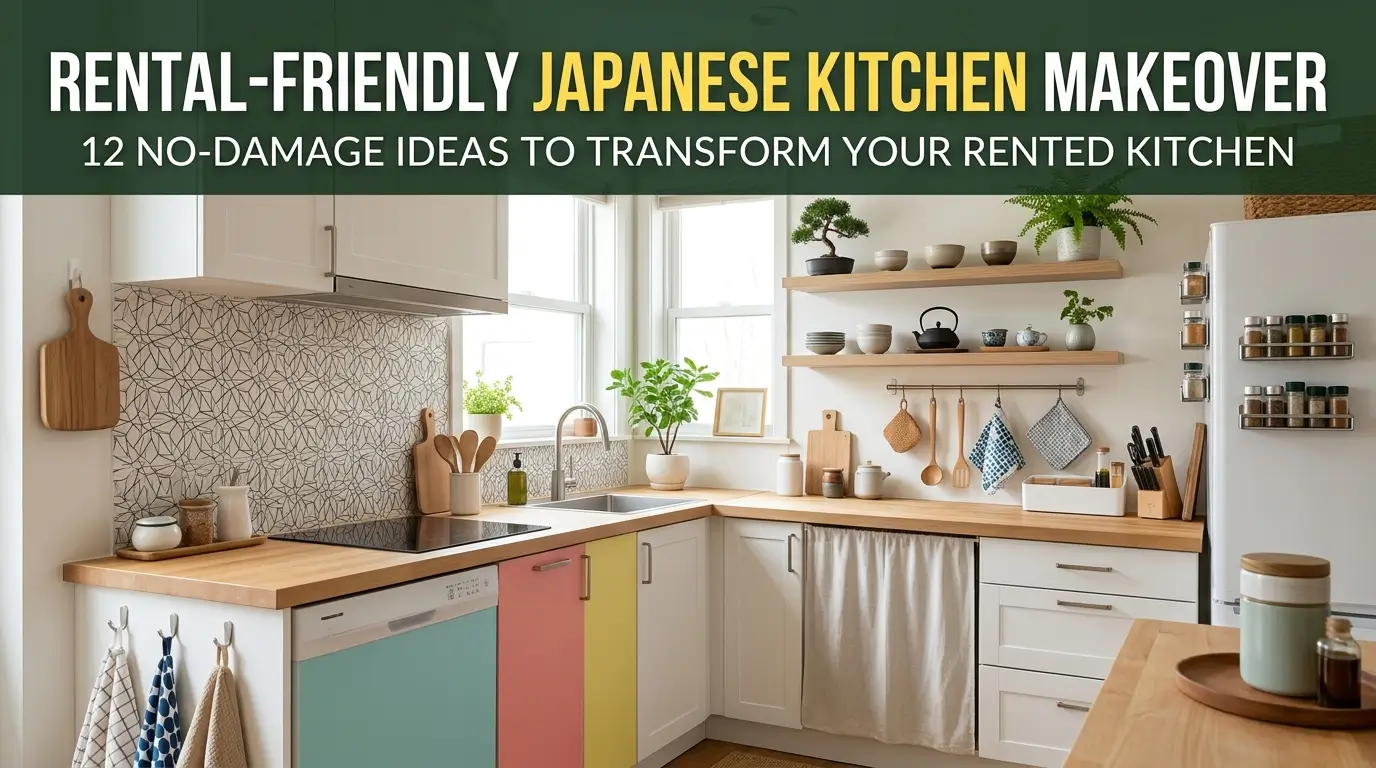
But a rental kitchen does not have to feel like a compromise. Japanese design philosophy, built around the principles of simplicity, intentionality, and calm, is surprisingly well-suited to rental constraints. Most Japanese-inspired changes are surface-level, removable, and low-cost — which means you can transform your kitchen without losing your security deposit.
Here are 12 rental-friendly ideas to give your kitchen a Japanese makeover without touching a single wall permanently.
Rental-Friendly Japanese Kitchen Makeover Ideas
1. Peel-and-Stick Cabinet Wraps
The fastest way to change the look of a rental kitchen is to change the cabinet fronts — without replacing them. Peel-and-stick vinyl wraps in light wood grain, matte white, or soft grey are widely available online and can be applied directly over existing cabinet surfaces.
This single change can make an outdated kitchen look significantly more modern and intentional. When it is time to move out, the wraps peel off cleanly without damaging the surface underneath. Measure carefully before ordering and use a squeegee to apply without air bubbles.
2. Removable Tile Stickers for Backsplash
Old ceramic backsplash tiles are one of the most common complaints in rental kitchens. Removable tile stickers — available in Japanese-inspired patterns like subtle geometric prints, muted stone textures, or clean white subway tile looks — can be placed directly over existing tiles.
They are heat-resistant, easy to wipe clean, and come off without leaving residue when removed carefully. Opt for muted, low-contrast patterns to stay true to the Japanese aesthetic. Avoid overly decorative or colourful options that work against the calm, minimal tone you are building.
3. Freestanding Open Shelves
Since you cannot install wall-mounted shelving without drilling, freestanding shelving units are your best alternative. A slim bamboo or light wood freestanding shelf placed against a kitchen wall can hold everyday items — a few ceramic mugs, a small plant, neatly stacked containers — in a way that feels curated and intentional.
Keep the shelving light and restrained. Japanese interiors never overcrowd open storage. Two or three well-chosen items on a shelf will always look better than a shelf packed with mismatched objects.
4. Peel-and-Stick Wallpaper on One Wall
An accent wall can completely change the mood of a small kitchen. Peel-and-stick wallpaper in a Japanese-inspired pattern — think soft watercolour botanicals, abstract ink textures, or a quiet linen weave — adds depth and character without permanent commitment.
Choose a single wall, ideally the one most visible from the entrance. Keep the pattern subtle and the colour palette within the Japanese range of off-whites, sage greens, soft blues, and warm beiges. The wallpaper peels off cleanly and leaves no residue on most painted surfaces.
5. Plug-In Under-Cabinet Lighting
Rental kitchens almost always have harsh, single-source overhead lighting. Adding plug-in LED strip lights under the cabinets changes the entire mood of the space — creating a warm, layered glow that makes the kitchen feel more considered and calm.
Plug-in strips require no wiring and attach with adhesive backing or removable clips. Warm white LEDs work best for a Japanese aesthetic. This one change costs very little but has an outsized effect on how the kitchen feels in the evening.
6. Declutter and Edit Ruthlessly
Japanese design philosophy, particularly the concept of ma — meaning negative space or emptiness — treats cleared surfaces as a design element in themselves. A countertop with only two or three objects on it communicates intention and calm far more effectively than one covered in appliances, bottles, and random objects.
Go through everything currently on your kitchen surfaces and remove what does not need to be there. Store appliances inside cabinets when not in use. A clear countertop is free, requires no products, and is perhaps the single most impactful change you can make in a rental kitchen.
7. Swap Out Cabinet Hardware
Most landlords have no objection to tenants swapping cabinet handles and knobs, as long as the originals are stored safely and replaced before moving out. This is one of the easiest and most effective changes available to renters.
Replace bulky or ornate handles with slim, matte black bar pulls or brushed brass recessed handles. These small hardware changes shift the entire character of a cabinet — from dated to deliberate. Keep the original hardware in a labelled bag inside a cabinet so it is easy to reinstall when you leave.
8. Introduce Natural Materials
Japanese interiors draw heavily on natural materials — wood, bamboo, stone, linen, and ceramic. In a rental kitchen, you can bring these in through accessories and small additions that require no installation at all.
A bamboo dish rack, wooden utensil holders, a small stone mortar and pestle kept on the counter, a linen tea towel folded neatly over the oven handle — these details accumulate into an aesthetic that feels warm, grounded, and quietly Japanese. None of these require permission or produce damage.
9. Use a Portable Kitchen Island or Cart
Many rental kitchens lack sufficient counter and storage space. A freestanding bamboo or light wood kitchen cart with a lower shelf solves both problems without touching the existing layout.
It adds prep surface, storage for bulkier items, and a strong natural material presence that anchors the Japanese aesthetic. When you move, it moves with you. Look for slim-profile carts that do not crowd the kitchen further — in a small rental kitchen, every centimetre of floor space matters.
10. Coordinate Your Kitchen Accessories
One of the most underrated aspects of a Japanese kitchen is colour discipline. Every visible object — dish rack, soap dispenser, sponge holder, utensil pot — is either in a neutral tone or in a single coordinating colour family.
Go through your current kitchen accessories and replace mismatched items with a coordinated set in white, matte black, natural wood, or light grey. This requires no renovation at all. It is purely a purchasing and editing decision, but the visual difference is immediate and significant.
11. Add a Low Maintenance Plant or Two
Japanese interiors use greenery sparingly but deliberately. A single pothos in a simple ceramic pot on a shelf, or a small succulent on the windowsill, brings life and softness to a minimal kitchen without introducing clutter.
Avoid plastic plants — they contradict the natural, honest material quality that Japanese design values. Stick to one or two low-maintenance varieties that do well in kitchen conditions. Overwatering is the most common mistake — choose plants that thrive on neglect.
12. Invest in Matching Storage Containers
Inside the cabinets matters as much as outside, particularly once you adopt the open-shelf approach. Mismatched packets, plastic bags, and random containers create visual noise every time a cabinet door opens.
Decant dry goods into matching glass or ceramic jars with simple labels. This is a core principle of Japanese kitchen organization — everything stored neatly, everything visible, everything in its place. It makes the kitchen more functional, reduces food waste, and brings a sense of quiet order that is very much at the heart of Japanese domestic life.
Transform Your Rental Kitchen Without Losing Your Deposit
A rental kitchen does not have to look like one. With the right combination of removable products, thoughtful editing, and natural materials, you can bring the calm and intention of Japanese design into a space you do not own — and take every bit of it with you when you leave.
Start with the changes that cost nothing — decluttering, coordinating accessories, editing what sits on the counter. Then layer in the products gradually. The transformation is more about discipline and taste than budget or permanence.