
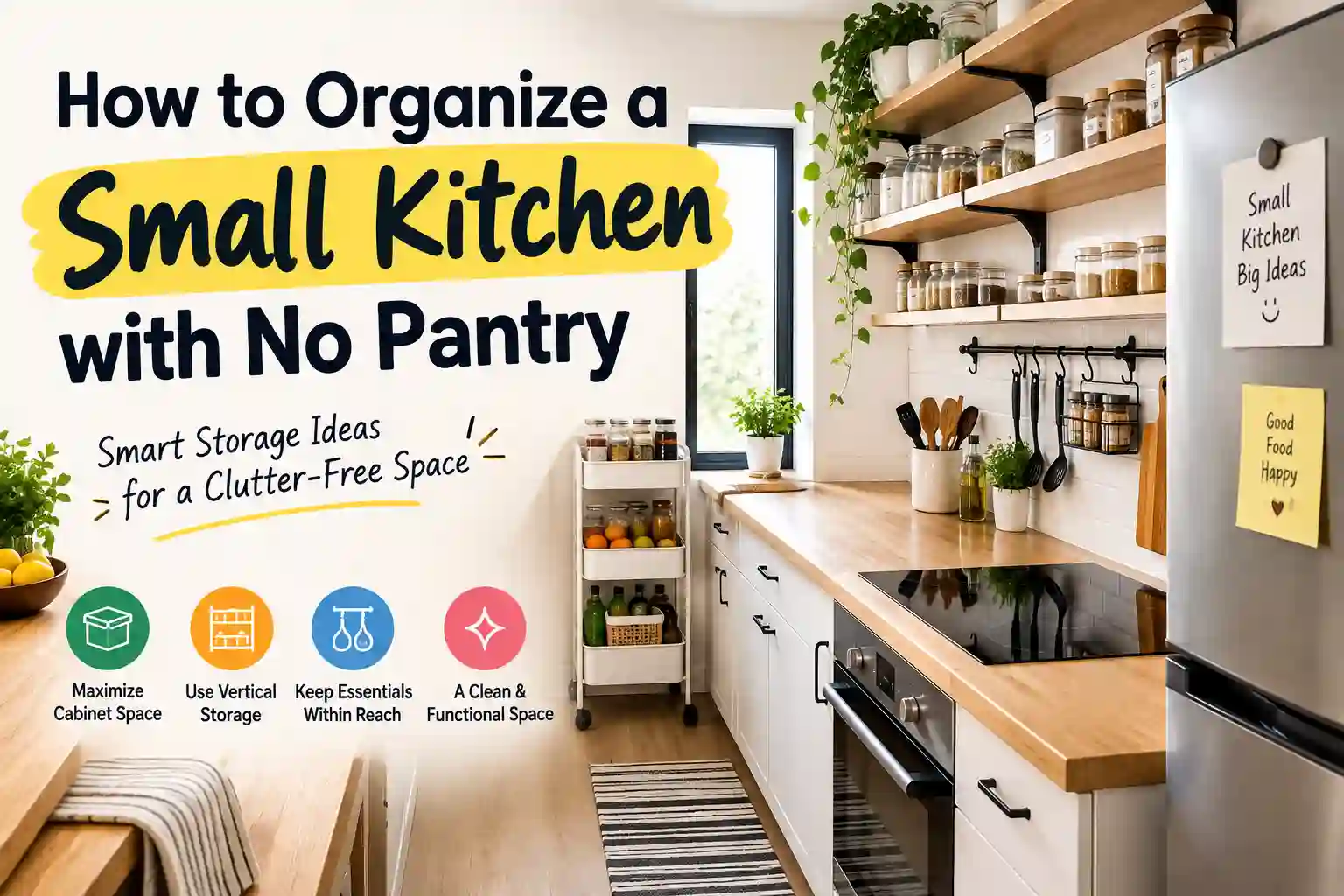
If you live in an apartment, you know how challenging it can be to organize a kitchen without a pantry. You have limited cabinet and counter space, yet groceries seem to take up more room.
You bring home a bag of rice, a box of cereal, and a few food containers, only to realize there is barely any room to store them. Before long, your cabinets feel cluttered, and finding essential items becomes a daily struggle.
The good news is that you don’t need a dedicated pantry to keep your kitchen organized. With a little planning, you can make better use of your existing cabinets, walls, drawers, and other available spaces.
Here are 10 practical ways to organize a small kitchen without a pantry—all without expensive renovations or sacrificing all your counter space.
1. Start by Reducing Unnecessary Clutter
Before buying storage containers or installing shelves, take a closer look at what you already have. Organizing a crowded kitchen becomes much easier when you remove items you no longer need.
Start with one cabinet or drawer at a time. Empty the space, wipe the shelves, and decide which items belong there.
Here are a few simple ways to get started:
- Check your groceries: Look at expiration dates and inspect packages for damage, signs of pests, or changes in condition. Discard food that is expired or unsafe to use.
- Remove duplicate kitchen tools: If you have several utensils that perform the same job, keep the ones you use most often.
- Review your small appliances: Move rarely used appliances to another suitable storage area if you have one.
- Group similar items: Put baking ingredients together, keep breakfast foods in one area, and store cooking essentials where they are easy to reach.
Avoid throwing away useful items simply because you haven’t used them recently. Instead, consider how often you cook, what equipment you actually need, and how much storage space is available.
The goal is to create enough room for the things you use regularly.
2. Create Simple Storage Zones
When every item has a designated place, it becomes easier to find what you need and put things away after cooking.
You don’t need a large kitchen to create storage zones. Even two or three cabinets can work well if you arrange them thoughtfully.
The food zone
Choose a cabinet or shelf for dry goods such as pasta, rice, cereal, flour, and unopened canned foods. Keep frequently used ingredients near your food-preparation area when possible.
The cooking zone
Store pots, pans, cooking utensils, and oven accessories close to the stove. This reduces the need to move around the kitchen while preparing meals.
The breakfast zone
Keep coffee, tea, mugs, and breakfast items together. A single shelf or small cabinet can make your morning routine more convenient.
The preparation zone
Store cutting boards, measuring cups, mixing bowls, and other food-preparation tools near the counter where you usually work.
You can adjust these zones to match your kitchen layout. If you only have two cabinets, combine related categories rather than trying to create a separate space for everything.
3. Make Better Use of Deep Cabinets
Deep cabinets can provide plenty of storage, but items at the back often get forgotten. You might use the same products from the front while older packages remain hidden behind them.
A few simple organizers can make these spaces easier to manage.
Try shelf risers
Shelf risers create an additional level for lightweight items. They can be useful for arranging mugs, small bowls, spice jars, and canned goods, provided the shelves and risers can safely support the weight.
Before purchasing one, measure the cabinet’s width, depth, and height. Make sure the riser leaves enough room to remove items without difficulty.
Use a turntable
A rotating organizer, often called a Lazy Susan, can make small bottles and jars easier to reach. It works particularly well for suitable cabinets with deep shelves or awkward corners.
Use it for items such as cooking oils, vinegar, or frequently used condiments, as long as the organizer is stable and the containers fit securely.
Group items in bins
Clear storage bins make it easier to see what you have. Instead of placing loose packets and boxes randomly on a shelf, group similar products together.
For example:
- Breakfast foods, including oatmeal and cereal bars.
- Baking ingredients, such as baking soda and baking decorations.
- Cooking essentials, including seasoning packets and unopened food packages.
Choose bins that fit your cabinets and are easy to lift. Avoid overfilling them, especially when storing heavier items.
4. Use the Inside of Cabinet Doors
Cabinet doors offer extra storage space that is easy to overlook. Depending on their design, you may be able to use them for lightweight kitchen accessories.
Hang cutting boards
A suitable door-mounted holder can keep thin cutting boards upright and free up room in a cabinet or drawer.
Organize pot lids
Lids can take up considerable space when stacked with cookware. A lid holder attached to the inside of a cabinet door can keep them organized and easier to access.
Store small spice containers.
A shallow rack may provide a convenient place for small spice jars. Check the available clearance before installing it so the door closes properly and the containers remain secure.
Choose organizers that are appropriate for your cabinet material and door thickness. Follow the manufacturer’s installation instructions, and avoid mounting heavy items on doors that cannot support them.
If you rent your home, removable organizers or freestanding alternatives may be preferable to drilling holes into cabinets.
5. Create a Small Pantry With Freestanding Furniture
Sometimes, the easiest solution is to add storage outside your existing cabinets.
Look around your kitchen and dining area. There may be a narrow gap beside the refrigerator, an unused corner, or a small section of wall that could accommodate a compact storage unit.
Consider a slim rolling cart.
A narrow rolling cart can fit into some unused spaces and provide room for suitable packaged groceries, kitchen supplies, or frequently used ingredients.
Measure the gap carefully before buying one. Leave enough clearance for drawers, cabinet doors, and appliances, and make sure the cart does not obstruct walkways.
Choose a stable cart with appropriate weight limits. Keep food away from heat sources, moisture, and direct sunlight.
Use a narrow bookcase.
A sturdy bookcase can serve as an open pantry when placed in a suitable location. Use the shelves for dry groceries, baskets, or kitchen accessories.
If you plan to store food on an open shelf, choose a clean, dry location away from cooking splashes and household chemicals. Store food in suitable packaging or containers and keep it protected from pests.
Secure tall furniture according to the manufacturer’s instructions, particularly if children or pets are present.
Choose furniture with built-in storage.
If your kitchen opens into a dining area, a storage bench or cabinet may provide extra room for kitchen-related supplies.
Use enclosed furniture for appropriate nonperishable items or household supplies. Make sure any food stored inside is protected from moisture, pests, and temperature extremes.
6. Organize Your Refrigerator and Freezer
Without a pantry, it can be tempting to put extra groceries in the refrigerator or freezer. These appliances can help manage certain foods, but they should not become overflow storage for everything.
Start by organizing the food you already have.
Use the first-in, first-out method.
When unpacking groceries, move older items toward the front and place newer purchases behind them when practical. Check dates and follow the storage instructions on food packaging.
This simple habit helps you keep track of what you have and reduces the chances of forgetting items at the back of a shelf.
Group similar foods together
Use suitable refrigerator bins to organize packaged foods, snacks, and other items that benefit from being grouped. Avoid overcrowding the shelves, since proper air circulation helps the refrigerator maintain a consistent temperature.
For the freezer, separate suitable foods into categories such as vegetables, meat, and prepared meals. Label packages with the contents and date when helpful.
Follow safe storage practices.
Keep your refrigerator at or below 40°F (4°C) and your freezer at 0°F (-18°C), using an appliance thermometer if needed.
Store perishable foods in the main refrigerator compartment according to food-safety guidance and the manufacturer’s instructions. Refrigerator doors experience greater temperature fluctuations, so avoid using them for particularly temperature-sensitive foods.
Not every pantry item belongs in the refrigerator. Before moving flour, nuts, bread, or other dry goods into cold storage, check their packaging and storage requirements. Use clean, suitable containers and protect food from moisture and odors.
7. Keep Countertops Useful, Not Crowded
Counter space is especially valuable in a small kitchen. If every available surface is covered with groceries, appliances, and containers, preparing meals becomes more difficult.
You don’t have to keep every countertop completely empty. The idea is to leave enough clear space for the tasks you perform regularly.
Use a tiered stand
A two-tiered stand can organize selected items in a compact area. Depending on your needs, it may hold suitable fruit, tea supplies, or frequently used kitchen accessories.
Make sure the stand is stable and easy to clean. Store produce according to its individual storage requirements rather than placing every fruit and vegetable together.
Install floating shelves where appropriate
Wall shelves can free up cabinet space for items you prefer to keep out of sight. They are useful for everyday dishes, mugs, or lightweight kitchen accessories.
Before installing shelves, check the wall type, the mounting hardware, and the expected weight. If you rent, confirm whether permanent installation is permitted.
Keep shelves away from areas where food or dishes could be exposed to cooking splashes. Avoid placing heavy or breakable objects directly above busy preparation areas.
Create a small daily-use station
Instead of spreading coffee supplies, cooking oils, and frequently used ingredients across the counter, group a few essentials in one designated area.
This makes them easier to find while keeping the rest of the work surface available for cooking.
8. Choose Storage Containers Carefully
Storage containers can help you organize a pantry-free kitchen, but buying a large matching set is not always necessary.
Start by identifying the foods that are difficult to store in their original packaging. Then choose containers that fit your shelves and suit the ingredients you want to keep.
Look for practical shapes
Square or rectangular containers often make efficient use of shelf space. Stackable designs may also help, provided they remain stable and are easy to access.
Measure your cabinets before purchasing containers. A set that looks attractive online may not fit your actual storage space.
Use airtight containers when appropriate
Clean, dry, food-safe, airtight containers can help protect suitable dry ingredients from moisture and pests.
They are particularly useful for items such as flour, sugar, rice, and cereal when the containers are appropriate for the food and storage conditions.
Make sure containers are completely dry before filling them. Follow any relevant packaging instructions, and do not assume that transferring food into a container automatically extends its shelf life.
Label the contents
Labels can identify the ingredient, opening date, or other useful information. This is especially helpful when several ingredients look similar.
Keep original packaging or record relevant cooking instructions, allergen information, and expiration details when necessary.
You can start with just a few containers for your most frequently used ingredients and expand your collection as needed.
9. Find Storage Space in Unexpected Places
When your kitchen lacks a pantry, small unused areas can make a difference. The important thing is to choose storage locations that are suitable for the items you want to keep there.
Use the space above the refrigerator
If there is a safe, accessible shelf or cabinet above your refrigerator, it may be useful for lightweight kitchen accessories or items you rarely need.
Check the appliance manufacturer’s clearance and ventilation requirements before placing anything nearby. Avoid storing food or heat-sensitive products in areas that become warm.
Organize the space above cabinets
If your cabinets do not reach the ceiling, baskets can help organize lightweight items on top. Choose containers that are stable and easy to handle.
Keep the area clean, avoid excessive weight, and do not store frequently used or heavy items where retrieving them would require awkward reaching.
Make use of the space beneath the sink
The cabinet beneath the sink can be useful for cleaning supplies and other household essentials. A small organizer may help you work around plumbing pipes.
However, this area is not usually the best place for food storage because leaks, moisture, and household chemicals can create problems. Keep cleaning products separate from food and out of children’s reach.
Store non-food supplies elsewhere
Paper towels, extra napkins, and other household supplies do not always need to occupy valuable kitchen cabinets. If you have suitable space in a utility cupboard or another dry storage area, move some of these items there.
This leaves more room for groceries and cooking essentials.
10. Shop According to Your Available Space
One of the simplest ways to keep a small kitchen organized is to avoid bringing home more groceries than you can reasonably store.
Bulk purchases may offer convenience in some situations, but they are not always practical when cabinet space is limited.
Try these habits instead:
- Plan meals before shopping: Check your existing ingredients and make a list of what you actually need.
- Buy sensible quantities: Choose package sizes that fit your storage space and how quickly you use the product.
- Check before buying duplicates: Look through your cabinets before purchasing another packet of rice, pasta, or spices.
- Keep an inventory: A simple note on your phone can help you remember which ingredients are running low.
- Leave room for new groceries: Avoid filling every shelf to capacity, since you need space to put away new purchases.
You do not necessarily need to shop every day or avoid bulk purchases entirely. The best approach depends on your household size, shopping routine, budget, and available storage.
A little planning can help prevent crowded cabinets and unnecessary food waste.
Maintain Your Kitchen With a Simple Daily Reset
Even a well-organized kitchen can become cluttered when you cook regularly. The easiest way to maintain your system is to spend a few minutes putting things back in their proper places.
At the end of the day, try this simple routine:
- Wash the dishes or load the dishwasher.
- Wipe down food-preparation surfaces.
- Return ingredients to their appropriate storage locations.
- Check that refrigerated and frozen foods have been put away promptly.
- Put kitchen tools back in their designated drawers or cabinets.
- Make a note of groceries that need replacing.
You don’t have to complete every organizing task each night. Focus on the basics that make the next day’s cooking easier.
Every few weeks, review your cabinets and check whether your current arrangement still works. If a particular shelf keeps becoming cluttered, consider changing the way you group or store those items.
Final Thoughts
Organizing a small kitchen that lacks a pantry doesn’t require a major renovation or an array of expensive storage products.
Start by decluttering, creating convenient storage zones, and making better use of your existing cabinets. Only add items like shelf risers, storage bins, or over-the-door organizers if they solve a specific problem.
If you need more space, consider a suitable rolling cart or a freestanding shelving unit. Keep your countertops clear for food preparation and store food items properly.

Aarav Sharma is a passionate home and lifestyle writer. He loves exploring kitchen design, home decoration, and interior styling. With a keen eye for beautiful details and practical design ideas. Aarav Sharma shares inspiration to help readers create comfortable and functional living spaces.