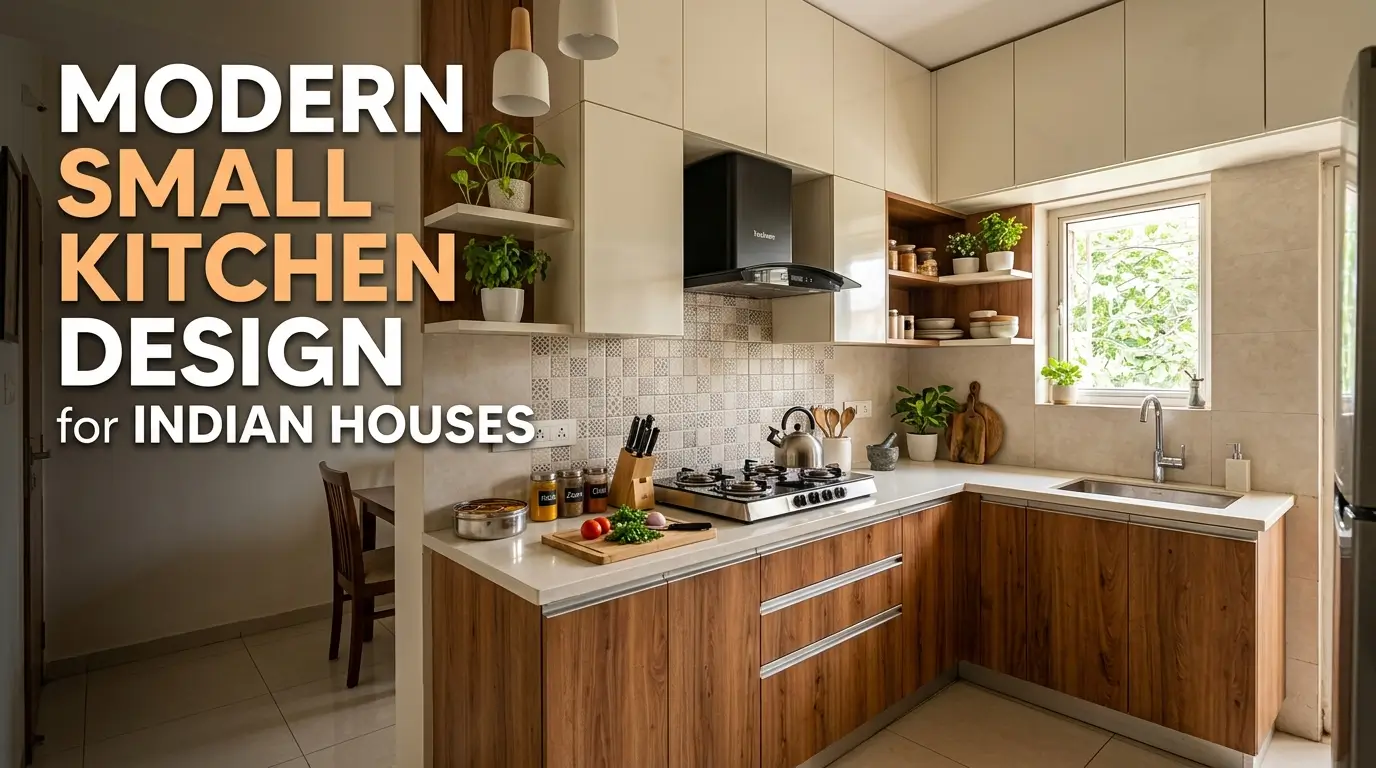
Modern kitchen design in India is at an interesting point. The reference points have shifted. A generation ago, the aspirational Indian kitchen was ornate, two-tone, high-gloss, and maximally fitted. Every surface covered, every cabinet filled, every hardware piece polished to a high shine. It looked expensive and it signalled investment.
That aesthetic has not disappeared but it is no longer the only one. A growing number of Indian homeowners, particularly in urban flats, are looking for something different. Kitchens that are quieter, more resolved, less visually busy. Kitchens that feel considered rather than decorated. Kitchens where the design decisions communicate restraint rather than abundance. Kitchens that look, in a word, modern.
The challenge is that modern kitchen design, as it is understood internationally, was developed for a different cooking context. European and American modern kitchens are designed for a cooking style that uses fewer burners, generates less smoke, requires less dry goods storage, and involves a smaller and more homogeneous range of equipment than Indian cooking demands. A modern kitchen design that works beautifully in a Copenhagen apartment or a London flat does not automatically translate to a Mumbai or Bangalore kitchen where the daily cooking load is significantly heavier and the storage requirements are substantially greater.
A genuinely modern small kitchen for an Indian house has to solve for both the aesthetic ambitions of contemporary design and the functional demands of Indian cooking simultaneously. Neither can be sacrificed for the other. A modern kitchen that cannot handle a proper Indian meal is not a successful kitchen. An Indian kitchen that handles every meal but looks like it was designed in 1995 is not a modern one.
Here are 12 ideas for bringing genuinely modern design into a small Indian kitchen without compromising on the function that Indian cooking requires.
Modern Small Kitchen Design Ideas for Indian Houses
1. A Monochromatic Colour Palette as the Foundation
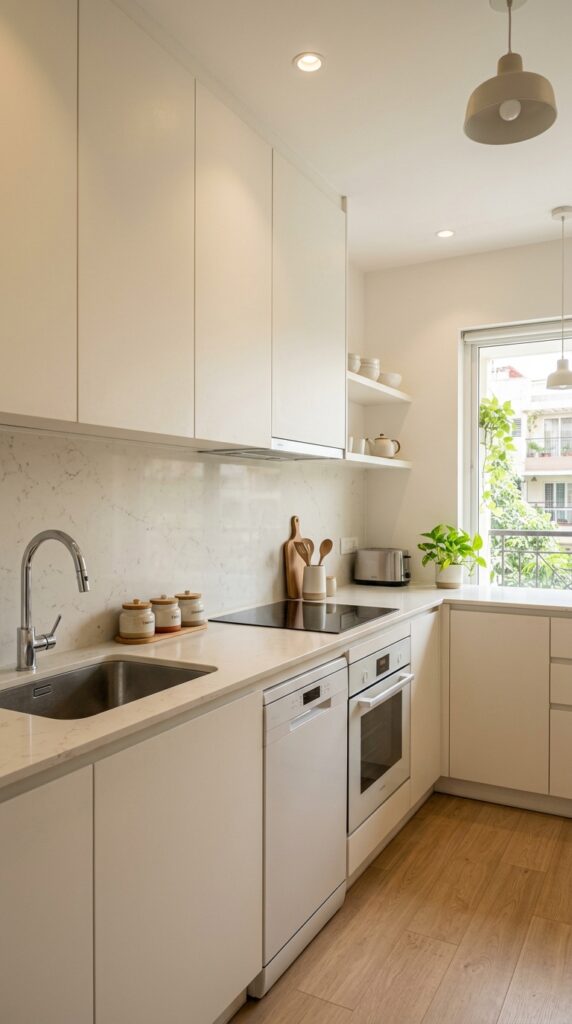
The visual signature of modern kitchen design is tonal consistency. One colour, or a narrow range of closely related tones, applied across the cabinets, the countertop, and the wall surfaces, creates a kitchen that reads as a single unified composition rather than a collection of different coloured elements assembled in a room. The two-tone Indian kitchen, white uppers and grey lowers, or cream uppers and walnut lowers, is a specific aesthetic that signals a particular era of kitchen design. The monochromatic palette signals a different era entirely.
Choose one base tone and apply it across both upper and lower cabinets. Warm white, soft linen, pale sage, warm grey, or a deep muted green are all appropriate monochromatic foundations for a modern Indian kitchen. The countertop in a closely related tone, the backsplash in a complementary neutral, and the wall surfaces in a paint colour that sits within the same tonal family complete the monochromatic foundation. The result is a kitchen where the eye moves across the surfaces without interruption, and the space feels larger, calmer, and more deliberately designed than a two-tone kitchen of identical dimensions.
2. Flat-Front Handleless Cabinets Throughout
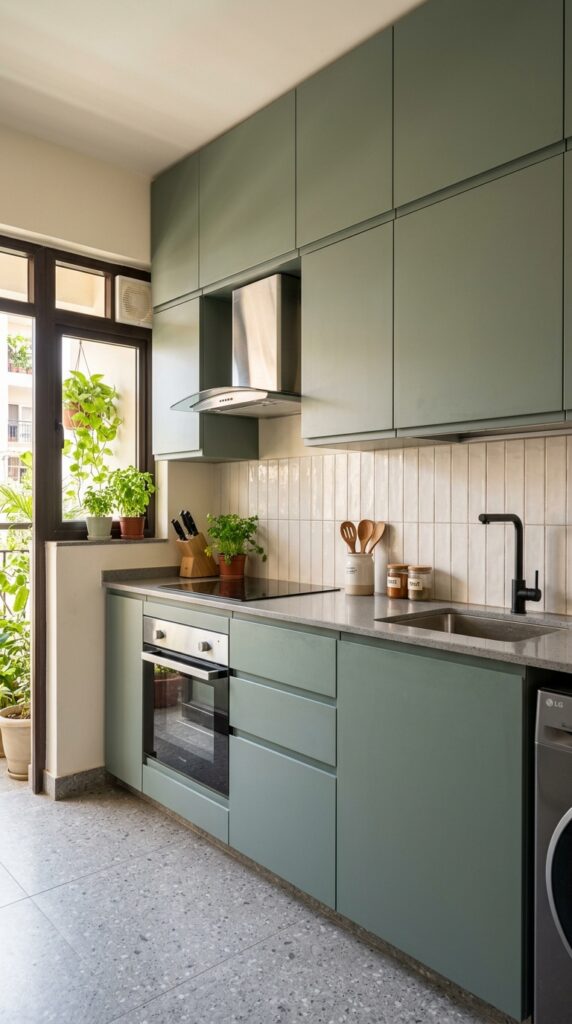
The cabinet front is the dominant visual element of any kitchen. In a small kitchen where the cabinets cover most of the visible wall surface, the design of the cabinet front determines the overall character of the space more than any other single element. Ornate raised-panel fronts, routed edge profiles, and decorative mouldings signal a traditional aesthetic. Flat-front handleless cabinets signal a modern one.
Flat-front cabinets with integrated J-pull handles, push-to-open mechanisms, or recessed grip channels along the top edge of the door eliminate all visible hardware from the cabinet face. The cabinet front becomes a flat, uninterrupted plane that the eye moves across without any decorative detail to stop it. In a small Indian kitchen where the cabinets are covering a significant proportion of the total wall area, flat-front handleless cabinets make that wall area feel cleaner, quieter, and more architecturally resolved than any alternative cabinet front design.
3. A Waterfall Countertop Edge on the Visible Counter End
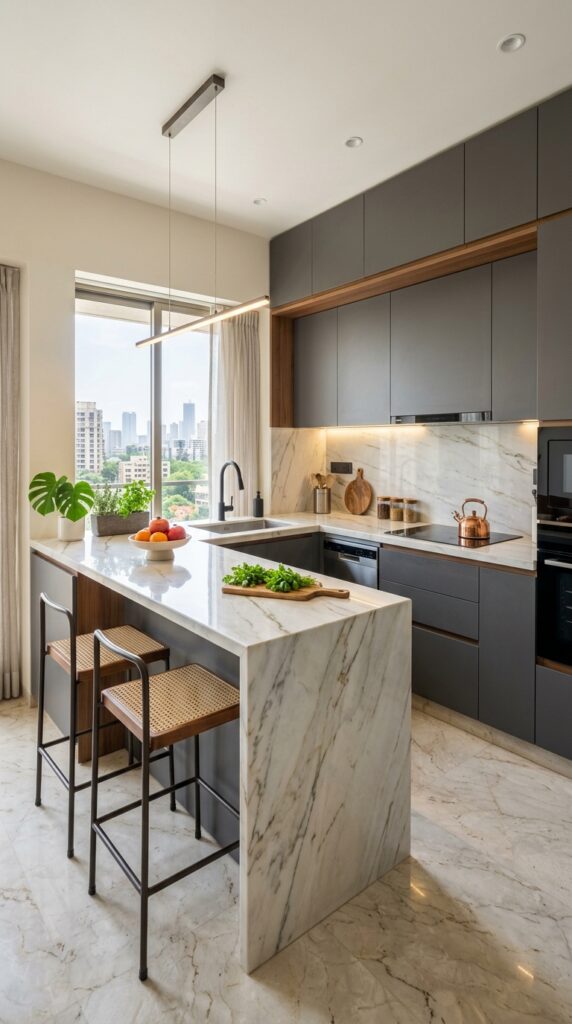
The countertop edge detail is a small decision with a disproportionate visual impact in a modern small kitchen. A standard square-cut edge is clean and appropriate. A bullnose or bevelled edge references an older kitchen aesthetic that does not sit naturally within a modern design. A waterfall edge, where the countertop material continues vertically down the end panel of the counter run to the floor, makes a strong modern statement that elevates the entire kitchen.
A waterfall countertop edge on the visible end of the counter run, the end that faces into the room or toward the kitchen entrance, creates a sculptural quality that no standard countertop edge treatment can match. The counter appears to float on the vertical slab below it. The material is used as a design element rather than simply as a functional surface. In a small Indian kitchen where the budget for the full countertop is already committed, a waterfall edge on one visible end rather than across the full perimeter is a targeted investment that has the greatest visual return for the cost.
4. A Single Large-Format Backsplash Tile With Minimal Grout
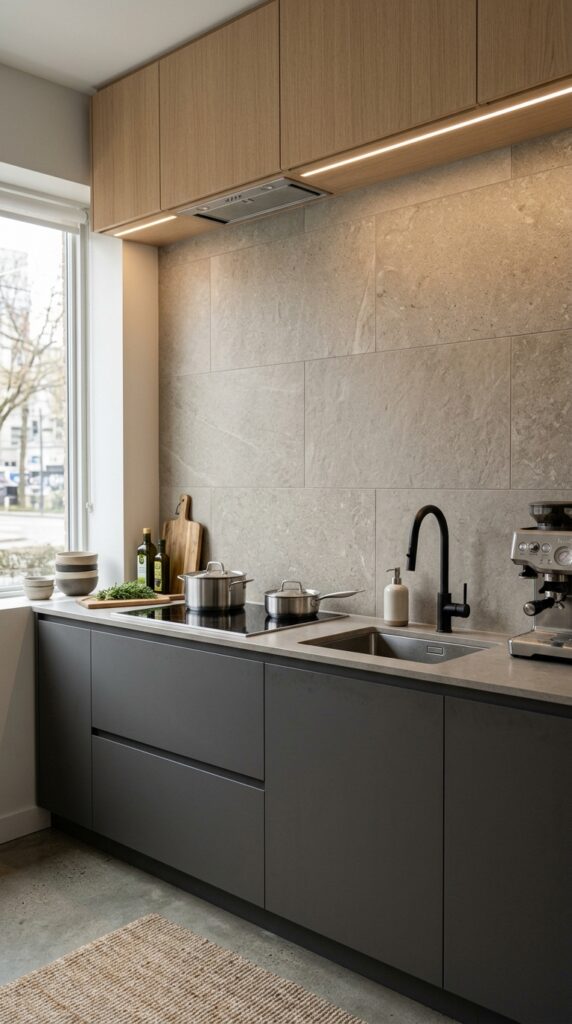
The backsplash in most Indian kitchens is small-format ceramic tile in a subway or mosaic pattern with visible grout lines that accumulate staining over time and require consistent maintenance to keep clean. In a modern small Indian kitchen, the backsplash is an opportunity to make a quiet but deliberate material statement that upgrades the entire register of the space.
A large-format porcelain tile, 600 by 1200 millimetres or larger, in a single neutral stone or concrete tone with minimal grout lines between panels, creates a backsplash that reads as a continuous surface rather than a tiled pattern. The reduced grout area is easier to clean in a kitchen where daily Indian cooking generates regular backsplash staining. The large format eliminates the visual busyness of smaller tile patterns and creates a calm, continuous surface behind the cooktop and prep area. In a modern small kitchen, a large-format backsplash tile with near-invisible grout joints is the backsplash treatment that most effectively advances the contemporary aesthetic.
5. An Integrated Slim-Profile Chimney
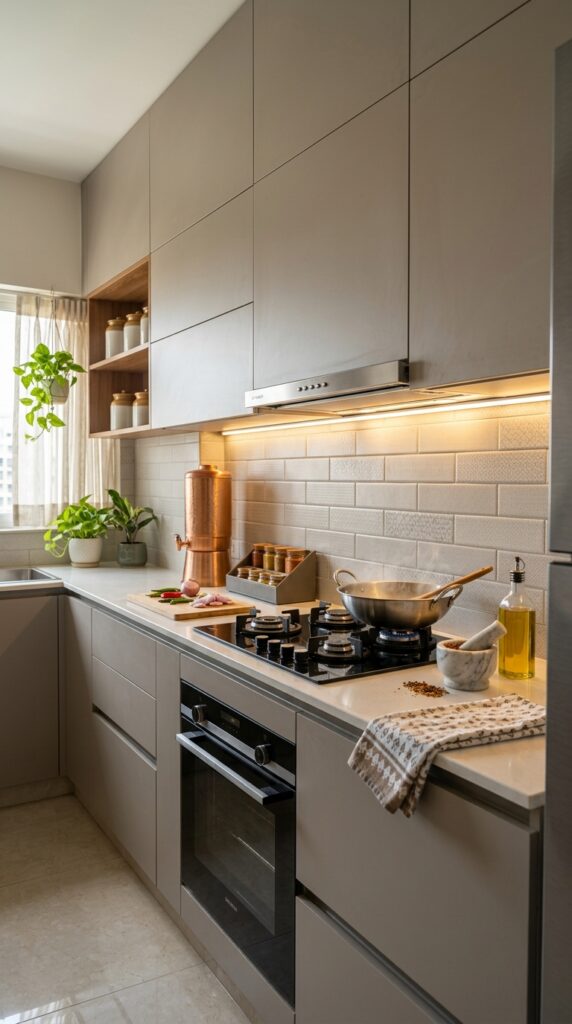
The chimney is the appliance in a small Indian kitchen that most frequently disrupts the design coherence of the space. A large, angular chimney hood projecting prominently from the wall above the cooktop dominates the kitchen visually and is very difficult to integrate into a modern kitchen aesthetic regardless of how carefully everything else in the kitchen is designed.
A slim-profile integrated chimney, a unit that sits flush with the overhead cabinet run or recesses into a dedicated cabinet housing, handles the extraction requirement of Indian cooking without the visual prominence of a standard chimney hood. Several Indian chimney manufacturers now produce slim-profile and recessed-ceiling chimney units specifically designed for integration into modular kitchen cabinet systems. A chimney that disappears into the cabinet line above the cooktop, visible only as a slim extraction slot in the cabinet soffit, is the modern kitchen approach to a chimney installation. It solves the ventilation problem without creating a visual one.
6. Matte Black as an Accent Rather Than a Primary Finish
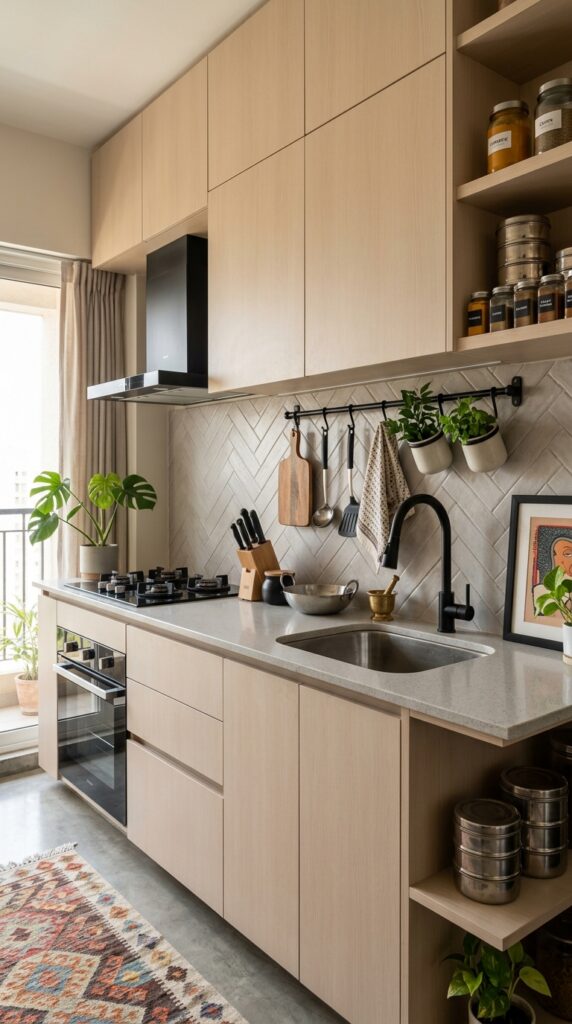
Matte black as a kitchen finish has become one of the signature elements of contemporary kitchen design internationally, and it translates effectively into a modern small Indian kitchen when used as a deliberate accent rather than a primary finish. Matte black applied across every surface of a small kitchen creates a space that is striking in a showroom and oppressive to cook in daily. Matte black used selectively as an accent against a light monochromatic base creates a contrast that is contemporary, considered, and visually precise.
A matte black tap over a light stone countertop. A matte black single-wall rail above the prep counter against a light backsplash. Matte black integrated J-pull handles in the recessed grip channels of otherwise flat-front light cabinets. Each application of matte black is a deliberate accent that adds visual definition to the modern kitchen without overwhelming it. The accent is most effective when it is consistent, the same matte black finish on every element where it appears, and restrained, three or four applications rather than a pervasive presence across every surface.
7. Integrated Appliances Behind Matching Cabinet Panels
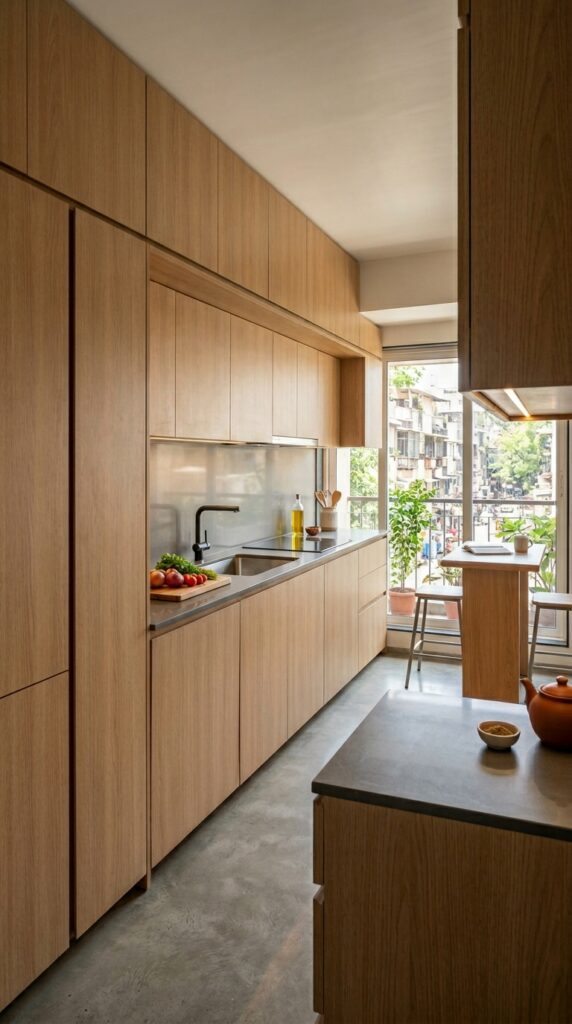
The modern kitchen conceals its appliances. Not because appliances are something to be ashamed of but because a kitchen where every appliance is visible on the counter or in dedicated housing reads as a kitchen organised around its equipment rather than around its design. A kitchen where the appliances are integrated behind matching cabinet panels reads as a kitchen that has resolved its equipment requirements within the design rather than working around them.
The refrigerator behind a full-height cabinet panel that matches the surrounding cabinets. The microwave inside a dedicated housing with a cabinet door that closes over it. The dishwasher, if one is installed, behind a panel that continues the base cabinet run without interruption. Each integrated appliance removes a visual element that would otherwise interrupt the coherence of the modern kitchen composition. In a small Indian kitchen where the appliance collection is significant and the visual space to accommodate it without disruption is limited, integrated appliance panels are one of the most impactful modern design decisions available.
8. A Statement Pendant Light Above the Dining or Counter Position
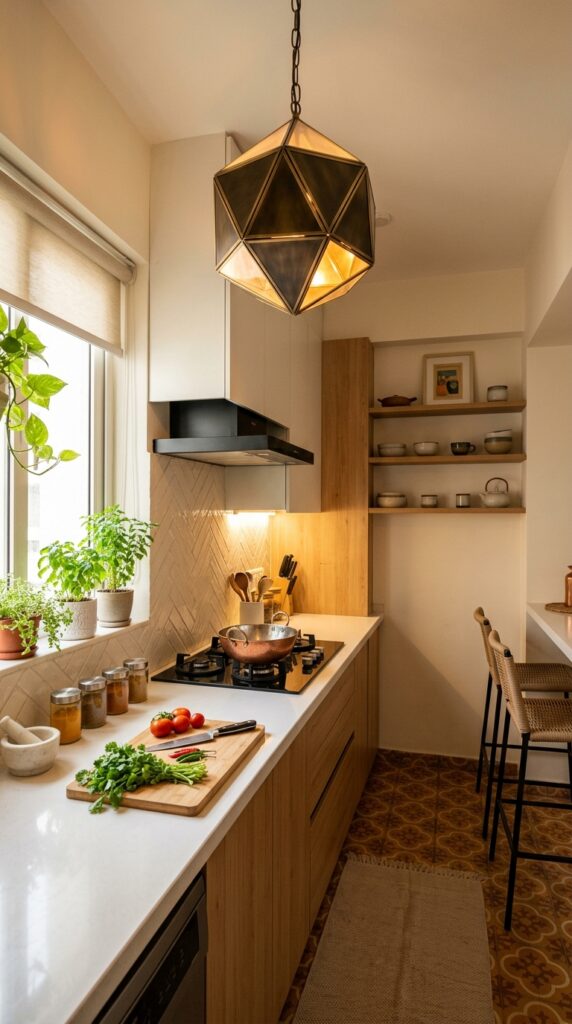
Modern kitchen lighting has moved beyond the single overhead fitting and the under-cabinet strip. A statement pendant light, a single well-chosen fitting suspended above the dining counter, the breakfast bar, or the most visible position in the kitchen, introduces a deliberate decorative element into an otherwise restrained modern kitchen in a way that reinforces rather than disrupts the contemporary aesthetic.
In a small Indian kitchen where the overall design language is calm, monochromatic, and minimal, a statement pendant is the element that communicates that the restraint is intentional rather than the result of a limited budget. Choose a pendant with a form that is simple and geometric rather than ornate. Matte black, brushed brass, or smoked glass are all appropriate pendant finishes for a modern Indian kitchen. Position it at the correct hanging height, typically 700 to 800 millimetres above the counter surface it illuminates, and it becomes the focal point that gives the modern kitchen its personality.
9. Slim Floating Open Shelf Section as the Only Open Storage
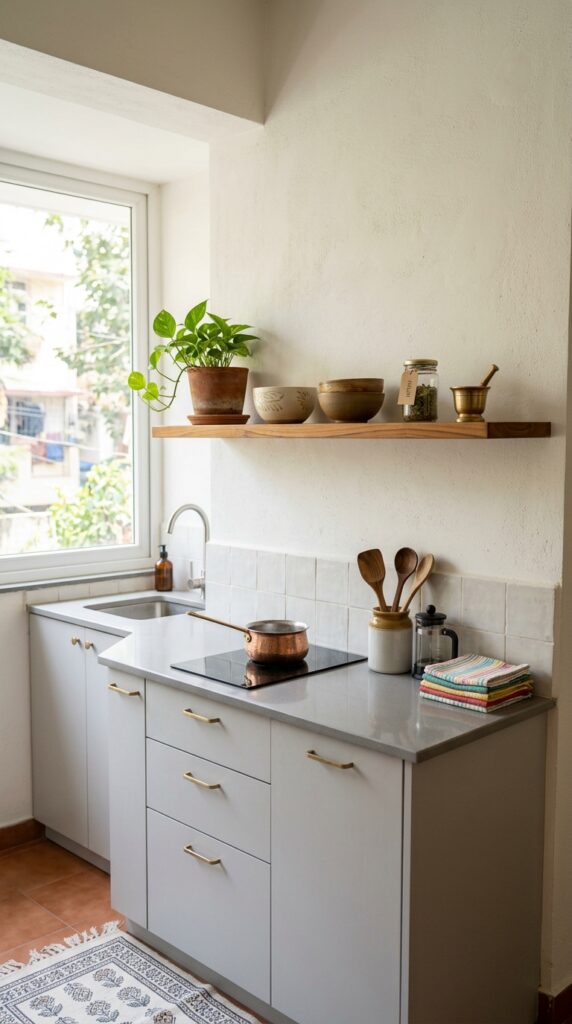
Modern kitchen design does not eliminate open storage entirely. It curates it. A single section of slim floating open shelves, installed as the only open storage in an otherwise fully closed kitchen, creates a display zone that is visible, accessible, and controlled rather than the general open storage that accumulates clutter in any kitchen that does not maintain strict discipline over what it holds.
The floating shelf section in a modern small Indian kitchen holds three or four items of genuine visual quality. A matching set of ceramic vessels. Two cookbooks with covers that work within the colour palette. A single small plant. A handmade ceramic piece brought back from a trip somewhere. The items on the floating shelf are chosen and arranged with the same care as objects in any other room of the house. The rest of the kitchen storage is behind closed cabinet doors. The floating shelf section is the controlled window into the kitchen’s material character.
10. Integrated Waste Sorting Built Into the Base Cabinet Run
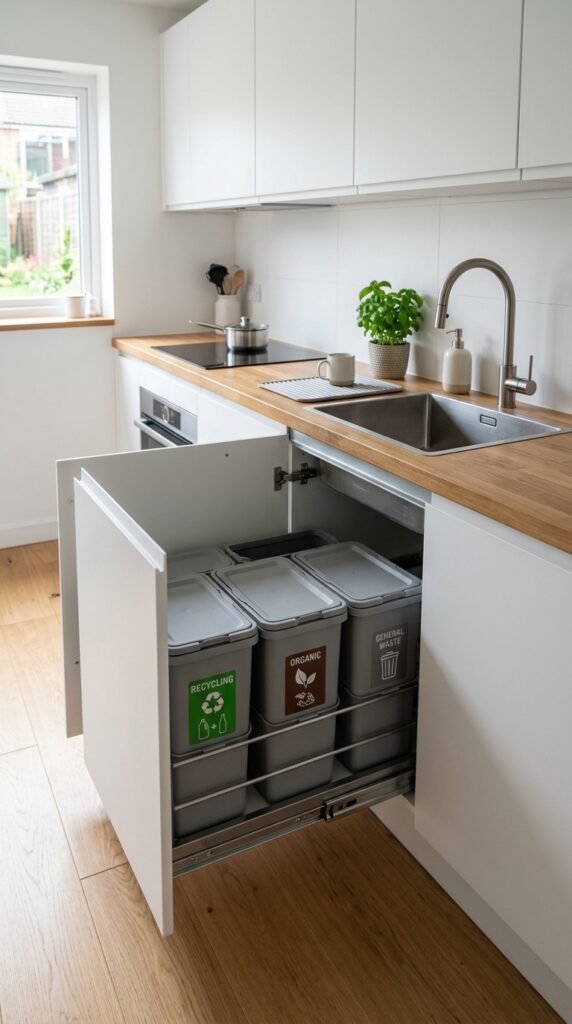
Waste management in a modern small Indian kitchen is a design problem that most kitchens solve badly. A bin beside the counter, a second bin for recycling, and a third smaller container for compost, all standing on the floor or beside the cabinet run, introduce a collection of utilitarian objects that are visually incompatible with a modern kitchen aesthetic and consume floor space that the small kitchen needs for movement.
An integrated waste sorting system built into the base cabinet run, typically a pull-out unit under the sink with two or three sorted compartments, conceals the entire waste management system behind a cabinet face that matches the rest of the kitchen. The bins are sorted, accessible, and contained within the cabinet structure. No object sits on the floor. No bin is visible from the kitchen entrance. The base cabinet run reads as a continuous surface with no disruption from the objects that a poorly planned waste management system would introduce. In a modern kitchen where the coherence of the cabinet run is a visual priority, integrated waste sorting is a functional detail that also advances the design.
11. A Natural Material Element to Prevent Clinical Coldness
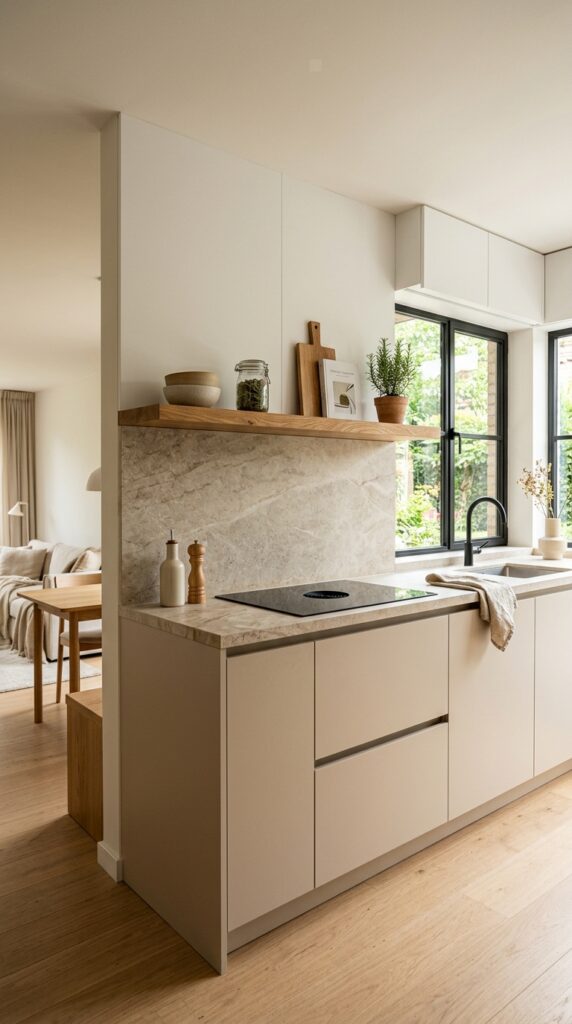
Modern kitchen design at its least resolved can feel cold. A monochromatic palette, flat-front handleless cabinets, integrated appliances, and minimal decorative detail produce a kitchen that is visually calm but can also feel impersonal in a way that is not comfortable for a space where significant time is spent every day. A single natural material element, introduced deliberately into the modern kitchen composition, prevents this coldness without compromising the contemporary aesthetic.
A solid wood floating shelf as the single open shelf section in an otherwise all-white or all-grey kitchen. A natural stone countertop with visible mineral variation against flat-front white cabinets. A terracotta pot holding a plant against a concrete-tone backsplash. A section of warm timber veneer on the lower cabinet run against matte upper cabinets. Each natural material introduction brings warmth, organic variation, and a quality of human-made imperfection into the modern kitchen that prevents the contemporary aesthetic from becoming sterile. The natural element should be genuine, real wood rather than wood-effect laminate, real stone rather than stone-pattern ceramic, and it should be used in a quantity that adds warmth without undermining the restraint that defines the modern kitchen aesthetic.
12. Smart Storage Specification for Indian Cooking Requirements
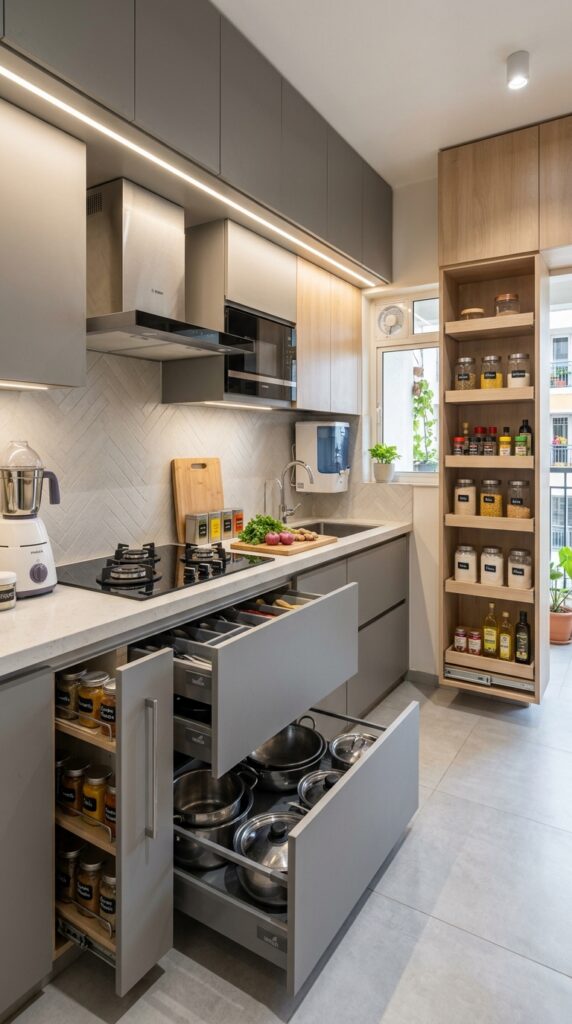
A modern small Indian kitchen that looks contemporary but cannot handle the storage demands of Indian cooking is not a successful modern kitchen. It is a kitchen that has prioritised appearance over function and will reveal that prioritisation every day through the inadequacy of its storage. The modern aesthetic and the Indian cooking requirement are not incompatible. They require a storage specification that addresses both simultaneously.
Pull-out spice drawers adjacent to the cooktop that keep the spice collection accessible without counter clutter. A full-height larder unit with pull-out shelves for bulk dry goods that conceals the entire Indian pantry requirement behind a single matching cabinet door. Deep pull-out drawers in every base cabinet position for vessel storage. A dedicated masala organiser in the drawer immediately beside the cooktop. Toe-kick drawers across the full counter length for flat items. Each of these storage solutions is compatible with the modern kitchen aesthetic because all of them are hidden within the cabinet structure rather than visible on the surface. A modern small Indian kitchen with smart hidden storage for Indian cooking requirements is a kitchen that looks as contemporary as any international reference and functions as completely as any Indian kitchen should.
Modern Design and Indian Cooking Are Not Opposites
The gap between international modern kitchen design and the practical requirements of Indian cooking is smaller than it appears in the showroom. The aesthetic decisions that define a modern kitchen, the monochromatic palette, the flat-front cabinets, the integrated appliances, the controlled open storage, are all compatible with the functional decisions that Indian cooking requires. The hidden spice pull-out, the full-height dry goods larder, the deep vessel drawers, the correctly specified chimney.
The modern small Indian kitchen is not an international design template applied to an Indian context and hoping the cooking requirements somehow fit. It is a kitchen designed from the Indian cooking requirements outward and finished with a contemporary aesthetic that is confident enough to let the function determine the form rather than fighting against it.
Get the function right. Then make it look modern.
That is the correct sequence. And it produces a kitchen that is both.