
Small kitchens can feel like a puzzle. You want them to be calm and practical, but there is also the reality of groceries and dishes that happens when you actually cook. The good news is that small space decorating can be rewarding, because every choice matters. A Japanese-inspired approach tends to focus on light, flow, and only keeping what earns its place. In this post, I am sharing 10 minimal Japanese kitchen layout solutions in a way that feels doable. Think pale wood, soft light, organized corners, and layouts.
Table of Contents
1) A simple galley kitchen layout with clear pathways
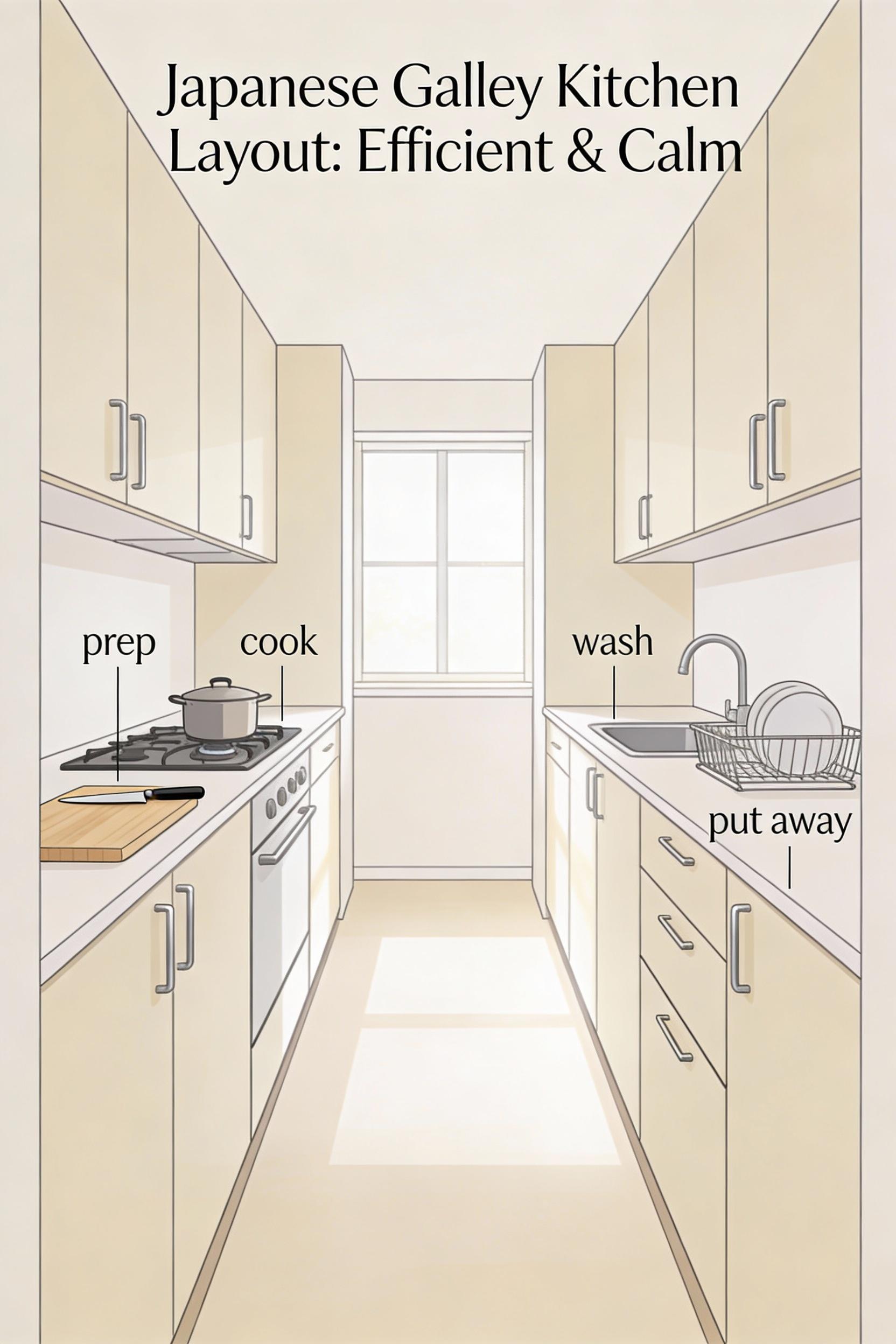
A galley kitchen layout often gets overlooked, but in Japanese apartments it is a classic for a reason. Keeping two clean lines of cabinetry creates an easy rhythm: prep, cook, wash, put away. The key is leaving the walkway open so the space feels calm, not cramped. If you can, choose flat-front cabinets in a light tone and keep handles minimal, or skip them entirely.
To warm it up, bring in natural texture. A pale wood cutting board left on the counter, and a linen tea towel hung neatly can soften the look without creating clutter. When everything has a spot, the whole room feels more spacious.
2) A one-wall kitchen layout that stays airy and bright
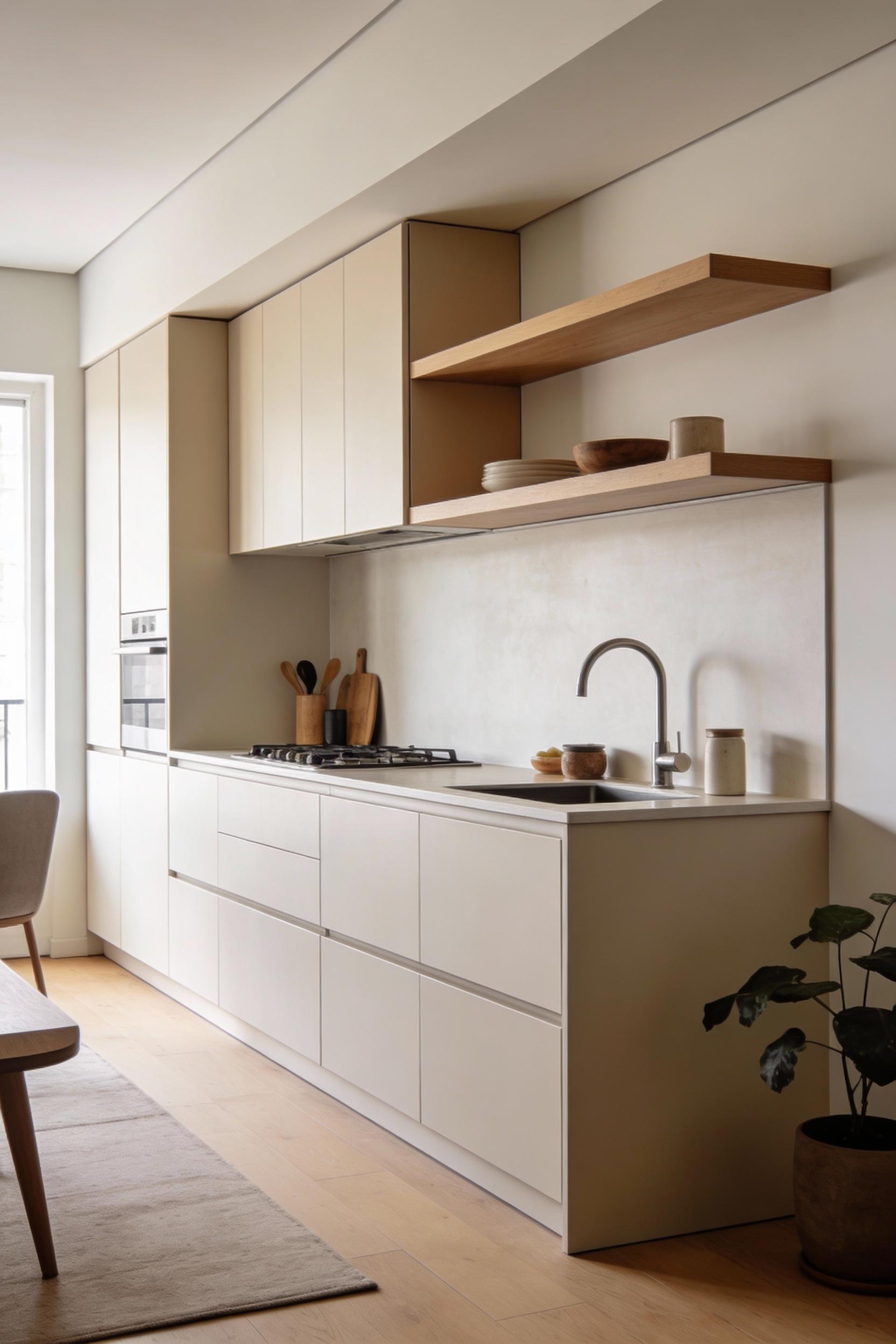
If your kitchen sits along a single wall in a studio or open plan space, lean into that simplicity. A one-wall kitchen layout feels more intentional when the upper area stays visually light. Some people skip upper cabinets and use one or two open shelves instead. Others keep cabinets but match them to the wall color so they fade back.
For a Japanese minimalist look, try a light matte finish, warm white walls, and a small amount of wood. Under-cabinet lighting helps a lot here. It makes evenings feel cozy, and it keeps the work surface clear, since you do not need extra lamps or bulky fixtures.
3) A compact L-shaped kitchen layout for better work zones
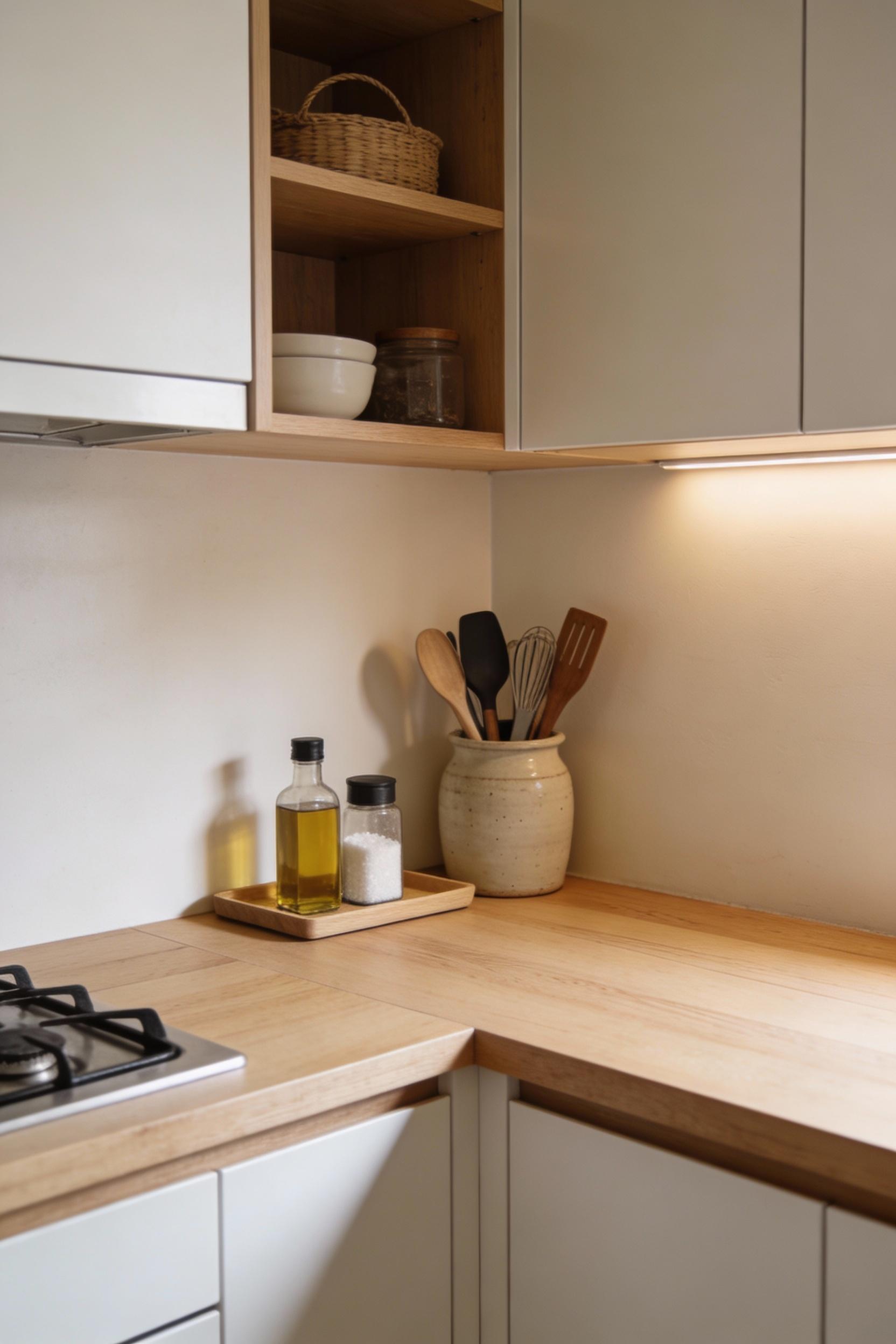
An L-shaped kitchen layout is a friendly option for small homes because it creates a natural corner for prep. That corner can become your calm cooking station, with a small tray for oils and salt and a crock for the tools you actually use. The rest can stay tucked away. This kind of zoning is very Japanese in spirit, since it supports a clean counter and a quieter look.
If you have room, place a narrow runner rug in a neutral tone. Think woven cotton or jute for a grounded texture. Keep the color gentle so the layout still feels light and open.
4) A Japanese-style kitchen with an uncluttered sink-to-stove line
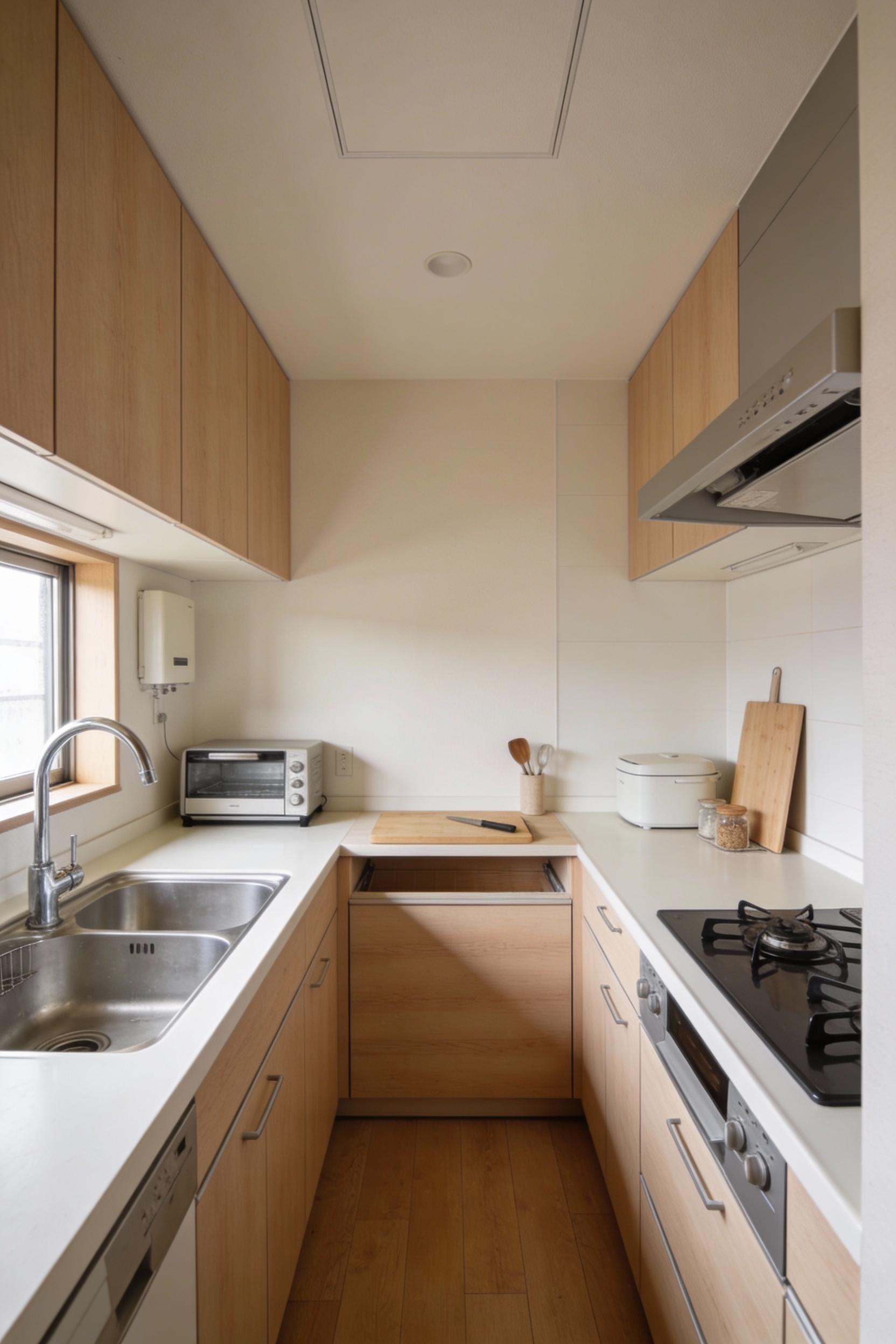
In many Japanese-style kitchens, the sink-to-stove relationship is treated with care. The layout stays efficient, and the surfaces stay mostly clear. If you can align your prep space between the sink and stove, cooking feels smoother, even in a small footprint. It is less about fancy appliances and more about flow.
A slim dish rack that drains into the sink, or a sink cover that creates temporary counter space, can be a quiet hero. Choose items in stainless steel, pale wood, or simple white to keep the visual tone consistent.
5) Minimal kitchen storage using tall cabinets and hidden zones
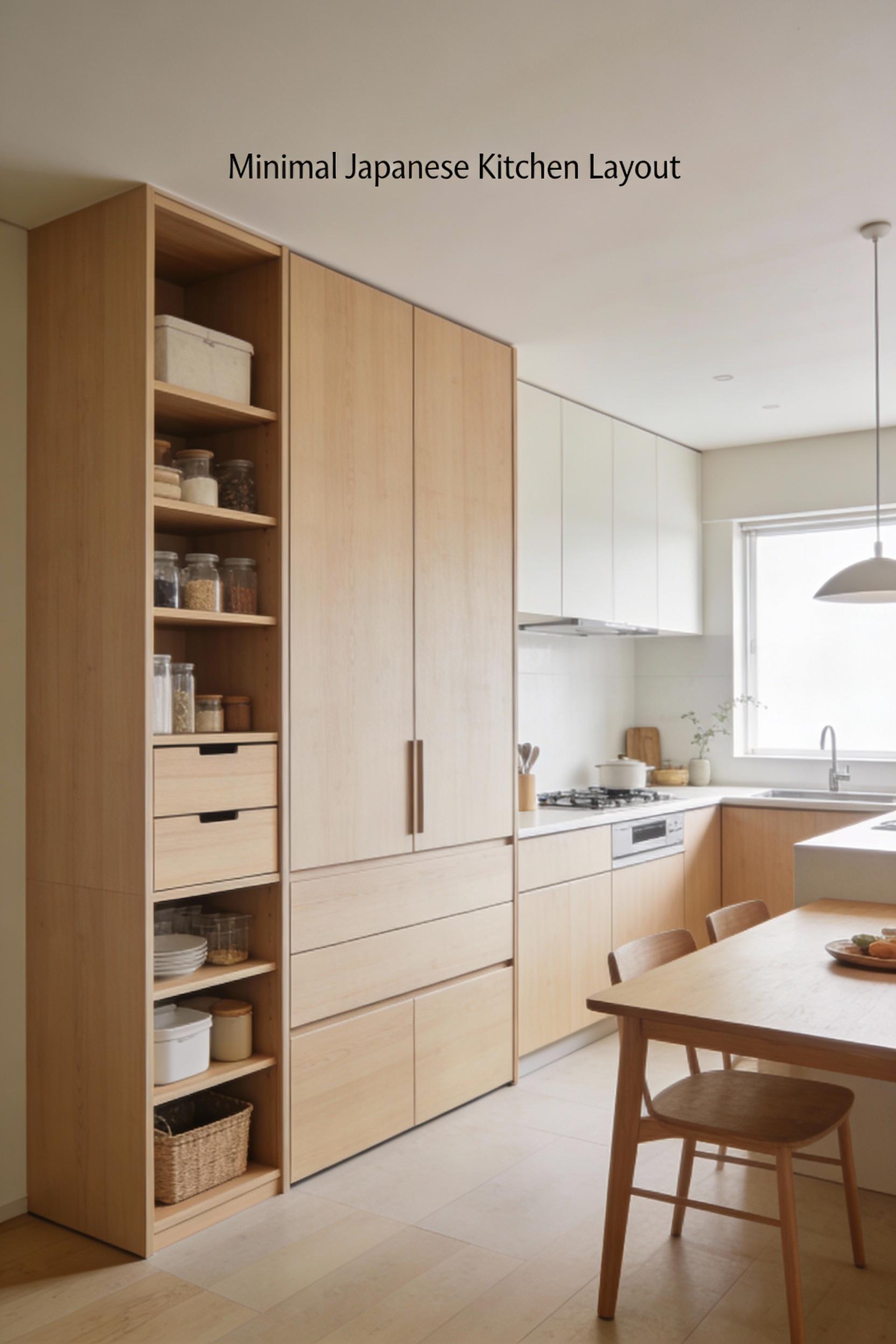
When space is tight, it helps to think vertically. Tall cabinets or pantry units can hold a surprising amount while keeping the kitchen looking clean. This is one of those 10 minimal Japanese kitchen layout solutions that feels especially realistic for busy households, because you are not forced to display everything.
Inside the cabinets, use simple bins or trays so items do not become a messy pile. Clear labels can help, but keep them subtle. When storage is calm behind closed doors, the whole kitchen feels calmer too.
6) Open shelving that looks intentional, not busy
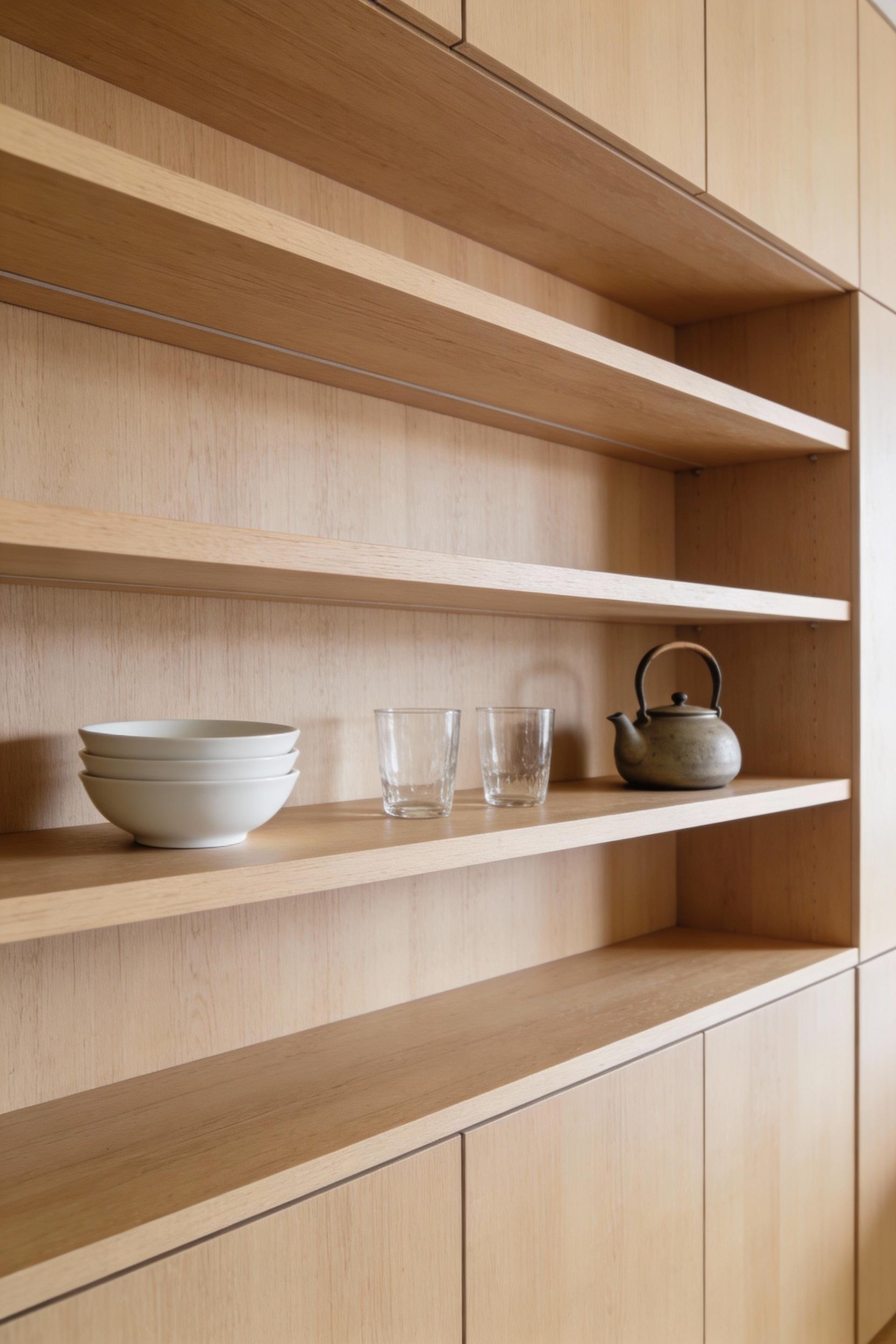
Open shelving can look beautiful in a minimal Japanese kitchen, but it only works if you treat it like a curated display. Keep the shelf length modest and the items consistent. A small stack of white bowls, a few glasses, maybe a teapot, and that is plenty. Too many mismatched packages will make the kitchen feel noisy.
If you need pantry storage, consider decanting dry goods into simple jars. Not because it is trendy, but because it reduces visual clutter. The shelf becomes part of the design, with soft repetition and clean lines.
7) A small kitchen island alternative: a slim worktable
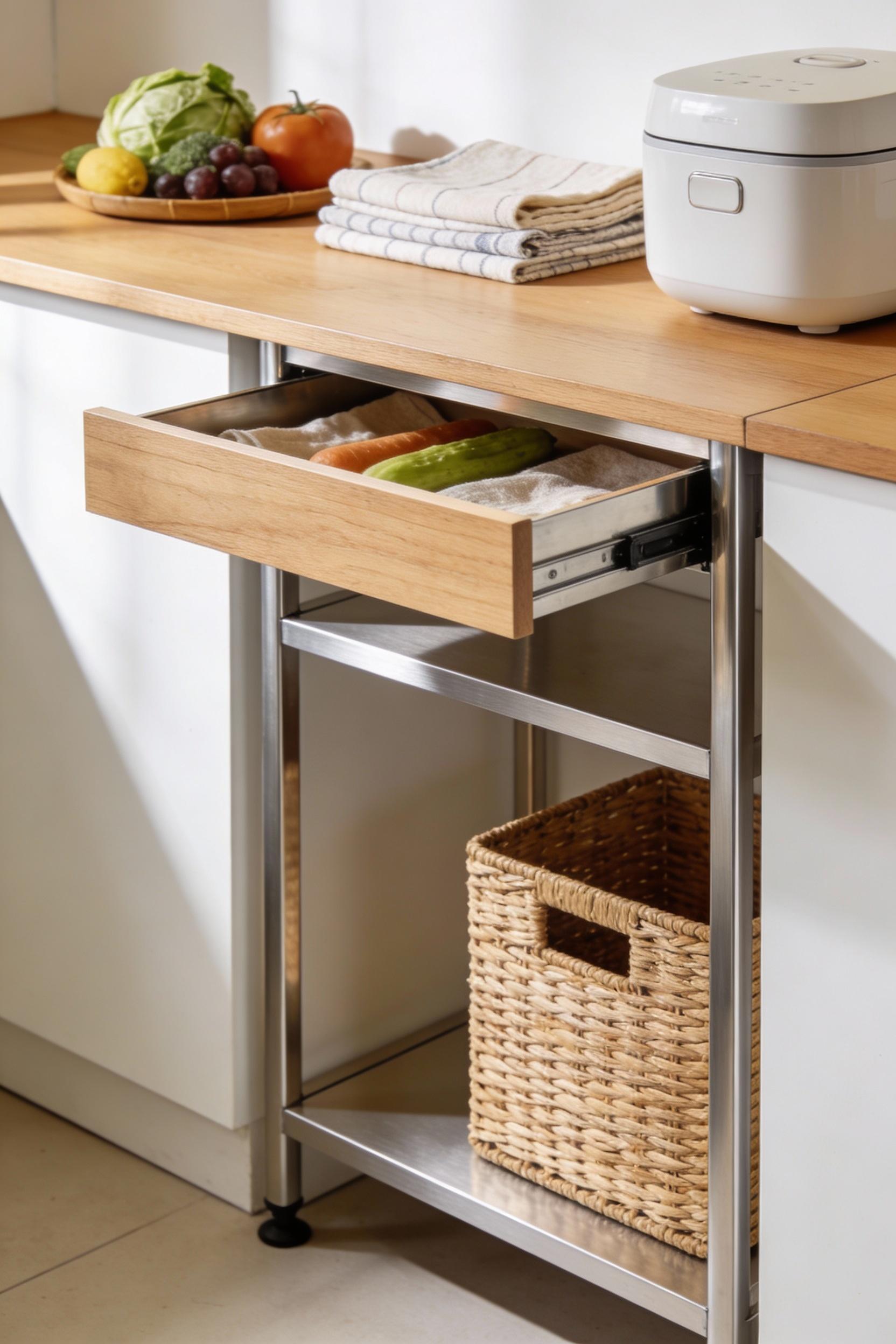
Not every kitchen can fit an island, but a slim worktable can give you the same benefits. Look for something narrow, ideally in light wood or stainless steel, with a lower shelf for baskets. This keeps the surface open and gives you a place for produce, linens, or a rice cooker.
In Japanese-inspired interiors, multifunctional pieces matter. A worktable can be prep space in the morning, a serving station at night, and a spot for a laptop in between. Keep the top clear when you are not using it, so the kitchen still feels restful.
8) Light tones and natural materials to expand a tiny kitchen
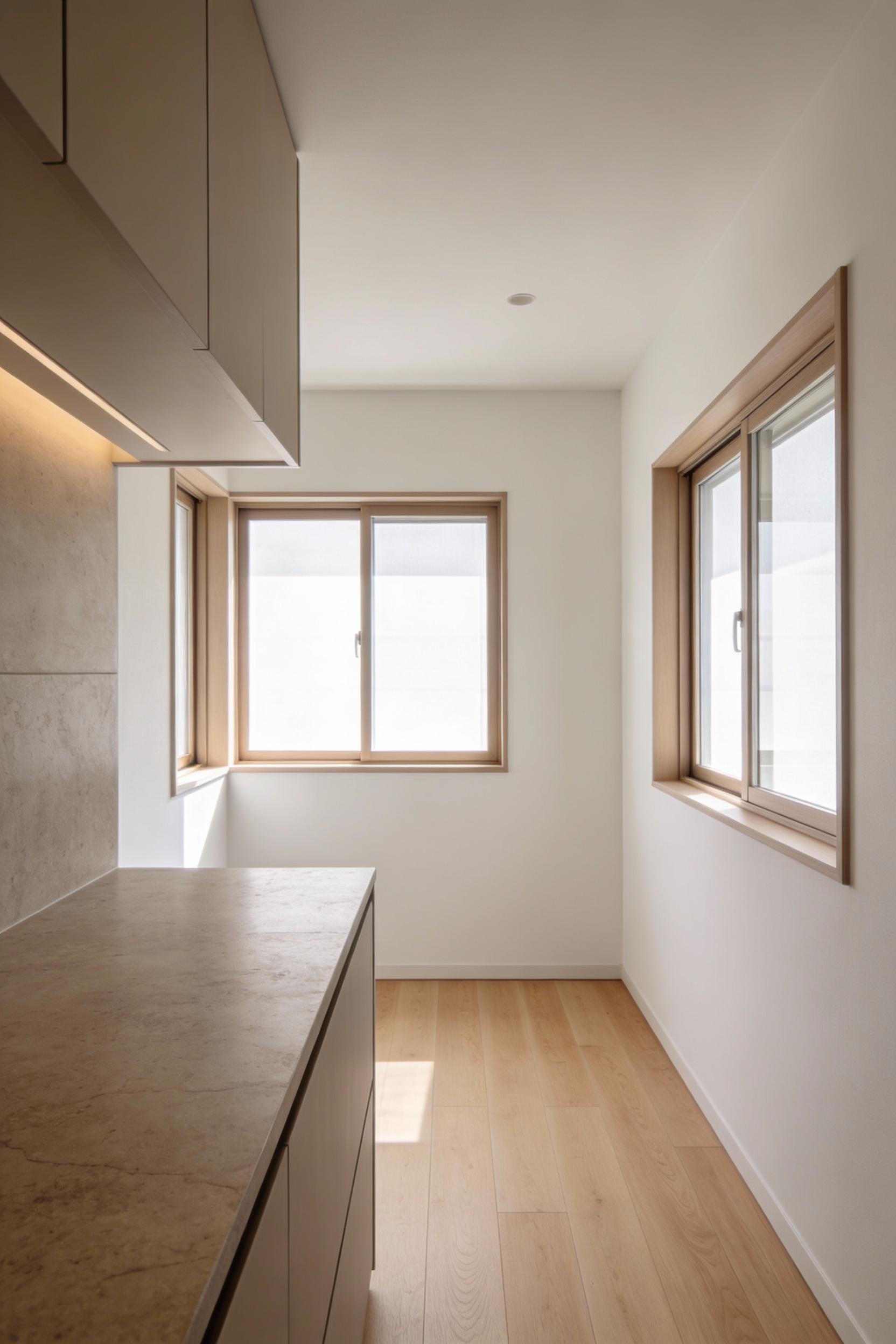
Color does a lot of heavy lifting in small spaces. Light tones help bounce daylight around, which makes the room feel bigger without changing the layout at all. Warm whites, soft greige, pale oak, and muted stone tones fit naturally with Japanese minimalism. They also play nicely with most rental floors and existing countertops.
Add natural materials in small touches. A wooden stool, a bamboo tray, ceramic canisters, or a cotton noren-style curtain near a doorway can bring that quiet, earthy feeling. Keep it simple so the layout remains the star.
9) A tidy entry point for open-plan kitchen living
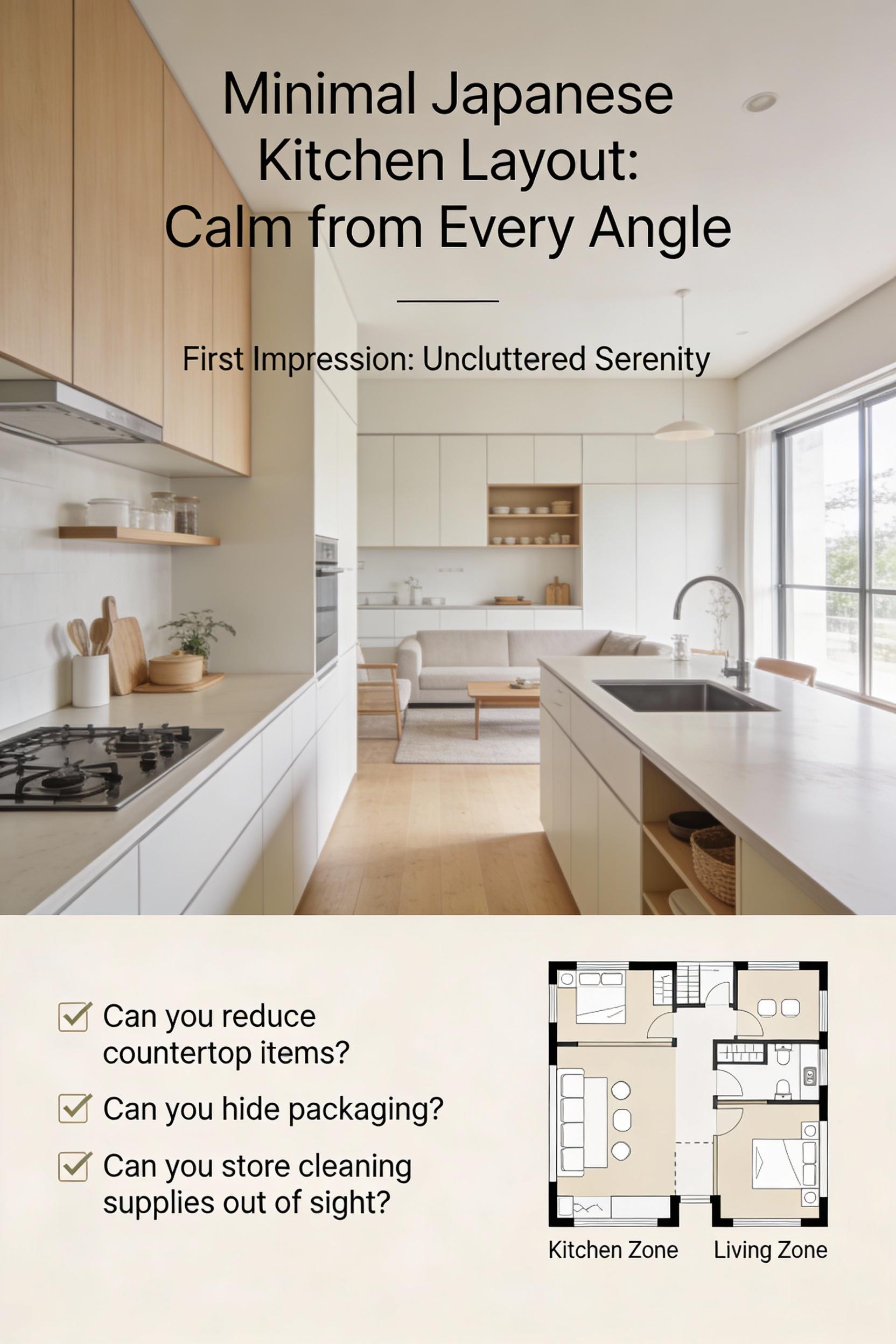
If your kitchen opens into the living area, the layout needs to look calm from multiple angles. Think about what you see first when you walk in. Many of the 10 minimal Japanese kitchen layout solutions come down to this moment. Can you reduce countertop items? Can you hide packaging? Can you store cleaning supplies out of sight?
A small catchall tray for keys and mail near the kitchen can prevent random piles from landing on the counter. And if your trash can is visible, choose one with a simple shape and a neutral finish. These tiny choices help the whole space feel considered.
10) A cozy lighting plan that supports minimal kitchen design
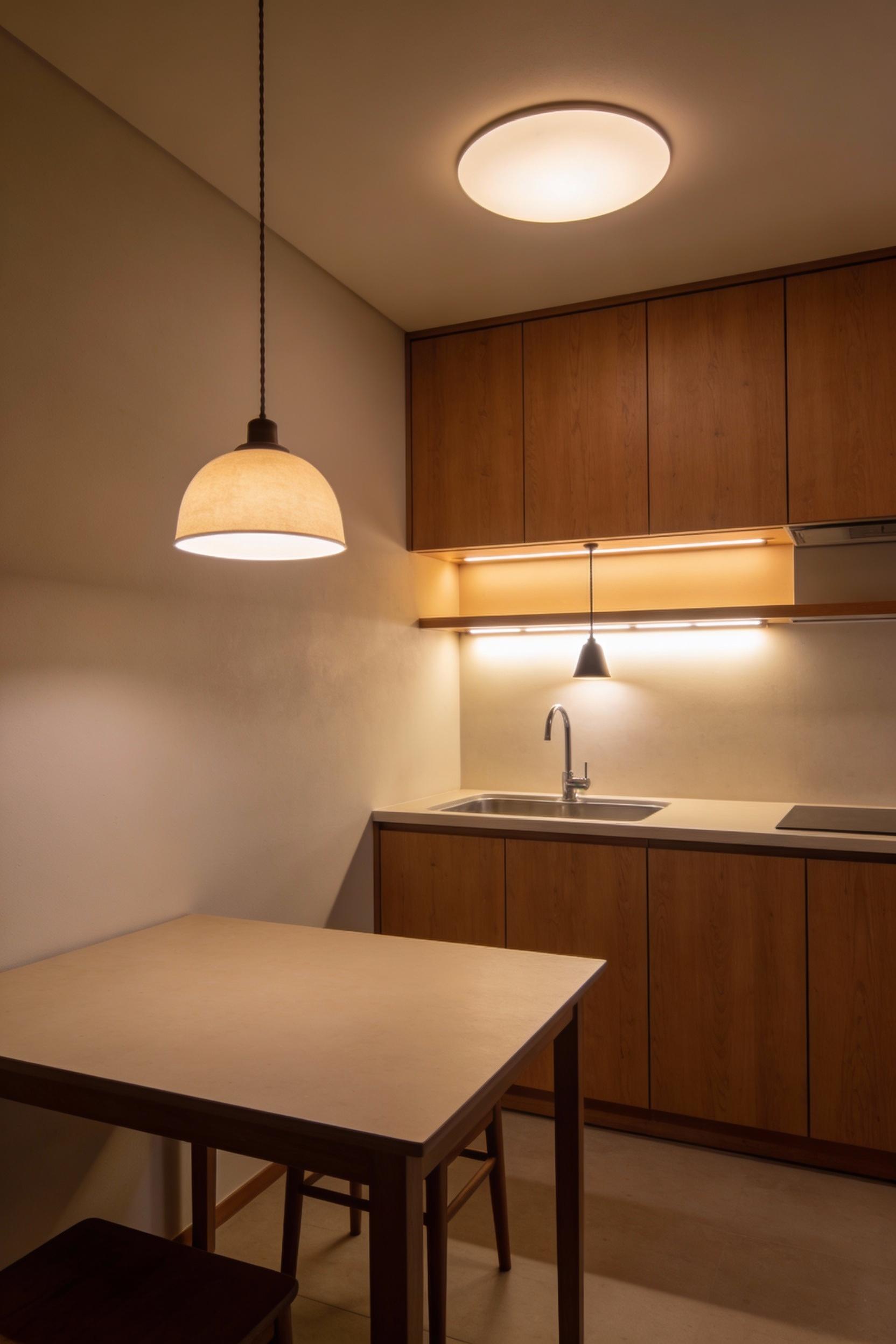
Lighting is often the difference between a kitchen that feels stark and one that feels welcoming. Japanese-inspired spaces tend to avoid harsh glare. If you can, mix a soft overhead light with warmer task lighting. Even a small pendant above the sink or table can add a gentle focal point.
Choose bulbs in a warm tone so the wood and ceramics look richer at night. And keep cords and fixtures tidy. When the lighting feels calm, the layout feels calmer too, which is really the heart of these 10 minimal Japanese kitchen layout solutions.
Working with a small kitchen can bring out your most thoughtful design choices. You learn what you use, what you love, and what you can let go of. If you take anything from these 10 minimal Japanese kitchen layout solutions, let it be this: focus on flow, keep surfaces clear, and choose a few natural materials that make you want to linger. The goal is not a showroom kitchen. It is a real space that supports your daily routines and still feels peaceful. Start with one corner, one shelf, or one cabinet, and let the calm build from there.

Aarav Sharma is a passionate home and lifestyle writer. He loves exploring kitchen design, home decoration, and interior styling. With a keen eye for beautiful details and practical design ideas. Aarav Sharma shares inspiration to help readers create comfortable and functional living spaces.